Palace Conquered Europe, But the Real Fight Starts Now
Crystal Palace's Conference League glory masks an uncertain future as Glasner departs and predators circle.
The Night Everything Changed
Steve Parish tried to hold it together. He really did.
Standing in the Leipzig night air, watching his players hoist the Conference League trophy above their heads, the Crystal Palace chairman could feel 50 years of devotion surging through him at once. The boy who fell in love with the Eagles when they reached the FA Cup semi-finals from the old Third Division in 1976. The man who plucked the club from the jaws of administration in 2010. The owner who dared to believe that Selhurst Park could house genuine European ambition.
Now it was real. Jean-Philippe Mateta had just stabbed the ball past Rayo Vallecano's goalkeeper, and Crystal Palace were European champions.
"When I bought the club I wasn't sure we'd ever play in Europe, let alone win a trophy. It's a dream come true."
Parish's words carried the weight of a man who understood exactly how improbable this all was. Palace had not just competed in Europe. They had won.
Three Trophies, One Architect
The Conference League triumph was the crown jewel, but it wasn't an isolated miracle. Under Oliver Glasner, Crystal Palace have lifted three trophies in a run that has redefined what this football club believes it can be.
Glasner arrived at Selhurst Park with a reputation forged at Eintracht Frankfurt, where he delivered a Europa League title in 2022 against all odds. That was his calling card: an ability to wring maximum output from squads that the market had undervalued, to instill a collective identity that transcended individual talent.
At Palace, he replicated the formula with ruthless consistency. The football was structured but aggressive. Defenders understood their triggers. Midfielders pressed in coordinated waves. And the attack, spearheaded by the tireless Mateta, became a genuine weapon on the European stage.
Palace fans had watched managers come and go over the decades. Hodgson's pragmatism. Vieira's promise. The revolving door of mid-table survival. Glasner was different. He didn't just keep Palace up. He made them dangerous.
The Goal That Sealed It
Leipzig provided the backdrop. Rayo Vallecano, themselves a romantic story of Spanish football's underbelly, stood between Palace and immortality.
The match was tight, as European finals tend to be. Cages were rattled but not broken. Then Mateta found the moment. The French striker, whose career at Palace has oscillated between peripheral and prolific, timed his run and finished with the composure of a man who understood that these opportunities don't arrive twice.
One goal. One night. One trophy.
The Conference League doesn't carry the prestige of the Champions League. It doesn't generate the same revenue or the same headlines. But for Crystal Palace, a club that has spent most of its existence navigating the brutal economics of English football's middle class, this was everything.
Parish called it proof that "sometimes the good guys win." He wasn't wrong.
What the Achievement Means
- Europa League qualification secured for next season
- Palace's first major European trophy in club history
- Third piece of silverware under Glasner's stewardship
- Mateta cements his legacy as a Selhurst Park cult hero
Behind the Departure
And now comes the part nobody at Selhurst Park wants to talk about.
Oliver Glasner is leaving.
The details of his departure remain somewhat opaque. Whether it's a pre-agreed understanding, a mutual decision, or simply the natural conclusion of a project that has reached its zenith, the Austrian is moving on. His stock has never been higher. Three trophies, European glory, and a tactical blueprint that elite clubs have been studying closely.
Glasner departs as arguably the most successful manager in Crystal Palace history. He leaves behind a fanbase that adores him and a squad that believed in his methods absolutely.
"It's incredible. An amazing achievement. All the ups and downs..."
Parish's celebration was tinged with something else. Gratitude, certainly. But also the quiet recognition that the man who built this was walking out the door.
The Transfer Intel
Behind the scenes, the picture is even more complex. Key players who delivered this Conference League triumph are now firmly on the radar of Europe's wealthiest clubs. Palace's success has been a double-edged sword. Win trophies and you attract attention. Attract attention and your best assets become someone else's targets.
Mateta's stock has skyrocketed. His combination of physical presence, intelligent movement, and proven European pedigree makes him a genuine commodity. Multiple Premier League clubs and continental suitors are expected to test Palace's resolve this summer.
He won't be the only one. Several players who formed the spine of Glasner's system have seen their market values spike dramatically over the past 12 months. Palace's recruitment team faces the classic mid-table dilemma: cash in at peak value or try to hold the squad together for a Europa League campaign that could define the club's trajectory for years.
History suggests the predators usually win.
The Parish Paradox
There's a peculiar tension at the heart of Steve Parish's ownership. He is, by every measure, the most successful chairman in Crystal Palace's history. He saved the club. He stabilized it. He invested wisely. And now he's delivered European silverware.
But success at Palace's level always carries a countdown. The better you do, the more attractive your people become to clubs with deeper pockets and grander stages. Parish has navigated this cycle before, but never from a position this strong.
Europa League football changes the financial equation. It provides additional revenue streams, enhances the club's profile in transfer negotiations, and offers a compelling pitch to prospective signings. But it also demands squad depth that Palace may not be able to assemble if multiple stars depart simultaneously.
Parish will back himself. He always has. From the dark days of administration to the floodlit glory of Leipzig, his tenure has been defined by making the improbable feel inevitable.
The question now is whether he can do it again.
What Comes Next
The managerial search begins immediately, and it might be the most consequential appointment in Palace's modern history. Get it right, and the Europa League campaign becomes a platform for sustained relevance. Get it wrong, and the Conference League triumph becomes a beautiful memory rather than a launchpad.
Names will be linked. Ambitious coaches will see Palace as an opportunity: a club with European football, a talented squad, and a supportive ownership structure. Others will look at the potential exodus of key players and wonder whether the cupboard will be bare by the time they arrive.
Palace need a manager who can build on Glasner's foundations without being enslaved to them. Someone who understands the club's identity, who can develop talent, and who isn't intimidated by the Thursday-Sunday grind that Europa League football demands.
The summer transfer window will be equally decisive. Palace's recruitment has been quietly excellent in recent years, identifying undervalued players and maximizing their output within Glasner's system. That process cannot afford a misstep now.
The Lasting Image
For all the uncertainty ahead, this moment belongs to Crystal Palace and their supporters. A club from South London, forged in the fires of financial peril and decades of underachievement, stood on a European stage and won.
Mateta's goal. Parish's tears. Glasner's final gift.
The Conference League trophy will sit in Selhurst Park's cabinet as permanent proof that the improbable happened. Whatever comes next, whatever names depart and whatever new faces arrive, nobody can take Leipzig away.
Crystal Palace are European champions. And sometimes, as Steve Parish reminded the world through reddened eyes, the good guys really do win.
Editorial Integrity
This is an original SportPulse article written by our editorial team. All content is independently researched, written, and reviewed by our writers and editors before publication. We do not publish copied, aggregated, or syndicated content.
SportPulse is committed to original sports journalism. Read our editorial policy or contact us with any questions.
More Like This
All football
Kane's Double Delivers England's Statement Win in World Cup Cracker
Harry Kane's brace survives a chaotic first-half scare as Tuchel's England open their World Cup campaign with a thrilling victory over Croatia.
Spurs' £230m Splurge: Desperation Gamble or Calculated Masterstroke?
Tottenham's unprecedented £230m spend signals a dramatic break from the Levy era, but the strategy raises more questions than answers.
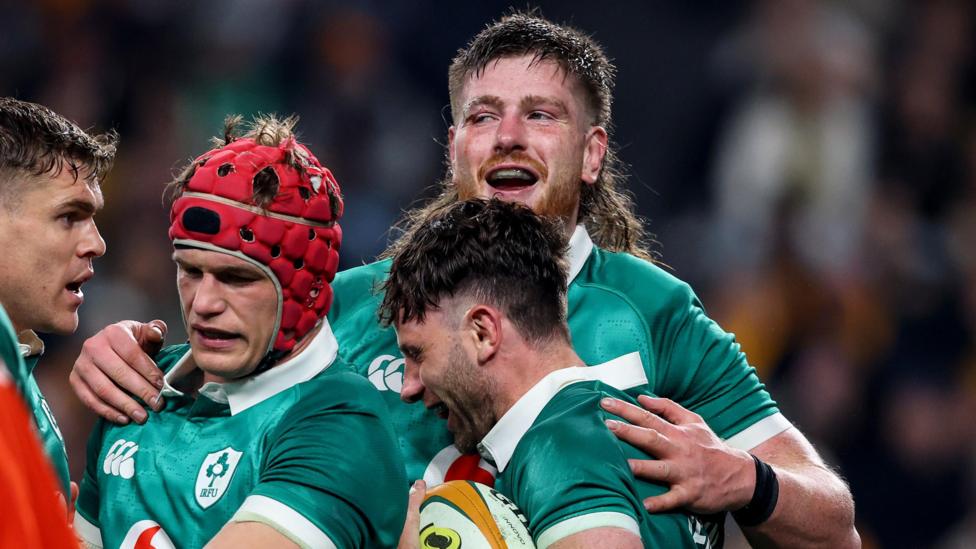
Ireland Break Wallaby Hearts in Sydney Epic
Ireland stun Australia with a bonus-point comeback in Sydney after Ben Donaldson's last-gasp penalty drifts agonizingly wide.