Czechia's Survival Test Against a Mexico Side Playing With House Money
Mexico have clinched the group, but for Czechia the equation is brutally simple: win or face elimination.
The Paradox of a Dead Rubber
There is a particular tactical cruelty to the final matchday of a World Cup group stage. One side has already achieved its primary objective, blood pressure lowered, rotation suddenly a luxury rather than a risk. The other stands on the edge of a cliff, every pass carrying the weight of an entire tournament's worth of preparation. When Czechia face Mexico tonight at 9pm ET, that asymmetry will define everything about how this match unfolds.
Mexico have already clinched top spot in the group. Their passage to the Round of 16 is secure, and they will face one of the best third-placed finishers from Groups C, E, F, H, or I. Even if South Korea were to match Mexico's points total, El Tri hold the head-to-head tiebreaker. That cushion transforms this fixture from a competitive obligation into something far more interesting from a coaching perspective: a chance to manage minutes, test depth, and send a psychological signal to whichever opponent awaits in the knockout rounds.
For Czechia, the calculus could not be more different. Every scenario involving their survival runs through this match. The permutations may vary depending on earlier results, but the underlying truth is immutable: anything less than three points leaves them at the mercy of mathematics and other teams' performances. That kind of pressure does strange things to tactical plans.
Mexico's Blueprint: Control Without Risk
El Tri arrived at this World Cup with a clear philosophical identity. Their group stage campaign has been a masterclass in measured progression, the kind of controlled, possession-based approach that reflects a coaching staff prioritizing structural integrity over spectacle. Mexico have suffocated opponents with a disciplined 4-3-3 shape that morphs into a compact 4-5-1 out of possession, denying central passing lanes and forcing play wide into low-percentage crossing zones.
Their defensive record across the group has been exceptional. Opponents have struggled to generate high-quality chances against a backline that maintains its shape religiously, with the midfield trio acting as a relentless filter. The pressing triggers have been surgical rather than manic: Mexico do not chase the ball recklessly, instead waiting for specific cues, a poor first touch, a backwards pass under pressure, before compressing space with coordinated movement.
The question tonight is how much of that structure manager Jaime Lozano chooses to preserve. Rotation is inevitable when qualification is assured, but World Cup squads are finite resources. Rest too many key figures and you risk disjointedness heading into a knockout match where cohesion will matter far more than freshness. Rest too few and you gamble with injuries or suspensions for a match that carries no competitive weight. The balance is delicate, and Lozano's selections tonight will reveal his priorities for the rounds ahead.
Czechia's Dilemma: Structure vs. Urgency
Czechia's group stage has been a study in competitive inconsistency, flashes of tactical sophistication undermined by moments of defensive fragility. Their preferred approach under manager Ivan Hašek centers on a flexible 4-2-3-1 system designed to transition quickly from defensive compactness to direct attacking play. The double pivot provides a stable platform, while the attacking midfielder operates as the creative fulcrum, linking play between the lines.
When it has worked, Czechia have looked genuinely dangerous. Their vertical passing sequences bypass midfield congestion efficiently, and the wide players offer genuine pace on the counter. When it has not worked, the defensive block has sat too deep, ceding territory and inviting pressure that eventually cracks.
Tonight demands a tactical recalibration. Against a Mexico side likely to rotate, Czechia must decide whether to press aggressively high up the pitch, targeting unfamiliar partnerships, or maintain their established shape and trust their counter-attacking structure to exploit the spaces Mexico's less cohesive unit might leave. The instinct of any desperate team is to throw bodies forward, but reckless attacking against a side as technically proficient as Mexico, even a rotated Mexico, is a recipe for counter-punching punishment.
The Pressing Question
If Czechia opt for a high press, they must execute it with discipline. Rotated Mexican players will still be comfortable in tight spaces, still capable of playing through pressure with one-touch combinations. The risk is that aggressive pressing without coordination creates the very gaps Mexico's midfield is designed to exploit. Czechia's coaching staff will have studied this carefully: pressing triggers must be specific, the backline must push up to compress the pitch, and the wide players must track runners rather than gamble on intercepting switches of play.
Tactical Shift: What Mexico's Rotation Reveals
The most fascinating tactical subplot tonight lies in how Mexico's lineup changes reshape their positional structure. If Lozano drops his first-choice midfield pivot, the pressing intensity and positional discipline that defined their group stage may soften considerably. Backup midfielders often lack the same spatial awareness, the same instinctive understanding of when to hold position and when to step out.
This creates opportunity for Czechia in the half-spaces. The zones between Mexico's full-backs and centre-backs have been well-guarded throughout the tournament, but unfamiliar defensive partnerships take time to synchronize their communication. Czechia's attacking midfielder could find pockets of space that simply did not exist against Mexico's first-choice backline.
Equally, Mexico's attacking rotations matter. If their primary wide threats are rested, the width that stretches defensive blocks disappears. That condenses play centrally, which paradoxically could benefit Czechia's compact defensive shape. Fewer threats on the flanks means fewer decisions for full-backs, which means fewer moments of isolation that lead to dangerous crosses.
"We have a squad for exactly this situation. Every player who steps onto that pitch knows our principles. The system is the system."
This is the kind of statement coaches make before rotation matches, and it carries both truth and anxiety. Systems are only as effective as the players executing them, and the gap between a starting eleven drilled together for months and a reshuffled lineup can be enormous in a high-pressure World Cup environment.
Group Implications and Bracket Mathematics
Mexico's position as group winners is a significant advantage beyond mere prestige. The third-placed teams they could face in the Round of 16 represent a softer path than finishing second, which would likely pit them against a group runner-up with considerably more pedigree. Lozano knows this, and it reinforces the logic of prioritizing knockout preparation over tonight's result.
For Czechia, the stakes could not be more existential. A victory keeps their tournament alive and sends them into the knockout rounds with momentum, the psychological boost of surviving a group stage scare often propelling teams further than their talent alone might suggest. A draw or defeat could spell elimination depending on other results, a deeply unsatisfying way to end a World Cup campaign built on years of qualification effort.
The broader group dynamics also matter for the neutral viewer. Results elsewhere in the final matchday can create simultaneous drama across multiple venues, the kind of cascading tension that makes World Cup group stages uniquely compelling. Czechia's players may receive updates from other matches during halftime, information that could either galvanize or deflate depending on the context.
The Psychological Dimension
There is a subtle danger for Mexico in this fixture that transcends tactics. Teams that have already qualified sometimes struggle to generate competitive intensity, and the gap between professional obligation and peak performance is wider than coaches care to admit. The body language in warm-ups, the urgency in the opening exchanges, the willingness to contest fifty-fifty balls, these details reveal whether a rotated squad truly believes in what it is doing.
Czechia, conversely, will be fueled by desperation. That emotional fuel is potent but volatile. Channel it effectively and you produce performances that exceed your tactical ceiling. Mismanage it and you get frantic, disconnected football that plays directly into the opponent's hands.
Looking Ahead
Tonight's result shapes the knockout bracket in ways that extend far beyond these two teams. Mexico's Round of 16 opponent will study this performance closely, searching for vulnerabilities in the rotated lineup that might carry over into the next match. Czechia's tournament future hangs on whether Hašek can find the tactical formula that turns desperation into precision.
The opening twenty minutes will be telling. If Czechia come out with controlled aggression, pressing intelligently and building attacks with patience, this could be a classic World Cup group stage finale. If they come out chaotic, Mexico's technical quality, even in reserve, will punish them. The tactical chess match between a team with nothing to lose and a team with nothing to gain is one of football's most underappreciated dynamics, and tonight it takes center stage.
Editorial Integrity
This is an original SportPulse article written by our editorial team. All content is independently researched, written, and reviewed by our writers and editors before publication. We do not publish copied, aggregated, or syndicated content.
SportPulse is committed to original sports journalism. Read our editorial policy or contact us with any questions.
More Like This
All football
England's Six-Goal Blitz: How Southgate's System Dismantled Panama
England's 6-1 demolition of Panama exposed every defensive frailty through relentless set-piece precision and positional rotations.

The Man Behind the Paint: DR Congo's Superfan Phenomenon
Before his first World Cup match, the iconic DR Congo superfan embodies a football culture built on resilience and relentless noise.
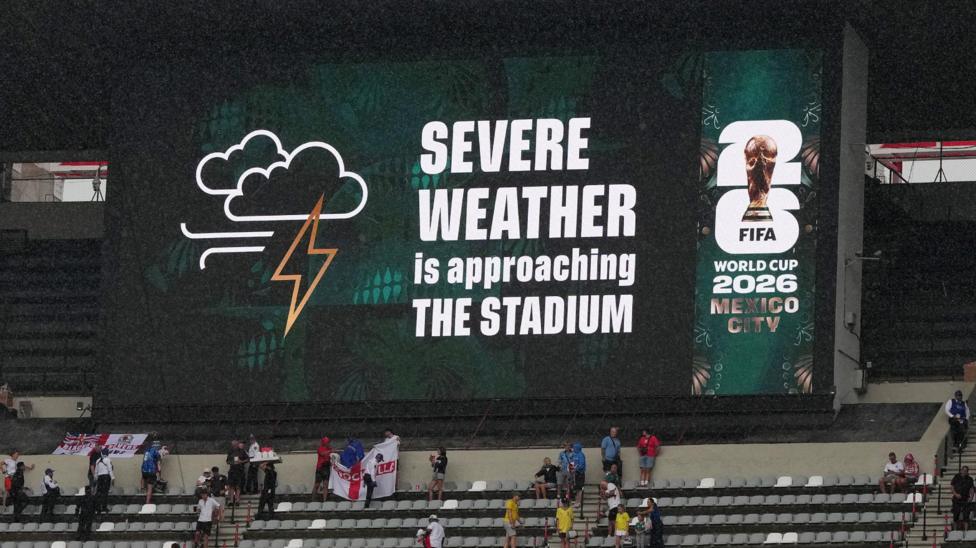
Storm Over Azteca: Tactical Chaos Looms for Mexico-England
A shelter-in-place order at Azteca disrupts Mexico-England preparations, threatening tactical plans in already extreme conditions.