Dan Evans Dismantles Wild Card Narrative at Wimbledon Qualifying
Dan Evans cruises into Wimbledon qualifying second round, refusing to let rejected wild card requests define his All England campaign.
The Smile That Said Everything
The ball bounced twice on the far side of Court 4, and Dan Evans broke into a grin. It was not a grin of relief, nor one of defiance aimed at the All England Club's committee rooms. It was simply the pure, unadulterated joy of a man who had just taken a step closer to home. Evans had just dispatched Juan Carlos Prado Angelo in the first round of Wimbledon qualifying, and as he packed his rackets, that smile told a story words often fail to capture.
For a player who has ridden the extreme highs and crushing lows of professional tennis, a qualifying match at a tournament he has graced for over a decade could easily have felt like a demotion. Instead, it felt like a declaration of survival.
The British veteran is navigating the qualifying rounds at Roehampton after the All England Club opted against granting him a wild card for the main draw. It was a decision that sent ripples through the British tennis community, given Evans's long-standing service and previous heroics on the SW19 grass. Yet, as he walked off court following a composed, clinical victory, Evans made one thing abundantly clear: the rejection is not his fuel.
"Big smile! I'm enjoying my tennis. Not getting a wild card is not a motivating factor for me. I just want to win matches."
He said it with a casual shrug, dismissing the narrative that the establishment had wronged him. But to understand why that smile carries such weight, you have to look at the road he has traveled to simply stand on that baseline.
The Anatomy of a Grass-Court Specialist
Grass has always been Evans's native surface. The low bounces, the slick footing, the requirement for razor-sharp reflexes and surgical touch at the net. These are the conditions where his game breathes. While the modern power baseline has rendered many serve-and-volley tacticians obsolete, Evans has stubbornly clung to a style that feels like a throwback. It is beautiful, it is chaotic, and on its day, it can dismantle the best in the world.
But the landscape of British tennis can be a fickle, unforgiving place for aging stalwarts. The All England Club's wild card allocation is a politically charged chess match, balancing emerging talent against established names on the decline. This year, the committee looked at Evans and decided his current trajectory did not warrant a free pass into the main draw.
It is a cold reality of the sport. Reaching a career-high ranking of No. 21 in 2023, Evans has seen his standing plummet following a relentless battle with injuries and the sheer physical toll of the tour. By forcing him into qualifying, Wimbledon was not necessarily disrespecting his past; they were evaluating his present. Evans, to his immense credit, refuses to view it through the lens of bitterness.
Career by Numbers
- Career-High Ranking: No. 21 (achieved in September 2023)
- ATP Singles Titles: 2 (Delray Beach 2023, Melbourne 2021)
- Wimbledon Main Draw Appearances: 9 consecutive years (2014-2023)
- Best Wimbledon Result: 3rd Round (2016, 2019, 2021)
- Current Ranking: Outside the Top 150, necessitating qualifying entry
- Prize Money: Over $7.5 million in career earnings
The numbers sketch the portrait of a career that has vastly overachieved given the physical limitations he has faced. A player lacking a monster serve or a thunderous forehand, Evans has built his livelihood on court craft, anticipation, and an elite tennis IQ.
The Psychology of the Qualifying Trenches
There is a unique psychological burden attached to qualifying for a Grand Slam, particularly for a former top-30 player. The qualifying grounds at Roehampton lack the grandeur of the All England Club's main show courts. The stands are sparser, the atmosphere is rawer, and the desperation is palpable. Every match is a war of attrition against hungry, fearless opponents who have nothing to lose.
Prado Angelo, a talented Bolivian rising through the ranks, represented exactly the kind of tricky first-round obstacle that can unravel a veteran mentally. A bad loss here would not merely delay Evans's Wimbledon campaign; it would validate the committee's decision to deny him a wild card. That is the invisible pressure that hangs over every qualifying match: the fight against the narrative.
Evans dismantled that pressure with the kind of grizzled composure only a decade on the tour can provide. He moved well, struck his backhand slice with trademark precision, and refused to let the young challenger find any rhythm. When the moment arrived to close the door, he did so with authority. It was a performance that underscored a crucial, often overlooked aspect of professional tennis: the ability to manufacture your own momentum.
Reclaiming the Narrative
The media wanted a villain in the All England Club. They wanted the story of a spurned British hero using the sting of rejection to rampage through the qualifying draw. Evans declined the role. By insisting the wild card snub is not his motivation, he is actively reclaiming his agency.
He is not playing for the committee. He is not playing to prove anyone wrong. He is playing because the ball bounces, because the grass smells like summer, and because the 34-year-old knows how to find solutions on a tennis court. That distinction is vital for his mental health and his performance. Anger is a volatile fuel; it burns hot, but it burns out. The genuine desire to compete, however, is a slow-burning fire that can sustain a player through the grueling three-match crucible of Grand Slam qualifying.
Evans has been through far worse than a bureaucratic slight. He served a one-year ban in 2017 for a cocaine violation, a dark period that could have ended his career entirely. He fought his way back from that abyss, clawing his way up from the bottom of the rankings to achieve his career-best results. Compared to that existential crisis, navigating Wimbledon qualifying is merely a logistical hurdle.
The Battle Ahead at Roehampton
Advancing past Prado Angelo is only the first step. To reach the main draw, Evans must survive two more rounds in Roehampton. The fields in Grand Slam qualifying are notoriously treacherous, packed with rising stars desperate for a breakthrough and seasoned veterans fighting for their livelihoods.
Every match demands a relentless focus. The physical toll of playing three high-stakes matches on grass before the main draw even begins is significant, particularly for a player with Evans's injury history. Grass courts demand constant vigilance, with unpredictable bounces and rapid changes of direction that stress the joints.
Yet, there is a silver lining to the qualifying crucible. Match sharpness is a currency, and by the time a qualifier reaches the first round of the main draw, they have already acclimatized to the surface, the weather, and the unique pressures of the tournament. Main draw wild cards, by contrast, often step onto the show courts cold, overwhelmed by the occasion.
If Evans can navigate his next two opponents, he will enter the main draw not as a player handed a favor, but as one who has earned his place through sheer, undeniable merit. That carries a psychological edge.
A Legacy Forged in Resilience
How will Dan Evans be remembered when he finally decides to lay down his racket? The answer is still being written, but the themes are already etched into the annals of British tennis. He will not be remembered as a multi-Slam champion, but as a craftsman. A player who maximized every ounce of his talent, who thrilled the Court 18 crowds with his audacious shot-making, and who refused to fade away quietly.
His refusal to weaponize the wild card rejection speaks volumes about his character. It would have been easy to play the victim, to stoke a media firestorm that could have provided a temporary adrenaline rush. Instead, Evans chose the harder, quieter path. He chose to let his racket do the talking in Roehampton.
The smile he wore after beating Prado Angelo was the smile of a man entirely at peace with his reality. He knows the margins are thin. He knows the end of the road is closer than the beginning. But for a few more days at least, Dan Evans is exactly where he wants to be: on the grass, under the open sky, fighting for every point. And doing it all on his own terms.
Editorial Integrity
This is an original SportPulse article written by our editorial team. All content is independently researched, written, and reviewed by our writers and editors before publication. We do not publish copied, aggregated, or syndicated content.
SportPulse is committed to original sports journalism. Read our editorial policy or contact us with any questions.
More Like This
All tennis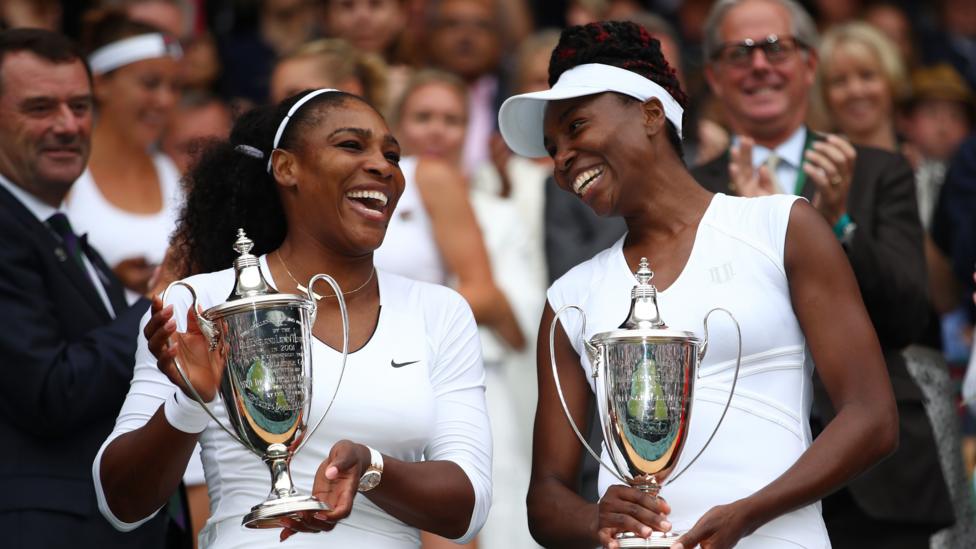
One Last Dance: The Williams Sisters Return to Wimbledon's Grass
Serena and Venus Williams receive a Wimbledon doubles wildcard, reigniting the most iconic sibling partnership in tennis history.

Wimbledon 2026 Day One: Aspartame of the Old Guard and the Hungry Unknowns
Day one at Wimbledon delivers a pay truce, Jodar's meteoric rise, and the familiar tension between tennis tradition and ambition.
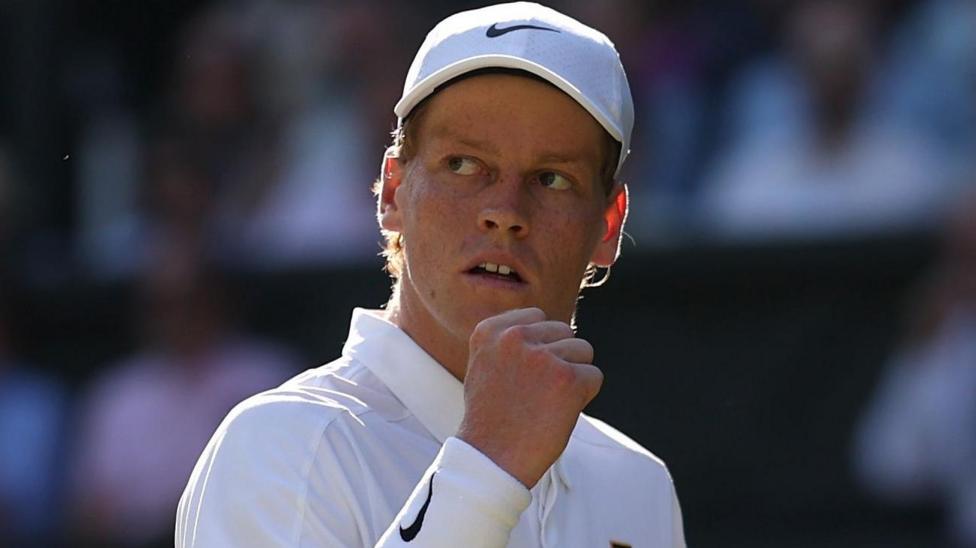
The Quiet Earthquake: Sinner's Relentless Quest to Own Wimbledon
After a stunning French Open exit, Jannik Sinner returns to Wimbledon with a title to defend and a point to prove.