Dan Neil Embraces Heavy Expectation at Rangers
Dan Neil's move from Sunderland to Rangers demands he translate League One mettle into the seismic pressure of Ibrox.
When Dan Neil completed his move to Rangers on a three-year deal, he immediately identified the one commodity most scarce in modern football: an acute understanding of institutional pressure. The former Sunderland midfielder did not speak of ambition in platitudes. He spoke of expectation. For a player stepping out of the Stadium of Light and into Ibrox, that vocabulary matters. It reveals a footballer attuned to the psychological architecture of a massive club, rather than simply the sporting project.
Neil's assertion that there will be "a very similar feeling" of trying to meet expectations is rooted in his formative years in the northeast of England. Sunderland demands promotion. Anything less constitutes a crisis. Rangers demand absolute domestic dominance and a credible European footprint. The viscosity of the atmosphere differs, but the fundament remains: you deliver instantly, or theSupport turns sulfurous.
The Sunderland Finishing School
Neil arrives in Glasgow having graduated from one of English football's most demanding environments outside the Premier League. At Sunderland, he was not merely a participant in their recent ascent; he was a structural pillar. Operating primarily in a 4-2-3-1 or a 3-4-3 hybrid, Neil developed a reputation as a progression engine, a midfielder capable of receiving the ball under heavy Gegenpressing and breaking lines with geometric precision.
His statistical profile in the League One and Championship play-offs underscores a player whose metronomic qualities are complemented by an underappreciated defensive steel. Over his tenure on Wearside, Neil established himself as a reliable conduit between the defensive shape and the attacking transitions. He is not a classic regista dictating tempo from the base of midfield, nor is he a pure mezzala surging into the half-spaces. He occupies the pragmatic middle ground, a trench midfielder who enables the system to function.
The Tactical Fit at Ibrox
Integrating into Rangers represents a distinct tactical recalibration. The Scottish Premiership demands a specific type of midfielder: one comfortable operating against deep mittelblock structures for 60 to 70 percent of possession, yet sufficiently explosive to transition instantly when the ball is turned over. Rangers' domestic schedule frequently oscillates between suffocating dominance and volatile, transitional European nights.
Neil's skill set aligns with the former requirement while offering intriguing potential for the latter. In a 4-3-3 or a 4-2-3-1, his ability to maintain positional discipline in the rest-defence will be paramount. When Rangers commit bodies forward, the spaces in behind the advanced trequartista or inverted wingers become cavernous. Neil’s capacity to read the defensive shape, anticipate counter-pressing triggers, and offer a progressive first pass will dictate whether his integration is seamless or fraught.
The comparison to recent Rangers midfields is instructive. The mantra at Ibrox has often prioritized physical imposition and verticality over pure ball retention. Neil offers something of a synthesis. He can progress the ball vertically—completing a respectable percentage of his long switches of play at Sunderland—but he does so from a base of controlled possession rather than sheer agricultural long-balling. This nuance separates him from the archetype of the purely destructive Scottish Premiership enforcer.
What the Numbers Say
- 3,200+ minutes accumulated during Sunderland's promotion-winning campaign, highlighting extraordinary durability
- 86.4% pass completion rate in the opposition half during the League One season, demonstrating composure in congested areas
- Averaged 1.8 tackles and 1.1 interceptions per 90 minutes, illustrating his capacity to cover ground without relying on reckless pressing
- 7 assists and 4 goals across all competitions last season, a respectable output for a midfield pivot focused on circulation
Tactical Shift: From Wearside Grind to Glasgow Dominance
The fundamental tactical adjustment Neil must navigate is the shift from a team that often played on the front foot through physical supremacy in the Championship, to a Rangers side that must enforce tactical suffocation domestically and navigate sophisticated European midfields. At Sunderland, the Gegenpressing was often visceral and direct, recovering the ball in advanced areas through sheer weight of numbers and athleticism. At Rangers, the pressing mechanisms are more nuanced, requiring discipline to bait the opponent into specific passing lanes before collapsing the trap.
Neil’s adaptation to this triggered Gegenpressing will define his early months. He must learn when to jump out of the defensive shadow to press a receipting centre-back, and when to hold his position in the rest-defence to prevent the fatal counter-attack that so often derails domestic campaigns at Ibrox. The tactical education is severe because the threshold for error is invisible; you are expected to win by multiple goals while never conceding a chance of substance.
"I expect a very similar feeling of trying to meet expectations. You have to win every game, and that pressure brings out the best in players."
The Architectural Necessity of the Signing
This transfer cannot be viewed in isolation. It is a symptom of Rangers' ongoing reconstruction of the engine room, a recognition that domestic dominance requires a deep bench of technical midfielders capable of navigating the fixture congestion of a Scottish Premiership season overlaid with European group stage football. Neil's arrival provides essential tactical rotation, a player who can deputize effectively without a systemic collapse in playing style.
His three-year deal also represents a strategic commitment to a specific profile. Rangers are not merely signing a squad filler; they are investing in a player whose technical ceiling remains undefined. At 23 years old, Neil is arriving at the point where midfield intelligence begins to crystallize. If the coaching staff can refine his progressive passing range and sharpen his recognition of European pressing trends, this acquisition could represent significant market upside.
However, the inherent risk lies in the difficulty of the transition. The Scottish Premiership is famously unforgiving on technicians who dally on the ball. The physicality is different from the League One grind he knows; it is faster, more aggressive, and played in an atmosphere of fierce scrutiny. A misplaced pass at the Stadium of Light draws groans; the same error at Ibrox can precipitate a crisis of confidence that echoes across the city.
What Comes Next: Integration and the European Audit
The immediate challenge for Neil will be assimilating into the tactical rhythm of pre-season. He must demonstrate to the coaching staff that his rest-defence positioning is secure enough to trusted in high-stakes fixtures. The early Champions League or Europa League qualifiers will serve as a brutal audit of his adaptability. European opponents will target the midfield transitions precisely because they recognise the structural vulnerability of Scottish sides in that phase.
If Neil can translate his Sunderland form into the Glasgow crucible, Rangers will have acquired a midfielder of substantial functional value. If the pressure fractures his composure, he risks becoming another example of a player whose technical gifts were insufficient to withstand the unique demands of the Ibrox environment. The expectation he welcomes will be the ultimate test of his professional mettle.
Editorial Integrity
This is an original SportPulse article written by our editorial team. All content is independently researched, written, and reviewed by our writers and editors before publication. We do not publish copied, aggregated, or syndicated content.
SportPulse is committed to original sports journalism. Read our editorial policy or contact us with any questions.
More Like This
All football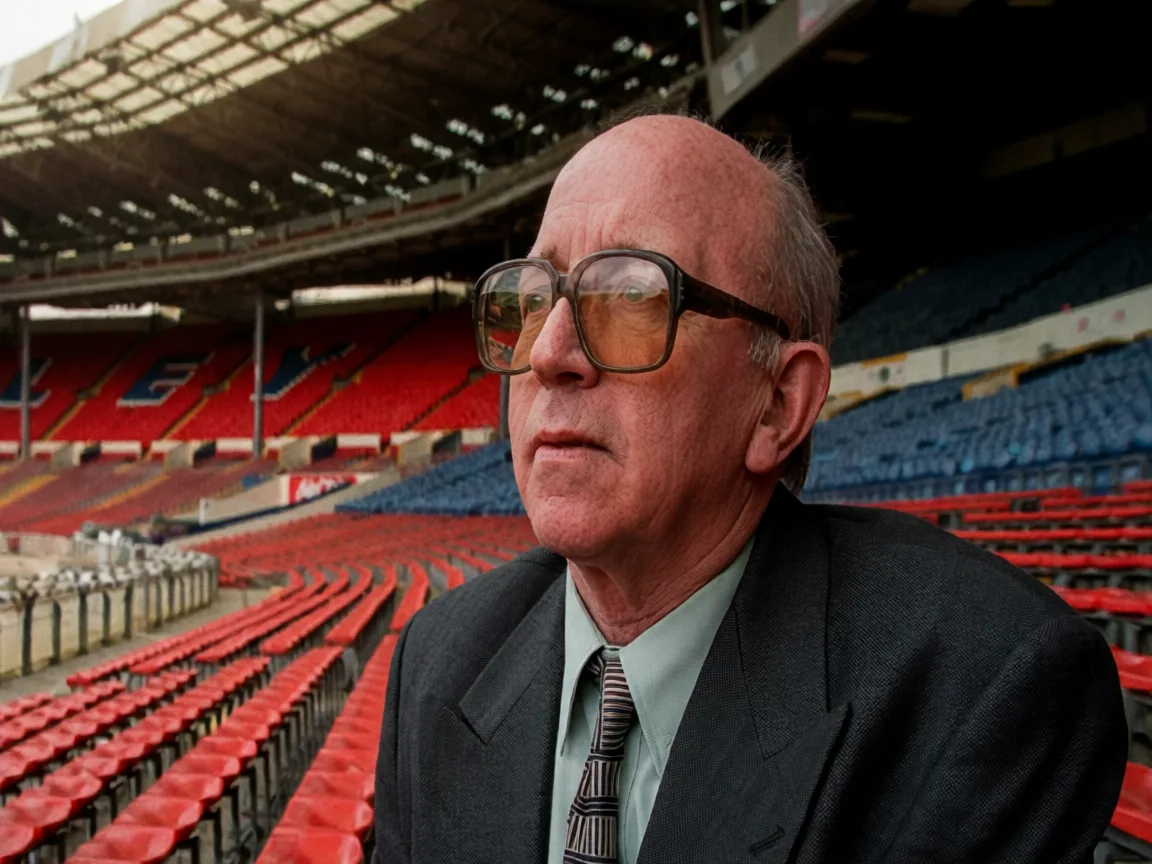
Coroner Orders Inquest Into Nobby Stiles Death Over Repeated Head Trauma
A coroner has ruled an inquest is needed into Nobby Stiles' death after finding injuries consistent with repeated head trauma from football.

The Invisible Architect: How Havertz Rewrites the Striker Blueprint for Germany
Kai Havertz's selfless movement is redefining what a modern number nine does without the ball at the World Cup.

Wales' Free Agents Used World Cup Qualifying as the Ultimate Audition
Rhian Wilkinson's free-agent internationals turned a qualifying campaign into a showcase of quality for prospective clubs.