No Favouritism At World Cups: A Referee Speaks Out
Former World Cup referee Darren Cann dismantls the conspiracy theories that haunt football's biggest tournament from the inside.
The Whisper Campaign
Every four years, the beautiful game turns ugly.
A controversial penalty. A phantom offside. A red card that changes the trajectory of an entire tournament. Within seconds, the narrative takes shape. Not in the stadiums, but in the darker corners of the sporting world where cynicism breeds. The accusations are always the same. FIFA wanted this. The referees were instructed. The system is rigged.
It is a relentless whisper campaign that shadows the World Cup. Fans demand accountability for heartbreak, and the easiest target is the man in the middle. The narrative suggests an invisible hand guiding decisions toward favoured nations. It is a theory that lacks evidence but thrives on emotion.
Darren Cann has heard it all. He has stood on the pitch, felt the heat of the world's gaze, and officiated at the very highest level. He promises there is no favouritism.
"I've been a World Cup official. I promise you there is no favouritism."
To understand the weight of that promise, you must understand the environment. The World Cup is not just a football tournament. It is a geopolitical event wrapped in sporting theatre. Every decision is dissected by billions. The pressure is suffocating. And yet, behind the-scenes, the reality of refereeing is far removed from the conspiracies.
The Preparation Crucible
Conspiracy theories rely on the premise of hidden agendas. They assume referees arrive at tournaments with preconceived notions. The truth is far more mundane and far more gruelling.
Elite referees do not simply show up. They endure years of relentless physiological and psychological screening. Their every decision is catalogued. Their fitness is tracked to the millisecond. By the time a referee reaches the World Cup, they have been stripped of any illusion of invulnerability. They are operating in a high-performance pressure cooker.

Cann's career is a testament to this process. He was part of the officiating team at the 2010 World Cup in South Africa. He was on the line for the infamous final. A match remembered for its brutality. Many point to that final as evidence of incompetence. Fourteen yellow cards. A red card in extra-time. It was a match where control felt elusive.
But incompetence is not favouritism. It is a failure of management. It is human limitation under extreme stress. Cann makes the distinction clear. The officials are not trying to hand an advantage. They are trying to survive the most demanding 90 minutes of their lives.
The Anatomy of an Allegation
Consider the anatomy of a controversial decision. The play happens in a fraction of a second. The referee must process speed, intent, and contact simultaneously. They must filter out the noise of 80,000 screaming fans.
In that moment, there is no room for a predetermined agenda. The cognitive load is too high. The margins are too thin. Yet, when the decision goes against a specific team, the favouritism narrative is instant.
The refereeing crew is meticulously selected and rotated. Their backgrounds are scrutinised. If a referee has any loose connection to a team, they are excluded. The protocol is rigid. There is no back-room where officials are handed scripts.
"We don't wait for the perfect moment. We build the shape that creates the moment."
What the Numbers Say
- 107 minutes: Average active refereeing time in a knockout World Cup match, including stoppages.
- 5 kilometres: Average distance covered by an assistant referee during a single match.
- 40: Number of days referees spend isolated in pre-tournament training camps before the first whistle.
- 0: Number of hard-line directives given to officials regarding specific teams or federations.
The Human Element
The protective layer of professionalism conceals a fragile truth. Referees are human. They make mistakes. They suffer from optical illusions. Their positioning can be compromised by the sheer speed of modern athletes.
When a forward goes down in the box, the referee has a viewing angle. It might be obscured by a defender. It might be distorted by perspective. They make a call based on what they see, not what the high-definition broadcast shows. This is not a conspiracy. It is an inherent flaw of the sport.
Cann's perspective is crucial because it addresses the psychological toll. The accusation of favouritism cuts deep. It attacks the integrity of officials who have sacrificed decades to reach the pinnacle. Most officials are pragmatists. They know they will be vilified. They know a single error can define their legacy. But they do not accept it is deliberate.
Understanding the referee's mindset is key to understanding the fallacy of the conspiracy. A referee's primary goal is not to please a federation. Their primary goal is to end the match with their credibility intact. They want to be anonymous. They want to go home. They want the scrutiny to end.
The fallacy of the agenda ignores this self-preservation instinct. A referee involved in a scandal is a referee whose career is over. They lose their elite status. They face public humiliation. Why would any official risk their livelihood to favour a specific nation? The incentives simply do not align.
Behind the Deal: The Commercial Reality
The favouritism narrative persists because it serves a purpose. It deflects from the inadequacies of a team. It generates engagement. Outrage is a powerful commodity.
The football industry thrives on debate. A controversial decision is replayed endlessly. It drives traffic. It fuels content. The conspiracy is not a genuine belief held by those inside the game. It is a product sold to those on the outside.
The contrast between expectation and reality is jarring. The public sees an official making a high-profile error and assumes malice. The refereeing community sees a colleague dealing with a systemic problem. The pace of the game is outstripping human capability.
The Road Ahead
So where does this leave the World Cup? The sport is in a transitional phase. The introduction of VAR was meant to eradicate the egregious errors. Instead, it has shifted the goalposts of outrage. We now debate millimetres. We dissect the frame rate of offside lines. The conspiracy has simply adapted to new technology.
Cann's plea for sanity is a reminder of the human foundation of the sport. Referees will make mistakes. The system will falter. But attributing these failures to a coordinated conspiracy is a disservice to the game.
The next World Cup will bring new controversies. There will be a decision that sends a nation into despair. The accusations will fly. The integrity of the officials will be questioned. It is a predictable cycle.
But behind the outrage, a small group of officials will be preparing. They will be running fitness tests. They will be reviewing positioning drills. They will be trying to get it right. Not because they are told to. But because their careers depend on it.
The World Cup is a theatre of dreams. It is also a theatre of human error. Understanding the difference is the first step toward reclaiming the narrative. There is no grand design. There is only the game. And the people trying to keep up with it.
Editorial Integrity
This is an original SportPulse article written by our editorial team. All content is independently researched, written, and reviewed by our writers and editors before publication. We do not publish copied, aggregated, or syndicated content.
SportPulse is committed to original sports journalism. Read our editorial policy or contact us with any questions.
More Like This
All football
Beckham Won America Without Kicking a Ball
David Beckham's omnipresence at the World Cup exposes a commercial dominance no British athlete has ever achieved on US soil.

England's World Cup Quarter-Final History: A Tactical Audit
Norway become England's 11th distinct World Cup quarter-final opponent. We dissect the tactical evolution across all ten previous foes.
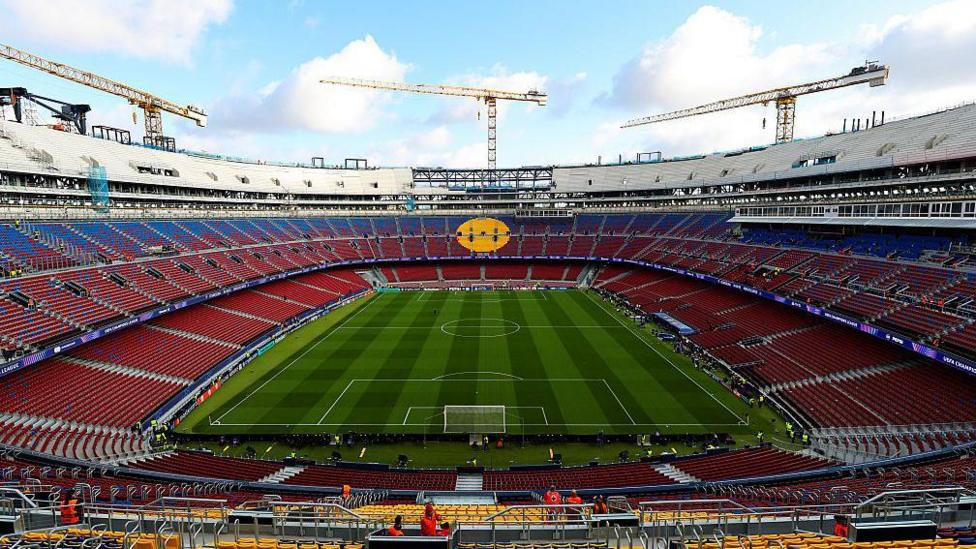
Worker dies at Nou Camp as Barcelona face questions over renovation
A worker's death during Nou Camp renovations exposes the human cost of Barcelona's ambitious stadium rebuild project.