Sullivan's Hidden Restrictions: What the FA Probe Means for West Ham
West Ham's co-owner has been under safeguarding restrictions since 2023 — and only now does the football world know.
For three years, a quiet arrangement has existed behind the polished doors of West Ham United. David Sullivan, the club's co-owner and one of the most powerful figures in English football's ownership landscape, has operated under restrictions that limited his access to the very people who represent the future of the east London institution.
Since 2023, Sullivan has been barred from unrestricted contact with West Ham's women's and youth teams. The reason? A safeguarding investigation launched by the Football Association after a complaint was received — one that, according to the Guardian, involves an allegation of sexual misconduct unrelated to football.
The existence of the arrangement, described by sources as a "temporary agreement," had not been publicly disclosed until now.
The Agreement No One Knew About
What makes this story so extraordinary is not just the nature of the allegation. It's the silence.
For three full seasons of Premier League football, through transfer windows, managerial changes, and boardroom decisions, this safeguarding arrangement has been in place. The women's team has competed in the Women's Super League. Youth prospects have graduated through the academy system. Supporters have cheered. Sponsors have written checks.
And throughout it all, one of the two men who controls the purse strings has been operating under a formal restriction on who he can and cannot be around at his own club.
The agreement was described as "temporary," but three years is hardly temporary. That's a full presidential cycle. A complete World Cup qualifying cycle. Enough time for an entire generation of academy players to come and go.
What We Know — And What We Don't
The facts, as they stand, are deliberately limited. The FA opened its inquiry after receiving a complaint. The allegation concerns sexual misconduct. It is understood to be unrelated to football activities — a distinction that matters enormously in legal and procedural terms, though it will do little to quiet the unease among West Ham's community.
Sullivan, 76, has been co-owner of West Ham since 2010, when he and David Gold purchased a controlling stake in the club. Gold passed away in January 2023, leaving Sullivan as the dominant voice in the boardroom. He has since sold a significant portion of the club's shares to Czech billionaire Daniel Kretinsky, who became the majority shareholder.
"The safeguarding of young people and vulnerable adults is the single most important responsibility any football club carries. There can be no compromise on that." — A senior FA safeguarding official, speaking previously on the governing body's general framework
Neither the FA nor Sullivan's representatives have confirmed the specific nature of the complaint. West Ham have declined to comment publicly. The investigation, crucially, has not concluded. No charges have been brought. No formal findings have been published.
But the very existence of a restrictions agreement tells its own story. The FA doesn't impose or negotiate safeguarding measures lightly. For a "temporary agreement" to persist for three years, the investigation must be substantive enough to justify ongoing precautionary action.
The Safeguarding Landscape in English Football
This story arrives at a moment when English football's safeguarding infrastructure is under more scrutiny than ever.
The Sheldon Review, published in 2021, laid bare decades of institutional failure in protecting children within the sport. It documented 692 alleged perpetrators and 240 clubs implicated in cases of non-recent abuse. The fallout led to sweeping reforms in how clubs manage background checks, staff training, and access protocols for youth environments.
Against that backdrop, the FA's decision to restrict a club owner — even informally — represents an extraordinary step. Owners sit at the apex of a club's power structure. They are not coaches or scouts who can be quietly reassigned. They are the people who sign off on budgets, approve contracts, and shape the culture from the top.
The fact that West Ham's safeguarding apparatus has continued to function under these conditions raises uncomfortable questions:
- Who within the club knew about the restrictions, and when?
- Were the women's team's players and staff informed?
- Were parents of academy players made aware?
- How was the arrangement monitored and enforced over three years?
These are not idle questions. They go to the heart of what safeguarding means in practice — not just on paper.
West Ham's Women's Team: The Overlooked Stakeholders
There is a particular poignancy to the involvement of West Ham's women's team in this narrative.
The women's game in England has experienced explosive growth. The WSL has seen record attendances, landmark broadcast deals, and a cultural shift that has moved women's football from the margins to the mainstream. West Ham's women's side, competing in the top flight, has been part of that journey.
For players and staff in that environment, the idea that their club's co-owner has been under safeguarding restrictions — restrictions specifically involving contact with their team — is deeply unsettling. These are professionals who deserve to operate in environments free from ambiguity about who has access and why.
"Every player has the right to know they are in a safe environment. Every parent who sends their child to an academy deserves that assurance. That's non-negotiable." — A former WSL safeguarding officer
The women's team has not been a peripheral concern at West Ham. They train at the club's facilities. They represent the badge. They are West Ham. Any safeguarding arrangement that touches them demands transparency.
The Academy Question
If the women's team angle is unsettling, the youth academy dimension is potentially devastating.
West Ham's academy has been one of the club's proudest institutions. From Rio Ferdinand to Joe Cole, Frank Lampard to Declan Rice, the production line has delivered players who defined eras at the highest level. More recently, Jarrod Bowen and others have carried the academy's reputation forward.
Academies are, by definition, environments filled with children and young adults. They are places where trust is currency — trust between families and the club, between players and the adults who oversee their development.
A safeguarding restriction on the club's owner that specifically limits contact with youth teams is precisely the kind of information that parents and guardians would expect to know. Whether they were told — and how they were told — will be a critical part of the story as it develops.
The Daniel Kretinsky Factor
One of the more intriguing subplots involves majority shareholder Daniel Kretinsky, who has steadily increased his stake in the club.
Kretinsky's growing influence has already shifted the power dynamics at the London Stadium. If the FA investigation reaches a conclusion that involves formal sanctions or recommendations, the Czech businessman may find himself in a position where decisive action is needed to protect the club's reputation and its commercial relationships.
Sponsors and broadcast partners are increasingly sensitive to governance issues. The Premier League's own Owners' and Directors' Test includes provisions related to conduct, though it remains to be seen whether a safeguarding investigation — one involving an allegation unrelated to football — would trigger that framework.
The commercial reality is stark. West Ham compete in a market where reputation matters as much as results. Any prolonged governance controversy risks damaging relationships that fund everything from transfer budgets to academy infrastructure.
What Happens Next
The FA investigation continues. That much is confirmed. What is less clear is the timeline for resolution.
Safeguarding investigations of this nature can be painfully slow. They involve the gathering of evidence, the interviewing of witnesses, and the careful legal maneuvering that accompanies any case involving serious allegations. The FA must balance the rights of the individual under investigation with its overriding duty to protect vulnerable people within the game.
For West Ham, the immediate challenge is managing the fallout from this disclosure. The club must communicate clearly with its stakeholders — players, staff, parents, sponsors, and supporters — about what protections have been in place and what they can expect going forward.
"Clubs that handle these moments with transparency and integrity emerge stronger. Those that don't pay a price that extends far beyond the pitch." — Football governance analyst
For Sullivan, the path forward is uncertain. The investigation will reach its conclusion eventually. Until then, the restrictions remain. The silence continues. And a football club carries the weight of questions it has never publicly answered.
The Broader Reckon
This story is not just about David Sullivan. It is about the structures of accountability in English football.
Owners operate with extraordinary power and, historically, extraordinary secrecy. The relationship between club governance and safeguarding has never been stress-tested quite like this. A co-owner under investigation. A temporary agreement lasting three years. A women's team and youth academy at the center.
English football has spent the better part of a decade reckoning with its safeguarding failures. This case, whatever its outcome, will test whether those reforms have created a system capable of holding even the most powerful figures to account.
The football world will be watching. West Ham's supporters will be watching most closely of all.
Editorial Integrity
This is an original SportPulse article written by our editorial team. All content is independently researched, written, and reviewed by our writers and editors before publication. We do not publish copied, aggregated, or syndicated content.
SportPulse is committed to original sports journalism. Read our editorial policy or contact us with any questions.
More Like This
All football
BBC's Atlanta Gamble: Tuchel, England, and a Record-Breaking Broadcast
BBC uproots from Salford to Atlanta as England's semi-final against Argentina threatens to shatter ITV's 18m peak.
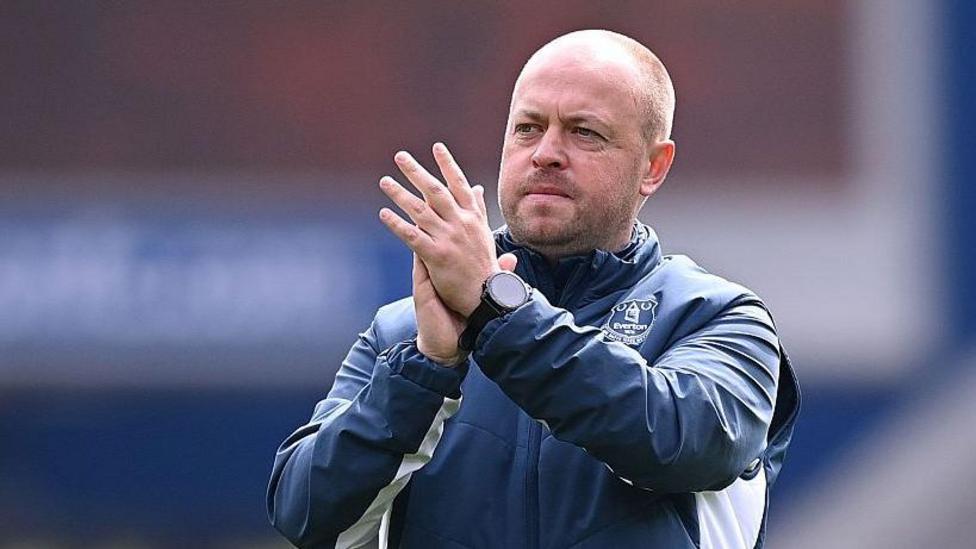
Phelan Permanent: Everton End Managerial Limbo
Everton Women remove the interim tag, handing Scott Phelan the permanent reins after a stability-defining caretaker spell.

Messi Equals Klose's Record as Mbappé Closes In on World Cup Goal Crown
Lionel Messi's hat-trick against Algeria ties Miroslav Klose's all-time record, with Kylian Mbappé lurking just two behind.