Messi Equals Klose's Record as Mbappé Closes In on World Cup Goal Crown
Lionel Messi's hat-trick against Algeria ties Miroslav Klose's all-time record, with Kylian Mbappé lurking just two behind.
The Race No One Expected to Be This Close
There was a time, not so long ago, when the idea of anyone threatening Miroslav Klose's 16-goal World Cup record seemed fanciful. The German striker accumulated his tally across four tournaments between 2002 and 2014, a monument to longevity and clinical finishing in the most pressurised environment the sport has to offer. It felt like one of those records that would stand for decades, perhaps a generation.
Then Lionel Messi happened.
Argentina's opening fixture of the 2026 World Cup against Algeria was supposed to be a routine group-stage exercise. What it became was a coronation. Messi's hat-trick in a commanding 3-0 victory didn't just seal three points for the defending champions; it catapulted him level with Klose on 16 career World Cup goals. At 38 years old, playing what is almost certainly his final tournament, the Inter Miami forward has the record within touching distance. One more goal and the crown is his alone.
But this is not a one-man procession. Across the tournament bracket, Kylian Mbappé is doing what Mbappé does best: making everything about pace, power, and inevitability. His brace against Senegal in France's opening match brought his career World Cup tally to 14 goals, putting him just two behind Messi and firmly in the hunt. The torch has not been passed. It is being fought for in real time.
How Messi Got Here
To appreciate the magnitude of what Messi achieved against Algeria, context is essential. He arrived in Qatar in 2022 with seven World Cup goals from four previous tournaments, a respectable haul but hardly the stuff of all-time records. What followed was a transformation: seven goals across that tournament, including a brace in the final against France, lifting him to 13 and within striking distance of Klose.
Three more have now come in one afternoon in 2026. The clinical nature of the hat-trick was notable. Messi's goals have always carried a certain aesthetic weight, but the opener against Algeria was a study in positional intelligence. He drifted into the half-space between Algeria's centre-back and right-back, received a disguised pass, and finished with the kind of low, placed effort that goalkeepers read a fraction too late. The second was a penalty, converted with the economy of a man who has taken hundreds. The third, a sweeping counter-attack finish, sealed a performance of ruthless efficiency.
Lionel Scaloni's tactical setup deserves mention here. Argentina operated in a fluid 4-3-3 shape that allowed Messi to conserve energy in defensive phases while positioning him high and central during transitions. The system is built around the principle that Messi's movement creates gravitational pulls: defenders shift toward him, opening channels for runners. It worked to devastating effect against Algeria, whose defensive block was stretched beyond its structural limits.
Mbappé's Unstoppable Trajectory
If Messi's record chase feels like a career coda, Mbappé's pursuit is something different entirely: a statement of intent from a player who has been on this stage since he was 19 years old. His World Cup debut in 2018 produced four goals, including that electric brace against Argentina in the round of 16. Four years later in Qatar, he added another eight, including a hat-trick in the final itself, even as France fell on penalties.
That gives him 14 goals in what amounts to just two completed tournaments and now one match of a third. The rate is staggering. Where Klose needed 24 matches to reach 16, Mbappé is averaging nearly a goal per game across his World Cup career. His double against Senegal was vintage Mbappé: a header from a whipped cross exploiting his extraordinary leap, followed by a breakaway finish that left the Senegalese backline gasping.
Didier Deschamps deployed France in a 4-2-3-1 with Mbappé nominally on the left but with licence to drift centrally and combine with the number nine. The tactical framework is less about positional rigidity and more about creating one-on-one situations for Mbappé in transition. When France win the ball high, the first pass almost always seeks him. Against Senegal, it worked twice. Against better organised defences, the question will be whether France can sustain this supply line or whether Mbappé needs to manufacture his own opportunities.
The Historical Context
The all-time World Cup goalscoring list reads like a who's who of tournament football:
- Miroslav Klose (Germany): 16 goals in 24 matches across 2002-2014
- Lionel Messi (Argentina): 16 goals in 20 matches across 2006-2026
- Kylian Mbappé (France): 14 goals in 15 matches across 2018-2026
- Ronaldo (Brazil): 15 goals in 19 matches across 1998-2006
- Gerd Müller (Germany): 14 goals in 13 matches across 1970-1974
What stands out immediately is efficiency. Gerd Müller's 14 goals in 13 matches remains the gold standard for conversion rate, but Mbappé is not far behind. Messi's numbers, meanwhile, reflect a different trajectory: modest returns in his early tournaments, followed by an extraordinary late-career surge that defies conventional ageing curves.
Klose himself accumulated his record through consistency rather than prolific bursts. He never scored more than five goals in a single tournament, relying on reaching four World Cups and rarely failing to find the net. It was a model built on availability and positional nous, qualities that Messi and Mbappé share but augment with creative brilliance and athletic dynamism respectively.
Tactical Shift: How Scaloni Built a System Around Messi's Decline
One of the underappreciated subplots of this record chase is how Lionel Scaloni has restructured Argentina's tactical identity to accommodate Messi's reduced physical output. In Qatar, the midfield trio of Rodrigo De Paul, Enzo Fernández, and Alexis Mac Allister provided the pressing intensity and ball progression that Messi could no longer deliver consistently. The system asked Messi to walk more, sprint less, and arrive in the final third fresh rather than exhausted.
Against Algeria, that model was on full display. Argentina's pressing triggers were set to activate in the middle third, with Messi exempt from the initial press. His defensive contribution was limited to occupying passing lanes rather than engaging in direct duels. The result was a player who looked energised in the attacking phase, making the kind of darting runs that had become rarer in recent seasons. Scaloni's willingness to sacrifice collective intensity for individual brilliance has been vindicated repeatedly, and it may yet deliver the all-time record.
What This Means for the Tournament
The implications extend beyond personal milestones. Argentina and France are widely considered among the favourites to lift the trophy, and their respective talismans are in form. For Argentina, Messi equalling and potentially breaking the record adds a narrative layer that can either galvanise a squad or distract it. Scaloni's ability to manage that emotional weight will be tested as the tournament progresses.
For France, Mbappé's pursuit is more straightforward. He has always played with a scorer's hunger, and the prospect of overtaking both Messi and Klose in a single tournament would represent a defining achievement. The tactical question is whether Deschamps trusts his supporting cast to create enough. Against Senegal, the supply was adequate. Against a low-block defence in the knockout rounds, it may not be.
The broader picture is one of generational transition. Messi at 38 and Mbappé at 27 represent opposite ends of the World Cup lifecycle. One is chasing history on the way out; the other is building it on the way up. That they are doing so simultaneously, separated by just two goals, is one of the most compelling individual narratives the tournament has produced.
Looking Ahead
Argentina face their next group fixture knowing that a single Messi goal would make history. The opposition and tactical setup will determine whether Scaloni continues to build the system around his captain's positioning or whether the record arrives from a set piece, a penalty, or a moment of individual genius.
France, meanwhile, will be watching. Mbappé needs three goals to draw level with Klose's old mark and four to match whatever Messi ultimately reaches. Given his rate of production, that is entirely plausible before the knockout rounds begin.
The World Cup has always been football's grandest stage for individual brilliance within collective effort. In 2026, two of the finest forwards of their respective generations are writing their final chapters on it, one goal at a time. The record book is about to change hands, and the only question is whose name will be inscribed at the top when the tournament reaches its conclusion.
Update:
新增梅西第200次国家队出场的细节。
Editorial Integrity
This is an original SportPulse article written by our editorial team. All content is independently researched, written, and reviewed by our writers and editors before publication. We do not publish copied, aggregated, or syndicated content.
SportPulse is committed to original sports journalism. Read our editorial policy or contact us with any questions.
More Like This
All football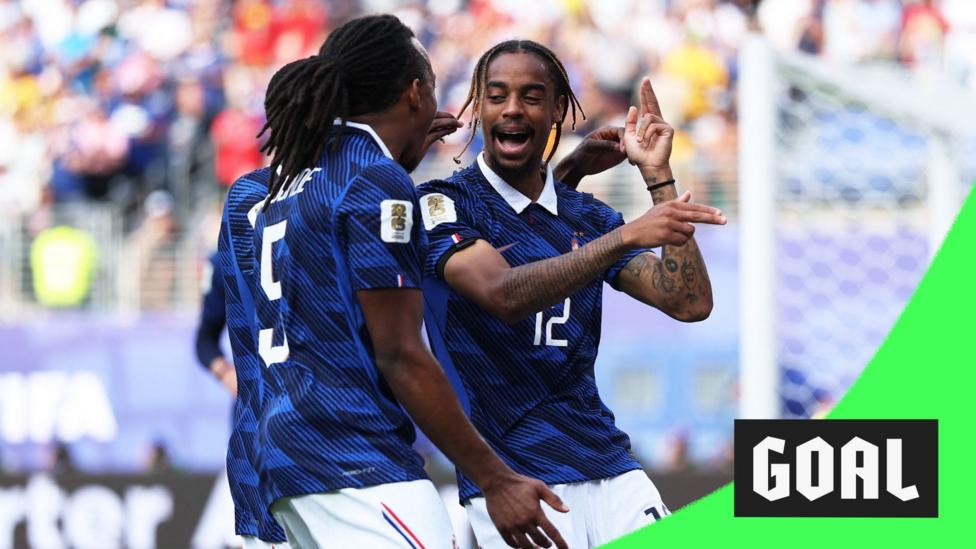
Barcola Erases Doubts as France Double Sweden
Bradley Barcola's emphatic finish puts France in control of their World Cup last-32 clash against Sweden.
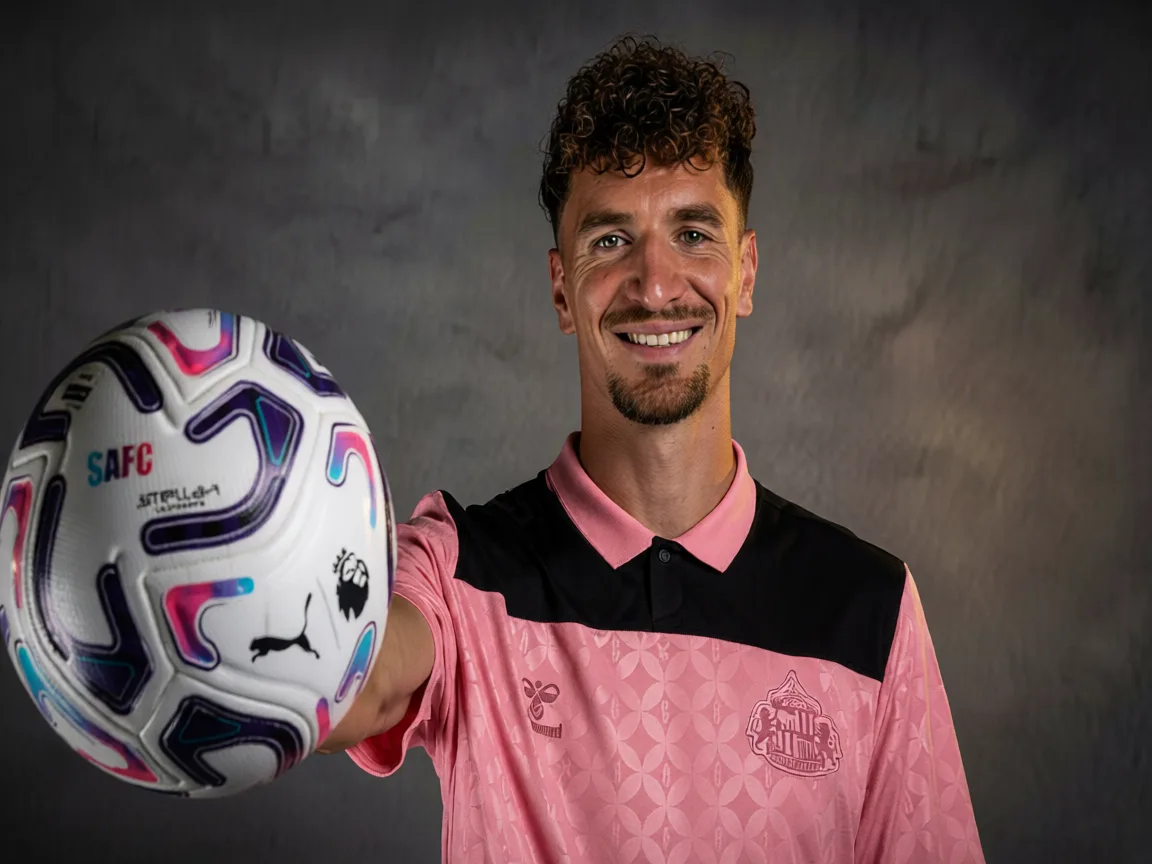
Sunderland Pull Off Coup Landing Belgium's Thomas Meunier
Sunderland secure Belgian international Thomas Meunier on a free transfer, bringing World Cup pedigree to the Championship promotion push.
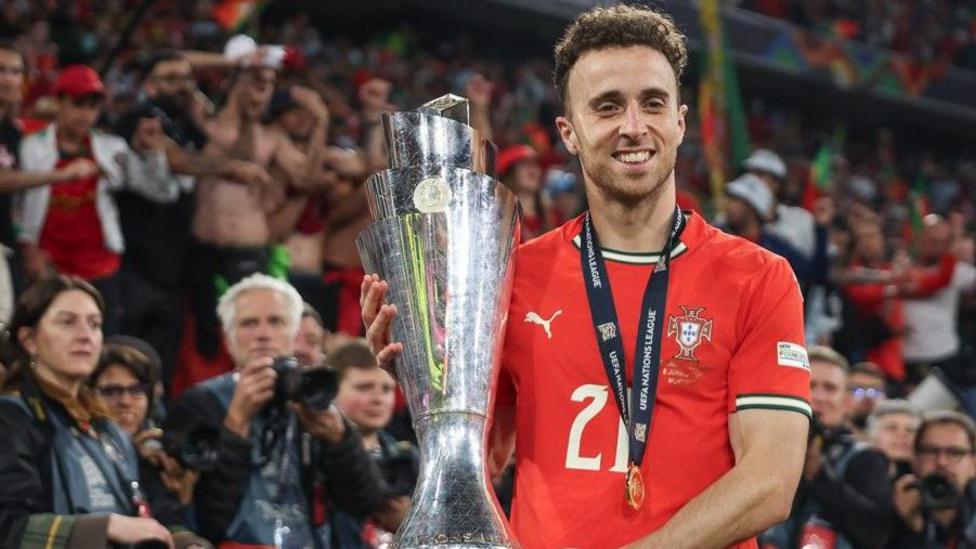
Portugal Carry Diogo Jota's Memory Into World Cup Mission
One year after Diogo Jota's passing, Portugal channel grief into a collective mission to lift the 2026 World Cup.