The Metamorphosis of Declan Rice: From Released Prodigy to England's Tactical Anchor
Released by Chelsea, forged at West Ham, and refined by Arteta, Declan Rice enters the World Cup as England's vice-captain and complete midfield architect.
When Declan Rice walked into a Soho House event three years ago, he carried the burden of a European semi-final on his shoulders yet remained genuinely baffled by the audience's fascination. The room was dense with marketing directors and CEOs, all eagerly awaiting insights on effective leadership from a footballer who was still, in his own mind, just an everyman trying to navigate the elite tiers of the sport. Why him? What made him so special? That authentic bewilderment is precisely what defines Rice. He does not posture as a leader; he simply operates as one. Now, entering the World Cup as England's newly appointed vice-captain and fresh off securing the Premier League title with Arsenal, the 27-year-old has completed a tactical and psychological metamorphosis that ranks among the most fascinating in modern English football.
The Forgetting at Chelsea and the Forging at West Ham
To understand the midfielder's current operational capacity, one must first examine the foundational trauma of his release from Chelsea at age 14. It is a well-documented scar, but its tactical implications are rarely unpacked. Rejection by a club obsessed with perceptual vastness and technical precocity forced Rice into an environment at West Ham United where physical robustness and defensive diligence were non-negotiable prerequisites for survival. Under the scrutinizing gaze of the east London setup, Rice did not merely learn to tackle; he internalized a philosophy of retrieval.
At West Ham, his role within the 4-2-3-1 was rigidly defined. He was the wrecker, the primary ball-winner positioned in the lower half-spaces, tasked with breaking up opposition transitions and handing possession to more technically adorned teammates. It was an education in spatial awareness and defensive positioning, but it also constrained his conceptual horizon. He became exceptional at regaining the ball, yet the question of what happened next lingered. He was a pivot, not an architect. His perceived ceiling was that of a defensive shield, an elite Destroyer capable of covering ground at an elite rate, but fundamentally limited in his creative projection.
The Arteta Refinement: Operational Freedom in North London
Mikel Arteta's acquisition of Rice was not merely a transfer; it was a tactical re-education. The £105 million fee demanded an evolution beyond the static parameters of a traditional 6. At Arsenal, Rice was introduced to a system where possession is not a passive state but an aggressive, positional weapon. Arteta tasked him with mastering the inverted left-back overlap, requiring the midfielder to assess when to hold the line and when to surge into the final third.
The shift from David Moyes's defensively conservative 4-2-3-1 to Arteta's fluid, possession-dominant 4-3-3 unlocked Rice's latent capabilities. Suddenly, the player who was once told he lacked the technical sophistication for a top-six academy was executing line-breaking passes under high pressure, dictating the tempo from deep, and arriving in the penalty area with the timing of a seasoned second striker. His role within Arsenal's right-side rest-defence, shielding while the ball circulated on the opposite flank, showcased an elevated tactical intelligence and a mature understanding of when to press and when to hold.
The Statistical面elevation
- 7 goals and 8 assists in the league campaign, obliterating his previous seasonal outputs
- 2.3 interceptions per 90 minutes, maintaining his elite ball-winning standard while dramatically increasing his offensive output
- 89.4% pass completion rate, a figure that places him among the most reliable progressive distributors in the division
Tactical Shift: From Ball-Winner to Complete Controller
The definitive transformation occurred not through a single match, but through a systematic positional recalibration during Arsenal's title-winning campaign. Earlier in the season, Rice operated predominantly as a left-sided 8 in a 4-3-3, offering underlapping runs and congesting the half-spaces. Yet as the stakes heightened and fixtures accumulated, Arteta rotated him into the primary 6 position, demanding he orchestrate the play from the base.
This was the inflection point. No longer was Rice merely the safety valve; he became the launchpad. His ability to receive the ball on the half-turn, bypass the first line of pressure, and execute diagonal switches to the advancing full-backs gave Arsenal a structural control they had previously lacked. The tactical shift was profound: a midfield engine designed purely for combustion was now generating the electricity for the entire tactical grid. His pressing metrics shifted from reactive to proactive, engaging opponents higher up the pitch and forcing turnovers in zones that immediately translated to goal-scoring opportunities.
"I never saw myself as just a destroyer. I always wanted to affect the game at both ends. The manager gave me the permission and the structure to do that." — Declan Rice
The Everyman Leader in Tuchel's System
Thomas Tuchel's decision to appoint Rice as England's vice-captain is a nod to both his peripheral calm and his central intensity. The German manager values midfielders who can execute controlled pressing and maintain structural integrity during transitions. Rice offers precisely that, but his leadership operates on an entirely different wavelength. It is not the raucous, chest-thumping variety; it is empathetic, connective, and deeply authentic.
Three years ago, he sat in a room of corporate executives, genuinely uncertain of why they wanted to listen. That humility resonates in a dressing room populated by egos and anxieties. Whether he is returning to his old school to engage with awestruck children or organizing a high defensive line under extreme World Cup pressure, Rice remains consistently grounded. This psychological stability is a crucial tactical asset, ensuring England's midfield spine does not fracture under duress.
World Cup Outlook: The Primacy of the Double Pivot
As England prepare for the World Cup, Tuchel faces a fascinating construction project. Rice's versatility allows for multiple midfield configurations, but the optimal deployment will likely mirror his Arsenal responsibilities. In a 4-2-3-1 or a 3-4-3 conversion, Rice will anchor the left side of a double pivot, tasked with covering the advanced runs of his partner while initiating the first phase of build-up.
The tactical intrigue lies in his partnership selection. Pairing him with a pure ball-retainer risks exposing his defensive vulnerabilities on the counter, while partnering him with another aggressive presser could compromise England's shape. Tuchel must find the balance that allows Rice to operate in his optimal zone, breaking lines with his carrying ability and screening the back four when possession is lost. His role as vice-captain further cements his status as the on-field executor of Tuchel's tactical will, a leader by presence and action rather than mere vocal decree. The boy released by Chelsea has become the man England cannot live without.
Editorial Integrity
This is an original SportPulse article written by our editorial team. All content is independently researched, written, and reviewed by our writers and editors before publication. We do not publish copied, aggregated, or syndicated content.
SportPulse is committed to original sports journalism. Read our editorial policy or contact us with any questions.
More Like This
All long-reads
England's Bomb Squad Bet: Can Youth Fire in Johannesburg's Final Quarter?
Jamie George trusts inexperienced forwards to out-South Africa South Africa in the closing stanza at Ellis Park.
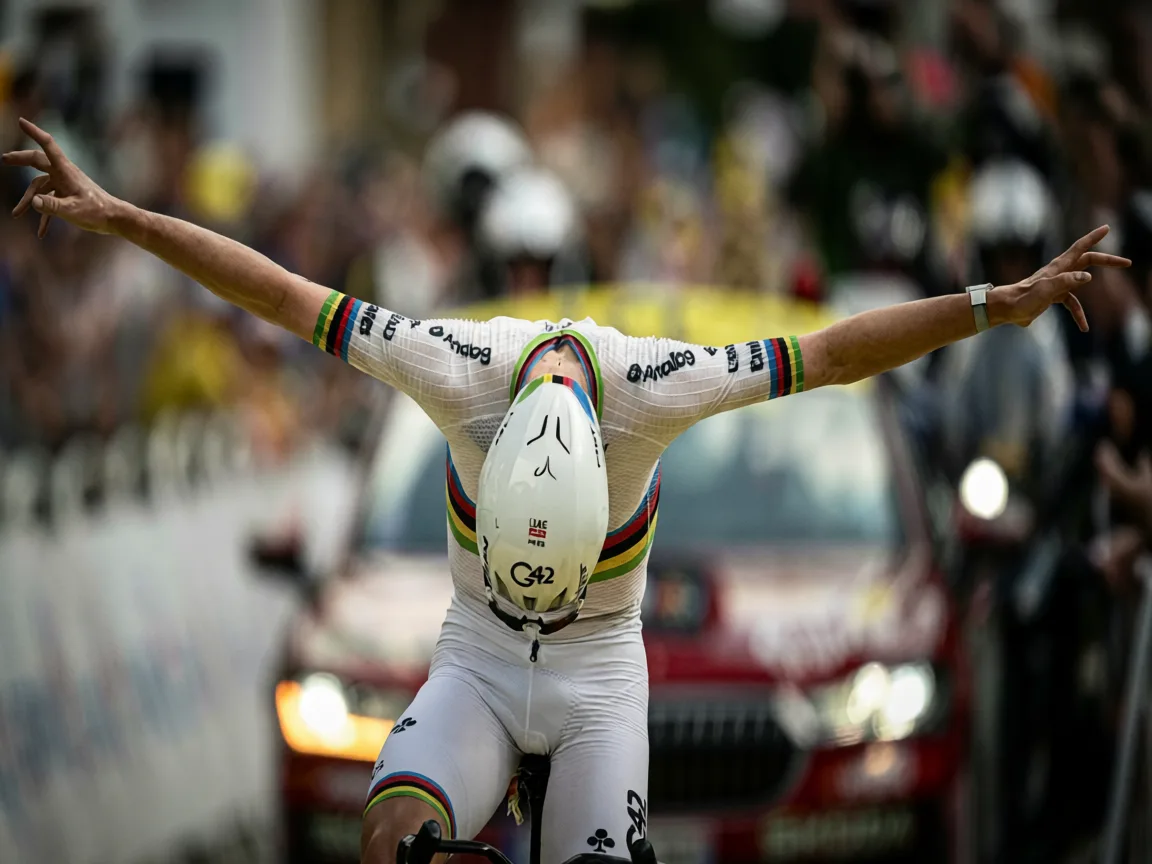
Pogacar Conquers Tourmalet as Rivals Crumble
Tadej Pogacar delivered a Tourmalet masterclass, reclaiming yellow and moving within sight of a record-equalling fifth title.
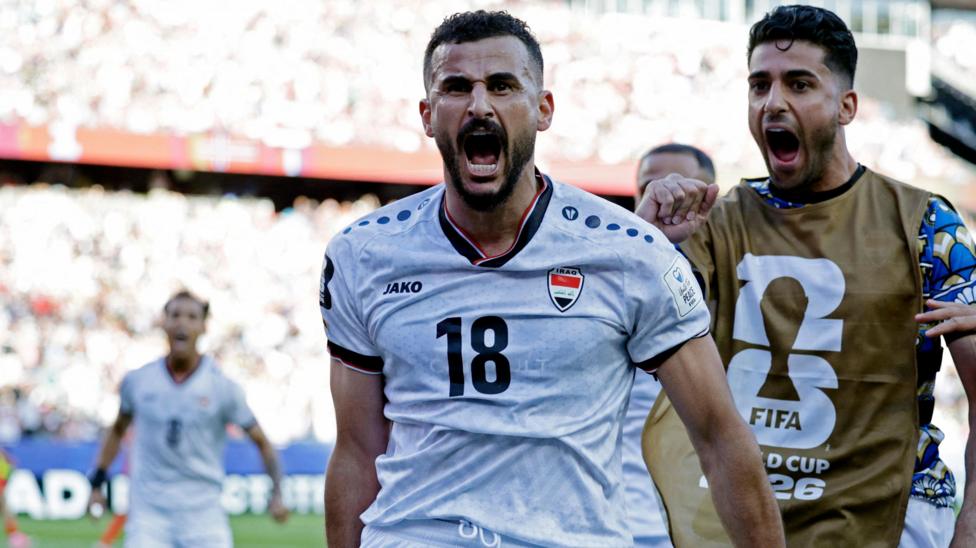
Aymen Hussein: The Striker Forging Iraq's World Cup Dream From Tragedy
Aymen Hussein’s journey from devastating personal loss to firing Iraq toward World Cup qualification is a masterclass in resilience.