The Last Dance on Grass: Djokovic's Twilight Hunt for 25
At 39, Novak Djokovic arrives at Wimbledon knowing this may be his final realistic shot at Grand Slam history.
Iron Sharpens Iron
There is something almost ceremonial about Novak Djokovic walking onto the grass at Aorangi Park for the 21st time. The boots know the ground. The body, now 39 years old, knows the choreography. He stretched, sparred, moved through drills with the kind of deliberate patience that only comes from decades of professional repetition. Then he stepped onto No 1 Court and hit with Jannik Sinner, the world No 1, and the scene crystallized into something more than a practice session. It was a collision of eras, the old master and the young king, trading forehands across a net that separates generations.
But Djokovic’s preparation this fortnight has been driven by more than just personal legacy. As he continued his buildup, the 39-year-old revealed that the return of 44-year-old fellow seven-time singles champion Serena Williams has put an extra spring in his step.
“What she’s doing is inspirational and it’s epic,” Djokovic said. “That’s what I told her. I always admired her career, her journey, her story. Of course, Venus, as well.”
The parallel between the two legends—both defying biological timelines to remain at the pinnacle of their sport—has added a layer of narrative depth to his Wimbledon campaign. Djokovic, who will join Roger Federer on eight titles if he wins this year, draws energy from watching Williams battle back onto the grass courts she once dominated.
Djokovic is seeded seventh at Wimbledon this year. Seventh. For a man who once seemed to exist above the concept of seeding altogether, who held all four Grand Slam titles simultaneously, who rewrote every meaningful record in men's tennis, the number is both humbling and irrelevant. Seeds are for bracket predictions. Djokovic plays for legacy.
The Math of Mortality
The arithmetic is stark. Djokovic owns 24 Grand Slam singles titles, tied with Margaret Court for the all-time record across all of tennis. One more and he stands alone in a place no man or woman has ever stood. But the window is not merely closing. It is nearly shut.
At 39 years and 51 days old when Wimbledon begins, he would become the oldest Grand Slam singles champion in the Open Era by a significant margin. The current record belongs to Roger Federer, who was 36 when he won the 2018 Australian Open. Ken Rosewall was 37 when he reached the 1974 US Open final. No one has seriously contended for a major title in their late 30s the way Djokovic continues to do.
His body has betrayed him in increments. A knee injury forced him to withdraw from the 2024 French Open. He has spoken openly about the toll of recovery, about mornings that feel different than they did a decade ago. But Djokovic has always been the player who defied biology through preparation, through diet, through an almost monastic devotion to the craft of physical maintenance. The question is no longer whether he can compete at the highest level. It is whether he can do it for 14 matches across two weeks without his body failing him at the critical moment.
Why Grass Changes the Equation
This is where Wimbledon becomes not just another chapter but potentially the final, definitive one.
Grass-court tennis rewards the exact attributes that age has least eroded in Djokovic's game. The surface produces quicker points. The ball stays low. Returns, always Djokovic's greatest weapon, become even more lethal on a surface that skids through the strike zone. His serve, while never the thunderbolt that defined Federer or Pete Sampras, gains effectiveness on grass because the surface amplifies movement rather than neutralizing it.
Compare this to Roland Garros, where rallies extend into brutal wars of attrition, where Carlos Alcaraz and Sinner can grind opponents into red dust over five sets. On clay, Djokovic's body is asked to absorb punishment for hours. On grass, he can dictate tempo. He can shorten points. He can play the percentages with surgical precision and trust that his return game will hand him free points that other players must earn.
Seven Wimbledon titles already sit in his collection. Only Federer, with eight, has more. Djokovic has won the tournament in 2011, 2014, 2015, 2018, 2019, 2021, and 2022. He knows every blade of Centre Court grass. He has stood on that podium so many times that the trophy engraver likely has his name muscle-memorized.
"I don't think about age when I step on the court. I think about tactics. I think about the next point. Age is a number that other people care about more than I do." — Novak Djokovic, speaking ahead of the 2026 tournament
The Sinner Problem
But Djokovic does not exist in a vacuum. Across the net stands a new generation that has already proven it can beat him when it matters most.
Jannik Sinner, the world No 1, arrives at Wimbledon with his own unfinished business. His shocking loss at the French Open, where he was considered the overwhelming favorite, left a mark. The Italian will be desperate to prove that result was an anomaly rather than a crack in his armor. His game translates beautifully to grass: the flat groundstrokes, the explosive movement, the serve that has become one of the most reliable weapons on tour.
Sinner has won two Grand Slam titles and has held the No 1 ranking with an authority that suggests he intends to keep it. His head-to-head against Djokovic has shifted decisively in recent years. Where Djokovic once dominated the matchup with the psychological edge of a champion who refused to lose to younger rivals, Sinner has dismantled that mystique with clinical victories.
Their practice session together on No 1 Court was telling. Both men hit with intensity. Neither conceded an inch. It was competition disguised as preparation, and it set the tone for what could be a defining fortnight.
Career by Numbers
- 24 Grand Slam singles titles (tied all-time record with Margaret Court)
- 7 Wimbledon titles (second all-time behind Federer's 8)
- 428 weeks spent as world No 1 (all-time record)
- 39 Grand Slam finals appearances
- 99 career singles titles overall
- 1 Olympic gold medal (2024 Paris)
- 0 Grand Slam titles won since the 2023 US Open
That last number is the one that haunts. Djokovic has not lifted a Grand Slam trophy since New York in September 2023. He reached the Wimbledon final in 2024 but lost to Alcaraz. He has been close. He has been right there. But close does not engrave your name on silverware.
The Psychology of the Pursuit
There is a particular kind of pressure that comes from chasing history in the twilight. Djokovic has spent his entire career absorbing pressure, channeling it, using it as fuel. He turned hostile crowds into motivation. He turned match points against him into victories that defied probability. He turned the narrative of the underdog, the third man in a two-man rivalry, into the most decorated career the sport has ever seen.
But this pressure is different. It is quieter. It whispers rather than screams. Every Grand Slam that passes without a 25th title is a missed opportunity that will not come again. The calendar does not offer mulligans. If not Wimbledon, then the US Open, where the hard courts and the New York heat will test his body in entirely different ways. If not the US Open, then another year older, another year further from the summit.
Djokovic has always been honest about his motivations. He wants the record. He wants to stand alone. Not for ego, or at least not only for ego, but because he believes the record should belong to someone who earned it the hardest way possible. He has earned everything the hardest way possible.
What the Draw Tells Us
Wimbledon's grass has a way of producing chaos in the early rounds. Seeds fall. Unknowns rise. The surface is unforgiving to anyone who arrives underprepared or overconfident. Djokovic, seeded seventh, will face dangerous floaters in the opening week and must navigate the draw without the luxury of being a top seed who avoids confrontation until the second week.
But this is also where his experience becomes a tactical weapon. He has played more Grand Slam matches than any active player. He has survived five-set battles on Centre Court that broke lesser players. He understands the rhythm of a two-week Slam better than anyone alive.
The draw will likely place him on a collision course with Sinner or Alcaraz in the semifinals or final. Those are the matches that will define the tournament, the matches where Djokovic's body will be asked to produce something extraordinary against opponents who are younger, fresher, and hungry to write their own chapters.
The Last Chapter?
Wimbledon has always been Djokovic's spiritual home on tour. Not because he is English or because he grew up on grass, but because Centre Court respects greatness in a way that other venues do not. The silence before a serve. The applause that greets a perfect backhand. The standing ovations that have accompanied his greatest victories.
If this is his last realistic shot at No 25, and it may well be, then the story writes itself. A 39-year-old champion, returning to the place where he has known his deepest joy and his sharpest heartbreak, chasing a number that would make him immortal in a sport that already considers him close to it.
Inspired by the epic return of Serena Williams, Djokovic carries that energy onto the court, proving that admiration for a peer can be the strongest fuel of all.
The grass is cut. The draw is set. The practice sessions are done.
All that remains is the tennis. And for Novak Djokovic, the tennis has always been enough.
Updated: 2026-06-27 — Added Djokovic's direct quotes expressing inspiration from Serena Williams' return.
Editorial Integrity
This is an original SportPulse article written by our editorial team. All content is independently researched, written, and reviewed by our writers and editors before publication. We do not publish copied, aggregated, or syndicated content.
SportPulse is committed to original sports journalism. Read our editorial policy or contact us with any questions.
More Like This
All tennis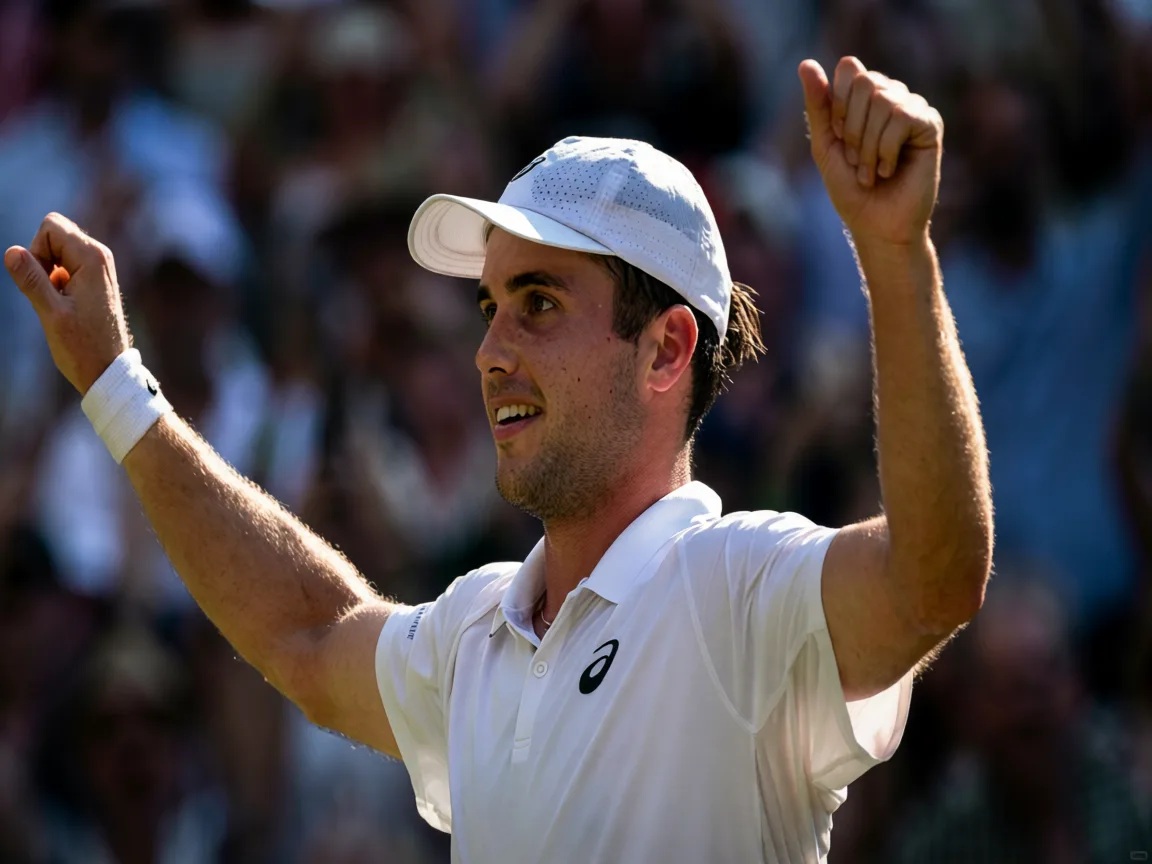
The Wildcard Who Cracked the Code: Fery's Wimbledon Fairytale
Arthur Fery's wildcard rampage past Flavio Cobolli has Wimbledon breathless, one match from an unthinkable final.
Sinner's Fifth Slam: The Silent Coronation at Wimbledon
Jannik Sinner's fifth Grand Slam title signals amanagerial era where silence speaks louder than any roar tennis has ever known.
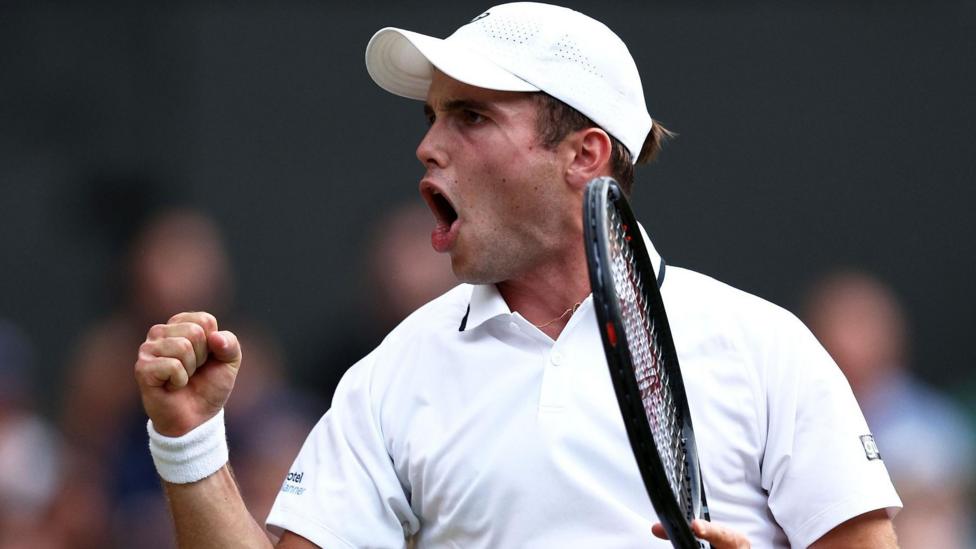
The Wildcard Who Ate the Grid: Fery's Wimbledon Fairy Tale
Arthur Fery outlasted Grigor Dimitrov in five sets to become the first British wildcard to reach a Grand Slam quarter-final, rewriting Wimbledon's grass-court lore.