The Wildcard Who Ate the Grid: Fery's Wimbledon Fairy Tale
Arthur Fery outlasted Grigor Dimitrov in five sets to become the first British wildcard to reach a Grand Slam quarter-final, rewriting Wimbledon's grass-court lore.
There is a specific kind of silence that swallows Centre Court right before a fairy tale breaks completely loose. It is a heavy, breathless quiet pregnant with anticipation and tinged with local disbelief, completely distinct from the polite hush ordinarily reserved for routine dominance. On another sun-drenched afternoon at the All England Club, Arthur Fery shattered that silence with a foreman’s work ethic and a sorcerer's touch, forcing an entire tennis establishment to sit up and witness the permanent birth of a new British obsession.
He did not merely defeat Grigor Dimitrov, a seasoned maestro of these lawns and a former semi-finalist possessing an elegant, benchmark backhand. Fery outlasted him, out-thought him, and ultimately out-lasted him in a gruelling five-set thriller, carving his name into the deepest strata of Wimbledon folklore.
The final number on the scoreboard tells only a fraction of the story. The true narrative of this match lies in the agonizing accumulation of tension across five sprawling sets, a match that demanded everything from both men and eventually yielded a victory that felt simultaneously inevitable and entirely absurd. Fery, a player who would have entered this tournament thrilled simply to win a main-draw match, has now authored the most breathtaking British tennis chapter in recent memory.
By conquering the veteran Bulgarian, Fery achieved something no British player had ever managed before. He became the first British wildcard in the modern era to reach a Grand Slam quarter-final. The weight of that historical milestone is immense, tethering his sudden breakout to the deep, romantic traditions of this tournament. For decades, the British wildcard has been a charming novelty, a generous gesture designed to give promising prospects a taste of the big time before a swift, predictable exit against established tour-level opposition. Fery has violently rewritten that tired script, transforming a courtesy invitation into a legitimate crusade.
The Architect of the Upset
Dimitrov arrived at this Championships with legitimate intentions. A former top-ten stalwart and a player whose single-handed backhand is tailor-made for the low, skidding bounce of grass, Dimitrov possesses the kind of pedigree that usually shrinks the games of young, unproven challengers. In the early exchanges, that gulf in class and experience was apparent. The Bulgarian was dictating play with his signature brand of effortless, first-strike tennis.
But wildcards possess a unique, intangible armor: the freedom of having absolutely nothing to lose. Fery did not play like a junior scrambling to retrieve Tour-level heavyweights; he played like a man who firmly belonged on this stage. The tactical adjustments throughout the five sets were a masterclass in reactive tennis. Rather than allowing Dimitrov to dominate the net and implement his aggressive court craft, Fery began targeting the Bulgarian’s backhand return with heavily topspun second serves, neutralizing the immediate offensive threat.
The British wildcard matched the veteran blow for blow from the baseline, exhibiting a level of shot tolerance that belied his relative inexperience at the highest level. Grass-court tennis is traditionally the domain of the server, a rapid exchange of aces and unreturnable deliveries. Yet, as the match stretched deep into the fifth set, it was Fery who looked remarkably more secure in the prolonged, exhausting baseline exchanges.
History is not inherited on grass; it is violently seized from those who already hold it.
The physical toll of a five-set match at a Grand Slam is a uniquely punishing suffering. Legs grow heavy, lungs burn, and the mind begins to play tricks, amplifying every minor physical ailment. Dimitrov, with years of wear and tear etched into his body, eventually began to show cracks under the relentless pressure radiating from the other side of the net. Fery, buoyed by a raucous and increasingly partisan home crowd, simply refused to yield. His return positioning crept further back to absorb the pace of Dimitrov’s first serve, buying time to construct points on his own terms. When the critical breakpoint arrived in the decisive fifth set, it was the British wildcard who struck first, stepping aggressively into the court to rip a forehand down the line that left Dimitrov sprawling on the turf.
The Anatomy of a Cinderella Run
To fully contextualize the magnitude of this upset, one must examine the historical scarcity of this achievement. The tradition of awarding wildcards to British players at Wimbledon is older than the Open Era itself, designed to foster homegrown talent and replicate the unique conditions of the Championships. Yet, the wildcard entrants have historically served as cannon fodder for the established elite, gaining invaluable experience before an inevitable, educational defeat.
- First British wildcard to reach a Grand Slam quarter-final in tennis history
- Overcame a seasoned opponent with a career-high ranking inside the world's top three
- Required five grueling sets and over three hours of play to secure the monumental victory
- Extended a historic run that has captivated the entirety of British tennis
Before Fery, the memories attached to British wildcards were brief flashes of brilliance that quickly fizzled out, memorable for an evening but forgotten by the end of the first week. He has shattered that glass ceiling with a sledgehammer, proving that a late entrant into the draw can still manufacture the necessary momentum to terrorize the entire tournament draw.
The Echoes of Henman Hill Past
The atmosphere on the grounds during this match will inevitably draw comparisons to the halcyon days of Tim Henman and the nascent, pre-championships emergence of a young Andy Murray. There is a specific brand of British tennis hysteria that only truly emerges when a homegrown underdog threatens to achieve the impossible. It is a nervous, collective energy that often cripples players, suffocating them under the weight of a nation's expectations.
Fery, remarkably, seemed entirely immunized against it. Whether through naive enthusiasm or a profound mental fortitude, he channeled the crowd's immense energy into a performance of stunning clarity. Every service game was met with roaring approval, every crucial hold of serve celebrated with the unbridled vigor of a championship-winning moment. He did not merely ride the wave of local emotion; he effectively orchestrated it, harnessing the energy of the stands to fuel his physical baseline endeavors.
Dimitrov, an experienced road warrior entirely accustomed to hostile environments, found himself gradually swallowed by the tide. The longer the match progressed, the more the crowd willed Fery forward, turning a standard tennis match into something resembling a great, dramatic national event. The British tennis public, starved of a genuine Cinderella story in recent years, found a worthy protagonist in a wildcard with a champion's swagger.
The Aftermath: A Nation Reacts
The reaction to Fery's stunning victory extended far beyond the Centre Court stands. In the immediate aftermath, BBC 5 Live Sport dedicated extensive coverage to the upset, with pundits and callers alike marvelling at the audacity of the wildcard's triumph. The phrase "stunning victory" echoed across airwaves as analysts deconstructed how a player ranked well outside the elite had dismantled one of the sport's most graceful grass-court exponents. The collective sense of disbelief was matched only by a dawning realisation that British tennis may have uncovered a genuinely special talent.
What Lies Beyond the Horizon
A quarter-final berth guarantees Fery a career-high ranking, a significant financial windfall, and, perhaps most importantly, direct entry into future Grand Slam main draws. No longer will he require the discretionary charity of tournament committees; he has earned the right to sit at the sport's top table by right.
The road ahead only steepens from this point. A Grand Slam quarter-final promises a heavily favored top-ten seed, a battle-tested veteran who will not be undone by youthful exuberance or partisan crowds. Yet, the tactical blueprint demonstrated against Dimitrov proves that Fery possesses both the game and the mental resilience to compete at the highest echelons of the sport.
For Dimitrov, the defeat marks another frustrating near-miss at a tournament where he has frequently promised so much and ultimately delivered too little. advancing age and the physical demands of the tour mean opportunities for deep Slam runs are increasingly finite.
But this fortnight belongs firmly to Arthur Fery. He has rendered every Super Saturday preview obsolete, bypassed the established hierarchy, and completely rewritten the rules of engagement for British wildcards. The fairytale remains very much alive, and with each resonant strike of the ball, the future of British tennis looks significantly brighter, boldly louder, and infinitely more compelling.
Updated: 2026-07-07 — Added BBC 5 Live Sport post-match reaction coverage to the Wimbledon last-16 victory over Dimitrov.
Editorial Integrity
This is an original SportPulse article written by our editorial team. All content is independently researched, written, and reviewed by our writers and editors before publication. We do not publish copied, aggregated, or syndicated content.
SportPulse is committed to original sports journalism. Read our editorial policy or contact us with any questions.
More Like This
All tennis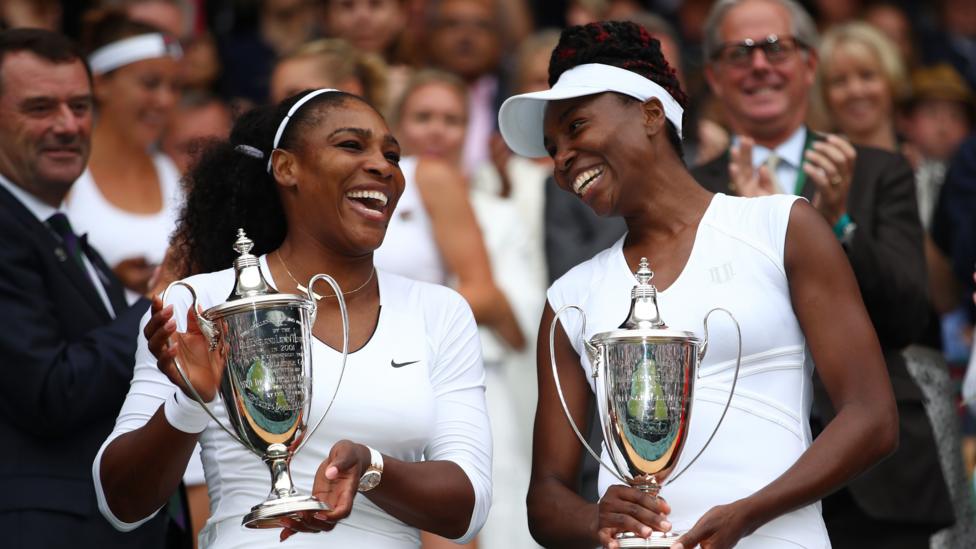
One Last Dance: The Williams Sisters Return to Wimbledon's Grass
Serena and Venus Williams receive a Wimbledon doubles wildcard, reigniting the most iconic sibling partnership in tennis history.
Wimbledon's White Code Meets High Fashion: Osaka Leads the Revolution
Naomi Osaka's Kill Bill-inspired walk-on fit turns Wimbledon's pedestrian arrival moment into fashion's newest frontier.

Court of Broken Dreams: Inside Corfu's Most Disastrous Tennis Holiday
A budget tennis trip to Corfu promised sun, sport, and serenity. Instead, it delivered empty pools, stringless rackets, and chaos.