Eala Shatters Filipino Grand Slam Barrier at Wimbledon
Alexandra Eala becomes the first Filipino to reach a Grand Slam third round, electrifying a tennis-starved nation.
title: "Eala wins 'for all the girls with ruffled socks and chubby cheeks'"
category: tennis
badge: Grand Slams
badgeType: category
author: Nina Patel
authorRole: Tennis Correspondent
authorInitials: NP
date: 2026-07-03
readTime: 7 min read
image: https://ichef.bbci.co.uk/ace/standard/976/cpsprodpb/6b82/live/5adc3a60-76b0-11f1-af69-5108783f4681.jpg
imageAlt: Alexandra Eala celebrating a winning point on Wimbledon's grass courts during a Grand Slam match
tags: Wimbledon, WTA, Grand Slams
excerpt: "Alexandra Eala shocks defending champion Iga Swiatek to become the first player from the Philippines to reach the fourth round of a Grand Slam in the Open era."
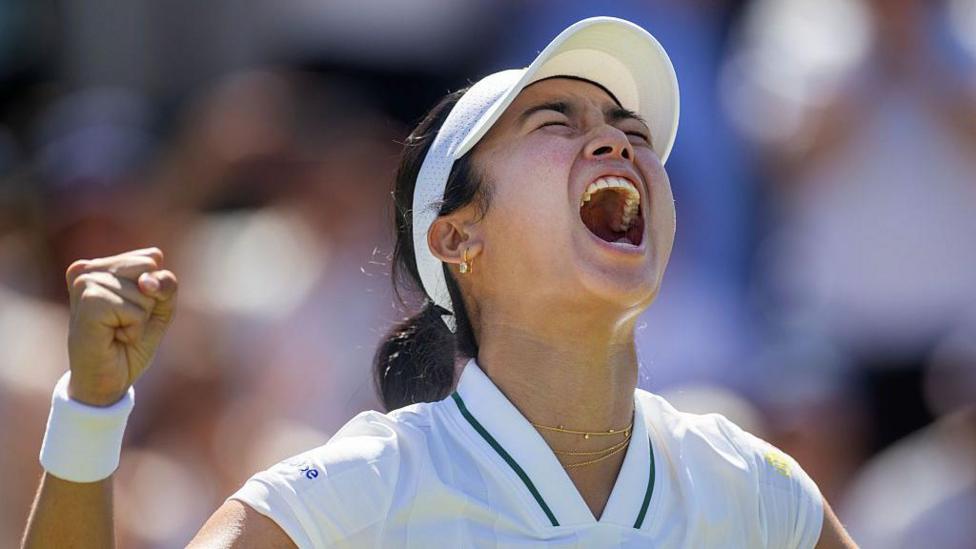
The ball kicks up off the Wimbledon turf, skidding low and awkward, the kind of nastiness only grass can conjure. A teenage qualifier from Manila reads the bounce early, shifts her feet on the slick Baseline, and cracks a backhand cross-court that threads the needle between line and charging opponent. Court 18 erupts, not with the polite murmur of the All England Club but with something rawer, more visceral, a roar steeped in decades of waiting.
21-year-old Alexandra Eala grips her racket tighter and lets out a scream that echoes beyond the ivy-covered walls. She has just become the first Filipino player to reach the fourth round of a Grand Slam in the Open Era — and she did it by defeating defending champion Iga Swiatek.
Let that sink in. Open Era. Since 1968. Fifty-seven years of professional tennis, of Filipinos grinding on the ITF circuit, scraping together ranking points in far-flung corners of the tennis world, dreaming of this exact moment. And it is Eala, barely old enough to order a drink in most countries, who finally crashes through the glass ceiling on the most hallowed lawns in the sport.
Anatomy of a Breakthrough
The significance of this achievement cannot be overstated. The Philippines is a nation of over 110 million people, a sprawling archipelago where basketball is practically a religion and boxing produces household names who become senators. Tennis? Tennis has always been a footnote, an expatriate curiosity, a sport played in exclusive clubs in Makati and Forbes Park.
Eala is rewriting that narrative one forehand at a time.
Her journey to the Wimbledon fourth round was no accident of luck or a single lucky draw. This is a player who logged her hours at the Rafa Nadal Academy in Mallorca, soaking in the culture of relentless work ethic and tactical discipline that the Spaniard's institution demands. She has been knocking on the door, winning junior Grand Slam titles, climbing the professional ranks with the kind of methodical patience that suggests those around her understand the long game.
The transition from junior phenom to professional force is where many careers quietly flatline. The WTA Tour is littered with juniors who hoisted trophies at Roland Garros and Wimbledon in the juniors, only to vanish into obscurity when the paychecks require beating adults with their own mortgages and coaching teams.
What the Numbers Reveal
- First Filipino to reach a Grand Slam fourth round in the Open Era (since 1968)
- Defeated defending champion Iga Swiatek to reach the fourth round
- Age 21 at the time of breakthrough, with significant room for development
- Junior Grand Slam pedigree, including doubles titles at the Australian and French Opens
- Trained at the Rafa Nadal Academy in Mallorca, Spain
- Represents a nation of over 110 million with no prior Grand Slam fourth-round presence
The Tactical Canvas
What makes Eala's Wimbledon run particularly compelling is the surface itself. Grass is the great equalizer and the great humiliator. It rewards those with quick hands, swift footwork, and a willingness to embrace chaos. It punishes the hesitant and exposes anyone whose ball tolerance cannot handle the unpredictability of a surface that changes character over the course of a fortnight.
For a player from a tropical nation where hard courts dominate and clay is virtually non-existent, adapting to grass requires a wholesale recalibration of instincts. The bounce is lower. The points are shorter. The margin between brilliance and disaster is razor-thin.
Eala has demonstrated a maturity beyond her years in constructing points on grass. Her serve, while not a howitzer, finds its targets with enough consistency to set up her most dangerous weapon: a forehand that she cracks with the kind of topspin that stays low and skids through the court. Her movement, honed on the practice courts of Mallorca where footwork is a non-negotiable religion, has held up under the pressure of matches where every point feels amplified.
A Nation Watches
Back in Manila, something unprecedented is happening. Social media timelines that usually overflow with basketball highlights and Manny Pacquiao throwback clips are suddenly dominated by tennis. News anchors who would not know a break point from a breakpoint are stumbling through segments about Wimbledon's oldest traditions.
The Philippine Sports Commission has taken notice. Local tennis clubs report a surge in inquiries. Parents who once ferried their children exclusively to basketball courts are now asking about tennis lesson schedules.
This is a moment that can change the trajectory of tennis in the Philippines forever. When you see someone who looks like you, speaks your language, shares your culture succeeding on the biggest stage, it shatters the mental barrier that tells you that sport is not for us.
That quote, from a Philippine tennis official, captures the catalytic power of representation. Vision requires a vessel. For Filipino tennis, Eala is becoming that vessel.
"This is everything"
In her on-court interview moments after the historic win, Eala could barely hold back tears.
This is everything. Everything I've worked for, everything my family sacrificed for — this moment right here, it's for them.
Eala paid tribute to her grandfather and her brother, who trained her as a child in the Philippines before she left for Mallorca. She spoke of early mornings on local courts, of her brother feeding her ball after ball, of her grandfather's unwavering belief that she could one day compete on the sport's biggest stages.
My grandfather was the one who put a racket in my hand. My brother was the one who stayed on the court with me when nobody else would. I carry them with me every time I step out here. This isn't just my win — it's theirs.
The emotion was raw, unfiltered, and deeply human. For a player often described in tactical terms — her topspin forehand, her court positioning, her grass-court adaptation — this was a reminder that behind every breakthrough is a story of people who believed before anyone else did.
"For all the girls with ruffled socks and chubby cheeks"
Eala's message resonated far beyond the tennis world. In a now-viral post-match moment, she dedicated her historic run to every young girl who has been told she doesn't fit the mold.
This is for all the girls with ruffled socks and chubby cheeks. For the ones who were told they didn't look like a tennis player. For the ones who were told they didn't belong. This is proof that you do.
The quote spread across social media like wildfire, shared by athletes, celebrities, and young girls from Manila to Mumbai. It was a powerful statement about representation, about breaking the mold, about redefining what a tennis champion looks like.
The Road Ahead
The fourth round of a Grand Slam is where the tournament begins in earnest. The qualifiers and ranked players have been sorted through. The first week, often described as a survival exercise where upsets happen and nerves fray, has been navigated. Now the draw opens up to reveal the sport's established hierarchy.
Eala will face a seeded opponent, a player who has been here before, who understands the rhythm of a two-week Slam and knows how to pace herself through seven rounds of warfare. The physical demands of best-of-three sets on grass, in London's humid summer, should not be underestimated. Recovery is an art form at Grand Slams, and Eala's team will be managing her load, her nutrition, and her mental energy with surgical precision.
Key Questions Ahead
- Can Eala's forehand maintain its potency against elite defensive movement?
- Will her serve hold up under the pressure of a player who returns aggressively?
- How does she handle the heightened expectations from a nation suddenly tuning in?
- Does she have the physical reserves to sustain a deep run across seven rounds?
There is also the matter of what this means for her ranking. A fourth-round appearance at Wimbledon guarantees a significant payday and a healthy injection of ranking points. For a player financing travel, coaching, and training expenses, that money is transformative.
More importantly, the ranking points will push her toward the top 100 of the WTA rankings, a threshold that unlocks direct entry into all four Grand Slams and the bigger WTA events. No more qualifying rounds. No more hoping for wildcards. The path becomes clearer.
The Bigger Picture
Eala's Wimbledon breakthrough forces a conversation about tennis in Southeast Asia that the sport's power brokers have been avoiding for years.
The region is a sleeping giant. Indonesia has a population of 275 million. Vietnam has 100 million. The combined populations of Southeast Asian nations exceed 680 million people. Yet the region produces a trickle of professional players, with the occasional exception of players like Thailand's Paradorn Srichaphan and Luksika Kumkhum.
The infrastructure is not there. The coaching expertise is not there. The competitive ecosystem that allows young players to develop without leaving their home countries is not there.
Eala had to leave. She went to Mallorca. She joined the Nadal academy. She removed herself from the Philippine tennis ecosystem to find one that could nurture her talent.
Her success is a vindication of that decision, but it is also an indictment of a system that could not provide what she needed at home.
The Philippine Tennis Association will be watching closely. Already, there are whispers of a renewed push to build facilities, to bring in international coaches, to create a pathway that allows the next Alexandra Eala to develop without crossing an ocean.
Whether those whispers translate into action remains to be seen. But for now, on the grass of Wimbledon, a twenty-one-year-old is serving notice that Filipino tennis has arrived. The roar from Court 18 may just be the beginning.
Updated: 2026-07-05 — Eala stuns defending champion Iga Swiatek to reach Wimbledon fourth round, the first Filipino to do so in the Open Era post-match tribute to "girls with ruffled socks and chubby cheeks" goes viral.
Editorial Integrity
This is an original SportPulse article written by our editorial team. All content is independently researched, written, and reviewed by our writers and editors before publication. We do not publish copied, aggregated, or syndicated content.
SportPulse is committed to original sports journalism. Read our editorial policy or contact us with any questions.
More Like This
All tennis
Serena's Siren Call and Wimbledon's Summer of Reckoning
Serena Williams returns at 44 while Jannik Sinner races the clock and Aryna Sabalenka seeks stability at Wimbledon.
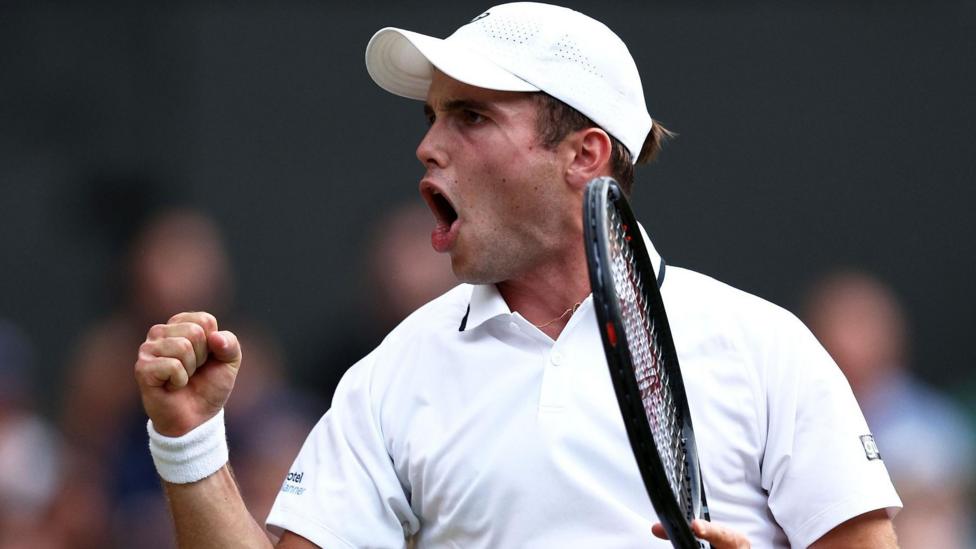
The Wildcard Who Ate the Grid: Fery's Wimbledon Fairy Tale
Arthur Fery outlasted Grigor Dimitrov in five sets to become the first British wildcard to reach a Grand Slam quarter-final, rewriting Wimbledon's grass-court lore.
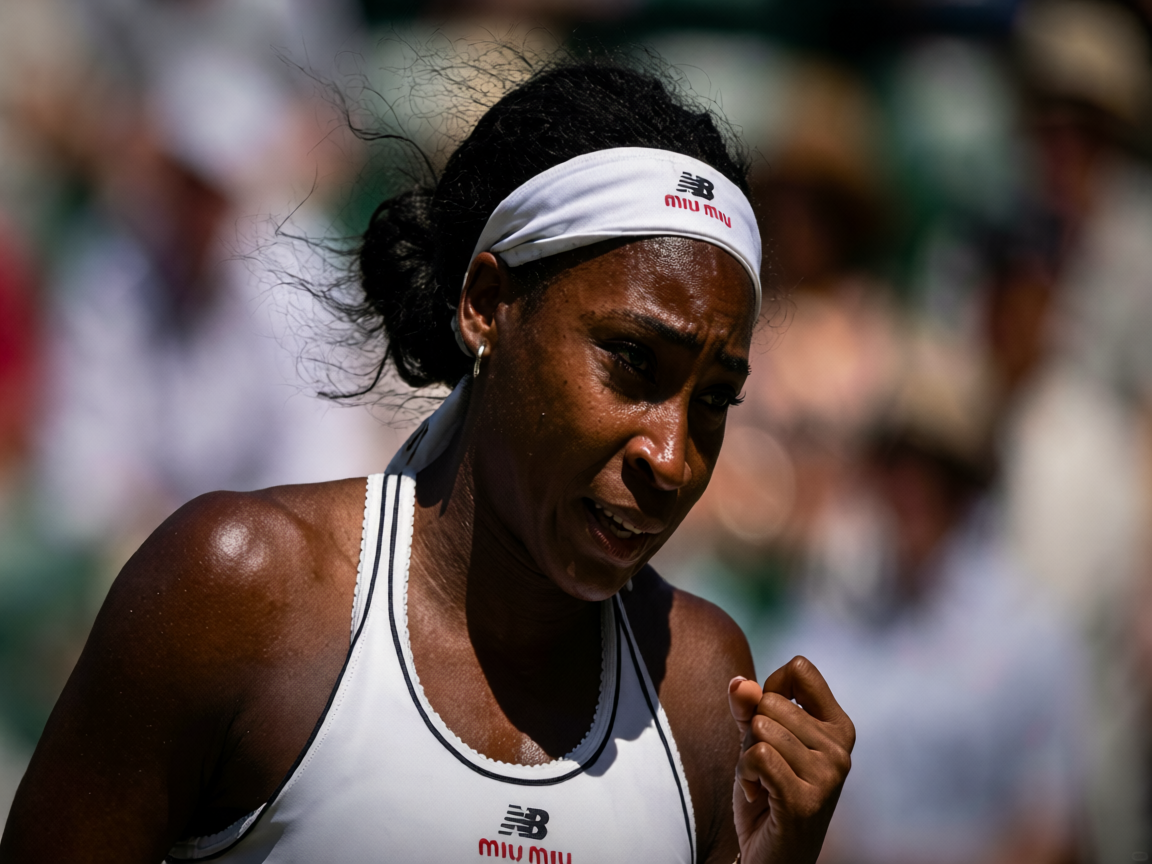
Gauff Edges Pegula in Thrilling Comeback to Reach First Wimbledon Semis
Coco Gauff overcomes Jessica Pegula in a gritty five-set battle to reach her maiden Wimbledon semi-final.