Split Scarves, One Heart: Egypt-Australia Forces a Diaspora Reckoning
For Egyptian-Australians, Saturday's Pharaohs-Socceroos clash is not just a match but a collision of identity and belonging.
When the Fixture List Becomes an Identity Crisis
There are group-stage draws that produce tactical intrigue, and there are group-stage draws that produce existential reckonings. When the 2026 FIFA World Cup bracket paired Egypt against Australia, it did something no formation diagram can capture: it forced an entire diaspora community to confront the deepest fault line in dual identity.
For the estimated hundreds of thousands of Egyptian-born Australians and their descendants, Saturday's Pharaohs versus Socceroos fixture is not a neutral spectacle. It is a mirror. It asks a question that immigrants everywhere quietly dread in sport's simplest binary format: who do you actually want to win?
The Oud, the Fez, and the Cork Hat
If you want the perfect visual metaphor for this tension, find the social media videos of Joseph Tawadros, the acclaimed multi-instrumentalist and proud Egyptian-Australian. In one clip, he performs on the oud — the pear-shaped stringed instrument that is the sonic backbone of Egyptian classical music — while wearing a fez adorned with the Australian flag and dangling corks. The image is playful, absurd, and quietly profound. It is the diaspora experience compressed into a single headpiece.
Tawadros is not alone in his conflicted glee. Across Sydney, Melbourne, and Brisbane, Egyptian-Australian communities are preparing for Saturday's kickoff with a mix of excitement that some describe as a "win-win situation" and others call "bittersweet". Both outcomes carry emotional weight. Neither outcome offers a clean resolution.
The Pharaohs and the Socceroos: Two Paths to the World Stage
To understand why this match cuts so deep, you need the footballing context. Egypt arrive at the 2026 World Cup with the gravitational pull of Mohamed Salah, still the most globally recognizable Egyptian athlete in history, and a squad that navigated African qualifying with the kind of steely pragmatism that has defined the Pharaohs' modern identity. They are a nation that has won the Africa Cup of Nations a record seven times but has historically stumbled on the World Cup stage, making only their fourth appearance in the tournament's history.
Australia, meanwhile, represent a different footballing culture entirely. The Socceroos carry the underdog ethos of a country where football competes for oxygen against rugby league, Australian rules football, and cricket. Their qualification campaigns are grueling intercontinental gauntlets, and their squads are typically built on discipline, athletic intensity, and the kind of collective resilience that compensates for a lack of individual superstar talent.
For Egyptian-Australians who follow both teams religiously, this matchup pits heritage against home. It pits the emotional, almost spiritual connection to the land of the Nile against the pragmatic, lived reality of building a life under the Southern Cross. The Pharaohs represent where you come from. The Socceroos represent where you are.
"Addicted to Football": The Diaspora's Unbreakable Bond
What makes the Egyptian diaspora's relationship with football so distinctive is its intensity. This is not a casual sporting interest. As members of the community have described it, Egyptian-Australians are "addicted to football" — a phrase that captures the all-consuming, non-negotiable role the sport plays in maintaining cultural continuity across oceans.
Football in Egyptian households is not background noise. It is the centerpiece of family gatherings, the catalyst for intergenerational conversation, the thread that connects grandparents in Cairo to grandchildren in Lakemba. When Egypt plays, entire neighborhoods transform. Rooftop dishes point toward satellite feeds. Cafés overflow. The sound of Arabic commentary spills out of open windows.
This addiction, if we can call it that, is fundamentally about identity maintenance. In a country where assimilation pressures are real and cultural markers can erode over generations, football is the one arena where Egyptian identity performs itself publicly, loudly, and without apology. Supporting the Pharaohs is not merely a sporting choice. It is a declaration.
The Tactical Question No Coach Can Answer
From a purely footballing standpoint, Egypt versus Australia is a fascinating stylistic collision. Egypt's approach under modern management has leaned on compact defensive structures with rapid transitions channelled through Salah's devastating pace and movement from the right half-space. The Pharaohs tend to operate in a disciplined 4-2-3-1 or 4-3-3, prioritizing control of central zones and letting their talisman exploit the chaos that a well-organized low block creates.
Australia, by contrast, are likely to press higher and seek to impose physical tempo. The Socceroos' traditional strength lies in wide delivery and aerial presence, supplemented in recent years by a generation of players schooled in European academies who bring more technical sophistication to the buildup.
The matchup within the matchup is whether Egypt's defensive discipline can withstand Australia's energy in transition, and whether the Socceroos' backline can contain Salah without committing the kind of fouls in dangerous areas that Egypt's set-piece routines punish ruthlessly.
But for Egyptian-Australians, none of this tactical detail resolves the emotional calculus. You can analyze the pressing triggers all you like. You still have to pick a side when the anthems play.
Community Divided, Community United
What is remarkable about this dilemma is how openly the Egyptian-Australian community is discussing it. There is no pretense of neutrality. There is no embarrassed deflection. Instead, there is a joyful, self-aware embrace of the absurdity of cheering for both teams and the impossibility of cheering for neither.
Some families are reportedly planning split-watching arrangements: one parent in Egyptian colours, the other in green and gold, children oscillating between the two depending on which team is attacking. Others are leaning into the "win-win" narrative, arguing that no matter the result, the community wins because one of their teams advances.
This framing is psychologically clever. It transforms a zero-sum sporting contest into a communal affirmation. It says: we belong to both, and neither result diminishes us.
Yet beneath the optimism, there is genuine tension. The older generation, those who emigrated as adults and carry Egypt in their bones, tend to lean Pharaohs. The younger generation, born in Australia, educated in Australian schools, shaped by Australian sporting culture, often feel a stronger pull toward the Socceroos. The match threatens to surface these generational fault lines in real time, in living rooms where three generations sit on the same couch.
The Global Stage Amplifies Everything
This would be a compelling human interest story at any tournament. But the 2026 World Cup — expanded to 48 teams, hosted across North America, and broadcast to an unprecedented global audience — gives it extra dimensions. More teams means more diaspora collisions. Egypt-Australia is not the only fixture in this tournament that will force immigrant communities to confront divided loyalties. It is simply the most prominent one involving two nations with large, passionate, and geographically concentrated diasporas.
The tournament's expanded format was designed to grow the global game. Part of that growth is these intersections — moments where football transcends sport and becomes a vehicle for exploring belonging, migration, hybridity, and the beautiful mess of modern identity.
What Comes Next
Saturday's result will produce joy and heartbreak in equal measure within the same households. But the real story extends beyond the final whistle. For the Egyptian-Australian community, this match is a milestone in a longer narrative about how diaspora populations negotiate belonging through sport.
If Egypt win, expect the oud music to echo through Sydney's western suburbs well into Sunday morning. If Australia prevail, expect the green-and-gold celebrations to carry a distinctly Middle Eastern flavour. If it's a draw, expect the most Egyptian-Australian outcome possible: both teams left to fight another day, and the community given a few more days to delay the reckoning.
Whatever happens, Joseph Tawadros will probably make another video. He will probably wear something impossible. And it will probably capture the moment better than any match report ever could.
"It's not about choosing one over the other. It's about the fact that we carry both. That's the reality of who we are." — A sentiment echoed across the Egyptian-Australian community ahead of Saturday's World Cup clash.
Looking Ahead
The group stage continues for both nations after Saturday's encounter. Egypt will need to navigate the remaining fixtures knowing that a result against Australia could be the difference between knockout football and an early flight home. Australia, similarly, cannot afford to drop points in what may be the most evenly matched pool in the tournament.
For the diaspora watching from the stands or from living rooms across Australia, the football will continue. The identity questions will not. They are permanent fixtures on the schedule of immigrant life — no VAR review required.
Editorial Integrity
This is an original SportPulse article written by our editorial team. All content is independently researched, written, and reviewed by our writers and editors before publication. We do not publish copied, aggregated, or syndicated content.
SportPulse is committed to original sports journalism. Read our editorial policy or contact us with any questions.
More Like This
All football
Four-Game Ban: When Telling The Truth Costs You A Month
Elliot Watt called it the worst VAR decision in history. The SFA responded with a four-game ban that speaks volumes.
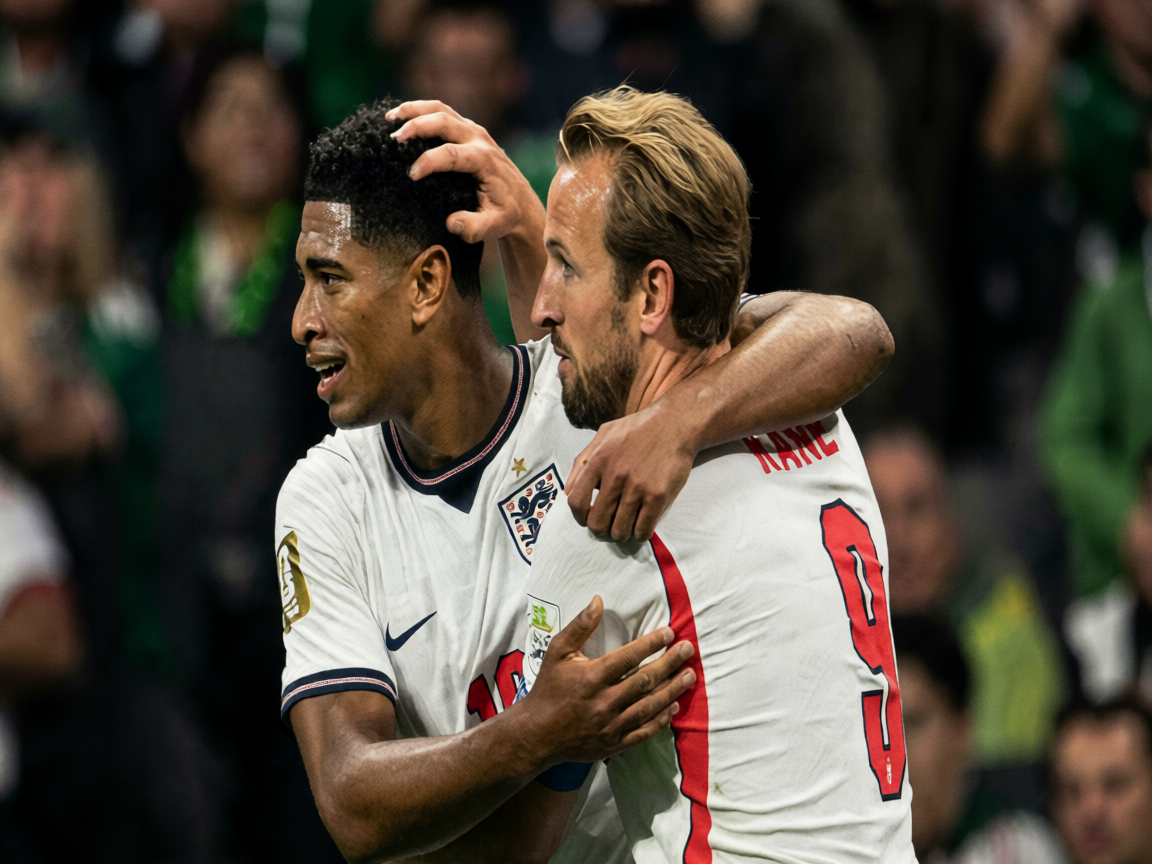
England’s World Cup: Kane and Bellingham Carry the Load
Ten of England’s eleven World Cup goals came from two men, exposing a dangerous tactical reliance.
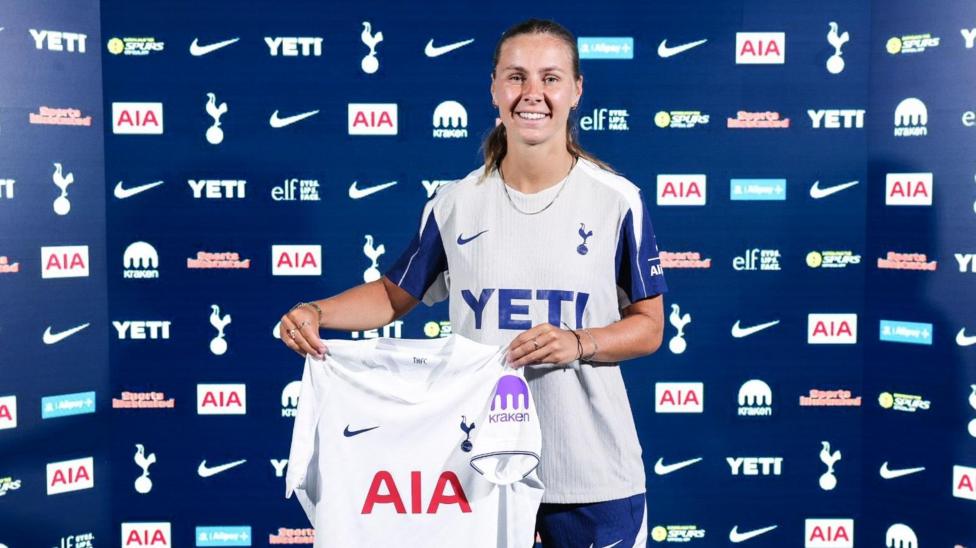
Pelova Across North London: Tottenham's Arsenal Coup
Tottenham secure Victoria Pelova on a free transfer from Arsenal, adding a pressing orchestrator to reshape their midfield dynamic.