Scaloni Demands Football Focus as England Clash Looms
Argentina's coach insists the World Cup semi-final is about tactics, not history, as two styled sides prepare for a defining battle.
A Tactical Subculture Born of Historical Friction
When the fixture algorithm spat out Match 102 and confirmed England versus Argentina for a place in the World Cup final, the immediate continental instinct was to reach for the chalkboard. This is a fixture steeped in geopolitical residue, yet the modern iteration promises to be a纯粹 chess match between two of the tournament's most structurally sophisticated sides. Lionel Scaloni, a coach who has meticulously rebuilt the Albiceleste around collective positional discipline, moved swiftly to sever the sporting narrative from the historical wounds of the 1982 Falklands/Malvinas conflict.
"No, no, no," the Argentina head coach tut-tutted emphatically when the political backdrop was raised. "This is just a football match. Let's not look for other stuff. It's a football game against a great team, with a great manager who I admire. But it's a football match. End of."
It was a deliberate deflection, one designed to protect his camp from the toxic oxygen of external vitriol. Scaloni understands that emotional volatility is an enemy of tactical execution. His Argentina is not the chaotic, inspiration-dependent outfit of decades past; it is a drilled defensive unit that transitions with devastating verticality.
The Ghost of Maradona and the Modern Chalkboard
Midfield linchpin Rodrigo De Paul echoed his manager's desire to compartmentalise. The sweat-soaked engine of Argentina's midfield acknowledged the ghosts of Mexico 1986, France 1998, and Japan 2002, yet firmly drew a line between homage and obsession.
"We understand it's a football game that transcends; it brings back memories of what Diego did," De Paul stated. "We sing songs about our Malvinas heroes, mainly to remember them, but we have to understand it's a football match and that the Malvinas have to be discussed elsewhere. What happened was an atrocity and we always remember the fallen, but what we want is to win this match to get to the final."
The mention of Diego Maradona inevitably conjures images of the Goal of the Century, but relying on romanticism obscures the modern tactical reality. Where Maradona operated as a rogue agent dragging a team forward through sheer individual genius, Scaloni's system relies on a structured 4-3-3 that morphs into a 3-5-2 in possession. The width is provided entirely by advanced fullbacks, allowing the front three to compress the central corridors.
Structural Variations and Midfield Control
The English approach will contrast sharply with South American pragmatism. England's manager is expected to maintain the 4-2-3-1 that has served him well throughout the tournament, utilising a double pivot to secure defensive stability while unleashing dynamic wide attackers. The tactical fulcrum will be the midfield battle between Argentina's pressing trigger and England's buildup structure.
Scaloni has spent the tournament refining his pressing scheme. Out of possession, Argentina Eskews naive high pressing for a hybrid mid-block in a 4-4-2 shape. The striker and attacking midfielder are dispatched to pressure the opposition's pivot, cutting off the simplest vertical passing lanes. Instructing the wingers to pinch inside transforms the shape, creating a dense central blockade.
The key tactical question is whether England's fullbacks can bypass this central congestion. If the fullbacks push high to stretch the pitch, it isolates the centre-backs against Argentina's dangerous inside forwards. The space behind the midfield is where this semi-final will be won. De Paul is not merely a destructive force; he is the release valve, the player tasked with spinning away from pressure to launch Argentina's transitional attacks.
Key Tactical battlegrounds
- Midfield overloads: Argentina's narrow front three against England's double pivot
- Half-space exploitation: England's wide attackers drifting inside to exploit gaps between fullback and centre-back
- Transition speed: De Paul's capacity to bypass the first line of pressure
"We don't wait for the perfect moment. We build the shape that creates the moment." — Lionel Scaloni
Defensive Trade-offs and The Risks
England's defensive solidity has been the cornerstone of their tournament, but facing Argentina presents a different problem. Argentina do not play with a traditional target man. Their forward line operates with fluid interchanges, constantly rotating positions to disorientate markers. Against a back four that prefers to defend deep and compact, this fluidity could be decisive.
Scaloni's gamble is that his defence can hold firm against crosses. England's threat from wide areas is documented, with a cross-completion rate of 24% in the tournament's knockout stages. Argentina's centre-backs are aggressive in aerial duels, but the full zone behind them is vulnerable. This is the systemic weakness England must exploit.
Tactical Shift: The Decisive Adjustments
The semi-final will likely be decided by who blink first structurally. Scaloni is a coach unafraid to alter his system mid-match. If Argentina finds themselves pinned back, a switch to a back three to match England's numerical superiority in central areas will stabilise the midfield.
One potential shift is moving to a 5-3-2 without the ball, dropping a midfielder into the defensive line to create a back three free to track English runners. This would force England to break down a low block, a task they have occasionally struggled with against disciplined opposition.
Conversely, if England struggles to penetrate Argentina's low block, their manager might sacrifice a midfielder for an additional attacker, shifting to a 4-2-4 to overload the penalty area.
The Beautiful Game Refuses History's Shadow
The geopolitical backdrop adds an undeniable edge, an unavoidable cultural residue that colours the occasion. Yet both camps have spoken with a unified voice: the pitch will be the arbiter.
Scaloni's diplomatic deflection serves a dual purpose. It respects the historical weight of the fixture while protecting his players from the paralyzing pressure of nationalistic expectation. A World Cup semi-final is a test of nerve and discipline as much as tactical acumen.
Argentina's collective structure and defensive discipline suggest a match of fine margins. If Scaloni has his way, the narrative will be written in tactical nuances andExecution, not echoes of a war that ended four decades ago.
The football itself promises a fascinating tactical battle. The contrast between Argentina's pragmatic, structure-first approach and England's evolving attacking threat is a clash of modern coaching philosophies.
For all the pre-match talk of history and hatred, the chalkboard awaits. The winner will be the side that executes their tactical plan with the coldest precision, unconcerned with the ghosts of clashes past.
The stakes are stark. A place in the final awaits. The tactical preparation will determine whether it is Argentina or England who take that final step. Scaloni has set the tone: football, and only football.
What's Next
The winner of Match 102 faces a formidable opponent in the final. For Argentina, securing the final would validate Scaloni's tactical rebuild, a project that has transformed them from a collection of individuals into a structurally sound collective. For England, overcoming a tactically sophisticated South American side would signal a genuine shift in their tournament credentials.
The upcoming fixture is a tactical connoisseur's dream. Watch for the midfield configurations, the spatial configurations in the half-spaces, and the transitional triggers that will ultimately decide who progresses. The football is ready to speak for itself.
Editorial Integrity
This is an original SportPulse article written by our editorial team. All content is independently researched, written, and reviewed by our writers and editors before publication. We do not publish copied, aggregated, or syndicated content.
SportPulse is committed to original sports journalism. Read our editorial policy or contact us with any questions.
More Like This
All football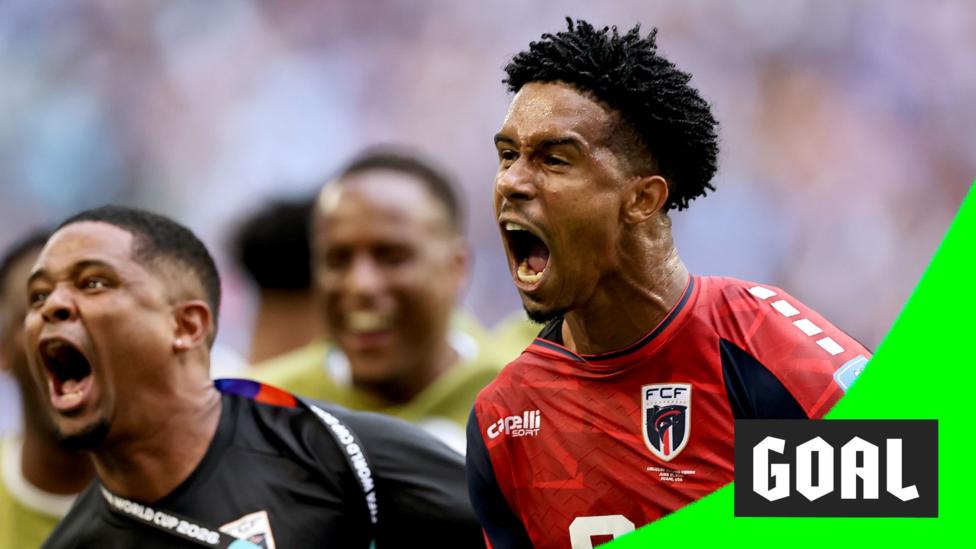
Cape Verde Stun Uruguay as Pina Strikes Historic World Cup Shock
Kevin Pina's rocket handed Cape Verde a shocking lead over Uruguay, threatening to rewrite Group H's entire narrative.
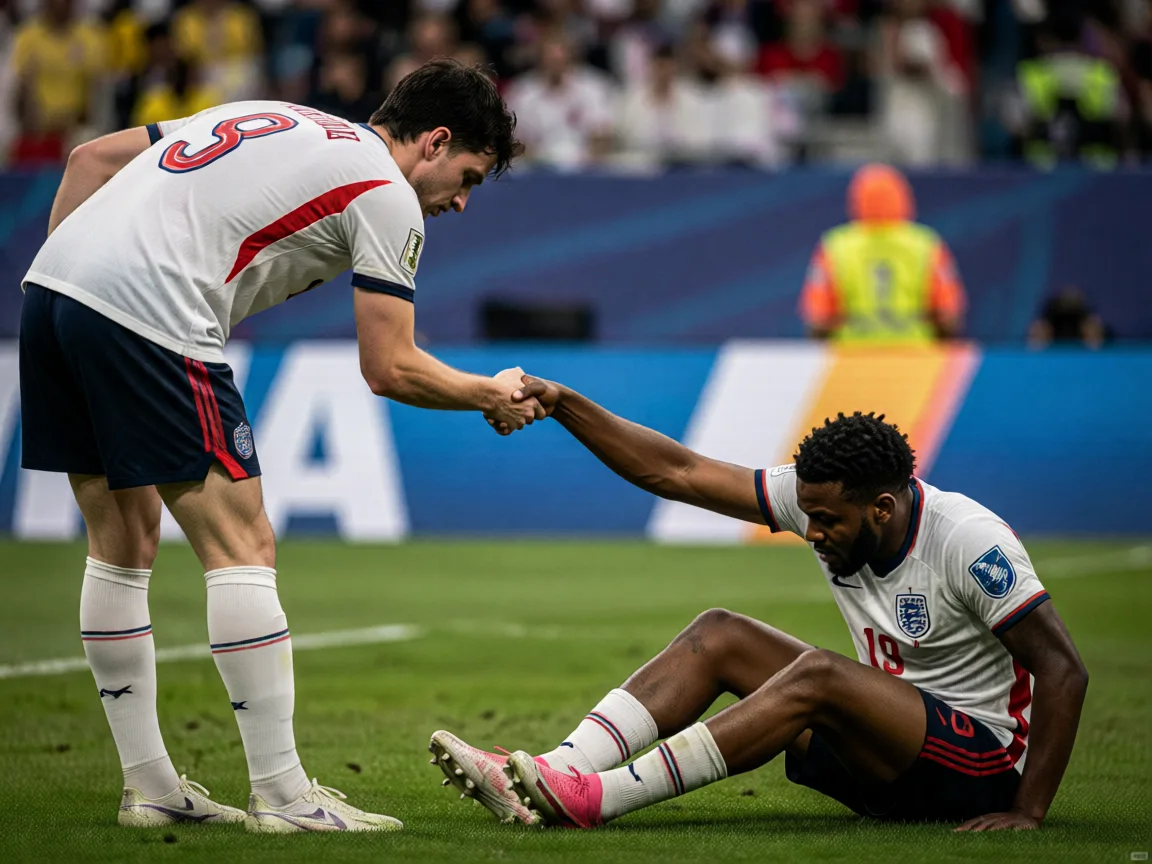
England's Right-Back Crisis Deepens as Reece James Faces Race Against Time
With James sidelined again, Tuchel scrambles to plug a problem position before England's quarter-final showdown with Norway.

Everton Close In On Hackney — A Midfield Blueprint Emerges
Everton's move for Hayden Hackney signals a tactical evolution in their midfield build-up play under Dyche.