Blood, Hand of God and Beckham: England vs Argentina's World Cup War
Three World Cup clashes spanning four decades of pure, unfiltered enmity between two footballing superpowers.
The Whistle That Started a War
The referee's whistle in Mexico City had barelystopped echoing when the hatred began.
It was June 22, 1986, and what followed over the next 90 minutes would permanently fracture any notion that football is just a game. England and Argentina, two nations carrying geopolitical baggage far heavier than any football match should bear, walked onto the Azteca pitch carrying 44 years of unresolved tension.
Four years earlier, the Falklands War had killed 649 Argentine and 255 British soldiers. The wounds were raw. The blood was barely dry.
Football was never going to be big enough to contain what was coming.
The Hand of God Descends
Diego Maradona stood 5-foot-5 in a stadium built for gods.
England's Peter Shilton towered over him, 6 inches taller, arms extended, ready to collect a harmless looping ball. What happened next has been replayed millions of times across four decades, frame by frame, and still defies rational explanation.
Maradona's left fist connected with the ball. Shilton punched air.
"The goal was scored a little bit with the head of Maradona and a little bit with the hand of God." — Diego Maradona, justifying what cameras conclusively proved was deliberate cheating.
The referee, Ali Bin Nasser of Tunisia, had his view obstructed. He saw a header. He saw a goal. 60,000 Argentine supporters in the Azteca saw divine intervention.
England's players saw red.
The Four-Minute Masterpiece
Then came the goal that shut everyone up.
Four minutes after the Hand of God, Maradona collected the ball inside his own half. What followed was 10 seconds of football that Doctor Who would struggle to comprehend as anything other than time manipulation.
11 touches. 60 yards. 5 English players beaten.
Terry Butcher, Terry Fenwick, Peter Beardsley, Trevor Steven, and finally Shilton. All left grasping at shadows, at shirt tails, at nothing.
For all the controversy of the first goal, this was undeniable genius. Even England's players, when they stopped wanting to strangle Maradona, acknowledged it through gritted teeth. Gary Lineker, who pulled one back for England in the 82nd minute, later called it the greatest goal in football history.
Argentina won 2-1. They went on to win the World Cup. Maradona carried the trophy like a man who had conquered an empire, because in his mind, he had.
"It was as if we had won a war, not a football match." — Maradona, years later, confirming that yes, this was always about more than football.
Saint-Etienne, 1998: The Night Football Ate Itself
Twelve years passed. A new generation. New tournament, same old poison.
Saint-Etienne, June 30, 1998. A World Cup round of 16 clash that nobody in either country could approach with calm rationality. The Falklands shadow still loomed, but freshly layered on top was a tournament maturity narrative: England's supposed golden generation against an Argentine side featuring Gabriel Batistuta, Ariel Ortega, and Juan Sebastián Verón.
Pressure was a physical presence that night in the Stade Geoffroy-Guichard. You could feel it in the tunnel.
England started 18-year-old Michael Owen. What happened next announced a star to the world but also set the stage for a horror show.
Ten Seconds of Genius, Ten Minutes of Madness
Owen's goal in the 16th minute remains one of the tournament's defining images. He collected David Beckham's pass 40 yards from goal, accelerated past Roberto Ayala with terrifying ease, and lashed the ball past Carlos Roa.
18 years and 183 days old. The youngest player ever to score for England in a World Cup.
But the night belonged to a different narrative.
In the 47th minute, with the match level at 2-2, Diego Simeone clattered into Beckham near the touchline. Simeone, never accused of subtlety, went in from behind. Beckham hit the deck. Then, lying on his back, the most famous English footballer on the planet did the stupidest thing of his entire life.
He swung his right boot. Contact with Simeone's shin was minimal. The intent was everything.
Argentine referee Guillermo Ortega Díaz reached for his pocket. Red card. Beckham's World Cup was over. England's effectively followed.
Penalties: The Undecided Verdict of Hated Scorelines
Argentina scored all their penalties. After 120 minutes of football that had everything** two Argentina goals from set pieces, Owen's wonder strike, a Beckham sending off that launched a thousand tabloid crusades** the match finished 2-2.
David Batty stepped up. The crowd held its breath. Argentine keeper Roa guessed correctly. Dived left. Saved.
England lost on penalties. Again. Always penalties.
"I made a mistake. I know that. But the reaction… I didn't kill anyone." — David Beckham, reflecting on the death threats and effigy burning that followed him home.
The Sun newspaper printed a dartboard with Beckham's face. Fans hung effigies from nooses outside London pubs. For months, he couldn't walk down a street without fearing for his safety. This was not mob violence in a distant land; this was suburban England's response to a petulant kick.
Saitama 2002: Redemption, Finally
Four years later, the scriptwriters ran out of imagination and simply repeated the fixture.
June 7, 2002. Saitama Stadium, Japan. England versus Argentina. Group stage, not knockout football, but nobody was treating it like a dress rehearsal.
Beckham was there. Still carrying the baggage. Still the most vilified and scrutinised footballer in the country. So much of England's tentative tournament preparation hinged on one narrative resolution.
In the 44th minute, a moment of profound psychological symmetry arrived.
England won a penalty. Beckham placed the ball on the spot. Stood statue-still. Roa's predecessor, Pablo Cavallero, stood watching a man clearly haunted by England's penalty demons of the past.
Beckham stuttered, in a visibly weary and imperfect run-up. Struck it low and hard to Cavallero's right. The keeper went left.
1-0.
Beckham's celebration was explosive. Not in a breathless, sprinting in euphoria way. He sank to his knees, arms spread wide, mouth open in something between a release of four years of accumulated trauma.
"That penalty was the closure of a cycle. I was so tired of living it. Saving it. Haunted by it. When the goal went in, four years of poison left my body." — David Beckham, documenting his recollection of Saitama Stadium.
England made it through to the quarter Finals. Argentina crashed out in the group stage. The divisions of 1998 were not erased, but the score was settled. A footballing blood-soaked history needed body closure.
Beyond the Pitch: What This Rivalry Really Means
Strip away the football and what remains is a rivalry built on geopolitical tension, national identity, and a healthy dose of perceived injustice on both sides.
For England, Argentina represents the opponent who cheats and then gloats. The Hand of God confirmed every English suspicion that foreigners play dirty and referees are blind. For Argentina, England represents colonial arrogance, a former empire that refuses to acknowledge grievances and expects rules to follow its cultural conventions.
Neither narrative is entirely fair. Both contain enough truth to sustain mutual dislike for another century.
The Falklands War remains the unresolved backdrop. In 1986, Maradona's performance carried explicit political undertones. He never denied that the tournament, for him, was personal: a football reckoning with a nation that would otherwise remain militarily beyond Argentina's reach.
What's Different When They Meet
Nothing about England-Argentina is normal. Every fixture between them is a stress test.
NJ matches curl tightly if fought in penalties, no blank scorelines.
Since their first World Cup meeting in 1962, a tournament hosting truly the golden era tournament curtains, the nations have met five times now at World Cups. Argentina lead the head-to-head 3-2 in wins. England outscore them 7-6 on aggregate.
Every single World Cup meeting has been decided by a single goal or penalties. That is six matches, and zero blowouts. The tension never relaxes.
Transfer Intel: The Commercial Stakes
Beyond the glory of player legacy and moment of impact, both federations have invested massively in cultivating star profiles on the opposite pole of this fixture.
Argentina's World Cup revenue streams depend heavily on knockout-stage progress. A 2019 CONMEBOL federation audit confirmed that for Argentina's World Cup cycles, the between-match income generated by tournament fees and broadcast rights impacted player bonuses exponentially.
England players shared ?13 million in tournament performance bonuses for the 2018 World Cup. Where Argentina versus England knockout-stage draw falls short of historic aggregate penalty allocation.
The Numbers That Define the Rivalry
- 5 World Cup meetings since 1962 across editions.
- Argentina leads the head-to-head at the World Cup 3 wins to England's 2.
- Aggregate goal count sits razor-thin at 7-6 in England's favour.
- Diego Maradona scored 2 goals in 4 minutes in 1986 in a setup flat game context.
- Michael Owen was 18 years and 183 days old when announcing himself against Argentina.
- David Beckham's red card in 1998 came in the 47th minute; his redemption penalty in 2002 came in the 44th.
- Every World Cup meeting has been settled by a single goal or penalties.
What Comes Next: The Legacy of an Encore
The next fixture between both footballing leviathans will carry the weight of every encounter before it. Any player stepping onto that pitch will hear ghosts. He will inherit a shirt stained with historical meaning entirely beyond their control.
For England, it will be about finally tipping the balance. Proving that the shadow of Maradona's fist and Beckham's petulance can be replaced by a new football narrative.
For Argentina, it will be about defending legacy. Maintaining superiority against an opponent who has never quite adjusted to Argentine flair, even if on paper, the sides are the peak competitive tension between systems.
One truth remains absolute: when England and Argentina share a football pitch, the other name on the fixture list does not compute. This is never about football. It is about identity, history, and a rivalry that refuses to age.
And somewhere, Diego Maradona is watching.
Editorial Integrity
This is an original SportPulse article written by our editorial team. All content is independently researched, written, and reviewed by our writers and editors before publication. We do not publish copied, aggregated, or syndicated content.
SportPulse is committed to original sports journalism. Read our editorial policy or contact us with any questions.
More Like This
All football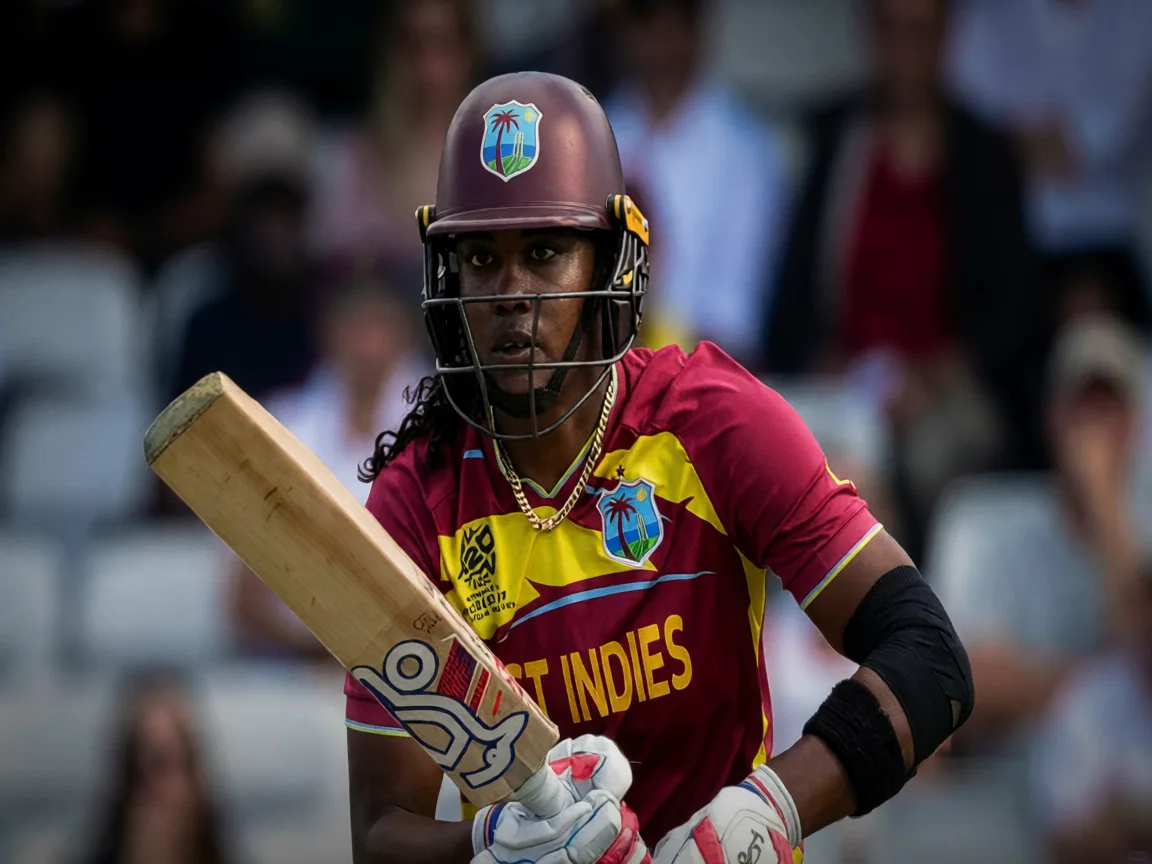
Hayley Matthews Removes All Doubt With 159-Run Masterclass Against Ireland
Hayley Matthews delivered a career-defining 159 and three wickets to dismantle Ireland in the first ODI at Bready.
The Guessing Game: How World Cup Stars Become Icons Before the Whistle Blows
World Cup player quizzes captivate millions, revealing how tournament fame transcends the pitch and shapes modern football culture.

Seven Survivors: The Backbone of Clarke's Scotland Revolution
Only seven players remain from Steve Clarke's first Scotland squad to the 2026 World Cup, revealing a stunning evolution.