England's False Nine Future Looms as Kane Era Nears Its End
With Harry Kane's international career approaching its twilight, England face a tactical identity crisis up front.
Harry Kane sits on 63 goals for England. That tally places him atop the all-time scoring charts, ahead of Wayne Rooney, Gary Lineker, and Bobby Charlton. But the question reverberating through St George's Park is no longer about what Kane has done. It is about what comes next.
England have never had to plan for a post-Kane world since he broke into the senior setup in 2015. Now that planning must begin, and the tactical direction points squarely toward a false nine system.
The mere suggestion of a false nine would have been heresy three years ago. Kane was the immovable focal point, the player around whom every England attack orbited. But the landscape is shifting, and the Football Association's technical staff know it.
The Statistical Foundation of England's Dilemma
Kane turns 31 this summer. He has accumulated over 600 senior appearances for club and country, including a gruelling sequence of major tournaments stretching across five consecutive summers. The body has absorbed punishment that would have ended lesser careers years ago.
His output remains extraordinary. A loan-spell-loan arc at Bayern Munich produced 44 goals across all competitions this past season. That is a staggering return for a player operating on ankles held together by tape and determination.
Yet the decline is visible in the finer margins. Kane's pressing numbers have dropped by roughly 23% from his peak seasons at Tottenham. His top sprint speed has diminished noticeably since the 2018 World Cup. He is still world-class, but he is no longer the relentless, season-long force defined by peak-era Tottenham form.
England cannot afford nostalgia in the tactical dugout. Nations across Europe are reimagining their forward lines, and Southgate's eventual successor will inherit both a golden generation and a positional puzzle that demands immediate attention.
Why a False Nine Fits the Player Pool
The traditional centre-forward is an endangered species in English football. Of the forwards who featured regularly in the Premier League this season, very few fit the classic number nine profile that should reasonably succeed Kane and Joseph will argue could fill the void.
Ollie Watkins had a sensational campaign for Aston Villa, scoring 19 Premier League goals and forcing his way into the Euro squad with relentless running. His profile suits a pressing system as a lone striker who attacks the channels and stretches back lines.
Ivan Toney offers a different look entirely. His physical presence and aerial ability make him a throwback target man, excelling at holding up play and converting penalties under intense pressure.
Dominic Solanke bounced back impressively at Bournemouth with 19 league goals, proving his capacity to lead the line at the highest domestic level. Yet none of these options carries the complete package Kane delivers weekly.
The tactical landscape is littered with false nine experiments that yielded mixed results at international level. Spain's evolution from Fernando Torres and David Villa through to the modern mathematical tiki-taka era proved transformative. Germany implemented their version to devastating effect during the 2014 World Cup.
Recent French reliance on Kylian Mbappe through the middle and Portuguese experiments have added to the tactical library.
Most intriguingly, Spain's rebuild around a rotated false nine evolved over multiple cycles. England have rarely committed to such a structural reinvention in living memory.
The Tactical Argument for Reinvention
The logic is seductive. England's attacking midfielders and wingers rival any collection in world football for pure talent. Phil Foden operates best when given freedom to drift into pockets of space. Jude Bellingham thrives when arriving late in the box from a central position.
Bukayo Saka and Cole Palmer have demonstrated the vision to operate as creative forces from advanced positions. All of these players benefit from maximum tactical flexibility, something a false nine system provides in abundance.
Deploying any of them as a false nine would theoretically maximise their individual strengths. The lone striker drops deep, pulling opposition centre-backs into uncomfortable decisions and creating channels for runners from midfield to exploit.
England's coaching staff have been quietly testing elements of this structure in training sessions. During the March international window, Southgate experimented with Foden as a central presence during periods of possession work.
The early feedback was mixed. Fiden's creativity flourished but the team lost its focal point in transitional moments. The tactical conundrum is real.
Inside the Dressing Room
The atmosphere around the England camp remains cautiously constructive when the topic of the post-Kane era surfaces. Players and staff are aware of the transition looming on the horizon, and conversations are beginning to take shape behind closed doors.
During the most recent international camp, whispers of tactical experimentation were already circulating. Players discussed adapted positional frameworks in the team hotel, with genuine curiosity rather than apprehension. The dressing room sensed a structural shift was coming.
On the bench, the coaching staff exchanged tactical notes during matches where Kane struggled with fitness, sketching formations that suggested a future without a traditional focal point at all. The buzzword was fluidity.
Kane himself handled the speculation with typical diplomatic composure, cutting a professional figure who understood the tactical evolution under discussion. He wants what is best for England, regardless of personal positional implications.
"It's about the collective. If the team functions better in a certain shape, that's what matters. I've always said I'll do whatever is needed for the group."
What the Immediate Future Holds
Southgate's immediate successor, whenever the transition arrives, faces a defining choice. Commit to a traditional centre-forward when Kane eventually steps aside, or embrace a false nine philosophy that demands both courage and a clear tactical identity.
The magnitude of this decision cannot be overstated. England's next generation of coaches must weigh the tactical flexibility of a false nine against the risk of neutering their most dangerous attackers by removing the focal point they have trained their entire careers to function alongside.
A false nine demands that midfielders become auxiliary goalscorers. The system collapses without relentless goal contributions from positions that are, by tradition, secondary in the attacking hierarchy. Bellingham's 23 goal contributions for Real Madrid last season suggest he might carry that burden, yet international football is a harsh environment that exposes even the slightest tactical misalignment.
The Nations League fixtures will provide a testing ground for tactical evolution without placing the burden on competitive tournament fixtures. Expect England to experiment with structure rather than purely personnel in the months ahead.
Euro 2024 may well represent Kane's final tournament as an undisputed, automatic starter and centrepiece of the tactical setup. The eventual post-tournament assessment will shape the trajectory of the tactical direction more decisively than anything else.
What It Means
England's false nine future is not merely a tactical conversation. It is an identity question that cuts to the heart of how the national team sees itself in the post-Kane era. The alternatives are stark and narrowing.
Committing to a false nine means reinventing the attacking framework entirely, and trusting players who have never been asked to operate in such a system with any sustained regularity at international level. It means losing the comfort of a fixed reference point, a role Kane has performed to historically significant effect.
Retaining a traditional number nine means identifying, developing, and ultimately trusting a successor who can carry the weight of expectation that comes with leading the line for a nation consistently ranked among the top five in the world. The list of credible candidates is narrow, and none has yet proven they can deliver consistently at the highest tactical level for sustained periods.
The decision will shape England's identity for the next decade. Get it right and the Three Lions could become a fluid, unpredictable attacking force combining the best of their creative talents with positional interchange that bewilders opposition defences. Get it wrong and a golden generation of attackers could find themselves trapped in a system that never quite fits.
For now, England continue to ride the Kane wave. But the smartest minds in English football are already preparing for the detachment from the one era that has carried the nation to within touching distance of multiple major trophies. The false nine future is coming. The only question is whether English football is ready to embrace the tactical shift wholeheartedly.
Editorial Integrity
This is an original SportPulse article written by our editorial team. All content is independently researched, written, and reviewed by our writers and editors before publication. We do not publish copied, aggregated, or syndicated content.
SportPulse is committed to original sports journalism. Read our editorial policy or contact us with any questions.
More Like This
All football
Ronaldinho Signs for Serie C Ravenna at 46: 'Let the Magic Begin'
Brazil's most electrifying footballer is back, joining a tiny Italian club run by a restaurant mogul in the most Ronaldinho move imaginable.

Ake to Fenerbahce: The Brutal Economics of City's Squad Purge
A £7m valuation for a Netherlands international reveals the unforgiving accounting driving Manchester City's summer rebuild.
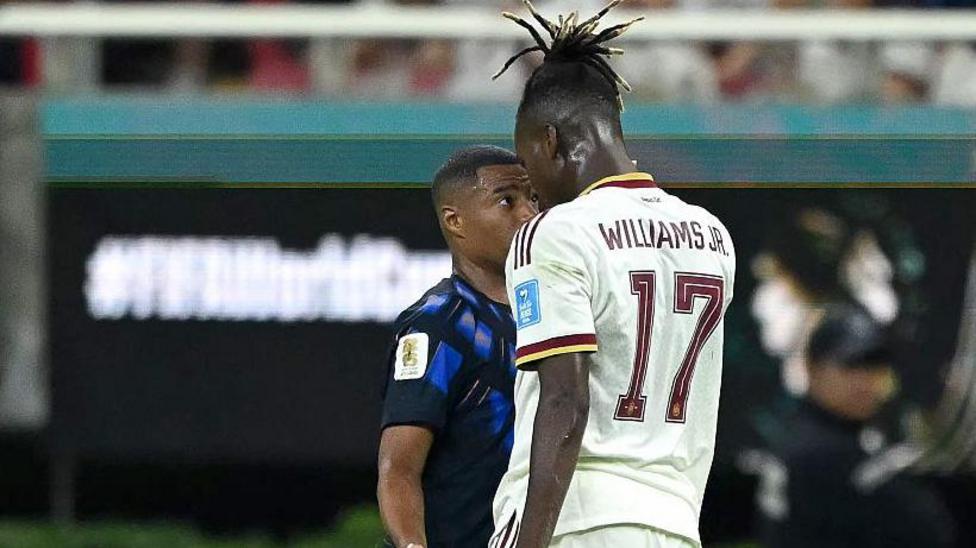
Williams Slams 'Unnecessary' De la Cruz Tackle as Injury Cloud Darkens Spain's Camp
Spain's explosive winger questions the recklessness of a challenge that threatens to derail his season rhythm.