England's Knockout Gauntlet: The Road to Berlin Runs Through Familiar Demons
England qualified for the knockouts, but the path to the final is paved with tactical landmines and historical ghosts.
The Weight of Expectation Never Lifts
Gareth Southgate stood at the touchline, arms folded, jaw clenched. England had done what they needed to do. Group stage survival was never truly in doubt, not with this squad, not with these resources. But surviving is not the mission. The mission is Berlin, the Olympiastadion, July 14th. And between here and there lies a gauntlet that has historically broken this team in ways no tactical blueprint can account for.
England's knockout bracket is now mapped out, and the road to the final is anything but a procession. The Three Lions have navigated the group phase with the kind of controlled, sometimes frustrating efficiency that has become the Southgate trademark. Not always pretty. Not always convincing. But functional enough to advance. The question that now hangs over every press conference, every training session, every pre-match huddle: is functional enough?
Reading the Bracket
Let's break down what lies ahead. England's knockout stage path begins in the Round of 16, and depending on results elsewhere, the bracket could throw up some genuinely daunting opponents. This is where tournament football shifts from the calculated group phase to the raw, unforgiving single-elimination pressure cooker. There are no second chances. No safety net of goal difference. No "well, we can still qualify if other results go our way."
The Round of 16 presents the first real examination. England will face an opponent who, by virtue of reaching the knockouts, has already proven they belong. These are teams that have nothing to lose and everything to gain. That dynamic alone makes this stage more dangerous than anything the group phase offered.
Should England advance, the quarterfinals await. This is historically the stage where Southgate's teams have shown both their best and worst tendencies. The 2018 World Cup quarterfinal against Sweden was a masterclass in set-piece dominance and defensive organization. The Euro 2020 quarterfinal against Ukraine was a ruthless, four-goal demolition that suggested this team had finally learned to kill games when they sensed blood. But memory also serves up darker chapters, the kind England fans carry like scar tissue.
The Tactical Equation
Southgate's system has evolved, but the core questions remain unanswered. Can England control the midfield against elite opposition without Declan Rice being a one-man shield? Is there a way to get the best out of Jude Bellingham, Phil Foden, and Bukayo Saka simultaneously without sacrificing structural balance?
"The problem isn't talent. It's coherence. England have 11 exceptional individuals. The challenge is making them function as a unit that's greater than the sum of its parts." — Tactical analysis from a Premier League coaching source
The Bellingham-Foden question has lingered like an unresolved chord throughout the group stage. Both are generational talents. Both want the same pockets of space. Both are at their most devastating when the team is built around them. Southgate has tried to accommodate both, sometimes to the detriment of neither playing at their peak level. In knockout football, you cannot afford passengers, and you cannot afford stars operating at 80 percent.
The defensive structure has been England's calling card in tournament football under Southgate. The back line has been organized, disciplined, and difficult to break down. John Stones brings the ball-playing composure that allows England to build from the back, while the fullbacks provide width and attacking thrust. But the high press from certain knockout opponents could expose the spaces between midfield and defense that the group stage opponents lacked the quality to exploit.
Behind the Deal: The Business of Knockout Football
There is a financial dimension to England's run that rarely makes the headlines but matters enormously to the Football Association. Every round England advance adds significant revenue through UEFA prize money, broadcast bonuses, and commercial activations. The difference between a Round of 16 exit and reaching the final is worth tens of millions of pounds to the governing body.
More importantly, deep tournament runs validate the FA's investment in the national team program, the coaching infrastructure, and the player development pathway that has produced this golden generation. Southgate's own contract situation, his future beyond this tournament, will be heavily influenced by how far this team progresses. A quarterfinal exit and the knives come out. A semifinal appearance and the conversation shifts entirely.
Historical Ghosts
England's knockout record at major tournaments is a study in heartbreak punctuated by occasional breakthroughs. The penalty shootout failures, the semifinal collapses, the quarterfinal curse that seemed unbreakable for decades. Southgate himself is the living embodiment of that trauma, the man whose missed penalty in Euro 96 sent England home.
He has since rewritten much of that narrative. The 2018 World Cup semifinal, the Euro 2020 final at Wembley, the 2022 World Cup quarterfinal against France where England were arguably the better team but fell to a moment of individual brilliance from Aurélien Tchouaméni. Each of these experiences has added layers to this squad's understanding of what knockout football demands.
"We've been to semifinals. We've been to a final. The next step is the hardest one in football. But these players know what it takes now." — Southgate's message to his squad
The question is whether experience translates into execution when the moment arrives. England's squad is arguably deeper and more talented than any Southgate has had at his disposal. Bellingham is fresh off a Champions League-winning season with Real Madrid, operating at a level that places him among the best players on the planet. Saka continues to evolve into one of Europe's most complete wingers. Foden has the technical ability to unlock any defense on his day.
What the Numbers Tell Us
- England have won seven of their last 10 knockout matches at major tournaments under Southgate
- The Three Lions have kept clean sheets in four of their last six knockout stage games
- Bellingham has been directly involved in a goal every 89 minutes across all competitions this season
- England's expected goals (xG) in the group phase suggests they have been slightly underperforming their chances, which could be a warning sign or a sign of variance correcting itself
- Southgate's teams have a 68 percent win rate in knockout football, the best of any England manager in the modern era
The Road Ahead
The knockout stage begins now, and everything before it becomes irrelevant. Group standings, goal tallies, individual awards from the group phase, none of it matters when the whistle blows in the Round of 16. This is where England's tournament truly starts, and where the narrative either reaches its crescendo or hits another brutal full stop.
The path to Berlin is clear. The opponents are identifiable. The tactical questions are known. What remains unknowable is how this group of players will respond when the pressure reaches its peak, when one mistake means elimination, when the weight of an entire nation's hope bears down on young shoulders.
England have the talent. They have the experience. They have a manager who has been here before and learned from every scar. Whether that is enough to finally lift the trophy that has eluded this nation for 58 years is the only question that matters now.
The gauntlet awaits.
Editorial Integrity
This is an original SportPulse article written by our editorial team. All content is independently researched, written, and reviewed by our writers and editors before publication. We do not publish copied, aggregated, or syndicated content.
SportPulse is committed to original sports journalism. Read our editorial policy or contact us with any questions.
More Like This
All football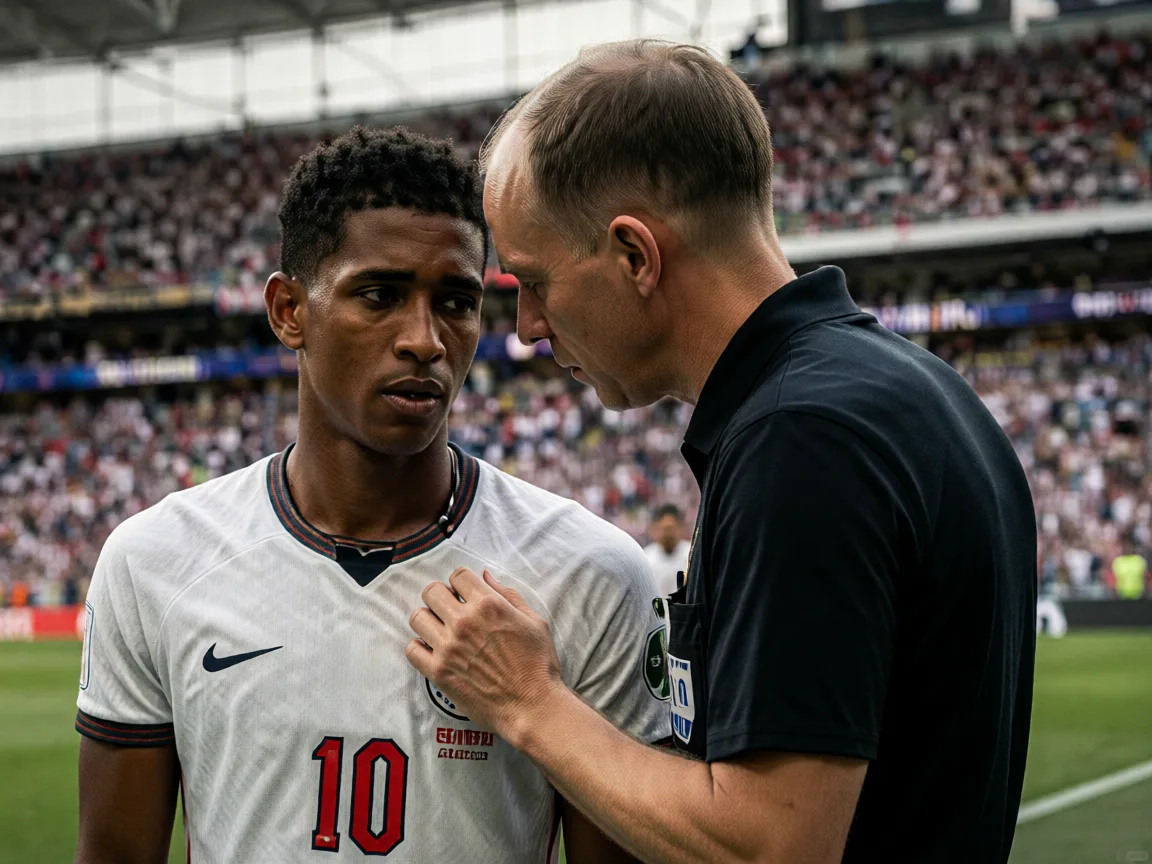
Bellingham Silences Tuchel With Two-Goal Masterclass as England Reach Semi-Finals
Jude Bellingham shrugged off his manager's criticism with a brace that fired England into the World Cup last four.

Messi Shatters World Cup Scoring Record With Brace Against Austria
Lionel Messi rewrites World Cup history with a two-goal salvo that sends holders Argentina into the last 32.
Franco's Ankle Blow Leaves Swansea Scrambling in Promotion Chase
Swansea's Goncalo Franco faces three months out with ankle ligament damage, derailing the midfielder's breakthrough and Luke Williams' promotion push.