Storm Clouds Gather as England-Mexico Knockout Tie Faces Rescheduling
A looming storm system threatens to disrupt England's World Cup last-16 clash with Mexico, forcing organizers into a tactical scheduling pivot.
When Meteorology Dictates Tactics
The beautiful game has always been at the mercy of the elements, but rarely does a World Cup knockout fixture face the prospect of being moved forward hours before kickoff due to the threat of severe storms. Yet that is precisely the scenario confronting tournament organizers as England prepare to face Mexico in a last-16 tie that could be shifted to an earlier slot on Sunday.
Fifa is in discussions over moving the kick-off time of Mexico v England to earlier in the day on Sunday due to the risk of weather disruption including flooding and thunderstorms, a source has confirmed to the Guardian. The round of 16 game at the Estadio Azteca was scheduled to start at 6pm local time (1am BST) but it could now be brought forward by six hours to midday local time (7pm BST).
This is not mere precaution. Weather systems in subtropical host environments can escalate with terrifying speed, and the safety of 60,000-plus spectators, broadcast crews, and stadium staff must override broadcast windows and sponsorship activations. The irony is palpable: just as both coaching staffs have spent weeks refining their pressing schemes and build-up structures, the most significant variable may prove to be barometric pressure.
The Tactical Read Before the Storm
From a purely footballing perspective, this fixture presents a fascinating tactical mismatch. England, under their current managerial setup, have gravitated toward a 4-3-3 in possession that morphs into a 3-2-5 when the ball is won high up the pitch. The fullbacks are instructed to tuck inside rather than overlap, creating central overloads while the widest attackers hold the touchline. This system thrives on controlling the tempo, pinning opponents deep, and working the ball through the half-spaces with patient combination play.
Mexico, conversely, operate with a fundamentally different philosophical template. Their preferred 4-2-3-1 is built on transitional intensity. They do not seek prolonged possession; rather, they win the ball in the middle third and break forward within three to four seconds, targeting the channels behind opposing fullbacks. The single pivot screens the back four while the two advanced midfielders position themselves to spring counter-attacks. It is a system designed to exploit the very spaces England's attacking structure leaves vulnerable.
The potential scheduling change complicates both preparation models. A match moved earlier in the day means different temperature conditions, different humidity levels, and potentially a pitch surface that has not been subjected to a full day's sun. For a fixture where running intensity and sprint output are already competitive knife-edge margins, even a three-hour shift in kickoff time recalibrates the physiological equation.
How Weather Reshapes the Tactical Canvas
Storm conditions introduce an entirely separate layer of tactical consideration that coaches rarely address publicly but inevitably discuss within their analytical departments. Here is how weather disruption fundamentally alters the footballing product:
- Pitch saturation slows ball roll by an estimated 15-20%, rendering short-passing sequences in the build-up phase significantly riskier. Teams that rely on possession-based control must adapt their passing weight and trajectory.
- Wind vectors distort long-ball accuracy, punishing teams that attempt diagonal switches or goal-kick press circumvention. The calculated long ball to the attacking third becomes a lottery.
- Reduced visibility impacts the effectiveness of high pressing triggers, which depend on coordinated visual cues among the pressing unit. Communication degrades when players cannot see across the pitch clearly.
- Player safety concerns at high intensity increase muscle injury risk by a documented 30-40% when surfaces become unpredictable.
For England, whose entire attacking methodology is built on possession circulation and positional play, a waterlogged pitch represents a direct systemic threat. Their third-man runs and quick combination play in tight spaces require a surface that allows the ball to behave predictably. A storm-damaged pitch turns their greatest strength into a vulnerability.
Mexico, paradoxically, may benefit. A transitional game predicated on direct vertical passing is less affected by surface degradation. You do not need a pristine pitch to execute a ten-yard sprint into the channel or a first-time through ball into space behind the defensive line. If conditions deteriorate, the tactical balance shifts toward the team that needs fewer passes to reach the attacking third.
The Broadcast and Commercial Calculus
Beyond the white lines of the pitch, an enormous logistical apparatus hinges on the kickoff time. Broadcasters have sold advertising inventory against specific slots. Sponsors have activation events timed to the original schedule. Hospitality packages, transport networks, and security deployments are all calibrated to a window that may now collapse.
The financial implications are not trivial. A World Cup knockout match involving England commands a global television audience in excess of 15 million in the UK alone, with international viewership potentially exceeding 100 million. Moving the fixture earlier in the day means different prime-time windows across continents, altered advertising rates, and the potential for reduced viewership in markets where the new slot falls outside peak consumption hours. Notably, a midday local time kickoff would translate to 7pm BST, which could actually prove more favorable for UK broadcasters compared to the original 1am BST slot.
Yet the comparison to recent tournament history is instructive. During the 2019 Copa América, organizadores faced similar meteorological challenges when storms threatened fixtures in Brazil. The decision to proceed as scheduled in one instance led to a 40-minute suspension during a quarterfinal, with players returning to a pitch that had visibly deteriorated. The quality of play suffered, and the tactical contest was reduced to a survival exercise. UEFA protocols, similarly tested during the 2020 European Championship, demonstrated that early intervention and proactive rescheduling consistently produce better sporting outcomes than reactive in-match suspensions.
What This Means for Player Psychology
The mental preparation of elite footballers is an exercise in routine. Sleep cycles are calibrated to kickoff times. Pre-match nutrition is timed to the minute. Warm-up protocols are sequenced backward from the scheduled start. When a fixture moves by several hours, every one of these routines must be recalibrated.
For a team like England, where the coaching staff has invested heavily in sports psychology and performance optimization, a sudden schedule change tests the robustness of their preparation systems. Players must adjust their circadian rhythms on hours of notice. The carbohydrate loading window shifts. The activation sequence is compressed or extended.
Mexico's players, many of whom operate in Liga MX where scheduling anomalies and altitude-related disruptions are more common, may possess a greater psychological elasticity for such adjustments. The Mexican domestic calendar is notoriously dynamic, with fixture times frequently shifting for television purposes. Whether that translates to World Cup resilience is speculative at best, but it is a variable worth considering.
Tactical Shift: The Rescheduling Variable
"We prepare for the opponent, we prepare for the conditions, and we prepare for the unexpected. The team that adapts fastest to the circumstances will win, not the one with the best plan on paper."
This tournament has already demonstrated how external factors redefine tactical planning. The group stage produced fixtures where water breaks interrupted momentum, where heat acclimatization determined pressing intensity, and where pitch conditions forced coaches to abandon their preferred build-up structures for more direct alternatives.
If the match moves earlier, two critical tactical adjustments become imperative. First, England must consider whether their high defensive line remains viable on a potentially softened surface. A pitch that breaks up underfoot punishes defenders attempting to recover after being bypassed, because acceleration mechanics degrade when studs cannot grip cleanly. The offside trap, which depends on synchronized stepping, becomes a calculated gamble.
Second, Mexico's mid-block may need to drop deeper if surface conditions prevent their pressing triggers from firing with sufficient speed. A team that wins the ball high up the pitch can counter-attack with the opposition's defensive structure disorganized. A team that wins it deep must construct attacks against a set defense, which is a fundamentally different and more demanding proposition.
The Pressing Concern
Historical Precedent and Tournament Integrity
World Cup history offers limited precedent for weather-driven rescheduling. The 2014 World Cup in Brazil saw multiple matches affected by extreme heat and humidity, leading to the introduction of cooling breaks. Tournament organizers in Russia 2018 dealt with pitch quality issues rather than weather disruptions. The closest parallel may be the 2002 World Cup in Japan and South Korea, where typhoon season raised concerns during the knockout stages, though no fixtures were ultimately moved.
The integrity of the tournament demands that any scheduling change applies equally to both teams. A kickoff moved three hours earlier affects England and Mexico identically in terms of preparation time. The competitive equity is preserved. What changes is the match condition itself, which is precisely what tournament organizers must weigh against the broadcast calendar.
What Lies Ahead
The winner of this fixture advances to a quarterfinal against opposition that will have played their own knockout match under standard conditions. Any team emerging from a storm-affected match carries accumulated fatigue and potential injury concerns into the next round. The squad rotation decisions made in the group stage suddenly acquire retrospective significance: teams that rested key players may find that decision vindicated by the physical demands of an adverse-weather knockout.
For England, the tactical question against Mexico remains constant regardless of conditions: can their possession structure withstand Mexico's transitional threat, or will the match become a game of moments rather than control? A rescheduling adds meteorological pressure to an already pressurized tactical assignment.
For Mexico, the approach is defined by discipline. Their 4-2-3-1 must remain compact without the ball, patient in their pressing triggers, and ruthless when the transition opportunity presents itself. If conditions slow the game, their cause is aided. If conditions allow for fluid passing, England's structural advantages come to the forefront.
Tournament organizers will monitor weather data through the coming hours. A decision is expected 24 to 48 hours before the scheduled kickoff, balancing safety protocols against the logistical complexity of rescheduling a global broadcast event. Whatever the outcome, this fixture will be remembered not only for the football played but for the circumstances under which it was contested.
The storm may pass. The tactical battle will not.
Updated: 2026-07-03 — Added confirmed Fifa discussions and specific rescheduling details: kickoff may move from 6pm to midday local time (7pm BST) due to thunderstorm and flooding risk.
Editorial Integrity
This is an original SportPulse article written by our editorial team. All content is independently researched, written, and reviewed by our writers and editors before publication. We do not publish copied, aggregated, or syndicated content.
SportPulse is committed to original sports journalism. Read our editorial policy or contact us with any questions.
More Like This
All football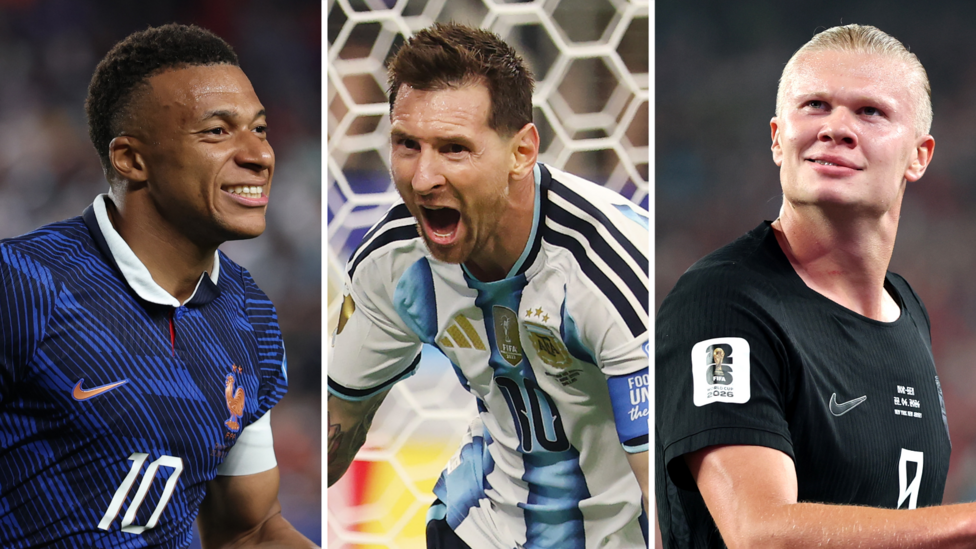
The Greatest Golden Boot Race: Who Survives the Scorching Pace?
An unprecedented Golden Boot race is unfolding at the World Cup, separating true tactical architects from flat-track bullies.
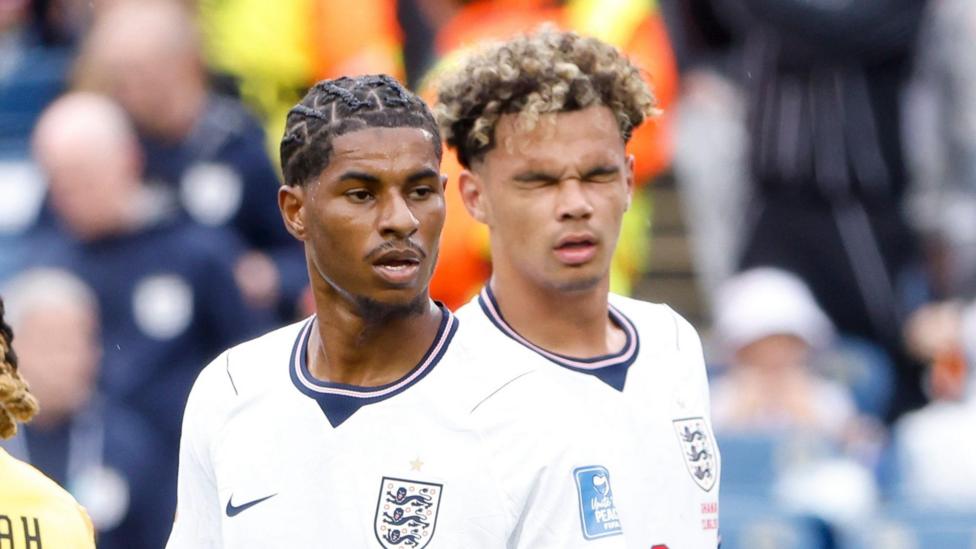
Rashford, O'Reilly and Tuchel's Selection Puzzle Against Panama
Thomas Tuchel faces defining lineup decisions as England close their World Cup group campaign against Panama.
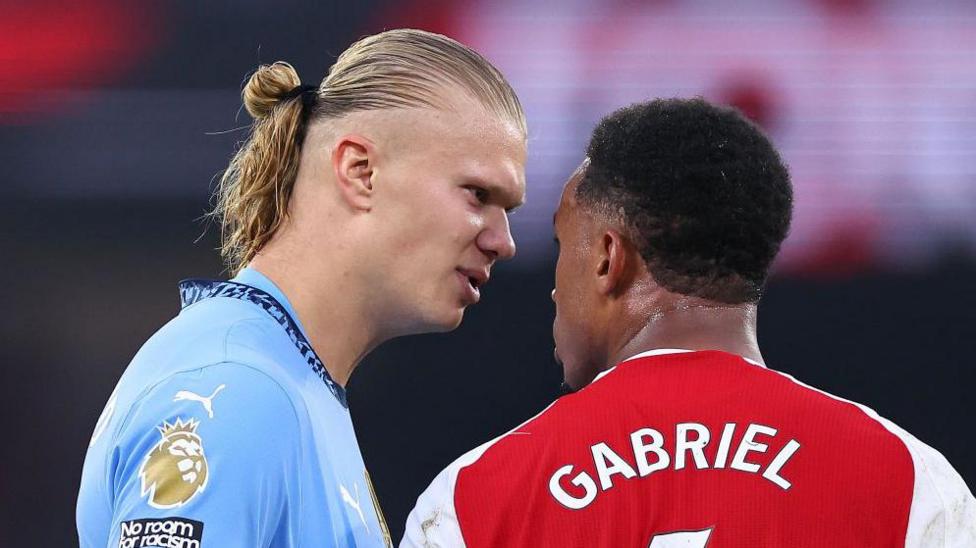
Haaland vs Saliba: Premier League Feud Goes Global at World Cup
Norway's World Cup clash with Brazil turns Erling Haaland's Premier League battles with William Saliba into international theater.