England's Second Game Syndrome Strikes Again in Ghana Stalemate
England delivered a torturous goalless draw against Ghana, reigniting fears of their cursed second group game.
The sirens are ringing. Not the celebratory kind that English fans hoped would be echoing through the tournament, but the familiar, grating alarms of a team reverting to type. Against Ghana, the Three Lions produced a performance so utterly sterile that it bordered on performance art. A 0-0 draw that felt less like a hard-fought point and more like a surrender to their own psychological demons.
England's second game syndrome is real, and it is suffocating.
The Void of the First Half
You could hear a pin drop in the stands. You could hear the collective groans of millions watching from home. But on the pitch? Absolute silence. The opening 45 minutes against Ghana wasn't just lacking in quality. It was an exercise in sterile domination, a hauntingly vacant display that will go down as one of the least eventful halves of football ever played at this level.
No shots on target of any real consequence. No runs that broke the defensive line. No urgency. Just endless, soul-crushing sideways passing against a team perfectly content to watch England pass themselves into a trance.
"The first half must surely be one of the least eventful 45 minutes of football ever played." — Post-match consensus
Ghana didn't even need to park the bus. They simply stood in their shape, watched England knock the ball around in front of them, and waited for the inevitable turnover. The Black Stars possessed a tactical discipline that exposed the fundamental flaw in England's approach: possession without penetration is just a rehearsal with no opening night.
Decoding Second Game Syndrome
This is not a new phenomenon. It is a chronic, recurring illness that has plagued English tournament football for decades. The narrative writes itself. Open the tournament with flair, with pace, with the boundless optimism of a team that looks utterly unplayable. Then, come the second group game, the shoulders hunch, the passing slows, and the fear creeps in.
The stats tell a brutal story of this institutional hesitancy.
- In their last five major tournaments, England has won just one second group stage game in regulation time.
- The team averages 0.8 goals per game in second group matches, compared to 2.4 in opening fixtures.
- Expected goals (xG) routinely plummets by over 40% from Matchday 1 to Matchday 2.
It is psychological. The weight of the badge, the expectation of a nation, and the sudden realization that qualification is just one result away causes a mental paralysis. Against Ghana, that paralysis was absolute. Every touch was heavy. Every decision was a second late. The swagger of the opener vanished, replaced by the familiar specter of English caution.
The Tactical Stranglehold
Give Ghana their due. They didn't stumble into this result by accident. The Black Stars came with a masterplan, and they executed it with ruthless precision. Their mid-block was a masterclass in defensive architecture, designed specifically to frustrate and provoke errors.
England's attacking midfielders found themselves in a positional nightmare. With no space between the lines and wingers forced backwards, the central channels became a congested wasteland. The fullbacks pushed high, but the delivery into the box was abysmal. Cross after cross was swallowed up by a Ghanaian center-back who barely had to jump.
Tactically, England needed a Plan B. Instead, they offered a Plan A repeated on an endless, frustrating loop. The limitations of inverted wingers Madueke and Gordon were cruelly exposed. They were unable to adjust their game, even when they kept running down the same dead end street. No runs from deep. No clever midfield rotations to pull defenders out of position. Just a stubborn insistence that if they kept the ball long enough, a gap would magically appear. It never did.
Bellingham Escapes Red Card
Amid the frustration, England nearly compounded their on-field problems with a disciplinary flashpoint. Jude Bellingham was fortunate to avoid a red card after covering his mouth while talking to Ghana's Jordan Ayew. The England midfielder's gesture—seen by many as an attempt to hide what he was saying—could easily have been interpreted as provocative or confrontational by the match officials. Yet, despite the tension of the moment and the scrutiny of the VAR, Bellingham was not shown a red card, allowing England to at least finish the stalemate with eleven men on the pitch.
Transfer Intel: The Cost of Tactical Inflexibility
While this was a World Cup match and not a boardroom deal, the business of international football is always lurking beneath the surface. For several of England's so-called 'golden generation,' this tournament is a shop window.
A poised, dynamic performance against tough opposition inflates a market value. Aghost performance shrinks it. Agents watching that dire first half would have been frantically recalculating valuations. The inability of England's creative hub to unlock a mid-tier defense raises uncomfortable questions about the technical ceiling of the squad's supporting cast.
When the game demanded guile, England offered grind. When it required creative chaos, they supplied structured sterility. These are the moments that make or break transfer premiums. Visibility on the biggest stage is everything, and England's attack collectively chose the worst possible time to go invisible.
Ronaldo Joins the Party
While England were busy putting the world to sleep, the tournament was waking up elsewhere. Cristiano Ronaldo, a man who has built an entire career on refusing to be ignored, finally arrived at the party.
Ronaldo joining the goalscoring fray serves as a brutal contrast to England's blunt attacking edge. Where England hesitated, Ronaldo attacked. Where the Three Lions sought the safe pass, the Portuguese legend demanded the ball in areas that hurt. His impact on the tournament narrative is immediate and visceral. He shifts the gravitational pull of the entire competition with a single, trademark celebration.
It is a stark reminder that while England are battling their own minds, other heavyweights are finding their ruthless rhythm. The World Cup does not wait for teams lost in their own psychological fog. It punishes them. Often, it punishes them brutally.
What Comes Next
Gareth Southgate, or the man in the dugout, faces his most pressing crisis of man-management. The temptation will be to tear up the tactical blueprint and start over. That would be a mistake. The structural foundation is sound. It is the mentality that requires emergency surgery.
The group is still very much in England's hands. A draw against Ghana is a setback, not a death sentence. But the final group game now carries the weight of a must-win, and under that specific pressure, this team has historically folded like a cheap suit.
The change room has to shift. substitute options must be utilized differently. The obsession with control must be balanced with a willingness to risk the chaos of a genuine attacking outlet. If England cannot find a way to switch from suffocating caution to calculated aggression, this tournament will end not with a bang, but with the same whimper we heard against Ghana.
The second game syndrome is a disease. Right now, England are coughing blood into the tournament. Only time will reveal if they have the cure.
Updated: 2026-06-24 — Added analysis of Jude Bellingham avoiding a red card for covering his mouth while talking to Jordan Ayew.
Editorial Integrity
This is an original SportPulse article written by our editorial team. All content is independently researched, written, and reviewed by our writers and editors before publication. We do not publish copied, aggregated, or syndicated content.
SportPulse is committed to original sports journalism. Read our editorial policy or contact us with any questions.
More Like This
All football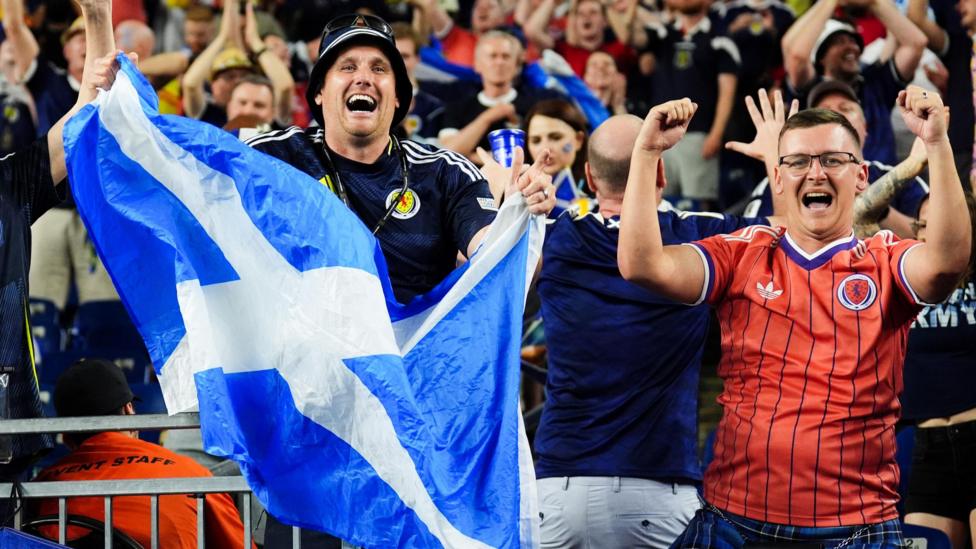
Scotland On American Soil: A World Cup Generation Has Waited Decades For
BBC Scotland's punditry presence in the US signals a new chapter for a nation starved of World Cup football.
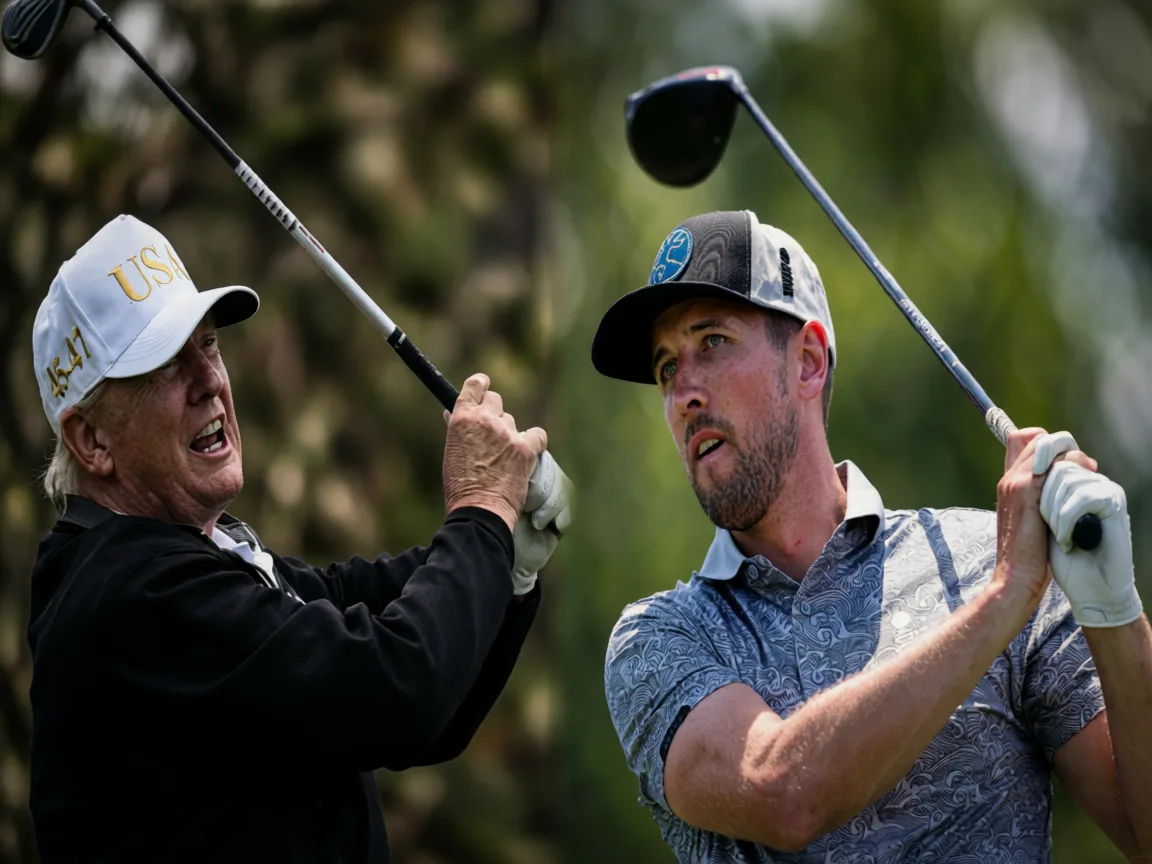
Kane Recalls Surreal Golf Round With President Trump
England captain Harry Kane opens up about an unlikely golf outing with Donald Trump, revealing the bizarre intersection of football and politics.
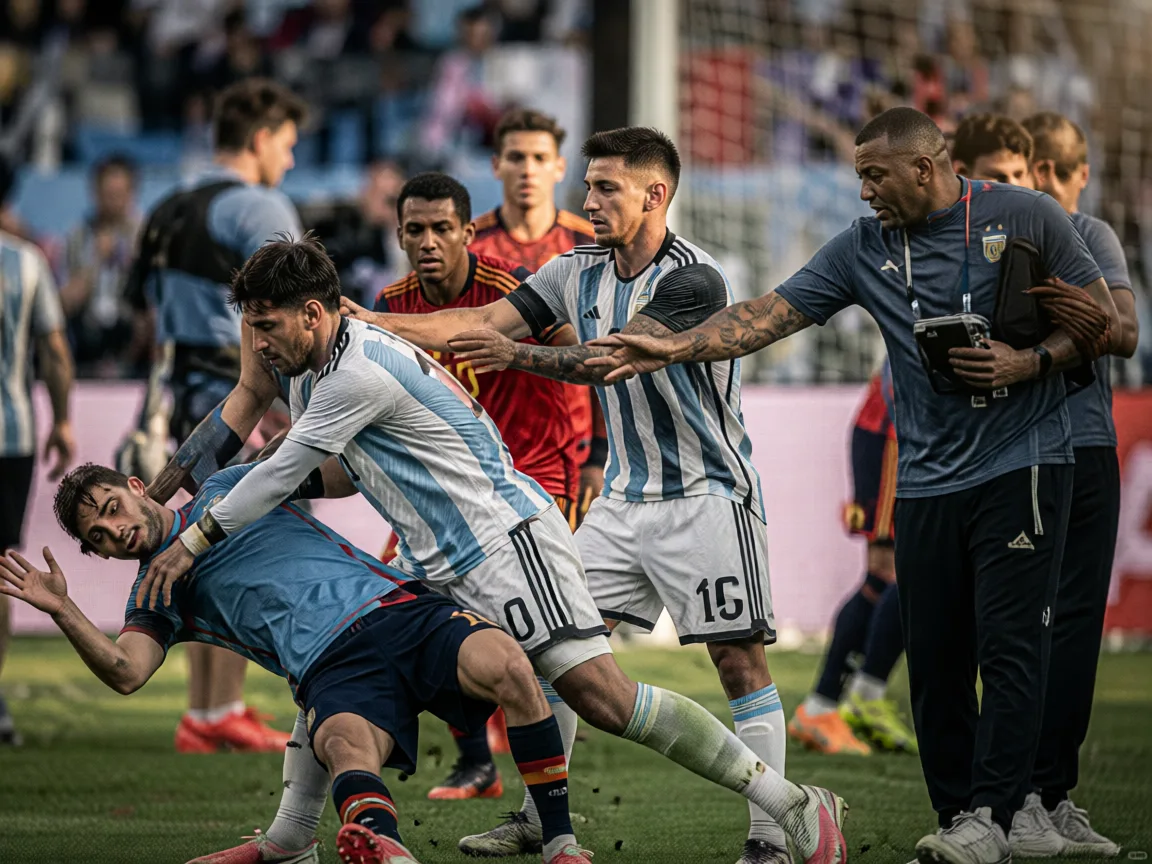
Gangs of New Jersey: How the World Cup Final Exploded Into Violence
Spain were crowned champions, but the real story was the extraordinary brawl that consumed both teams as the final whistle loomed.