Scotland On American Soil: A World Cup Generation Has Waited Decades For
BBC Scotland's punditry presence in the US signals a new chapter for a nation starved of World Cup football.
Finally, The Wait Is Over
Scotland are at a World Cup. Let that sentence settle, because an entire generation of Scottish football supporters has never been able to say it with a straight face. The last time the Tartan Army descended on a global tournament, France 1998 delivered John Collins' penalty against Brazil, a heartbreaking collapse against Morocco, and the lingering taste of what-might-have-been. Twenty-eight years on, with the tournament now staged across the United States, Canada, and Mexico, Scotland's return to football's biggest stage is not merely a sporting event. It is a cultural reckoning with decades of near-misses, playoff heartbreak, and the stubborn belief that this small nation belongs among the world's elite.
The fact that BBC Sport Scotland has deployed seasoned pundits Neil McCann and Leanne Crichton to the United States to cover the campaign tells you everything about the magnitude of this moment. This is not a token gesture or a cost-saving exercise broadcasting from a studio in Glasgow. Scotland's national broadcaster has boots on the ground, voices embedded in the tournament environment, and a mandate to bring the campaign to life for millions back home.
McCann And Crichton: Why Their Presence Matters
Neil McCann knows what it means to wear the Scotland shirt at a major tournament. The former Rangers and Dundee winger earned 26 caps for his country and represented Scotland during an era when qualification was still considered a baseline expectation rather than a moonshot. His transition into punditry has been marked by tactical clarity and an unwillingness to sugarcoat performances, qualities that serve a fanbase hungry for honest assessment rather than hollow optimism.
Leanne Crichton brings a different but equally vital perspective. A former Scotland Women's international who represented the country at the 2019 Women's World Cup in France, Crichton understands the pressure of performing on the global stage in a Scotland jersey. Her presence signals that BBC Sport Scotland views this World Cup coverage through a holistic lens, not merely as a men's football story but as a broader statement about where Scottish football stands on the international map.
Having both McCann and Crichton embedded in the US gives the coverage a dual advantage: tactical depth from a former professional who lived the qualifying grind, and emotional intelligence from someone who has experienced the unique intensity of a World Cup environment.
The pairing also reflects a deliberate editorial choice. Scottish football media has matured considerably in recent years, moving beyond the tired clichés of passion-and-commitment narratives toward genuine analytical substance. McCann and Crichton, individually sharp and complementary in their expertise, are well positioned to deliver exactly that.
The Weight Of History
To understand why Scotland's presence in the United States resonates so deeply, you need to appreciate the sheer misery of the intervening years. Between 1998 and now, Scotland have failed to qualify for six consecutive World Cups and five consecutive European Championships before finally breaking through to Euro 2020 (played in 2021) at Hampden Park. Even that breakthrough was bittersweet: Scotland exited at the group stage without winning a match, drawing with England but losing to the Czech Republic and Croatia.
The qualifying failures have been agonizing in their variety. There was the playoff defeat to Netherlands in 2003, the agonizing near-miss under Gordon Strachan in 2018 World Cup qualifying when Scotland finished third behind England and Slovakia on goal difference, and the penalty shootout loss to Serbia in the Euro 2020 playoff that was eventually reversed. Each failure carved another layer of scar tissue into the national psyche.
The expanded 48-team format for the 2026 World Cup, with UEFA allocated 16 berths instead of the previous 13, gave Scotland a more realistic pathway. But realistic and easy are not synonyms. Scotland still had to navigate a qualifying group, still had to produce results under pressure, and still had to prove that the progress seen under successive managers was more than cosmetic.
What The Campaign Demands
Scotland arrive at this World Cup without the luxury of being an unknown quantity. Opponents will have studied Steve Clarke's preferred tactical shape: the 3-4-2-1 system that has become the national team's identity, designed to be compact in defence while exploiting width through wing-backs. It is a pragmatic approach, born from the recognition that Scotland cannot out-talent most opponents but can out-organize them.
The squad itself is a blend of Premier League experience and domestic grit. Players like Andy Robertson (Liverpool captain, over 70 caps), Scott McTominay (a goalscoring midfielder who has become Scotland's unlikely talisman with a remarkable international goal record), and John McGinn (Aston Villa's tireless engine) form the spine. Behind them, a generation of younger players from the Scottish Premiership and lower English divisions provides depth that previous squads simply did not possess.
Key Tactical Questions
- Can Scotland's wing-back system withstand the pace and technical quality of group-stage opponents who will target the channels?
- Does McTominay's goal threat justify his advanced positioning, or does it leave the midfield exposed against elite counter-attacking teams?
- How does Clarke manage game states when Scotland fall behind, given the team's historical struggles to chase matches against organized defences?
These are the questions McCann and Crichton will be dissecting from their vantage point in the United States, and they are the ones that will define whether Scotland's campaign is a genuine competitive effort or merely a nostalgic tour.
The Tartan Army Factor
Never underestimate the Scottish travelling support. The Tartan Army has long been regarded as one of international football's most beloved fanbases, voted the best supporters at the 1998 World Cup by French locals and regularly praised for their good-natured, carnival-like atmosphere. At Euro 2020, despite the pandemic limiting attendance, Scotland's fans created a wall of noise at Wembley that visibly unsettled England.
In the United States, the dynamics are different. Travel distances are vast, time zones are punishing, and the cost of following a national team across multiple venues in a country that charges premium prices for everything from hotels to hot dogs will test even the most committed supporters. Yet early indications suggest significant Scottish presence at the tournament, with fan groups coordinating travel plans months in advance and social media buzzing with logistics.
The American setting also introduces an intriguing secondary audience. The Scottish diaspora in the United States is substantial, concentrated in cities like New York, Boston, Chicago, and parts of the Southeast. These communities, many with deep ancestral ties to Scotland, could provide unexpected pockets of support in stadiums that might otherwise be neutral or hostile.
Verdict
Scotland's World Cup campaign in the United States represents something more than 90-minute football matches. It is the culmination of a 28-year absence from the global stage, a validation of the incremental improvements in Scottish football infrastructure and talent development, and a test of whether a small nation can compete credibly in an expanded but still ruthlessly elite tournament.
McCann and Crichton's presence on the ground ensures that Scottish audiences will receive coverage with genuine substance, not just flag-waving sentimentality. Their ability to ask and answer the hard tactical questions, to contextualize performances within the broader arc of Scottish football history, and to hold the national team accountable when standards slip will be just as important as the football itself.
The Bottom Line
The Tartan Army has waited a generation for this. Whether Scotland produce a run that echoes the heroics of 1978 or fall short in a group stage that exposes the gap between aspiration and reality, the mere act of being present at a World Cup on American soil changes the conversation around Scottish football permanently. The question is no longer "can Scotland qualify?" It is "what can Scotland do now that they are here?"
That shift, subtle but seismic, is the real story. McCann and Crichton are there to tell it.
Editorial Integrity
This is an original SportPulse article written by our editorial team. All content is independently researched, written, and reviewed by our writers and editors before publication. We do not publish copied, aggregated, or syndicated content.
SportPulse is committed to original sports journalism. Read our editorial policy or contact us with any questions.
More Like This
All football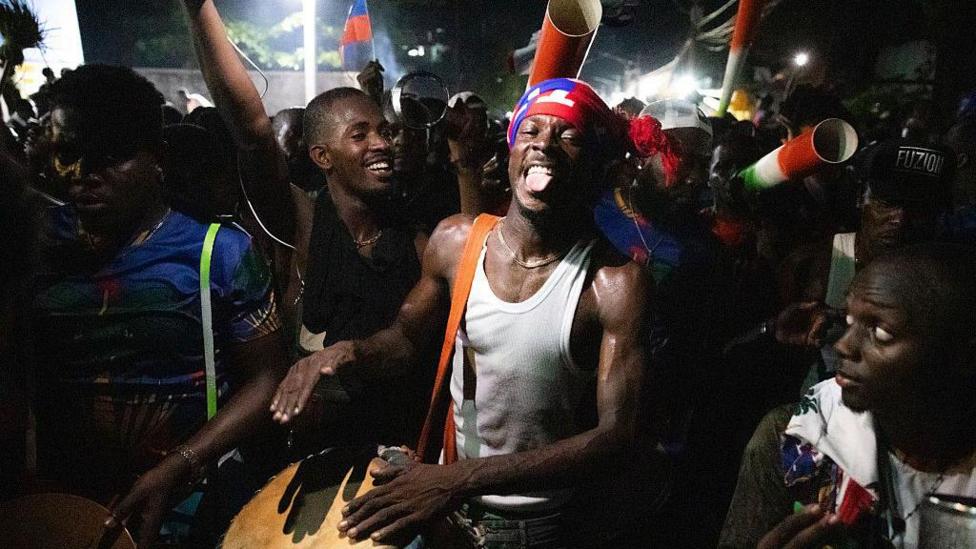
Island of Defiance: How Haiti's Football Chaos Forged World Cup Order
After 52 years, Haiti returns to the World Cup stage, a fragile nation finding a fleeting, disciplined identity on the pitch.
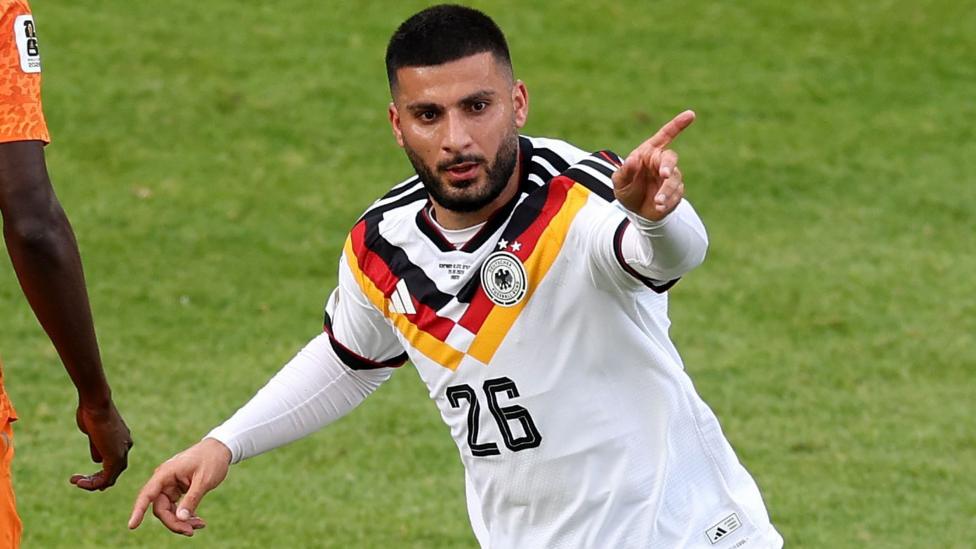
Deniz Undav: From Factory Floor to Germany's World Cup Saviour
Julian Nagelsmann once called him out publicly, but Deniz Undav is now rewriting Germany's World Cup script from the bench.
Miami Takes Center Stage as 30,000 England Fans Transform World Cup Quarter-Final Host City
Tens of thousands of England supporters descend on Miami Beach, turning Ocean Drive into a surreal carnival of football devotion.