Tuchel's England Are Winning Ugly. That's the Point.
England keep winning while Tuchel bemoans performances. The disconnect is not a crisis. It is a deliberate tactical trade-off.
The Contradiction at the Heart of Tuchel's England
Thomas Tuchel has a confession that should terrify international football. England keep winning, and he is thoroughly miserable about it.
After another victory that satisfied the mathematical requirements but failed the aesthetic test, the German was blunt about what unfolded on the grass. He was not happy with the performance. The passing was sluggish, the structure occasionally disjointed, and the overall control far too fragile for a side possessing this level of attacking talent. Yet the scoreboard does not care about beauty, and England remain undefeated under his guidance.
This gap between output and outcome is the most fascinating tactical story in international football right now. It asks a fundamental question: when a coach inherits a squad conditioned to underperform its collective potential, is it better to look brilliant and draw, or look ordinary and win?
Tuchel has unflinchingly chosen the latter. England are not playing well, but they are ruthlessly amassing points. That is not an accident.
The Statistical Illusion of Control
To understand why England are winning despite looking disjointed, we must look past the possession metrics that typically govern post-match discourse.
International football is fundamentally a low-block environment. Opponents do not press England high; they retreat, absorb, and pray for transitions. This neutralizes the very thing that made Tuchel's Chelsea successful: vertical, aggressive gegenpressing.
Instead, England are currently relying on a statistical anomaly. They are generating high quality chances from remarkably few sequences. This is a team operating with a functional expected goals (xG) output that belies its chaotic整体 rhythm.
- Shot conversion rate currently outpaces historical averages for previous England setups.
- High-value chances are being created from central zones rather than wide overload.
- Defensive actions in the final third have decreased, masking systemic fragility.
England are not dominating the ball in a way that breaks opponents down throughgeometry. They are surviving on individual attacking execution. When you possess forwards capable of finishing at an elite level, the tactical bar drops considerably.
The Bottom Line: England's underlying metrics suggest a team walking a tightrope, but elite finishing provides a safety net most international teams simply do not have.
pragmatic bent: Isolating the Flaws
Tuchel's discontent is not coach-speak. It is legitimate tactical unease.
The midfield balance remains the primary offender. In possession, England's double pivot is often caught static, with the No. 6 and No. 8 failing to create the passing angles necessary to progress the ball cleanly through central corridors. This forces play wide, slows tempo, and invites the opponent to compact the block.
Defensively, the high line is a gamble that has not yet been punished by the caliber of opponent England have faced. But against a transition side with pace, the spaces between the defensive line and the midfield screen are currently too expansive to ignore.
Tuchel sees this clearly. A coach renowned for his defensive architecture in club football knows that his current team leaks central transitions because the pressing structure is not yet fully internalized.
We are winning because we have individuals who can decide games in a single action. But to rely on that is a gamble I do not want to take.
The trade-off is clear: Tuchel is sacrificing controlled possession for defensive stability. By keeping two screening midfielders anchored and the fullbacks relatively conservative, he ensures England do not get hit on the break. The cost is a sluggish attacking buildup that relies on moments of magic rather than systematic dismantling.
Verdict: Tuchel is prioritizing security over expression, and the data backs him up. Clean sheets win knockout football; aesthetics win plaudits.
The Advanced Metrics Behind the Woes
Advanced tracking data, when contextualized, reveals why England's play feels disjointed but remains effective.
First, consider the pass completion rate in the final third. England's numbers in the attacking third are lagging behind the elite international standard. Central progression is clunky, with too many passes played backward or lateral when vertical options are technically available but not recognized.
Second, the PPDA (Passes Per Defensive Action) metric indicates a team that presses in sparks rather than sustained waves. England are allowing the opposition to make too many passes before triggering an aggressive defensive action. They react rather than dictate.
Yet, the crucial metric balancing all of this is shot quality against. England are surrendering very low-quality chances. The opponents might have the ball, but they are funnelled into wide areas where their xG per shot plummets.
- Possession without penetration: England control the tempo but lack the final-third incision to break deep blocks consistently.
- Transition vulnerability: The gap between midfield and defense is exploitable, though not yet capitalised upon.
- Elite finishing tax: The forward line is converting chances at a rate that artificially inflates the perception of overall control.
The Bottom Line: The numbers confirm Tuchel's eye for detail. Poor buildup play, suboptimal pressing intensity, but elite shot conversion and stringent shot suppression. It is a formula built on a knife edge.
Why This Is Explicitly by Design
What critics are missing is that Tuchel has only had a handful of training camps. International management is uniquely restrictive. You cannot drill automated movements into a squad over three days.
So what do you do? You simplify.
Tuchel is deliberately stripping away the complex automatisms that he would implement at club level. He knows that asking a newly assembled group to execute a high-intensity, fluid positional play structure against a low block is a recipe for chaotic transitions. Instead, he prioritizes defensive shape and trusts the likes of Bukayo Saka, Phil Foden, Harry Kane, and Jude Bellingham to manufacture the unmanufacturable.
This is not a coach failing to implement his philosophy. It is a coach showing the pragmatism required at international level.
When Tuchel says he is not happy with the performance, he is talking about the ceiling of this team. Right now, England are performing at 70% and still clearing the threshold. Tuchel wants the 90% that will be required against Spain, France, or Germany in a tournament knockout.
Verdict: The ugly wins are not a failure of process; they are Phase One of a deliberate, multi-stage tactical build.
The Bigger Picture: Flexibility over Ideology
The English national team has historically been suffocated by the expectation of both winning and looking good while doing it. Tuchel is the first manager in recent memory who appears entirely immune to that duality.
He looked at the squad, recognized the individual quality, and accepted that he could win games immediately by leaning on it. The tactical structure he is building is solid enough to avoid defeat, and the attackers are clinical enough to turn draws into wins.
This is anathema to the purist, but it is gold for the tournament pragmatist.
As England progress through this cycle and into competitive fixtures, the performances will need to sharpen. The passing will need to become crisper, the press more coordinated, the midfield control more evident.
But for now, results are the currency, and England's bank account is full. The discomfort Tuchel feels is exactly what should make opponents nervous. A manager who wins while angry is a manager who demands evolution.
The real title challenge begins when the performance finally matches the result. Until then, England will keep winning ugly.
Verdict: Embrace the discomfort. A winning team with an unhappy manager is infinitely more dangerous than a losing team with a satisfied one.
Editorial Integrity
This is an original SportPulse article written by our editorial team. All content is independently researched, written, and reviewed by our writers and editors before publication. We do not publish copied, aggregated, or syndicated content.
SportPulse is committed to original sports journalism. Read our editorial policy or contact us with any questions.
More Like This
All football
Popovic's Penalty Gamble Exposes Socceroos' Creative Void
Football Australia backs Tony Popovic, but the shootout loss to Egypt reveals a tactical ceiling Australia must shatter before 2026.
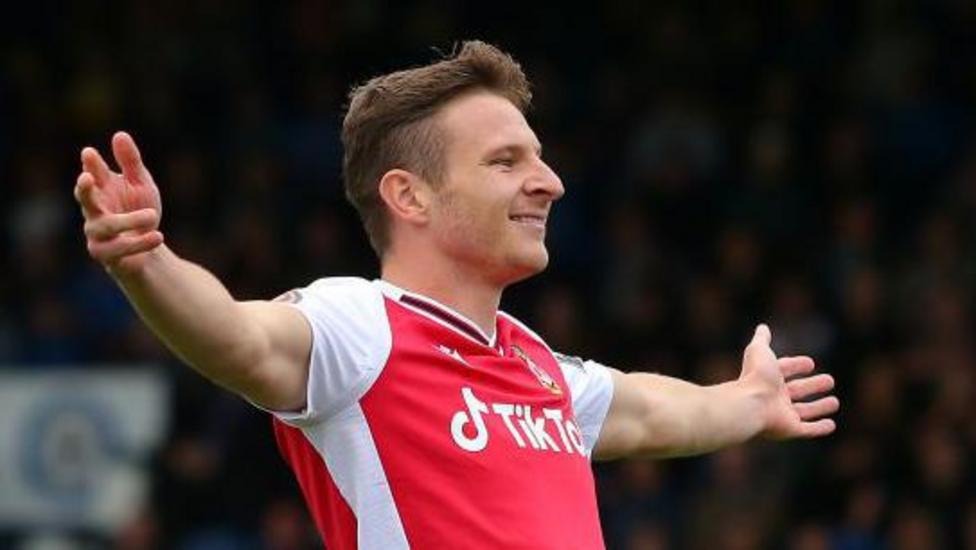
Mullin Out: The End of Wrexham's Fairy-Tale Striker Chapter
Paul Mullin leaves Wrexham by mutual consent, closing the book on the most prolific chapter in the club's modern history.

Cape Verde Shake Miami: Blue Sharks Hold Uruguay in World Cup Thriller
Debutants Cape Verde refused to blink, holding two-time champions Uruguay to a pulsating World Cup draw in Miami.