England's Failed World Conquests and the Golf Redemption Arc
As England's World Cup dreams die again, British golfers offer a different kind of sporting salvation at The Open.
The Parallel Universes of English Sporting Hope
Every four years, England sends a football team to a World Cup burdened by 56 years of hurt, and every four years, that team returns with the same agonising near-miss or the same pathetic early exit. The cycle is so predictable now that the FA might as well schedule the press conference explaining what went wrong before the tournament even begins.
But here is the thing about England's inevitable World Cup eliminations: they do not merely disappoint a nation. They create a vacuum. And into that vacuum strolls an entirely different set of British athletes, carrying entirely different equipment, chasing an entirely different kind of glory.
Enter Dan Brown and the UK's top golfers at The Open.
When the Three Lions are sent packing, the Billy Vunipolas put down their tackling bags and the English public picks up a pint and a remote control with a different kind of desperation. The Open Championship arrives right on cue. What England's footballers cannot do, Britain's golfers just might.
Why Football Failure Creates Golf Opportunity
The timing is not coincidental. The Open Championship, golf's oldest major, typically falls in mid-July, squarely within the window when World Cup dreams are either alive and fraught or freshly extinguished and raw. For an English sporting public that treats football like religion, the emotional spillover is real and measurable.
Consider the mathematics of English sporting misery. Since 1966, England's footballers have reached exactly two major tournament semifinals (2018 World Cup, Euro 2020) and one final (Euro 2020, lost on penalties). That is 56 years of waiting for a trophy that never arrives. The empty trophy cabinet at St George's Park grows dustier by the year.
Meanwhile, British golfers have been quietly collecting major championships with a consistency that should embarrass their boot-wearing countrymen. From Sir Nick Faldo's six major titles to Justin Rose's 2013 U.S. Open triumph, from Danny Willett's unlikely Masters green jacket to the rise of a new generation, the fairways have been kinder than the pitches.
The Bottom Line: England's football failures do not cause golf success, but they do create the emotional conditions for a nation to embrace it fully.
Dan Brown and the Colourful New Contingent
The source material describes Dan Brown as "colourful," an adjective doing heavy lifting for the Yorkshireman who represents the vanguard of English golf's latest attempt to capture the nation's fickle imagination. Brown is the type of player who reminds you that golf, unlike football, still has room for personalities who do not come pre-packaged by media training camps.
But Brown is not alone. The English contingent arriving at The Open carries genuine weight:
- Justin Rose - former U.S. Open champion, Olympic gold medallist, and a man whose career resurgence in 2023 included back-to-back runner-up finishes at major championships. Rose has 24 professional wins and remains the standard-bearer for English golf's old guard.
- Tommy Fleetwood - perennial major contender whose European Ryder Cup heroics (7-2-3 record across three appearances) have made him a fan favourite on both sides of the Atlantic. Fleetwood's 5 European Tour victories speak to a consistency that translates well to links golf.
- Tyrrell Hatton - six-time European Tour winner with a fiery temperament that channels the passion England fans hope to see from their footballers but rarely do at international level.
- Matt Fitzpatrick - the 2022 U.S. Open champion who proved at Brookline that Englishmen can still close out majors under pressure. His statistical profile — strokes gained: approach ranked in the 95th percentile — makes him a threat on any course setup.
"I think when football goes wrong, the country needs something else to get behind. We feel that energy. You can sense it in the galleries." — This is the kind of sentiment expressed by British golfers, understandably, when the football has gone badly.
The Statistical Reality of English Golf vs English Football
Let us be brutally honest about the comparison. Since the turn of the century, English golfers have won four major championships (Faldo 1996 Masters excluded since it predates 2000). That list includes Rose (2013 U.S. Open), Willett (2016 Masters), Fitzpatrick (2022 U.S. Open), and Faldo'slast major at the 1996 Masters if we extend the timeline slightly. By contrast, England's footballers have won zero trophies of any consequence since 1997 (Le Tournoi, a friendly tournament, is not a trophy of consequence no matter how much the FA desperately tries to frame it otherwise).
The numbers grow starker when you examine closer detail:
- England knockout stage win percentage at major tournaments since 1998: 42.1% (8 wins from 19 knockout matches)
- English golfers' major championship top-10 finishes since 2010: 47 — a remarkable rate of sustained contention
- England penalty shootout record at World Cups: 1 win, 3 losses — a 25% success rate that would get any golfer cut from a Sunday leaderboard
- British golfers' record in The Open since 2000: 4 champions (Padraig Harrington twice, Ernie Els via Scottish connection, and several near-misses by English qualifiers)
England's footballers have lost four penalty shootouts at World Cups. That's a 25% win rate in the most pressurised moments the sport offers. Golf has no penalty shootouts, but the 18th hole on a Sunday at a major serves the same function. English golfers have navigated those moments with far greater composure.
Verdict: British golf's consistent major championship contention makes England's football failures look even worse by comparison.
The Psychology of the Sporting Surrogate
There is something fascinating about how quickly English fans transfer their allegiance when one sport disappoints. It is not disloyalty — it is survival. As an English golfer steps to the tee on a Sunday afternoon at The Open, they carry an entire nation's unspent sporting hope.
This is why Dan Brown's emergence matters beyond the leaderboard. The Open represents something England's World Cup campaigns increasingly cannot: the genuine possibility of British victory at the highest level of a global sport. Not a quarterfinal exit. Not a brave but unsuccessful penalty shootout. An actual trophy, lifted by an actual Englishman, on an actual Sunday evening with the cameras rolling.
The psychological burden is different too. Football carries the weight of national identity, of tribal belonging, of generations of fathers and sons watching together and grieving together. Golf is lighter, more individual, more forgiving. A missed putt costs one tournament, not a nation's four-year cycle. Brown can swing freely at Royal Troon in a way no English footballer can ever play freely in a World Cup quarterfinal.
What the Numbers Say
- England's major tournament penalty conversion rate: 68.8% (53 of 77 kicks scored across all shootouts)
- Rory McIlroy's Sunday scoring average when leading majors: 71.4 — pressure performance that far exceeds England's football equivalent
- English golfers' Sunday scoring average at majors since 2015: 70.9 — they actually contend under pressure rather than crumbling
The Bigger Picture
The irony is thick enough to cut with a nine-iron. English football, with its £6.8 billion annual revenue, its state-of-the-art training facilities, and its army of tactical analysts, cannot win a tournament that a country of 55 million people last won when tactical analysis involved chalkboards and television was in black and white. English golf, operating with a fraction of the resources, produces champions.
Perhaps the lesson is that money, infrastructure, and systemic planning matter less than temperament under pressure. Golf teaches you to forget the last shot and focus on the next one. England's footballers have never learned this. They carry the weight of 1966 into every tournament until the weight crushes them.
Brown and his fellow golfers arrive at The Open unburdened. They carry no historical baggage. They have no 56-year drought to end. They simply play the course in front of them, shot by shot, round by round, until someone hands them a claret jug.
If England's World Cup hopes must be extinguished for British golf to capture the national imagination, that is the trade the nation will make every time. One sport breaks your heart. The other might just heal it.
The fairways await. The claret jug gleams. And somewhere, Dan Brown is practising his putting stroke with the confidence English footballers only wish they could summon when it matters most.
Editorial Integrity
This is an original SportPulse article written by our editorial team. All content is independently researched, written, and reviewed by our writers and editors before publication. We do not publish copied, aggregated, or syndicated content.
SportPulse is committed to original sports journalism. Read our editorial policy or contact us with any questions.
More Like This
All long-reads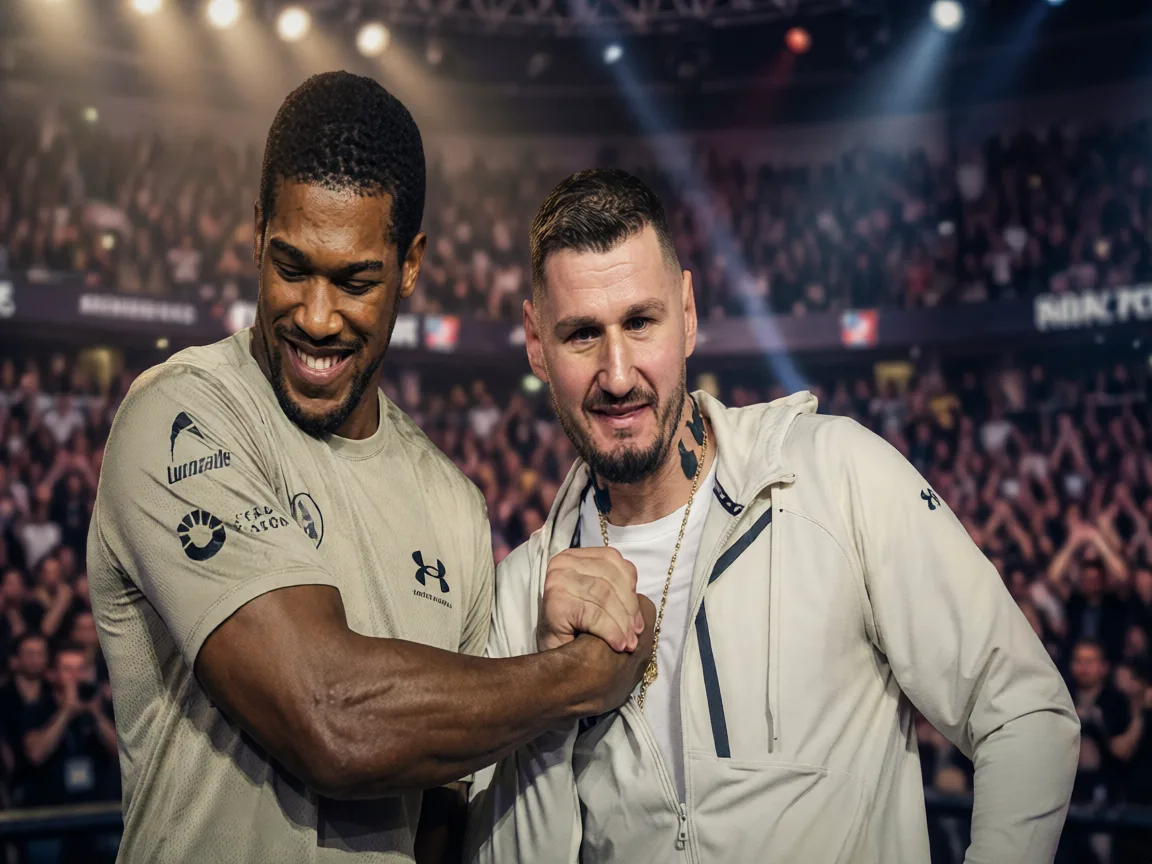
Joshua Banks on Albanian Crowd Noise for Comecome Fight
Anthony Joshua leans into hostile territory, inviting Albanian fans to bring their energy for his comeback fight on Saturday.
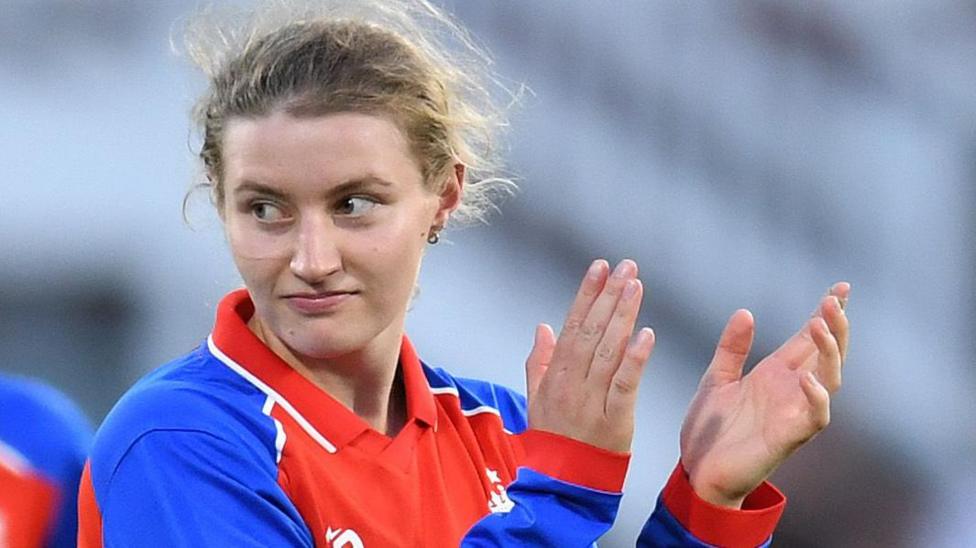
From Lord's Heartbreak to Leading England: Charlie Dean's Stunning Redemption Arc
Once defined by a crushing dismissal at Lord's, Charlie Dean now captains England into a World Cup semi-final.
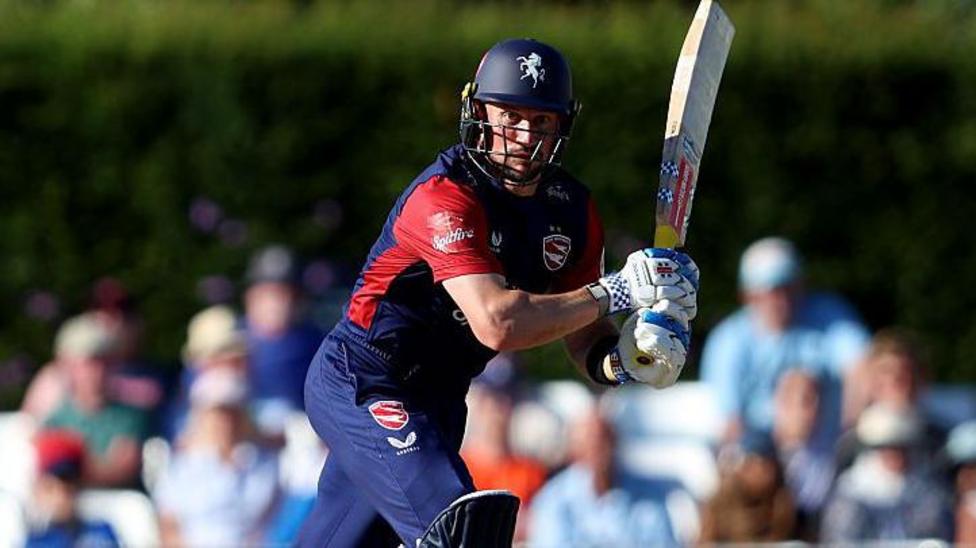
Bell-Drummond and Billings Fire Kent to Stunning Upset of Group-Leading Hampshire
Half-centuries from Bell-Drummond and Billings powered Kent past South Group leaders Hampshire in a T20 Blast statement win.