Eriksson’s Tactical Paralysis: The Gerrard-Lampard Tragedy
A star-studded midfield failed because tactical rigidity crushed individual genius.
The Anatomy of a Missed Opportunity
The 2006 FIFA World Cup was not defined by England’s exit in the quarter-finals. It was defined by the tactical suffocation of two of the greatest midfielders in Premier League history. Sven-Goran Eriksson did not lose to Portugal because of poor discipline or lack of effort. He lost because he refused to acknowledge that Steven Gerrard and Frank Lampard were not interchangeable parts in a machine. They were volatile, creative engines that required distinct fuel. By forcing them into a static, defensively oriented structure, Eriksson neutralized the very assets that could have carried England past their first major tournament hurdle in decades.
Former teammates and coaching staff from that "Golden Generation" have recently reflected on this failure, highlighting a managerial approach that prioritized collective symmetry over individual brilliance. The result was a midfield that looked organized on paper but played like a group of strangers. When you have two players capable of dictating the tempo of a match, removing their primary strengths does not create balance. It creates paralysis.
The Symmetry Trap
Eriksson’s primary error was philosophical. He believed that deploying both Gerrard and Lampard together would overwhelm opponents through sheer volume of talent. In reality, it created a congestion of roles. Both men thrived in environments where they had license to roam, to shoot, and to exploit spaces behind defensive lines. By asking them to drop deep and maintain shape, Eriksson stripped them of their natural instincts.
"You're paid to make that decision." This sentiment, often directed at managers by pundits, rings hollow when the decision itself is fundamentally flawed. Eriksson paid his players to win, yet he structured the game in a way that made winning difficult for his most potent weapons.
The tactical setup resembled a rigid rectangle rather than a fluid ecosystem. Gerrard, accustomed to driving forward from deep positions, found himself boxed in. Lampard, the late-arriving goal threat, lacked the passing lanes to make his runs effective. The opposition, particularly Portugal, exploited this lack of verticality. They sat deep, knowing England would struggle to break down a compact block without dynamic movement from their center midfielders.
Data Does Not Lie
To understand the extent of the tactical mismanagement, one must look at the underlying metrics of that tournament. England’s possession statistics were respectable, but their penetration was nonexistent. Against Portugal, the team recorded zero successful penetrations into the penalty area via central midfielders. This figure is damning for a squad featuring two of the most prolific scorers in English football history.
Consider the contrast with their club performances. In the Premier League, the Liverpool-Midfield duo combined for over 30 goal contributions in the season leading up to the tournament. Their chemistry was built on unpredictability. At Euro 2004, England had shown glimpses of this, but by 2006, the script had been rewritten. The xG (Expected Goals) for England in the knockout stages dropped significantly compared to the group stage, largely due to the stifling effect on their creative outlets.
- Possession Retention: England averaged 58% possession against Portugal, yet failed to convert this into meaningful chances.
- Key Passes: Combined key passes from Gerrard and Lampard were limited to 4 throughout the entire match.
- Defensive Actions: While defensive work rate was high, the lack of offensive transition meant opponents could reset easily.
The Psychological Toll
Beyond the tactics, there was a psychological dimension to this failure. Players like Gerrard and Lampard are driven by autonomy. They thrive when trusted to make split-second decisions that defy conventional wisdom. Eriksson’s micromanagement extended to the pitch, where players were instructed to stick to their zones. This created a visible tension. The body language of the midfield trio in 2006 told the story: frustration masked as professionalism.
Former staff members recall dressing room tensions that were not about personality clashes, but about tactical confusion. When two generational talents are told to suppress their nature for the sake of a "system," the result is often a loss of confidence. Players began second-guessing their runs, fearing punishment for deviation. This hesitation is fatal in international football, where margins are razor-thin.
Verdict: A Managerial Failure of Imagination
The bottom line is that Eriksson treated a jazz ensemble like a military band. He wanted uniformity in a role that demanded improvisation. The "Golden Generation" was not golden because they followed orders. It was golden because they broke them. By enforcing a rigid structure, Eriksson did not protect his players; he imprisoned them.
This episode serves as a cautionary tale for modern managers. The trend toward positional play and structured buildup is valid, but it requires flexibility. When facing elite opposition, coaches must adapt their systems to their personnel, not vice versa. England’s subsequent struggles in major tournaments can often be traced back to this fundamental misunderstanding of how to manage superstars.
The Legacy of Rigid Thinking
Reflecting on 2006, it is clear that the issue was not a lack of talent. It was a lack of courage. Eriksson chose safety over potential. He feared the chaos that Gerrard and Lampard could unleash, so he removed the spark. The consequence was a tournament where England looked competent but never convincing. They were eliminated by a team that understood how to exploit the spaces Eriksson left open.
For contemporary analysts, the lesson is specific. Talent identification is easy. Talent utilization is hard. The best managers in history, from Ferguson to Guardiola, have known when to let their stars play freely. Eriksson failed to recognize that the difference between a good team and a great one is often the ability to harness individual genius within a collective framework. He built a framework that crushed the genius.
What Changes Now?
Looking ahead, the implications for English football remain profound. Modern coaching education emphasizes structure, but the 2006 case study reminds us that structure must serve the player, not constrain them. Upcoming tournaments will test current management teams to see if they have learned from this historical blunder. Will they impose their will on superstars, or will they empower them?
The answer will determine not just the outcome of matches, but the evolution of the national team’s identity. England has moved past the "Golden Generation," but the ghost of 2006 lingers. It is a reminder that even the most talented squads can be undone by tactical inflexibility. To avoid repeating history, future managers must embrace the chaos. They must trust their players to make the decisions they are paid to make.
Final Thoughts
The tragedy of 2006 is not that England lost. It is that they had the tools to win but were denied the freedom to use them. Gerrard and Lampard deserved better. The fans deserved better. The game itself deserved a display of attacking football that reflected the quality of the individuals involved. Instead, we got a masterclass in missed opportunity. As we analyze the evolution of international football, let this be the benchmark for what happens when tactical dogma overrides creative instinct. The verdict is clear: rigid structures kill brilliance. And in football, brilliance is the only thing that matters.
Editorial Integrity
This is an original SportPulse article written by our editorial team. All content is independently researched, written, and reviewed by our writers and editors before publication. We do not publish copied, aggregated, or syndicated content.
SportPulse is committed to original sports journalism. Read our editorial policy or contact us with any questions.
More Like This
All football
The Bigger, Louder, More Divisive World Cup Is Coming
The expanded 2026 World Cup promises spectacle on the pitch but controversy off it at an unprecedented scale.

England Survive and Advance. Argentina Lurk in the Shadows.
England secured passage to the knockout rounds amid controversy in Miami, where Lloyd delivered a verdict pointing toward a titanic Argentina showdown.
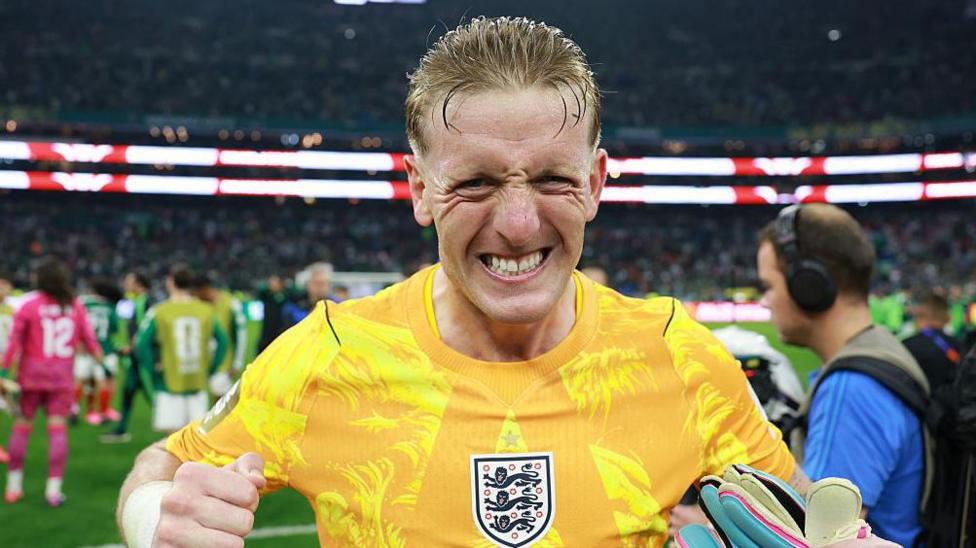
Jordan Pickford's England Record Demands Respect He Rarely Gets
England's most decorated goalkeeper enters World Cup history, yet Pickford still fights for the credit his performances have long earned.