Euro 96: The Night English Football Broke and Rebuilt Itself
Thirty years after Southgate's miss, the Euro 96 semi-final remains the definitive trauma that accidentally birthed the modern English game.
Des Lynam knew the weight of the moment immediately. As the BBC broadcast faded out, he casually instructed viewers to "remember where you were watching this tonight because in 30 years' time somebody will probably ask you." Three decades later, the prophecy holds. The European Championship semi-final between England and Germany on 26 June 1996 remains the most viscerally debated match in modern English football history. It was not just a penalty shootout loss. It was the violent collision between a nation drunk on sudden optimism and the cold, mechanical reality of German efficiency.
The tournament itself had become a cultural phenomenon. "Football's Coming Home" was not merely a song; it was an involuntary national reflex. For the first time since the hooligan-plagued exits of the late 1980s, the English public felt safe embracing the team without irony. The semi-final at Wembley was the apex of that hysteria.
The Anatomy of a Stalemate
Terry Venables had constructed a uniquely flexible 3-5-2 system that baffled opponents early in the tournament, but against Berti Vogts' Germany, the tactical equations cancelled each other out. England pressed high in the opening exchanges, driven by the relentlessness of Paul Gascoigne and the buccaneering runs of Stuart Pearce and Darren Anderton on the flanks.
The breakthrough arrived through sheer opportunism. Tony Adams' tackle on Jurgen Klinsmann triggered a rapid transition, allowing Alan Shearer to bulldoze through a half-clearance and hammer the ball past Andreas Kopke after just 3 minutes. Wembley erupted. Yet the lead lasted barely a quarter of an hour. A momentary lapse in concentration from the usually disciplined back three allowed Stefan Kuntz to ghost into the box and sweep home a near-post finish in the 16th minute.
From that point, the match settled into a grueling, suffocating rhythm. Both midfields nullified each other.
The Statistical Deadlock
The underlying metrics of the contest reveal a remarkable equilibrium that foreshadowed the eventual penalty conclusion:
- England shots on target: 7 / Germany shots on target: 4
- Total attempts: 14 each
- Possession: England 48.6% / Germany 51.4%
- Fouls committed: England 15 / Germany 17
- Corners: England 5 / Germany 6
The numbers illustrate a chess match played at breakneck speed. Neither side could establish territorial dominance without encountering an impenetrable defensive block.
The Ghost of a Winner
Extra time produced the defining agonies of the evening. England struck the woodwork twice, creating two moments that have been replayed in the minds of supporters millions of times since. Darren Anderton shifted the ball onto his left foot and watched his low drive agonisingly smack the inside of the post and roll across the goal line before being cleared in the 97th minute.
Four minutes later, Paul Gascoigne came within inches of immortality. A deep cross from Steve McManaman caused momentary panic in the German defense. The ball bounced perfectly across the six-yard box. Gascoigne, stretching every sinew, missed making contact by literal millimeters. Had he scored, it would have been the definitiveGoal of the tournament, burying the Germans and validating an entire generation's belief. Instead, it became the lasting image of a genius forever operating on the edge of his own physical limits.
"If Gazza's toe is an inch longer, we're not talking about thirty years of hurt. We're talking about thirty years of peace." — Common English football refrain.
The Inevitable Conclusion
When the whistle blew for full-time after 120 minutes, the outcome felt preordained. England had a notorious, almost cursed relationship with penalty shootouts, having been eliminated by West Germany in the 1990 World Cup semi-finals under identical circumstances.
The first five penalties were executed with flawless, terrifying precision. Shearer, Platt, Pearce, Gascoigne, and Sheringham all converted. Germany matched them blow for blow. The procession reached the sixth taker, a sudden-death scenario where the margins between glory and devastation thin to nothing.
Gareth Southgate, a center-back pushed into midfield for the tournament, stepped up. His penalty was weak, placed comfortably to Kopke's left. The German goalkeeper read it instantly and parried it away. When Andreas Moller dispatched the ensuing penalty, the lid came off the tournament.
The Bottom Line
The shootout was not a failure of technique; it was a psychological submission. England approached penalties as a traumatic ordeal, while Germany viewed them as a controllable, mathematical exercise. That 0% win record in major tournament shootouts heading into the match encapsulated a deep-seated national neurosis.
The Fabrication of a Modern Myth
In the immediate aftermath, the defining English trait took hold. The match was not analyzed for its tactical stalemate or Germany's resilient defending. It was immediately mythologized as a heroic failure. The narrative of "thirty years of hurt" became a self-sustaining cultural currency, completely ignoring the fact that England had not actually won anything prior to 1966 either, barring that solitary World Cup.
The intoxicating blend of Gascoigne's brilliance, the jingoistic media storm, and the eventual defeat created a template for how the English press and public process tournament football. The team was cast as tragic heroes undone by fate rather than opponents who were simply more disciplined under pressure.
Verdict: Euro 96 didn't introduce the concept of English sporting hubris, but it institutionalized it. The tournament established the dramatic arc of expectation, premature celebration, and tearful catharsis that would repeat itself in endless cycles for the next two decades.
The Accidental Foundation
Yet the true significance of that humid Wednesday night at Wembley was not the trauma itself, but what the trauma inadvertently birthed. The old English football establishment died on that penalty spot. The realization that passion alone could not overcome German structure forced a deep, painful recalibration.
The aftermath indirectly accelerated the philosophical shifts already germinating within the FA. It validated the creation of the Premier League's infrastructure and emphasised the need for an elite coaching pathway rather than relying on sheer physical intensity. The generation that watched that semi-final from living rooms and crowded pubs produced the coaches, analysts, and sporting directors who would eventually modernise the English game.
Gareth Southgate himself is the ultimate embodiment of this cycle. The man whose penalty miss inflicted the deepest wound studied the systemic flaws that caused it. When he took over the national team, he systematically deconstructed the emotionally volatile England team culture, replacing it with a cold, pragmatic system designed precisely to neutralize the trauma of shootouts. It led England to the 2018 World Cup semi-final and the back-to-back Euro 2020 and Euro 2024 finals.
The Bottom Line
The defeat at Euro 96 broke English football's romantic illusions. The subsequent three decades have been a long, often painful journey toward engineered pragmatism over spontaneous brilliance. The tears shed that night were not for a lost trophy, but for the realization that raw emotion is a profoundly flawed tactical strategy.
The current England setup, praised and criticized in equal measure for its calculated approach, is a direct descendant of Southgate's miss. The swagger of 1996 has been surgically replaced by risk management. It may be less entertaining, but it is far more consistently competitive on the global stage.
Lynam asked us to remember where we were. The real question, thirty years on, is whether English football has finally learned the uncomfortable lessons taught on that memorable Wembley night.
Editorial Integrity
This is an original SportPulse article written by our editorial team. All content is independently researched, written, and reviewed by our writers and editors before publication. We do not publish copied, aggregated, or syndicated content.
SportPulse is committed to original sports journalism. Read our editorial policy or contact us with any questions.
More Like This
All long-reads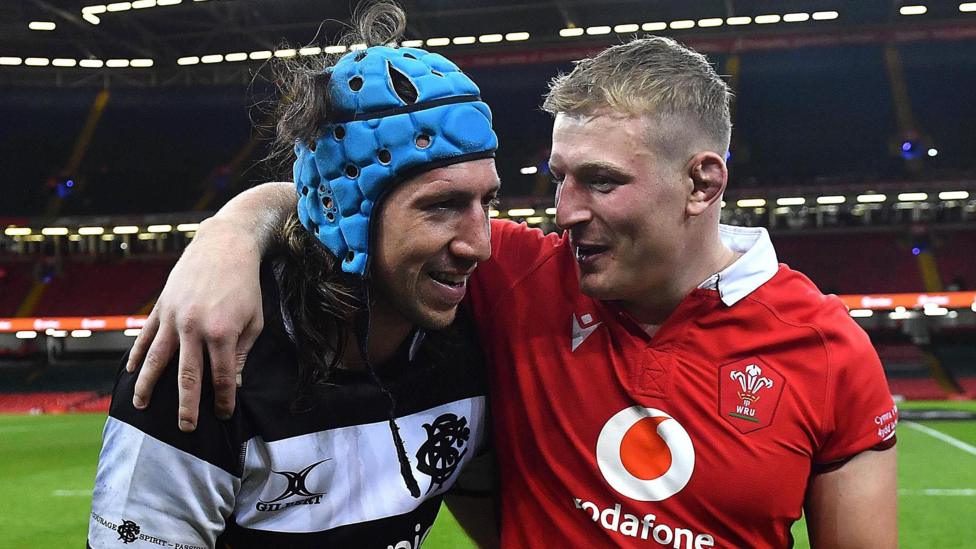
Wales and Barbarians Set for London Double-Header as Rivalry Reignites
Wales face the Barbarians in a historic London double-header, adding another storied chapter to over a century of rugby tradition.
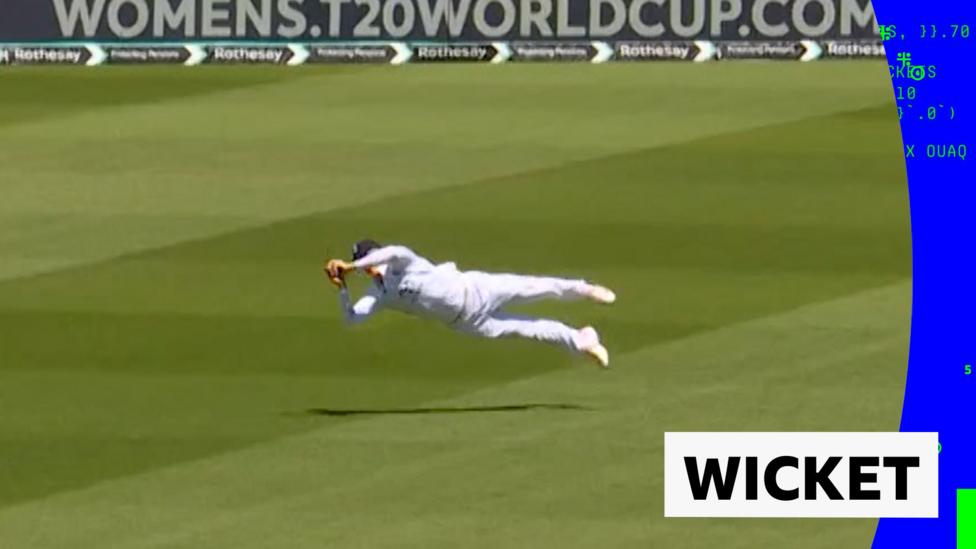
Bethell's Screamer Silences Latham as Archer Strikes Early at The Oval
Jacob Bethell's gravity-defying diving catch removes Tom Latham for 27, setting the tone for England's attack on day one.

Selling the Soul: Juventus and the Slow Death of Football's Moral Architecture
The crisis at Juventus is not an aberration. It is the logical endpoint of a sport that sold itself to the highest bidder.