Domenicali's Imola Contingency: F1 Eyes European Finale If Gulf Rounds Fall
F1 CEO Stefano Domenicali signals Imola as the likely backup venue if Qatar or Abu Dhabi cannot host their grands prix this season.
Air freight costs, regional flashpoints, and promoter viability have eroded the operating margins F1 management assumed when the current calendar was locked. Stefano Domenicali, addressing the possibility of disruption to the late-season Middle East swing, confirmed that contingency plans lean toward keeping the championship decider on European soil. His language was specific: if the Qatar or Abu Dhabi Grand Prix cannot be staged, the season finishes in Europe.
Imola as the Probable Replacement
The Chequered Flag podcast's assessment that Imola is the probable replacement venue rests on practical calculation. Formula 1 needs a circuit with current grade-one certification, located within reasonable logistics distance of the European freight hub, and capable of operating without months of advance promotional buildup.
Imola satisfies those constraints. The Autodromo Enzo e Dino Ferrari held a race recently enough that its paddock infrastructure and safety systems require only reactive preparation. Promoters in the Emilia-Romagna region have absorbed costs quickly before, as the 2023 round demonstrated when it was rescheduled after flooding forced a cancellation.
Paul Ricard lacks a current promoter agreement and has not hosted since 2022. Hockenheim last appeared as a placeholder in 2019 and its facility has degraded. Portimao faces the same freight distance problem as a flyaway. Imola is the path of least resistance.
Maintaining Minimum Round Count
A European finale displacing a Gulf round changes how teams structure their season. The current schedule places the Abu Dhabi Grand Prix as the closing round, double points exempted but championship-deciding across recent seasons. Qatar sits earlier in the sequence.
If both fall, F1 needs a replacement double-header to maintain minimum round count for commercial contracts. Imola back-to-back with a second European venue is plausible. Mugello in Tuscany, which hosted a one-off in 2020 during the reshaped COVID calendar, retains grade-one status.
The complication is local promoter revenue. Middle East rounds underwrite substantial sanction fees, estimated in the tens of millions per event. A European replacement operates on lower fees, higher ticket-revenue dependency, and a thinner margin profile for the promoter.
Domenicali's Negotiating Room
Domenicali did not name Imola directly. His statement, confined to the principle that European closure is the fallback, gives the commercial rights holder room to negotiate with multiple circuits without committing to a single promotional partner. That is standard practice in motorsport contingency planning.
The operational reality narrows the field. Any circuit that has not hosted within the last three seasons faces FIA recertification delays. The pool effectively shrinks to venues active since 2021: Imola, Mugello, Turkey's Istanbul Park, and Portimao. Of those, Imola is the cheapest to bring online.
Setup Consequences for the Title Fight
A championship decided at Imola rather than Abu Dhabi changes the competitive equation. Yas Marina's layout, with its long straights and slow chicanes, favors high-top-speed setups and rewards teams with strong straight-line efficiency. Imola demands high-downforce configurations, tighter ride heights, and aggressive curb usage.
Teams planning development allocations already face a compressed schedule with sprint weekends consuming setup time. A late calendar swap to a European track with a different technical fingerprint forces emergency simulation work, default baseline setups pulled from historical data, and potential reallocation of floor and wing components already scheduled for production.
The Freight Bottleneck
Sanction fees for Gulf rounds are the highest in the sport, reflecting state-backed promotional models. European replacements operate on commercial terms that generate a fraction of that revenue for Formula One Group. A single displaced Gulf round represents a commercial shortfall.
The more pressing concern is freight. Formula 1's sea freight operation moves approximately 1,400 tonnes of equipment across the season. A European replacement eliminates a leg of intercontinental shipping, which sounds like savings, but the logistics chain is planned months in advance. Redirecting containers already routed toward the Middle East requires pulling equipment back through customs, rebooking trucks, and renegotiating warehouse space at the replacement venue.
The net cost of a calendar swap, even a domestic one, exceeds any marginal freight savings. Formula 1 absorbs that cost as a commercial hit. Teams absorb it as operational disruption.
Domenicali's statement, confined to a principle rather than a specific venue, tells the promoter network that contingency capacity is required. The Chequered Flag podcast's Imola diagnosis, grounded in circuit availability and activation cost, identifies the site that requires the least preparation. Until the Middle East rounds are formally confirmed or withdrawn, both pieces of information stand as the working assumption for how a disrupted season concludes.
Editorial Integrity
This is an original SportPulse article written by our editorial team. All content is independently researched, written, and reviewed by our writers and editors before publication. We do not publish copied, aggregated, or syndicated content.
SportPulse is committed to original sports journalism. Read our editorial policy or contact us with any questions.
More Like This
All f1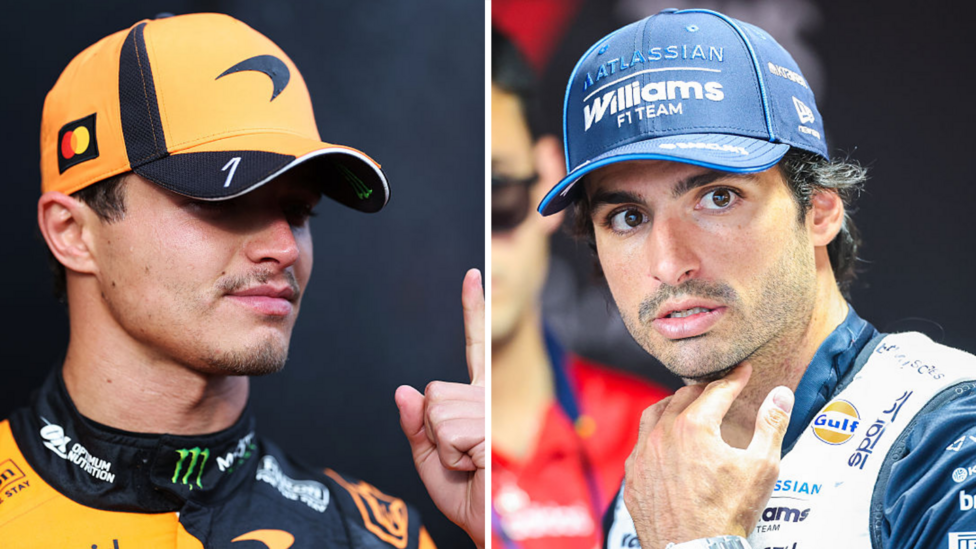
Norris delivers a complete weekend in Hungary as Sainz falters
BBC F1 commentator Harry Benjamin's driver ratings reveal a stark contrast between the McLaren and Ferrari drivers at the Hungaroring.

Austrian GP Power Rankings: Spielberg Delivers a Seismic Shift in Form
The Red Bull Ring's sprint weekend shook the pecking order. Here's who earned top marks and why it matters.
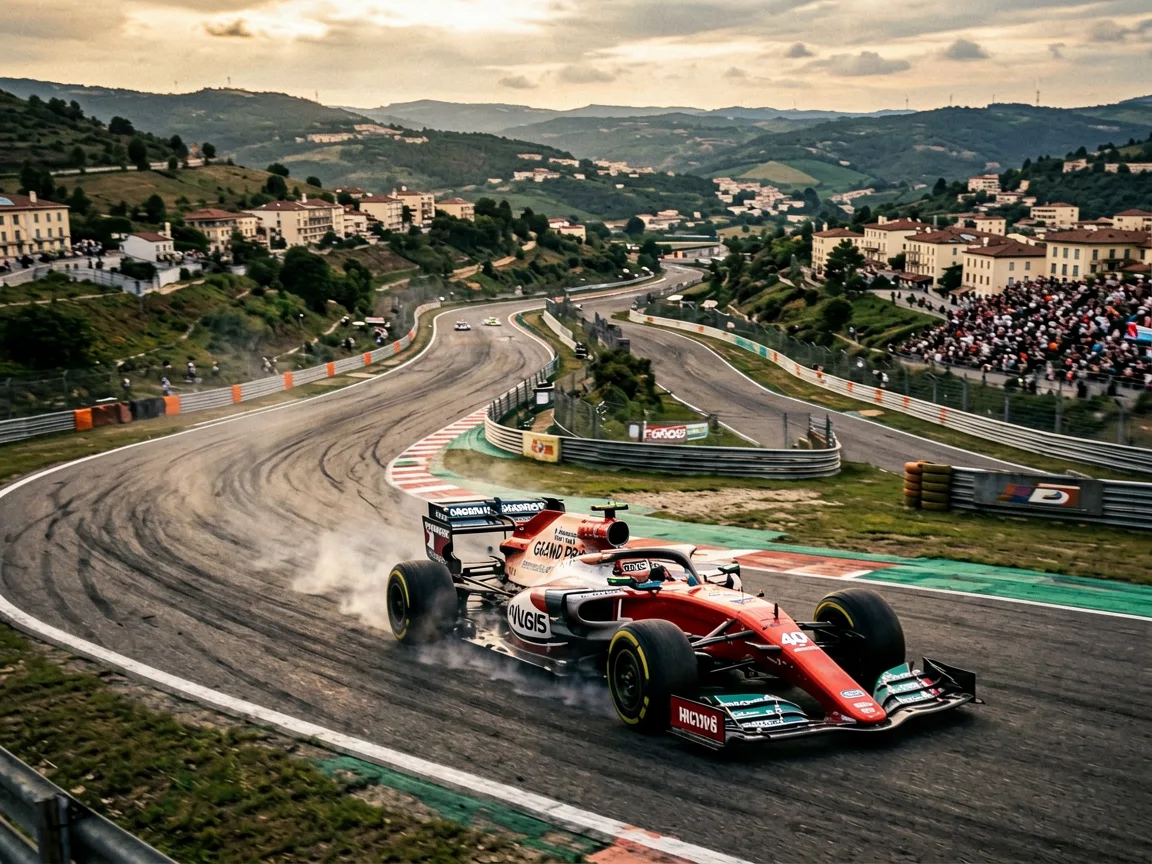
Budapest Paddock Marks 40 Years of the Hungarian Grand Prix
F1's teams gather at the Hungaroring one final time before the summer shutdown, with the circuit celebrating four decades on the calendar.