You Picked Them: The Fan-Voted F1 World Cup Starting XI
Thousands of fans voted. The greatest F1 starting XI ever assembled now has a lineup — and plenty of debate.
Lights Out and Away We Go — But This Isn't a Race
Forget the grid at Monza. Forget the DRS zones at Jeddah. The most hotly contested formation in motorsport history just dropped, and it didn't happen on a track. You voted. You debated. You argued in comment sections until 3 a.m. And now the SportPulse F1 World Cup Starting XI is locked in.
The concept was simple: take the greatest Formula 1 drivers of all time and slot them into a football-style 4-3-3 formation. Goalkeeper to striker. Centre-backs to wingers. Every position demanded a driver whose defining trait matched the football archetype. The votes poured in by the thousands, and the results reveal something deeper than a novelty exercise. They expose exactly how F1 fandom remembers its legends — and who gets left on the bench.
The Formation: 4-3-3
Let's set the lineup before we dissect it.
Position Driver Key Trait GK Alain Prost Calculating, impenetrable RB Mika Häkkinen Smooth, ice-cold CB Michael Schumacher Dominant, dynasty-builder CB Ayrton Senna Fearless, spiritual leader LB Niki Lauda Disciplined, titanium-tough CM Lewis Hamilton Relentless, record-breaking CM Juan Manuel Fangio Original maestro CM Jackie Stewart Precision, consistency RW Jim Clark Versatile, lethal LW Max Verstappen Explosive, aggressive ST Fernando Alonso Eternal competitorThe Goalkeeper: Alain "The Professor" Prost
No surprise here. Prost was always going to be the last line of defense. Four world championships, 51 wins, and a career defined by one thing: never making the unforced error. In football terms, he's the goalkeeper who reads the play three passes ahead, positions himself perfectly, and catches the ball before the striker even thinks about shooting.
Prost didn't need to make spectacular saves. He made them unnecessary. His career finishing position average across 13 full seasons was 2.3 — a stat that reads like a goalkeeper's clean sheet ratio. Fans voted him in overwhelmingly, and the logic is ironclad.
"I always thought that to be a great champion, you had to know how to manage risk. Not avoid it — manage it." — Alain Prost
The Centre-Back Partnership: Schumacher and Senna
This is where the debate got ferocious. Two alpha dogs, two incompatible personalities, slotted side by side in the heart of defense. Michael Schumacher as the commanding centre-back makes perfect sense. He built dynasties — first at Benetton (two titles in 1994-95), then dragging Ferrari from the wilderness to five consecutive championships (2000-04). He's the defender who organizes the backline, intimidates the opposition, and will commit the tactical foul if that's what victory demands.
Ayrton Senna alongside him is the emotional counterweight. Where Schumacher was methodical, Senna was spiritual. Where Michael calculated, Ayrton felt. 65 pole positions — a record that stood for nearly two decades — tell you everything about his ability to dominate from the front. In this XI, he's the centre-back who charges forward for headers, who bleeds for the badge, who turns a dressing room into a brotherhood.
The pairing is volatile. That's the point. Every great defense needs tension.
The Full-Backs: Lauda and Häkkinen
Niki Lauda at left-back is a masterclass in positional selection. The man survived a fireball at the Nürburgring in 1976, missed just two races, and came back with bandages still wrapped around his skull to fight James Hunt for the title. That's a full-back who gets kicked in the ankles for 90 minutes and doesn't flinch. Lauda's three world titles and his reputation for ruthless pragmatism make him the ultimate defensive flank.
Mika Häkkinen at right-back might raise eyebrows, but hear the voters out. Häkkinen's defining quality was composure. His legendary battle with Schumacher at Spa in 2000 — where he overtook both Michael and the backmarker Zonta on the Kemmel Straight — was a moment of ice-cold precision. He's the full-back who overlaps at exactly the right moment, delivers the cross, and sprints back without breaking a sweat. Two championships, 20 wins, and a demeanor that never cracked.
The Midfield Engine: Hamilton, Fangio, Stewart
Lewis Hamilton — The Box-to-Box Monster
104 wins. Seven world championships. 104 pole positions. Hamilton is the midfield engine who never stops running. He's been at the top of Formula 1 for 17 consecutive seasons and counting. In football terms, he's the midfielder who covers every blade of grass, who arrives in the box at the perfect moment, who tracks back when the team needs him. Fans overwhelmingly slotted him into the central midfield role, and the longevity argument alone makes it undeniable.
Juan Manuel Fangio — The Original Orchestrator
Five championships with four different teams. Fangio's win rate of 46.15% remains the highest in F1 history, a number so absurd it barely looks real. He's the deep-lying playmaker who dictates tempo, who sees passes nobody else can, who controls the match from the centre circle. Modern fans might underrate him because grainy footage doesn't capture the magic, but the purists voted in force.
Jackie Stewart — The Silent General
Three titles, 27 wins, and a safety crusade that literally saved lives. Stewart is the midfielder who does the dirty work — wins the tackles, maintains the shape, makes everyone around him better. His 1969 season saw him clinch the title with four consecutive wins and a margin of dominance that modern fans would call "Verstappen-like." He doesn't get the highlight reels. He gets the results.
The Front Three: Clark, Verstappen, Alonso
Jim Clark — The Right Wing Wizard
The purists' pick, and arguably the most debated selection in the entire XI. 25 wins from just 72 starts gives Clark a win rate of 34.7% — third all-time behind Fangio and Ascari. He was devastatingly versatile, winning the Indianapolis 500 and the F1 championship in the same year (1965). Clark is the right winger who can beat you with pace, trickery, or sheer intelligence. Tragically killed at Hockenheim in 1968 at age 32, his peak was cut short before we could count the trophies.
Max Verstappen — The Left Wing Wrecking Ball
Three consecutive championships (2022-24) and a record 19 wins in a single season (2023). Verstappen is the left winger who picks up the ball, runs at the defense, and dares anyone to stop him. His aggressive overtaking style — the late braking, the uncompromising wheel-to-wheel combat — translates perfectly to the flying winger archetype. He's still only 26 years old. The ceiling hasn't been found.
"I'm not here to be second. I never was. That's not how my father raised me." — Max Verstappen
Fernando Alonso — The Striker Who Never Retires
Two championships, 32 wins, and 22 seasons of relentless competition. Alonso is the striker who keeps playing until his legs give out — except his legs never gave out. He moved to McLaren-Honda when everyone said it was madness. He returned to Alpine when people called it nostalgia. He joined Aston Martin at 41 years old and finished on the podium in his first race with the team. Alonso has the talent of a ten-time champion trapped in the career of a two-time one. The fans chose him as the frontman because he embodies the most fundamental truth about elite sport: talent alone isn't enough. You need an obsession with competition that borders on pathological.
The Snubs: Who Missed Out and Why
No fan-voted XI comes without controversy, and the honorable mentions tell their own story.
Sebastian Vettel — Four consecutive titles (2010-13) and 53 wins, yet he didn't crack the starting lineup. The voters' reasoning? His decline at Ferrari and the perception that his peak, while brilliant, was shorter and more machinery-dependent than the players selected.
Nelson Piquet — Three championships but perpetually overshadowed by Senna and Prost in the Brazilian and broader narrative.
Kimi Räikkönen — The 2007 champion and beloved figure, but fans viewed him as a super-sub rather than a starter. The ultimate impact sub who could change a match in five laps.
Stirling Moss — The greatest driver never to win a championship. 16 wins, 24 pole positions, but the title gap ultimately cost him votes.
Damon Hill and Nigel Mansell — British heroes with one title each, but the depth of this midfield and defense left no room.
Race Verdict
🏆 MVP of the XI: Ayrton Senna
The fans didn't just vote for a centre-back. They voted for an identity. Senna's presence in this XI isn't about statistics — it's about what he represents. Pure, uncompromising passion. Every team needs a spiritual heartbeat, and Senna is the player who makes this XI feel like more than a collection of names.
📉 Biggest Snub: Sebastian Vettel
Four titles, and he can't get into the team. That's the brutal standard of this lineup, but it's also a reflection of how F1 fans are revising Vettel's legacy. His 2020 departure from Ferrari and the struggles that followed have colored perception in ways that feel unfair to his peak dominance.
What This XI Tells Us About F1 Fandom
The most revealing detail isn't who made it. It's the timeline spread. This XI spans from the 1950s (Fangio) to the 2020s (Verstappen), with every decade represented. F1 fans don't live in the present. They carry the entire history of the sport like a badge of honor.
The formation itself — 4-3-3 — signals aggression. Fans didn't pick a defensive 4-5-1 or a cautious 3-5-2. They went for the attacking shape. That tells you everything about how the F1 community views its greatest drivers: as competitors who went for the gap, who pushed the limit, who chose to race rather than manage.
Senna would have approved.
Championship Picture
This exercise isn't just a parlour game. It reflects the current state of the GOAT debate in Formula 1. Hamilton and Verstappen — the two active-era representatives — are locked in a generational argument that this XI tries to settle by putting them both in the team. Fangio's inclusion signals that the old guard still commands respect despite racing in an era most living fans never witnessed.
The real championship picture? Verstappen is 26 years old with three titles and 61 career wins. If he races for another decade at even 70% of his current output, he'll force a rewrite of this entire XI. The fan vote captured a snapshot. The on-track battle is still writing the full story.
Editorial Integrity
This is an original SportPulse article written by our editorial team. All content is independently researched, written, and reviewed by our writers and editors before publication. We do not publish copied, aggregated, or syndicated content.
SportPulse is committed to original sports journalism. Read our editorial policy or contact us with any questions.
More Like This
All f1
Hungaroring hosts F1's final act before the summer shutdown
From Spa's high-speed sweeps to Budapest's tight confines: F1 arrives in Hungary for the last race before the mid-season break.

Norris Gets Waxwork as F1's Cultural Revolution Accelerates
Lando Norris's Madame Tussauds unveiling proves F1's youngest stars are engineering a cultural shift beyond the garage.
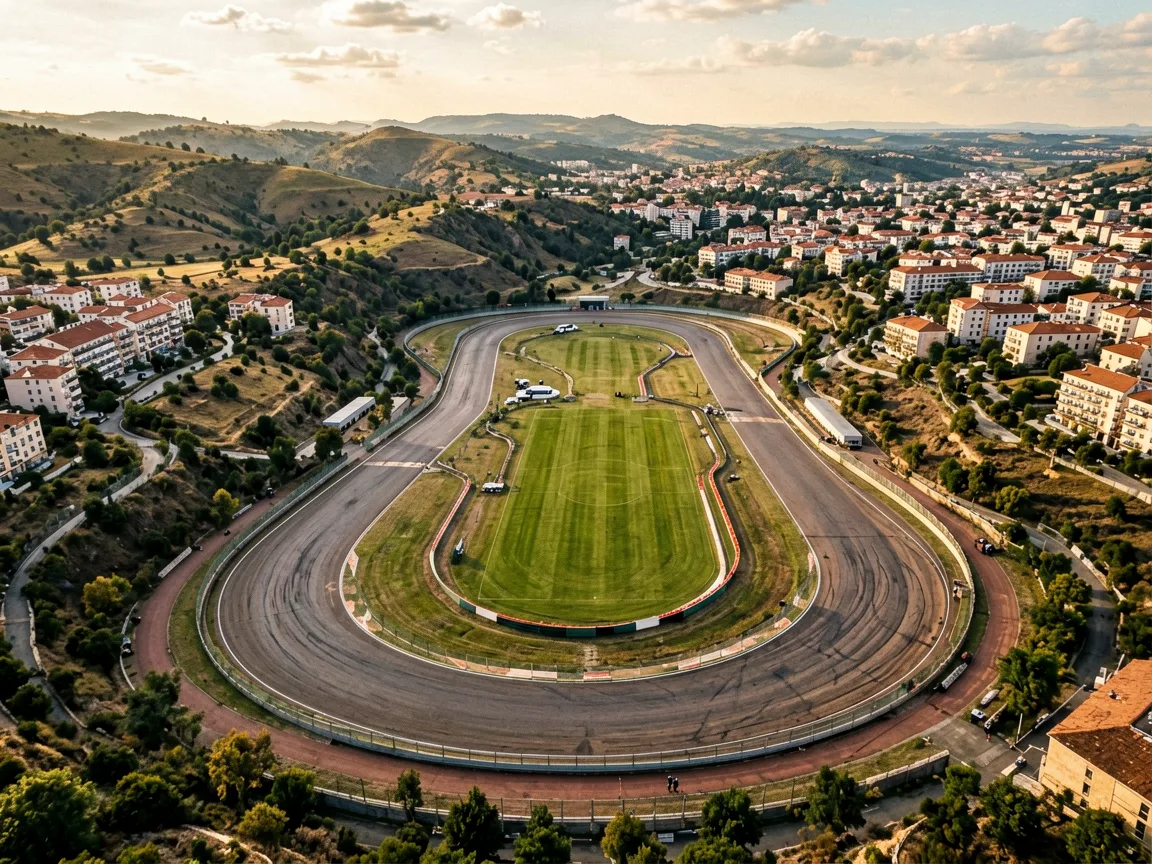
Hungaroring Qualifying: Where Saturday Decides Sunday Before Lap One
The tight, technical Budapest circuit punishes poor grid positions more than almost anywhere else on the calendar.