The Million-Dollar Paywall Blocking F1's Next Generation
Reaching the F1 grid now requires an estimated seven-figure investment, pricing out raw talent and reshaping the sport's future.
Lights out. The red lights go off, and a multi-million-dollar symphony of carbon fiber and hybrid power screams into Turn 1. It is the pinnacle of motorsport. But long before the lights go out, the check engine light is already flashing on the bank accounts of aspiring racing drivers. The brutal truth of modern Formula 1 is that raw talent alone cannot get you to the grid. You need something far more powerful: serious, unrelenting, seven-figure cash.
The gap between a childhood karting dream and an F1 superlicense is no longer a stepping stone. It is a financial chasm. Andrew Benson's deep-dive assessment into the cost of reaching F1 pulls back the curtain on a sport that is increasingly becoming the exclusive playground of the ultra-wealthy. The price of admission has skyrocketed, and the consequences for the talent pipeline are catastrophic.
The Price of the Dream
Imagine strapping into a kart for the first time at age seven. That initial adrenaline rush seems innocent enough, but the meter is already running at an alarming rate. Competitive karting at a European level, the bare minimum required to get noticed by F1 academies, will easily drain £150,000 to £200,000 per season from a family's savings. That is before a single wheel touches a single-seater track.
By the time a prospect reaches the official F1 feeder series, the financial numbers become staggering.
- F3 Season: €700,000 to €900,000 for a competitive drive
- F2 Season: €2.5 million to €3.5 million for a front-running seat
- Total estimated career spend to reach F1: £7 million to £10 million
These are not administrative fees. These are the astronomical buy-ins required just to occupy space on the starting grid. For context, a top-tier Premier League academy prospect can rise through the ranks for the cost of a pair of boots and transport to training. In F1, the equivalent talent requires the budget of a small luxury business just to survive the grassroots level.
Why the Costs Have Skyrocketed
So what happened? How did the ladder to F1 become a toll road with no free lanes? The escalation is driven by a perfect storm of technical regulations, sporting politics, and shifting economic models.
First, the cars themselves. F2 and F3 machinery is highly sophisticated, utilizing spec carbon fiber chassis, advanced aerodynamics, and complex telemetry systems. When a driver bins it into the barrier at Silverstone's Copse corner, the carbon fiber shrapnel comes with an invoice. A relatively standard F2 crash can easily rack up a €80,000 repair bill. The teams pass these risks directly onto the drivers, meaning deep pockets are required just to cover potential mishaps.
Second, the F1 cost cap ironically squeezed the middle tier. With F1 teams restricted on how much they can spend on their own operations, the financial burden of developing young talent has been pushed down the ladder. F2 and F3 teams operate on razor-thin margins, heavily reliant on driver funding to keep their operations afloat. The business model of a modern feeder series team is simple: the seat goes to the highest bidder, not the fastest driver.
The Talent Drain
The casualties of this million-dollar paywall are already piling up on the sidelines. The most glaring victim of the financial arms race is Jack Doohan. The Alpine academy driver possessed the raw pace and the superlicense points to justify an F1 seat, but he was ultimately sidelined, replaced by the heavily-backed Franco Colapinto, who brought crucial Argentine sponsorship dollars to the struggling Enstone outfit. It was a brutally rational decision, and one that perfectly encapsulated the grim reality of modern motorsport.
Drivers with undeniable pace are being leapfrogged by rivals whose primary asset is a bulging portfolio of personal sponsors. We are witnessing the slow death of the meritocracy. The narrative used to be that if you were fast enough, the money would eventually find you. Today, if the money is not there from lap one, no amount of speed will save your career.
"It's a shame that motorsport is like this now. The best drivers don't always get the opportunities. It comes down to who has the biggest chequebook, and that's not what racing should be about."
Chasing the Billionaire Backing
Without a trust fund or a royal family bankrolling your career, the modern F1 aspirant must become a full-time salesperson. Racing drivers spend more time in corporate boardrooms pitching to energy drink executives and cryptocurrency platforms than they do analyzing telemetry. The rise of the "pay driver" is not a new phenomenon, but the sheer scale of the required investment has fundamentally changed the demographic of the sport.
The focus has shifted entirely toward securing billionaire backing or landing a major multinational sponsor. Energy drink empires, Middle Eastern sovereign wealth funds, and massive industrial conglomerates are the only entities capable of bridging the gap. This leaves middle-class prospects entirely stranded. The F1 ladder is intentionally bottlenecks at F2, specifically designed to extract the maximum amount of seat money from the remaining contenders before one or two lucky souls are promoted upwards.
The Final Tally
- Jack Doohan (Alpine) - Lost out on a race seat despite superlicense credentials
- Franco Colapinto (Williams/Alpine) - Secured drive backed by substantial South American sponsorship
- Oliver Bearman (Haas) - Required significant Ferrari/Haas partnership funding to finalize his 2025 seat
- Andrea Kimi Antonelli (Mercedes) - Backed by Mercedes-AMG pipeline, but required massive infrastructure investment
Race Verdict
- MVP: Franco Colapinto - Mastered the meta-game of modern motorsport. His pace was impressive, but his ability to unlock South American sponsorship at the exact moment Alpine needed cash was the ultimate strategic overtake.
- Biggest Disappointment: The F1 Talent Pathway - The entire system. It is fundamentally broken when economic selection overtakes natural selection. The ladder is designed to extract wealth, not cultivate greatness.
The Championship Picture
This financial reality is rapidly altering the long-term competitive landscape of Formula 1. If the grid becomes saturated with drivers who bought their way in rather than earned their place through sheer pace, the overall quality of the racing product will inevitably degrade.
F1 prides itself on featuring the 20 fastest drivers in the world, but that marketing tagline is becoming heavily caveated. It is now the 20 best-funded drivers in the world. The FIA and the commercial rights holders must intervene before the feeder series completely collapses under its own weight. Salary caps in F2 and F3, centralized funding pools, or a radical restructuring of how superlicense points are distributed are all desperately needed.
Until the cost of the ladder is aggressively regulated, Formula 1 will continue to leave its next Senna or Schumacher stranded at the go-kart track, watching from the grandstands as the millionaires race past.
Editorial Integrity
This is an original SportPulse article written by our editorial team. All content is independently researched, written, and reviewed by our writers and editors before publication. We do not publish copied, aggregated, or syndicated content.
SportPulse is committed to original sports journalism. Read our editorial policy or contact us with any questions.
More Like This
All f1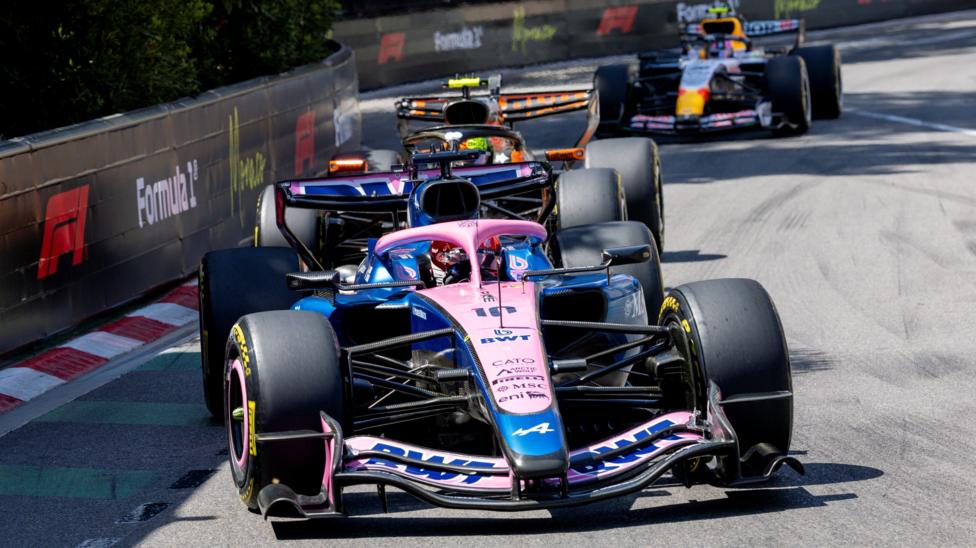
Gasly's Podium: Justice Served or Pandora's Box Opened?
Pierre Gasly's spotlight podium exposes the FIA's track limits crisis, a regulatory can of worms threatening Austrian Grand Prix integrity.

Norris Calls Spa Qualifying Masterclass One of His Best Despite P13 Grid Drop
Lando Norris stunned Spa with a qualifying lap for the ages, only for a grid penalty to bury him back in thirteenth.
The Crown's Weight: F1 Champions and Their Racing Sons
From Hill to Verstappen, the lineage of F1 champions carries an unavoidable burden of expectation on the grid.