Six Sprints, Higher Stakes: F1's Sprint Format Gets Its Biggest Test in 2026
F1 expands to six sprint races in 2026, marking the format's most ambitious season yet and reigniting the debate over racing spectacle.
Lights Out and Away We Sprint — Again
The countdown has begun. Six sprint races will feature on the 2026 Formula 1 calendar, the most the sport has ever staged in a single season. It's a clear signal from Liberty Media and the FIA: sprint weekends are no longer an experiment. They're infrastructure.
For fans who've tracked this format's turbulent evolution since its 2021 debut at Silverstone, the expansion feels like a statement of intent. For skeptics, it's another step toward diluting the Grand Prix weekend's sacred structure. Either way, the sprint is here to stay — and in 2026, it's scaling up.
A Format Born in Controversy
Let's rewind the tape. F1 sprint races launched in 2021 with three trial events at Silverstone, Monza, and Interlagos. The premise was simple: a 100km Saturday dash to determine the starting grid for Sunday's main race, injecting action into a weekend format that hadn't fundamentally changed in decades.
The reception? Mixed. Fans enjoyed the extra competitive session, but critics argued that sprints created a perverse incentive — drivers were too cautious, terrified of wrecking their Sunday grid slot. The format rewarded risk aversion, not racing.
F1 listened. In 2023, the sprint underwent a critical redesign. The key change: sprint qualifying (called the Sprint Shootout) became entirely separate from Grand Prix qualifying. Now, the sprint grid was determined by its own short qualifying session, and the sprint result had zero bearing on Sunday's starting order. Drivers could finally race without fear.
Points remained on the table for the top eight finishers: 8-7-6-5-4-3-2-1. But the psychological barrier had been removed. Sprint races in 2023 and 2024 delivered noticeably more aggression, more overtaking, and more drama.
The Current Sprint Format: How It Works
For those new to the format — or needing a refresher before 2026 kicks off — here's the breakdown of a standard sprint weekend:
Friday
- FP1 — The only practice session of the weekend. Teams get 60 minutes to dial in setups before parc fermé conditions take effect.
- Sprint Qualifying (SQ1, SQ2, SQ3) — A knockout-format session to determine the sprint race grid. Shorter sessions than standard qualifying, with soft compound tyres only.
Saturday
- Sprint Race — A 100km dash (roughly 20-25 laps depending on the circuit) with no mandatory pit stops. Points awarded to the top eight.
Sunday
- Grand Prix Qualifying — The standard Q1/Q2/Q3 format to set the grid for the main event.
- Grand Prix — Full-distance race. The sprint result has no impact on this grid.
This separation is the format's backbone. It gives teams and drivers two independent competitions across the weekend, each with its own qualifying and race. More track action for fans. More data for engineers. More championship points on the line.
Six in 2026: Why the Expansion Matters
The jump to six sprint events represents a significant increase from the three that launched the format and the incremental growth since. It means roughly one-quarter of the calendar will feature the condensed weekend structure.
That's a substantial operational commitment. Teams must prepare two distinct setups with minimal practice data. Strategists face pressure to nail tyre choices from a single FP1 session before sprint qualifying locks in decisions. For smaller teams with fewer resources, sprint weekends amplify the disadvantage.
There's also the points arithmetic. With six sprints offering up to 8 points for a win each, the maximum sprint haul across a season jumps to 48 points. That's nearly two full race victories' worth of points distributed in shortened, chaotic contests. In a tight championship fight — think Verstappen vs. Hamilton 2021, or the intra-team battles brewing in 2026 with sweeping new regulations — sprint points could be decisive.
The Strategic Angle
Sprint weekends compress the decision-making timeline. Teams that historically used FP1 conservatively, banking data for FP2 and FP3 before committing to a setup, now face a sink-or-swim Friday. One session. One chance to get the car in the window before parc fermé.
The data tells us this favors experienced operations. Since the 2023 format change, teams like Red Bull, McLaren, and Ferrari have consistently extracted the most from sprint weekends. Their simulation tools, driver feedback loops, and ability to make rapid setup adjustments have proven decisive in the high-pressure sprint qualifying environment.
For 2026, with completely new car regulations kicking in — active aerodynamics, new power unit configurations, revised fuel — the sprint format adds another layer of complexity. Teams will be learning their cars in real time during FP1, then immediately facing competitive sessions. Early-season sprints could produce wildly unpredictable results as the grid scrambles to understand the new machinery.
The Debate Won't Die
Not everyone is celebrating. The sprint format remains one of F1's most divisive topics, and expanding to six events hasn't silenced the critics.
The purist argument goes like this: a Grand Prix weekend should build toward a crescendo. FP1, FP2, FP3, qualifying, race. Each session has a purpose. The sprint disrupts this rhythm, front-loading competitive action and potentially cheapening the main event.
The counterargument is commercial and fan-driven. Sprint weekends consistently deliver higher Saturday viewership than traditional FP3 sessions. Race-day attendance at sprint events has shown strong engagement. For a sport aggressively pursuing younger audiences and global expansion, more racing = more value.
"Sprint races give us another chance to fight. As a driver, you want to race. More laps battling for position, more chances to make a difference. That's what I'm here for." — A driver's perspective on the sprint format's appeal.
The drivers themselves are split. Champions with comfortable points cushions tend to view sprints as unnecessary risk. Midfield drivers see them as golden opportunities — chaotic, short-format races where a bold strategy call or a well-timed overtaking move can yield massive rewards.
Race Verdict
Sprint MVP Prediction: Oscar Piastri
The Australian has built a reputation as a sprint specialist since joining the grid. His composure in condensed qualifying sessions, combined with his aggressive but calculated racecraft, makes him a perennial sprint threat. With McLaren's continued development trajectory, Piastri could be the driver who bankrolls the most sprint points in 2026.
Biggest Disappointment Risk: Mercedes
If the Silver Arrows struggle to adapt to the 2026 regulations — and historical precedent with major rule changes suggests teething problems are likely — sprint weekends could expose their weaknesses ruthlessly. One FP1 to understand a tricky car, then straight into competitive sessions. Mercedes has historically been a slow-burn team, needing multiple sessions to optimize. Sprint weekends punish that approach.
Championship Picture
Here's the math that matters. With six sprint races in 2026:
- Maximum sprint points available: 48 (6 x 8 for a win)
- Percentage of maximum season points from sprints: Significant in a field where margins between the top teams are razor-thin
In 2024, the championship battle between McLaren, Ferrari, and Red Bull was decided by fine margins. A single DNF, a brilliant strategy call, a penalty. Now layer in 48 extra points distributed across compressed, high-variance sprint races.
The team that masters sprint weekends doesn't just gain an advantage — it gains a structural buffer against the inevitable setbacks of a full season. Consistency in sprints becomes as valuable as outright pace in Grands Prix.
For the new era of 2026 regulations, with active aerodynamics and revised power units reshaping the competitive order, the sprint format takes on heightened significance. Early-season sprints could establish a pecking order before teams fully understand their cars. Late-season sprints could decide titles.
What to Watch in 2026
The sprint format's expansion to six races is F1's clearest bet yet on short-form entertainment. But the real test isn't the number of sprints — it's whether the new regulations create enough competitive variability to make every sprint appointment viewing.
If the 2026 grid is bunched together, sprints will be spectacular. If one team dominates, they become processional exhibitions with an extra trophy attached.
The clock is ticking. Six sprints. Six chances for chaos. Six Saturdays that could reshape the championship. F1's sprint experiment is no longer experimental — it's the future. And in 2026, that future arrives in full force.
Editorial Integrity
This is an original SportPulse article written by our editorial team. All content is independently researched, written, and reviewed by our writers and editors before publication. We do not publish copied, aggregated, or syndicated content.
SportPulse is committed to original sports journalism. Read our editorial policy or contact us with any questions.
More Like This
All f1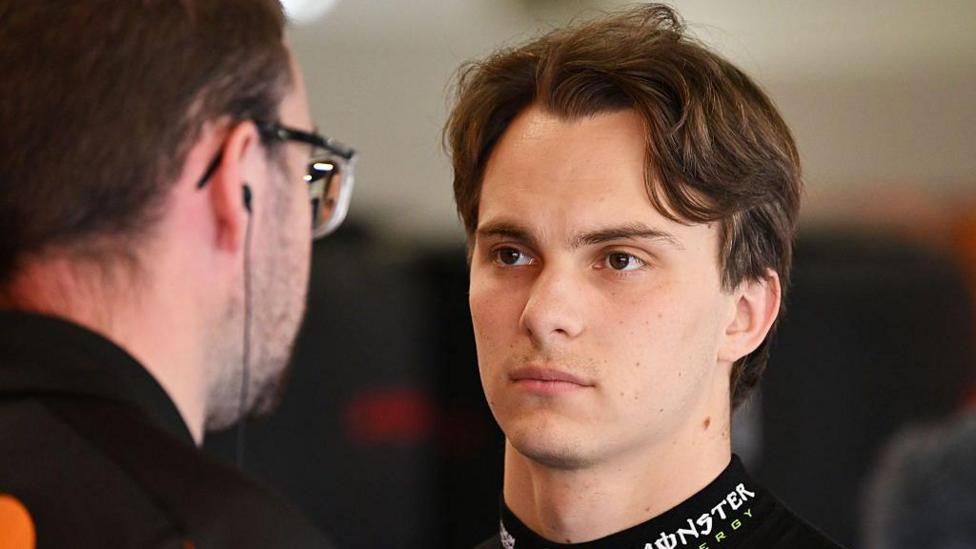
Piastri 'Mind-Blown' as FIA Overturns Gasly's Monaco Pit-Lane Penalty
A rare penalty reversal in Monaco raises serious questions about pit-lane enforcement consistency and the appeals process.
Spa Tyre War: Why Belgian GP Strategy Is a Gambler's Paradise
Spa-Francorchamps demands tactical genius with tyre degradation, weather chaos and pit windows defining Sunday's Belgian Grand Prix.

Yamakoshi Snatches F3 Pole in Shock Spielberg Qualifying
Hiyu Yamakoshi defies odds with maiden Formula 3 pole at Red Bull Ring, signaling a major shift in championship dynamics.