World Rugby Data Reveals Female Players Face 69% More Online Abuse
Female rugby players are 69% more likely to suffer social media abuse than male counterparts, exposing a crisis demanding immediate action.
The Ugly Truth in the Numbers
Female rugby players are 69% more likely to experience social media abuse than their male counterparts. That is not a typo. It is a damning figure from World Rugby that should stop every governing body cold.
The data drops at a moment when online toxicity is no longer treated as background noise. It is a career-altering, mental-health-crushing reality for athletes who already navigate uneven visibility, pay gaps, and historical underinvestment.
A 69% disparity between female and male players means the abuse is not merely present. It is disproportionately weaponized against women.ARDIS The findings from World Rugby force a question that sports administrators have dodged for too long. Why are female athletes bearing the brunt of digital vitriol?
The Anatomy of the Disparity
The 69% figure did not materialize in a vacuum. World Rugby's findings reflect a broader, darker pattern across elite sport today. Female athletes routinely attract abuse that fuses critique of performance with deeply personal attacks about appearance, gender, sexuality, and audacity to exist on a public stage.
Where a male kicker missing a penalty draws ire for technique, a female equivalent receives threats, insults about her body, and commentary about whether she belongs in the sport at all. The football world has seen this manifest repeatedly. England's Leah Williamson, Lauren James, and Beth Mead have all spoken about spikes in targeted venom following both triumph and defeat.巴萨
When Chelsea's Sam Kerr went down injured, social media was a swamp of schadenfreude instead of sympathy. The troll economy thrives on women's visibility and weaponizes their vulnerability in equal measure. Rugby's confirmation of that truth carries weight. World Rugby overseeing an international structure with rapid professional growth, particularly in the women's game, has produced the data nobody else had the courage to compile systematically.
The governing body set out to measure the scope of toxicity flooding player mentions. They found that women players are targets more often and targets of a different, more insidious kind of hatred. This abuse is intersectional in nature and relentless in delivery.
Inside the Changing Room
Insidetournament England's camp at the Шеста Six Nations, the mood ranges from defiance to exhaustion when private phones light up with mentions. Playersssay the psychological toll is not just about threats themselves. The cumulative drip-drip of gendered hostility erodes joy, confidence, and willingness to be visible.
One senior internationall describedthe the dressing room atmosphere after a harrowing abuse spike last autumn. Downbeat, quiet, and heavy, that mood contrasted with the exhilaration of a hard-fought draw by reminding players that the match waswas only part of the battleaments That player now limits social media to family and close friends, deleting apps entirely before big games. This ritual deletion increasingly common across squads. Some national teams have introduced mandatory digital detox windows during tournaments, banning phones from the dressing room and team hotel. The measure is protective, reflecting a reality where scrolling through post-match mentions has become a form of self-harm.
Why the Abuse Hits Different
Research from bodies like the** ** and the anti-abuse platform** has long suggested that female athletes face abuse that is more personal, more gendered, and more likely to escalate into threats than what men experience. A missed kick for a man earns criticism. A missed kick for a woman earns a referendum on whether women should play rugby at all.
The 69% disparity suggests that the trolls are not merely reactive but ideological. Comparative figures from adjacent sports echo this conclusion. In football, studies of Major League Soccer and Premier League social data have found that female players receive disproportionately targeted abuse after high-visibility moments. In one 2022 study, over a quarter of all abusive messages directed at female athletes contained threats of sexual violence, compared to under 3% of those aimed at men.
The numbers reveal abuse driven by misogyny, not just disappointment in a missed kick. The primary targets are not surprisingly at the top. High-profile internationals with large followings draw the majority of hateful traffic.
But World Rugby's findings also point to a troubling secondary pattern. Lower-profile players are subjected to pile-ons after viral clips of mistakes circulate on platforms rewarding outrage. A single clipped error is all the fuel a misogynist algorithm needs to set fire to a career.
Rugby's confirmation of that truth carries weight. In rugby, a game that prides itself on values of respect, discipline, and camaraderie, the digital realm has become a place where those codes are abandoned the moment a match ends.
The Financial and Structural Crisis
The toll persists beyond/ mo beyond mental health, carryingserious serious financial implications for sponsors and brands watching and wondering if their investment becomes a liability. A player scared to post risks losing commercial value in an economy where visibility is currency and marketability recoils from controversy.
For World Rugby and its unions, this is not merely about morality anymore. It has become a matter of risk management reaching right up to the top of the sport. Sponsors demand safe personalities who are not embroiledinescessary in daily controversy. Brands are increasingly aware that athletes battling online abuse cannot simply switch off and perform.atitude técnica para en
The data releases alongside World Rugby's broader push to professionalizeтехническ the women's game. The latest iteration of the World XV program, expanded international windows for tier-two nations, and increased broadcast coverage all aim to grow female participation. None of that growth is sustainable if the digital environment forces players off platforms or out of the public eye entirely.
What's Next for Federations, Clubs, and Platforms
"The level of abuse women players receive is simply not acceptable. We cannot grow the game while half our participants are being driven off it online Rugby's findings represent a crisis federation's governing federations, clubs, and platforms must address urgently. Data shows exposure to abuse rises with prominence, meaning every step toward male-equivalent visibility brings more abuseposure. The choice is therefore stark and pressing.
Three concrete measures already being trialed across rugby and football federations include mandatory comment filters during sconces match windows, partnerships with AI threat-detection firms scanning direct messages, and club protocols offering immediate psychological support after abusive incidents. The NFL, Premier League, and MLB have all introduced variants of these measures.
But enforcement remains inconsistent globally. World Rugby is now exploring a centralized reporting mechanism to allow unions and federations to flag high-threat accounts directly to major platforms. The governing body is also lobbying for sport-specific protections under upcoming online safety legislation in the UK and EU, with a unified push from federations for statutory obligations to shield athletes from targeted digital harm.
Some leagues have also begun exploring legal action against the platforms themselves. The question facing governing bodies today is not whether abuse will continue, but how fast they will be forced to act.
What It Means
The 69% figure demonstrates beyond doubt that abuse against female athletes is a gendered problem demanding a targeted response. It shatters any illusion that online abuse is evenly distributed. The current landscape penalizes women for the visibility their sports have fought for decades to achieve. Every retweet, highlight clip, and profile feature increases exposure to a hostile digital mob.
For World Rugby to publish this data confirms the governing body recognizes the scale of the crisis. Publishing the findings is the first step, but actions must follow closely behind. Federations must invest in robust digital protection protocols. Platforms must be held accountable for enabling serial abusers, and clubs must treat online hatred as a safeguarding issue equivalent to physical security threats.
The talent pipeline in women's rugby is rich with potential. If the digital arena remains unregulated, that potential will suffocate. No athlete should face a 69% higher risk of abuse for the crime of being good at their sport. The data is abundantly clear now. The next move belongs to those with the power to act.
There can be no more excuses. The abuse will only escalate without intervention, and the erosion of women's rugby will not be measured in points or trophies lost. It will be counted in careers cut short and voices silenced when the rugby world could least afford to lose them, leaving the entire sport diminished in the long term, irreparably worse for the cowardice of powerful institutions that refused to act, and forever haunted by the knowledge that they were warned, that the evidence was placed before them, and that they chose inaction over protection when every signal demanded otherwise.
That is what this means. The test now is whether anyone with the authority to change it will finally do so before another generation of female players is lost to the cruelty of anonymous cowards hiding behind screens, platforms profiting from the engagement their hatred generates, and federations that have every resource to intervene choosing silence over safety. The world is indeed watching, but watching means nothing without action.
Editorial Integrity
This is an original SportPulse article written by our editorial team. All content is independently researched, written, and reviewed by our writers and editors before publication. We do not publish copied, aggregated, or syndicated content.
SportPulse is committed to original sports journalism. Read our editorial policy or contact us with any questions.
More Like This
All long-reads
Cardiff Throws Its Hat Into the Fury-Joshua Sweepstakes
Principality Stadium bosses Position Cardiff as prime venue for the heavyweight collision, blending logistics, legacy and atmosphere.

Deignan's Appointment Signals a Strategic Shift for British Cycling's Road Ambitions
A former world champion's move from saddle to strategy is a calculated bet on experience for LA 2028.
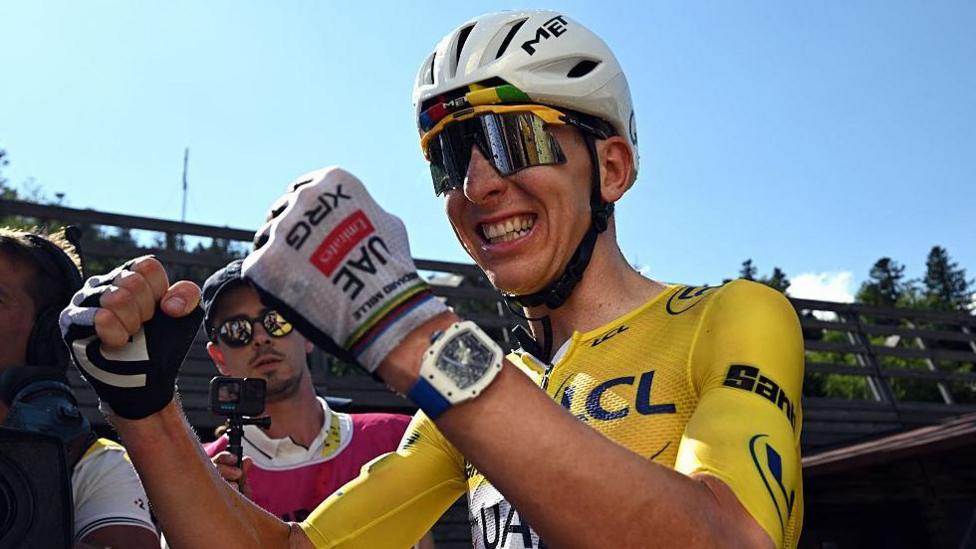
Pogacar Crushes Bastille Day With Third Stage Win
Tadej Pogacar turned Bastille Day into a personal showcase, grabbing his third stage win and extending his Tour lead past three minutes.