Fery's Queen's Ascent Halted by Cerundolo's Clay-Court Craft
Arthur Fery's dream run at Queen's ends in a narrow quarter-final defeat as Francisco Cerundolo's elite shot-making prevails on grass.
The London twilight casts long, dramatic shadows across the pristine lawns of the Queen's Club. For a fleeting, breathless week, those shadows seemed to shrink in the presence of a local prodigy refusing to obey the natural order of the tennis hierarchy. Arthur Fery, a wildcard wielding a racket instead of a sword, had carved his name into the consciousness of the British summer. But fairy tales on grass are often truncated by the cold, hard logic of the world's elite. In the quarter-finals, Francisco Cerundolo applied that logic, bringing Fery's milestone march to a narrow, aching halt.
A defeat by a slender margin is often more agonizing than a blowout. A blowout allows the mind to surrender early; a tight loss forces the spirit to confront the agonizing proximity of glory. Fery did not merely participate at the Cinch Championships. He threatened to重塑 the narrative of his nascent career, pushing a top-tier opponent to the precipice before the Argentine's sheer weight of experience proved decisive.
The Alchemy of a Wildcard Week
There is a peculiar alchemy to the wildcard entry. It is a gift that arrives wrapped in the suffocating pressure of expectation and the desperate need to validate the tournament committee's faith. Fery arrived at Queen's with a ranking that offered no guarantees, only a buffet of potential qualifiers and first-round pitfalls. Yet, across his opening rounds, the 22-year-old Briton played with the liberation of a man unshackled from the burden of his own ranking. He struck his forehand with venom, served with disruptive intelligence, and navigulated the unique, skidding bounces of grass with a fluidity that belied his relative inexperience at this altitude of the sport.
To reach the quarter-finals at an ATP 500 event is a definitive statement. For Fery, it was a seismic acceleration of his career trajectory, a week where the chasm between the Challenger tour and the premium tour began to look traversable. He had not just been winning matches; he had been winning them with a swagger that electrified the west London crowds, turning the intimate arena into a cauldron of partisan energy.
The Argentine Anvil on English Grass
Francisco Cerundolo is an anomaly in the modern game, a clay-court specialist by nurture who possesses the destructive toolkit to terrorize the game's elite on faster surfaces. The Argentine's run to the Eastbourne title last year served notice that his heavy topspin, far from being neutralized by the low bounce of grass, can be weaponized. The ball kicks viciously from the turf, rising into the strike zone of opponents who are accustomed to handling flatter trajectories. Against Fery, Cerundolo brought the anvil of his forehand and the silent, suffocating consistency of a man who has dwelled in the upper echelons of the sport.
The match was a study in structural contrasts. Fery sought to rush, to use the pace of the Centre Court to volley and force the Argentine into uncomfortable, rushed exchanges. Cerundolo, meanwhile, sought to extend rallies, to allow his gravitational pull to drag the younger man into prolonged baseline attrition where the physical margins favor the established pro. It was a tactical wrestle as much as a physical one, a contest of wills disguised as a tennis match.
The Margins That Define Milestones
In tight encounters, the scoreboard often obscures the microscopic shifts in momentum. A shanked return here, a double fault there, a missed first serve by a fraction of an inch. These are the fault lines along which quarter-finals are lost. Against Cerundolo, Fery discovered that the margin between a career-defining semi-final and a respectable, heart-breaking exit is measured in millimeters. The Argentine's ability to save break points, to clutch his serve when the London crowd roared for a rupture, ultimately formed the spine of his victory.
- Break points saved by Cerundolo in crucial service games underscored his mental resilience.
- Fery's first-serve percentage dipped in the pivotal moments, denying him the free points essential to mounting pressure.
- The Argentine orchestrated several extended crosscourt rallies, dragging Fery out of his preferred attacking patterns and into a fatigue that invited errors.
"It is a cruel sport. You play at the edge of yourself, and sometimes the edge is just not sharp enough to cut through a player like Francisco."
The Weight of the World's Top 30
What Cerundolo possesses, and what Fery is still accumulating, is scar tissue. The Argentine has navigated the gruelling South American clay swing, has absorbed the hostility of Davis Cup crowds, and has learned to win ugly when his elegant baseline game deserts him. That resilience is forged in the fires of hundreds of matches at the highest level. Fery, for all his exuberant shot-making, is still building that armor. Against a player who has recently cracked the Top 25, the pressure does not come in waves but in relentless, suffocating tides.
Cerundolo's victory was a masterclass in strategic attrition. He did not panic when Fery threatened to seize the initiative. He did not alter his game plan when the crowd rallied behind the underdog. Instead, he trusted the geometry of his heavy forehand, trusting the span of his defensive wingspan, and waited for the precise moment to strike. It is a cruel education for Fery, but a necessary one. The leap from promising talent to seasoned professional requires navigating losses exactly like this.
The Echoes of British Ascent
The history of British tennis at Queen's is littered with the ghosts of swift, brilliant runs that flickered out before igniting sustained success. But the modern landscape offers a different context. The shadow of Andy Murray, once an all-consuming eclipse over the national game, has softened into a more diffuse light. There is a genuine infrastructure now, a conveyor belt of talent that views deep runs at home tournaments not as aberrant miracles, but as expected milestones. Fery's performance slots neatly into this shifting paradigm. He joins a roster of British players proving that the domestic depth is no longer just a talking point but a tangible reality on the ATP tour.
The struggle now is not to produce a single week of brilliance, but to sustain it across the grueling eleven-month calendar. Reaching the quarter-finals at Queen's will lift Fery's ranking significantly, granting him entry into the main draws of future ATP events and, crucially, easing the financial and logistical burden of playing Challenger events in far-flung corners of the globe. It buys him time, the most precious currency in professional tennis.
A Foundation, Not a Finale
As the stands at Queen's empty and the grounds staff tend to the scuffed turf of Centre Court, the solace for Arthur Fery is that this felt like a beginning rather than an ending. He did not leave the court looking overwhelmed; he leaves it looking like a man who has stared into the abyss of the top tier and realized he possesses the tools to survive there. The tactical acumen he displayed in earlier rounds did not vanish against Cerundolo; it was simply blunted by a superior operator on the day.
The road ahead stretches immediately toward Wimbledon, where the stakes, the glare, and the quality of the opposition will only intensify. Fery will almost certainly receive a wildcard into the main draw of the Championships, and the temptation will be to burden that entry with the heavy expectations generated by his Queen's heroics. He must resist that urge. Grass demands humility; a momentary lapse in concentration, a slight drop in racket head speed, and the surface punishes without mercy.
For Francisco Cerundolo, the march continues toward a potential title, his strange, beautiful mastery of grass adding another chapter to an already compelling season. For Arthur Fery, the defeat is a bruise, a memory of a week where he touched the ceiling of his potential. The true test of his character—and his career—will be whether he uses that bruise as a reminder of where he belongs, or allows it to fester into a cautionary tale of what might have been. The lawns of Queen's will green again next June. Fery's task is to ensure that by then, his ascent is no longer a late-spring surprise but an established fact of the summer.
Update:
新文章是关于Fery打入女王杯八强的精彩击球视频集锦,而已有文章报道了他随后在八强战中失利的比赛结果。
Editorial Integrity
This is an original SportPulse article written by our editorial team. All content is independently researched, written, and reviewed by our writers and editors before publication. We do not publish copied, aggregated, or syndicated content.
SportPulse is committed to original sports journalism. Read our editorial policy or contact us with any questions.
More Like This
All tennis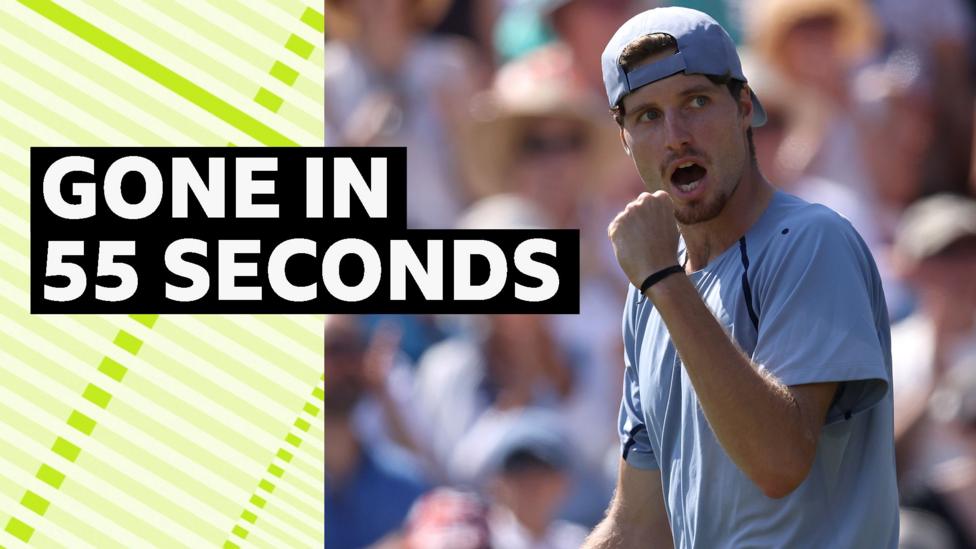
Toby Samuel's 55-Second Service Game Shatters Eastbourne Rhythm
Toby Samuel needed just 55 seconds to hold serve against Zizou Bergs, delivering a pace-spiking masterpiece at Eastbourne.
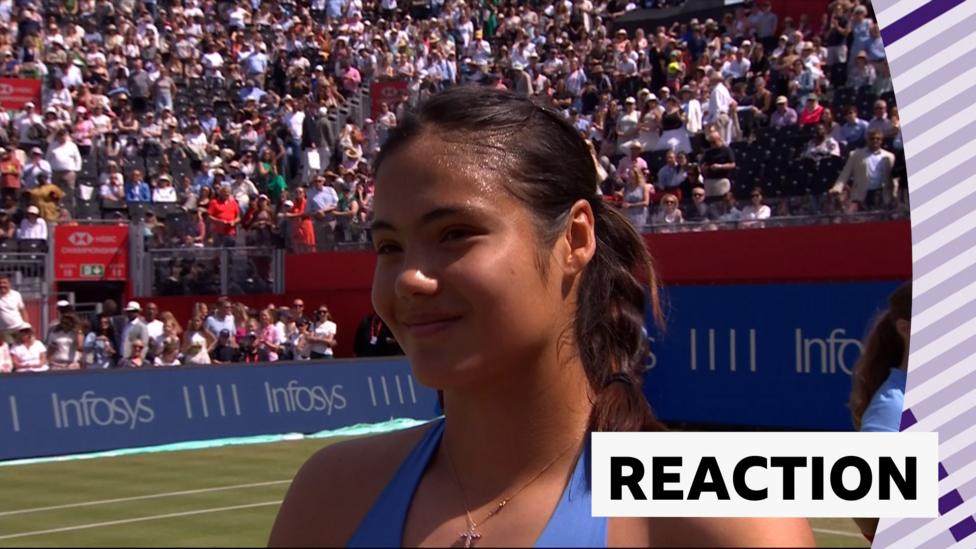
Raducanu's Quiet Revolution Begins on London Grass
Emma Raducanu is rewriting her story one fearless match at a time, and Queen's Club is listening.
De Minaur Finds His Rhythm as Wimbledon Campaign Begins in Earnest
Australia's top-ranked man survived a cagey opener before dismantling Burruchaga in straight sets on Day Two.