FIFA's Peace Match Gamble: Israel v Palestine Headlines New Youth Tournament
FIFA plans a symbolic Israel-Palestine opener for a new under-15 tournament, raising questions about football's role in geopolitics.
The Opening Gambit
Gianni Infantino has never been shy about wielding football as an instrument of global diplomacy. Now, the FIFA president is preparing perhaps his most audacious symbolic gesture yet: scheduling Israel versus Palestine as the curtain-raising fixture of a brand-new under-15s international tournament set to take place in the United States this September.
The competition, while not formally designated as an under-15 World Cup, will be open to all 211 FIFA member associations, a roster that notably includes Russia, whose senior national team remains banned from official competition following the invasion of Ukraine. The juxtaposition of those two facts alone tells you everything about the tightrope FIFA believes it can walk.
This is not merely a scheduling decision. It is a statement of intent from an organization that wants the world to believe football can succeed where decades of diplomacy have failed.
The Symbolism and the Strategy
The choice of a youth category for this fixture is deliberate and instructive. By placing children at the centre of the narrative, FIFA is attempting to neutralise the explosive political dimensions of the matchup. Under-15 players carry none of the senior team baggage. There are no club allegiances to navigate, no commercial sponsorships pulling in contradictory directions, no decades of on-pitch hostility to replay. It is, on paper, a clean slate.
But clean slates are a fantasy in this context. The Israeli-Palestinian conflict is not a rivalry that can be reframed by the age of its participants. Human rights organisations, political bodies, and football supporters across the Middle East and beyond will view this fixture through a lens that has nothing to do with youth development. FIFA is not staging a football match. It is staging a metaphor, and metaphors have a habit of escaping the intentions of their architects.
The United States as host nation adds another layer. The US has historically positioned itself as a mediator in the region, and staging the tournament on American soil gives FIFA a familiar geopolitical backdrop. It also, not coincidentally, aligns with the broader American investment in football ahead of the 2026 World Cup, which will be co-hosted by the US, Canada, and Mexico. Youth tournaments in the US serve a dual purpose: they test organisational infrastructure and they grow the sport's footprint in a market FIFA is desperate to cultivate.
Russia's Return Through the Back Door
The inclusion of Russia in this tournament deserves scrutiny equal to the headline fixture. FIFA's senior-level ban on Russian teams has been one of the few concrete consequences the sport has imposed since February 2022. UEFA has maintained its own parallel restrictions, barring Russian clubs from European competition and removing Russia from qualification pathways.
Yet here, at youth level, in a tournament that FIFA insists is not an official World Cup, the door creaks open. The distinction between an official under-15 World Cup and a FIFA-organised tournament open to all member nations is, frankly, a bureaucratic fig leaf. If FIFA sanctions it, if FIFA organises it, and if FIFA member associations participate, the competitive legitimacy is functionally identical.
This creates a precedent. If Russia can compete at under-15 level in September, the argument for continued senior exclusion weakens with every passing cycle. FIFA will frame this as age-group competition being separate from senior politics, but the governing body knows exactly what signal it sends. It is a controlled reintroduction, a softening of the ground before any formal policy reversal.
The 211-member participation structure also means Russia will not face the kind of targeted boycott pressure that a smaller, more selective tournament might invite. When everyone is included, singling out one participant requires a coordinated effort that few national associations will risk.
Infantino's Diplomacy Doctrine
Since assuming the FIFA presidency in 2016, Infantino has consistently positioned himself as a global statesman rather than a mere football administrator. His visits to conflict zones, his relationships with heads of state across the political spectrum, and his willingness to expand the World Cup to 48 teams all reflect a philosophy in which football's reach is its primary virtue.
"Football has the power to bring people together in ways that politics cannot. When children play, the world watches with hope instead of fear." — the kind of rhetoric Infantino has repeatedly deployed.
The under-15 tournament fits neatly into this doctrine. Youth football carries an inherent innocence that senior international competition lost long ago. There are no World Ranking points at stake, no qualification implications, no television contracts worth billions. It is, theoretically, football stripped back to its purest form: children competing, developing, and representing their nations without the weight of adult geopolitics.
The theory is appealing. The practice is considerably more complicated.
The Risks FIFA Is Running
The backlash, when it comes, will arrive from multiple directions simultaneously. Palestinian football authorities have long argued that FIFA has failed to adequately address the constraints placed on Palestinian players, from movement restrictions to infrastructure damage. Staging a symbolic match without addressing those structural grievances risks reducing Palestinian football to a prop in Infantino's peace narrative.
Israeli football, meanwhile, operates within its own complex political context. The Israeli Football Association has faced repeated calls for suspension from FIFA, most notably at the 2015 FIFA Congress. Any fixture against Palestine will be scrutinised for what it does or does not acknowledge about the broader situation.
Beyond the specific matchup, Russia's inclusion will generate fury in Ukraine and among European federations that have championed the ban. The Ukrainian Football Association has been vocal about the need for continued isolation, and a youth tournament in the US quietly admitting Russia will not go unnoticed in Kyiv or Brussels.
FIFA's calculation appears to be that the youth category provides enough insulation to absorb these criticisms. The organisation is banking on the spectacle of children playing football to drown out the political noise. Whether that bet pays off depends entirely on how the wider world receives the gesture.
What This Tournament Really Represents
Strip away the symbolism, and what remains is a significant organisational undertaking. A 211-nation youth tournament is logistically unprecedented at this scale. Qualifying processes, travel logistics, safeguarding protocols, and competitive balance across confederations with wildly different development structures all present genuine challenges.
For the participating under-15 players, the opportunity is substantial. Exposure to international competition at a young age accelerates development in ways that domestic academies alone cannot replicate. The tournament could become a genuine scouting showcase, giving players from smaller federations a platform that the existing youth calendar does not provide.
But FIFA has chosen to frame the event around its opening match rather than its developmental potential. That framing tells you where the organisation's priorities lie. This is a political project dressed in a football kit.
Looking Ahead
The September timeline leaves FIFA with roughly three months to finalise the bracket, secure hosting venues across the US, and manage the diplomatic fallout that will intensify as the tournament approaches. Expect national associations to face domestic pressure either to participate or to boycott, particularly in Europe and the Middle East.
The Israel-Palestine fixture, if it proceeds, will be the most politically charged youth football match in history. No amount of goodwill messaging will change that reality. FIFA is betting that the image of children on a pitch can transcend the conflict that surrounds them. It is a noble ambition and a reckless one in equal measure.
The tournament's ultimate legacy will depend not on the result of one symbolic match but on whether FIFA follows the gesture with substantive action. If this is the beginning of a genuine engagement with football's role in conflict resolution, it could mark a meaningful chapter. If it is a one-off spectacle designed to generate favourable headlines for Infantino, it will be remembered as precisely what its critics fear: sportswashing of the most calculated kind.
Editorial Integrity
This is an original SportPulse article written by our editorial team. All content is independently researched, written, and reviewed by our writers and editors before publication. We do not publish copied, aggregated, or syndicated content.
SportPulse is committed to original sports journalism. Read our editorial policy or contact us with any questions.
More Like This
All football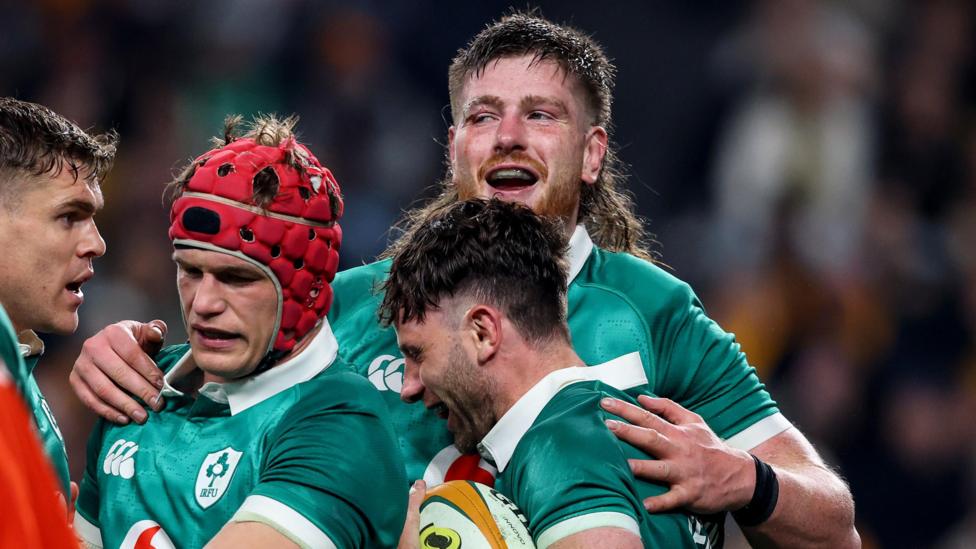
Ireland Break Wallaby Hearts in Sydney Epic
Ireland stun Australia with a bonus-point comeback in Sydney after Ben Donaldson's last-gasp penalty drifts agonizingly wide.
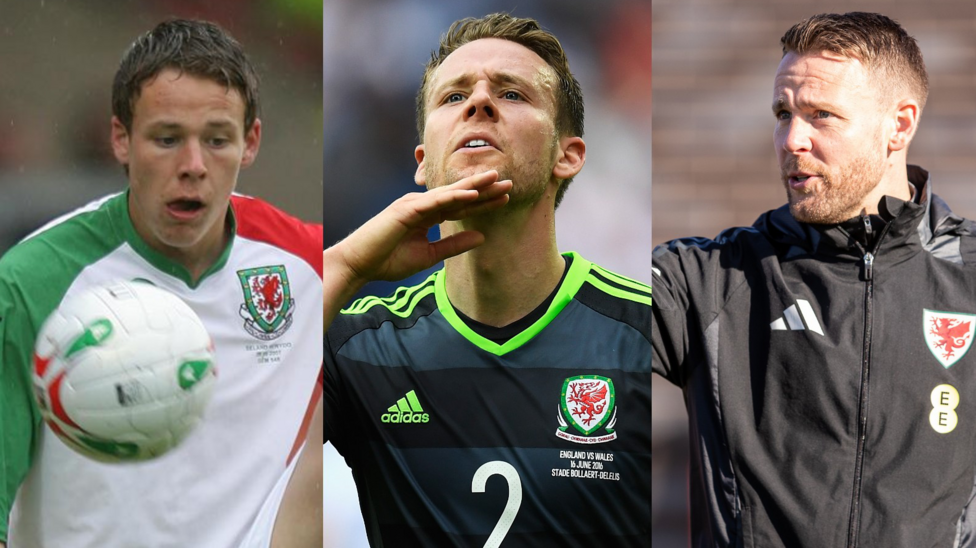
Gunter Completes the Circle: From Wrexham Prodigy to Wales U19 Architect
Chris Gunter returns to the Racecourse Ground where his Wales career began, now orchestrating a tactical revolution as head coach of the U19 Euros hosts.
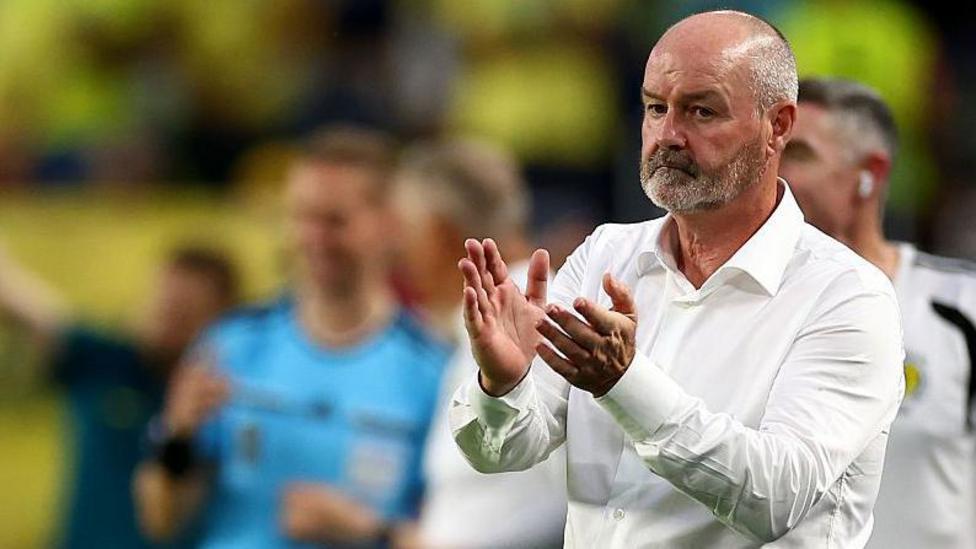
Clarke Walks Away: Scotland Boss Calls Departure 'Easy' After World Cup Heartbreak
Steve Clarke departs as Scotland manager after pre-planned exit following another group-stage failure on the world's biggest stage.