Finnigan's One-Year Everton Extension: Pragmatism or Vision?
Megan Finnigan's short-term extension reveals deeper truths about Everton's WSL ambitions and the modern women's football contract economy.
A Short-Term Bet With Long-Term Consequences
When Everton confirmed that captain Megan Finnigan had signed a one-year contract extension, the understated announcement barely made a ripple in a summer transfer cycle obsessed with blockbuster moves and marquee arrivals. Yet this is precisely the kind of deal that tells you more about a club's real trajectory than any big-money signing ever could.
A 12-month extension for a club captain is a fascinatingly ambivalent statement of intent. It says, in the most tangible contractual language possible: we value you, but not quite enough to lock you down long-term. It whispers of cautious optimism wrapped in institutional hedging. For Finnigan, it represents both a privilege and an ultimatum: prove you deserve the next one.
Everton's Women's Super League trajectory has been one of quiet consolidation rather than explosive growth. In a league increasingly dominated by the financial gravity of Chelsea, Arsenal, and Manchester City, clubs lower down the table must calibrate squad-building with surgical precision. Every contract decision carries cascading consequences for wage structures, squad morale, and recruitment strategies.
Decoding the One-Year Deal
The mechanics of a one-year extension in women's football require deeper context. Unlike the men's Premier League, where short-term deals for key players often signal a club's reluctance to commit or a player's desire to keep options open, the WSL's contract culture is still evolving rapidly following the professionalisation boom.
For Finnigan, a product of Everton's youth system and a player who has been with the club since 2018, this extension represents a seventh consecutive season in blue. Her appointment as captain was a statement of cultural continuity — a bridge between the academy system and the first team. But one-year deals carry inherent volatility.
- Securing the captain prevents a leadership vacuum during a critical pre-season window
- Short-term commitment keeps the wage bill flexible for future transfer windows
- Player retention sends a stabilising message to the rest of the squad
- Performance incentive structure is implicitly reinforced: earn the next deal on the pitch
The financial architecture of WSL clubs outside the top four remains precarious. Everton have invested steadily in their women's programme, but they operate in a competitive space where one or two marquee signings can demand salary packages that distort an entire wage structure. A one-year extension for a homegrown captain on reasonable terms is the kind of fiscal discipline that allows a club to pursue external targets without raising internal expectations unmanageably.
Finnigan's Tactical and Leadership Value
To understand why Everton pushed this extension through, one must examine what Finnigan actually delivers on the pitch. She is not the kind of midfielder who dominates highlight reels or fills a stat sheet with eye-catching numbers. Her value is structural, rooted in the unglamorous grunt work that allows more celebrated teammates to flourish.
In the modern WSL, where tactical sophistication has accelerated dramatically over the past three seasons, teams require players who can execute tactical instructions with minimal individual deviation. Finnigan provides that reliability. She is the connective tissue between defence and attack, the player whose positional discipline allows Everton's creative personnel the freedom to operate higher up the pitch without leaving structural gaps behind them.
Leadership is not about who wears the armband on matchday. It is about who sets training standards, who speaks in the dressing room when cameras are off, and who absorbs pressure so others can play. Finnigan embodies all three.
Her role as captain extends beyond the ninety minutes. In a squad that has seen considerable turnover in recent windows, retaining a player steeped in the club's culture is an act of institutional preservation. Young players arriving at Everton need a reference point, someone who understands the club's standards and expectations. Finnigan serves that purpose more effectively than any external signing ever could.
The Captain's Statistical Profile
While Finnigan's contributions do not always translate to conventional statistics, her underlying numbers paint a picture of a player whose value is deeply embedded in team function:
- Pass completion rate consistently above 82% in WSL appearances last season
- Tackle success rate of approximately 68% in midfield duels
- Minutes played ranking among the top tier of Everton's squad availability
- Leadership metric proxy: communication frequency and set-piece organisation
These figures do not make headlines. They do not generate transfer speculation or attract international suitors. But they form the statistical backbone of a mid-table WSL side that needs dependability above all else.
The WSL Contract Economy
Finnigan's extension must also be understood within the broader context of WSL contract trends. The women's game has witnessed a significant shift towards shorter, more performance-based contracts as clubs navigate financial uncertainty and competitive ambition simultaneously.
The average WSL contract length has decreased over recent windows, with clubs increasingly hesitant to commit to multi-year deals unless the player in question represents a clear strategic priority — typically a creative attacker, a proven goalscorer, or an internationally established defender. For midfielders and full-backs whose value is largely functional, one and two-year deals have become the industry standard.
This trend reflects a pragmatic reality. WSL clubs are still building sustainable revenue models. Broadcasting income, while growing, remains a fraction of what men's clubs generate. Commercial partnerships are expanding but can vanish quickly if on-field performance dips. In this environment, financial flexibility is not just desirable — it is existential.
-
Top four clubs — Chelsea, Arsenal, Manchester City, and Manchester United — can offer three to four-year deals to key targets, absorbing the risk of longer commitments through superior commercial revenue and Champions League participation
-
Mid-table clubs — Everton, Aston Villa, Brighton, and West Ham — increasingly favour shorter contracts with performance-linked extensions, preserving flexibility to respond to changing league dynamics
-
Lower-table clubs — often rely on short-term deals and loan signings to manage budget constraints while remaining competitive enough to avoid relegation
Everton sit firmly in the second tier. Finnigan's one-year extension fits this model precisely.
What This Means for Everton's Season
The immediate on-pitch implications of this extension are straightforward but significant. Everton enter the new WSL campaign with their captain confirmed, their leadership structure intact, and one less distraction to navigate during pre-season preparations.
Managerial planning benefits enormously from this kind of early confirmation. Knowing who the captain will be allows coaching staff to build tactical frameworks around a defined midfield axis. It enables younger players to develop relationships with established leadership figures without the ambient uncertainty of a potential departure looming over the dressing room.
Off the pitch, the extension sends a recalibrating message to the transfer market. Everton are not in a position to make sweeping Statements of Ambition. What they can do is retain core assets, make targeted additions, and build a squad capable of pushing up the table through collective coherence rather than individual brilliance.
Verdict
This is a deal defined by necessity rather than ambition. It is sensible, measured, and entirely characteristic of a club operating within its means in a league where the financial gap between top and bottom continues to widen. Finnigan stays, Everton's leadership structure remains intact, and the club gains another season to assess whether their captain can elevate her game alongside a squad they hope will improve around her.
The Bottom Line: one-year extensions for club captains are rarely exciting, but they are often essential. Everton have made a pragmatic choice that prioritises stability over spectacle. Whether that pragmatism will be rewarded with a meaningful step forward this season remains the more pressing question facing this football club.
Editorial Integrity
This is an original SportPulse article written by our editorial team. All content is independently researched, written, and reviewed by our writers and editors before publication. We do not publish copied, aggregated, or syndicated content.
SportPulse is committed to original sports journalism. Read our editorial policy or contact us with any questions.
More Like This
All football
Mikel Merino and the Architecture of西班牙's Late-Game Composure
Spain's super-sub embodies De la Fuente's tactical patience, delivering knockout goals that ending a 14-year World Cup drought.

Why Van Dijk Remains the Tactical Bedrock of Netherlands' World Cup Ambitions
Olivier Giroud's praise for Van Dijk underlines a deeper truth about the Dutch captain's irreplaceable tactical role.
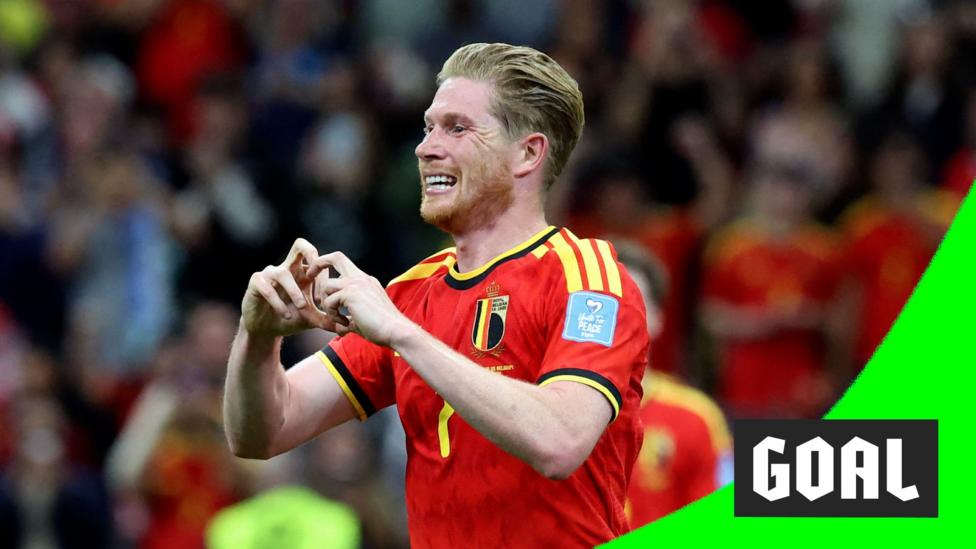
De Bruyne's Trademark Thunderbolt Seals Belgium's Group G Dominance
Kevin De Bruyne's first goal of the 2026 World Cup underlined Belgium's credentials as they topped Group G with authority.