The Boy Who Toppled the King: Fonseca's Parisian Coronation
Joao Fonseca's five-set French Open triumph over Novak Djokovic isn't just a win; it's a brutal, beautiful changing of the guard.
Clay is the great unmasker. On the crushed brick of Roland Garros, there is no place to hide a fragile spirit or an aching joint. The surface demands an agonizing resilience, a willingness to suffer through endless elongated rallies where the ball rises into the Parisian sky and drops back down like a verdict from the heavens. For nearly two decades, Novak Djokovic has been the author of those verdicts. On a Sunday that crackled with the electricity of a paradigm shift, the verdict was finally turned against him. Joao Fonseca, a 19-year-old Brazilian carrying the weight of a nation's tennis dreams, stared deep into the abyss of a five-set war and refused to blink.
There is a specific kind of violence to a changing of the guard on clay. It is not a polite handover of power. It is a mutiny fought with heavy topspin and burning lungs. Djokovic, the architect of 22 Grand Slam titles coming into this fortnight, has built his legacy on the very survival skills Fonseca was forced to match. The Serbian is the ultimate tennis pragmatist, a man who turns defence into suffocation. To beat him over five sets on his beloved European dirt requires more than just talent. It demands a psychological Amritsar, a willingness to walk through fire without flinching. Fonseca did exactly that, securing a victory that reverberates far beyond the boundaries of the Bois de Boulogne.
The Anatomy of a Shift
Consider the sheer improbability of the mathematics. Djokovic had amassed an astonishing 89-16 match record at Roland Garros prior to this encounter. Behind only Rafael Nadal in the pantheon of clay-court deities, the Serb's ability to problem-solve across five sets has historically been his most lethal weapon. When a set slips away, he tightens the screws, dragging opponents into the deep water where inexperience drowns. Yet, as the shadows lengthened across Philippe-Chatrier, Fonseca swam with the tide.
The match ebbed and flowed with the cadence of a classic Parisian drama. Djokovic, drawing upon his fathomless well of knowledge, inevitably found another gear when the match appeared to be slipping from his grasp. He clawed his way back, turning tactical levers, changing the height of his ball, testing the teenager's resolve with every conceivable shade of pressure. Lesser mortals have folded under far less. But Fonseca met the surge not with panic, but with a ferocious, whip-lashed forehand that carved open the court and pushed the legend behind the baseline.
"You do not wait for permission to take the throne on clay. You have to rip it from the hands of the king."
The Forehand That Shook Paris
Tennis has a long, romanticized history with the forehand. It is the stroke of dominance, the weapon of the conqueror. Fonseca's is a different beast entirely, a heavy, wildly spinning instrument of oppression that kicks off the dirt with vicious malice. In the crucial decisive set, the Brazilian was unrelenting. While the exact point-by-point breakdown belongs to the statisticians, the eye test revealed something far more profound: Djokovic was pushed behind the baseline by sheer brute force, unable to dictate with his usual geometric precision.
This was not the counter-punching of a naive challenger hoping to survive the storm. This was offensive aggression, thrust upon the most clinical defender the sport has ever known. Fonseca's shot conversion in pressure moments reflected a maturity utterly belying his age. He was breaking the cardinal rule of playing Djokovic, refusing to let the Serb establish the tempo. He hit through the middle of the court, robbing Djokovic of the angles he turns into gold. It was an assertion of raw, uncut will, a physical and tactical coming of age happening in real time under the most suffocating pressure.
The Ghost of Rio and the Heavy Crown
Brazilian tennis has spent decades searching for an heir apparent. Since the halcyon days of Gustavo Kuerten, the nation has waited for a player capable of matching the Samba rhythm with Grand Slam grit. Kuerten won his titles with a poetic grace, a languid brilliance that made the impossible look routine. Fonseca plays with a different hue. There is an edge to him, a street-fighter's tenacity overlaid with South American flair. He is the product of a tennis ecosystem that has steadily churned out champions in other racquet sports, finally producing a weapon sharp enough for the ATP's upper echelons.
He arrived in Paris as a highly-touted prodigy, but prodigies are a dime a dozen on the professional tour. The chasm between junior success and senior dominance is littered with the broken racquets of those who found the step up in velocity and mental fortitude too vast to bridge. Fonseca began bridging that gap on the most intimidating stage in the sport. He was not merely participating; he was imposing his will, dictating terms to a man who has made a Hall of Fame career out of making others play on his terms.
The Myth of the Immortal
We have grown accustomed to tennis's ancient regime ruling by divine right, a gerontocracy where the immortals rarely bleed. Djokovic, alongside Nadal and Roger Federer before him, built an aura of invincibility that often defeated opponents before they even struck a ball. The greatest weapon the Big Three possessed was the psychological chokehold they maintained over a generation of challengers. How many times did we see a young talent play the match of their life for two sets, only to wither and crumble as the finish line approached?
Fonseca represents the first true wave of players who grew up without that psychological burden. Born after the dynasty had already been established, they view these legends not as mythological figures, but as humans to be solved. Djokovic's movement, once an impenetrable wall, now occasionally shows the microscopic cracks of time. Fonseca targeted those cracks with the ruthlessness of a surgeon. He dragged the veteran into the kind of grinding, physical exchanges that expose weary legs, daring the master to find another escape route. When Djokovic could not, the narrative of an era trembled.
The Unwritten Future
For Djokovic, the immediate calculus shifts toward preservation and the relentless pursuit of another Slam final. Each defeat on the clay is no longer an anomaly to be brushed aside; it is a data point in a trajectory that bends inexorably downward. The Serbian will undoubtedly return, his competitive furnace burning as hot as ever, but the aura of certainty has been punctured.
For Fonseca, the road ahead is fraught with the perils of sudden fame. A victory of this magnitude is a double-edged sword, bringing both validation and the crushing weight of expectation. The remainder of the clay season, followed by the brutal transition to grass, will test his physical resilience and his ability to reset his emotional baseline. The draw opens up tantalizingly, but the trapdoors of complacency are plentiful. If he can internalize the lessons of this five-set epic, if he can truly understand that the level he produced is his new standard rather than a fleeting peak, the upper echelons of the game have a new tenant.
The ashes of a fallen king fertilize the soil from which the next dynasty grows. On the red dirt of Roland Garros, Joao Fonseca planted his flag. The boy has become the ultimate threat, and the sport is infinitely more captivating for it.
Editorial Integrity
This is an original SportPulse article written by our editorial team. All content is independently researched, written, and reviewed by our writers and editors before publication. We do not publish copied, aggregated, or syndicated content.
SportPulse is committed to original sports journalism. Read our editorial policy or contact us with any questions.
More Like This
All tennis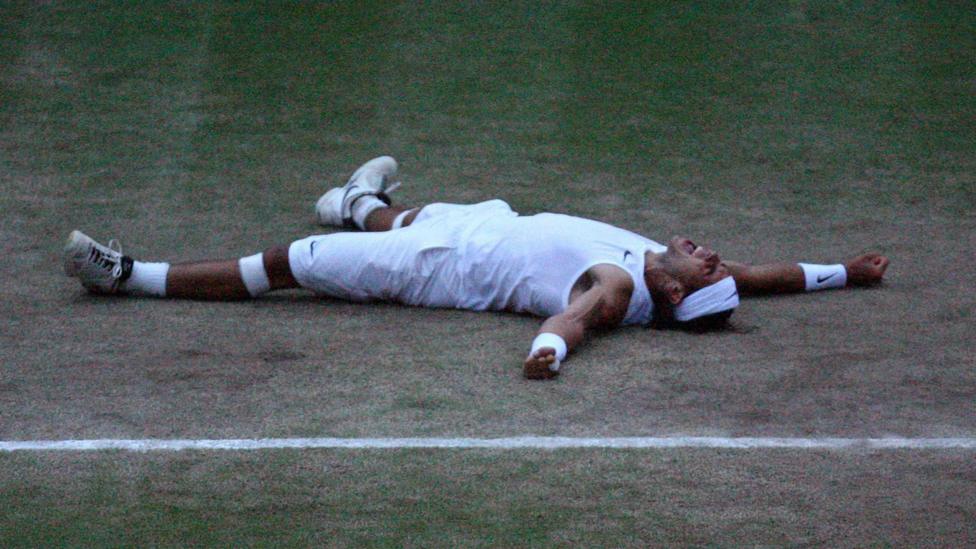
Nadal Reflects on the Match That Shattered Gravity
Rafael Nadal revisits his seismic 2008 Wimbledon triumph over Roger Federer, a five-set epic that redefined tennis history.
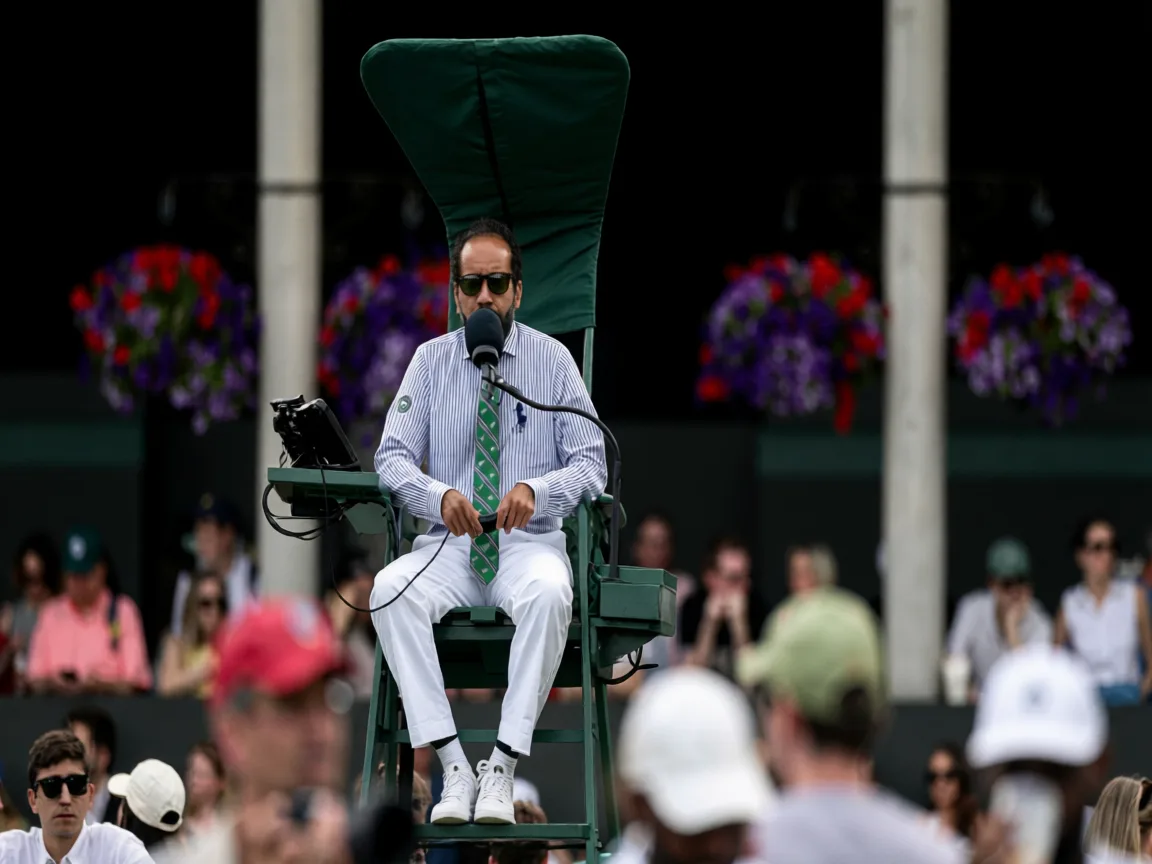
The Unsung Orchestrators: Life in the Wimbledon Umpire's Chair
Wimbledon's umpires endure pressure, weather, and biological reality. A deep dive into the hidden craft behind tennis's most prestigious officiating assignment.

The Invisible Coach: How Tracking Vests Are Reshaping Modern Tennis
High-tech vests are transforming tennis from a game of instinct to a science of data, revealing the hidden physical toll of the sport.