The Messi of the Cliffs: Deconstructing Gary Hunt
Gary Hunt dominated cliff diving without a coach or agent, relying on a self-taught biomechanical mastery that redefined the sport's limits.
When we speak of sporting dominance in the modern era, the conversation inevitably turns to the structures that manufacture greatness: the tactical academies, the high-performance data labs, the agents negotiating every micro-opportunity. Yet in the rarefied air above the 27-metre platform, Gary Hunt dismantled that entire paradigm. He ascended to the pinnacle of cliff diving, a discipline where the margin between perfection and catastrophe is measured in centimetres, entirely devoid of the modern athlete's conventional support system. He operates without a coach to calibrate his angles, without an agent toshield his commercial interests, and crucially, without the ego that typically demands such entourages. He is, as Xan Rice's revelatory 2023 profile dubbed him, the Lionel Messi of cliff diving—an enigma forged in contradiction.
Hunt's career reads like a manual on the power of proprioception. He trains with the obsessive intensity of a modern professional, cataloguing his rotations and entry angles with forensic precision, yet he carries the laid-back demeanour of a bygone era's sportsman. He is fiercely competitive on the platform, yet remarkably detached from the trappings of his own legacy once he resurfaces. To understand how he became the greatest cliff diver of all time, one must examine his approach not as a psychological quirk, but as a sophisticated tactical philosophy—a system of self-reliance that ultimately gave him a strategic edge over his peers.
The Architecture of the Dive: A Solo Tactical System
In traditional aquatic disciplines, the coach occupies the role of the outside eye—the architect who sees the spatial misalignment the athlete cannot feel from within the rotation. Hunt's refusal to employ a coach is not merely a stroke of bohemian independence; it is a fundamental tenet of his biomechanical self-correction. At 27 metres, a diver accelerates to over 85 kilometres per hour in less than three seconds. The human brain must process a dizzying array of spatial calculations in that brief window: the initiation of the rotation, the tuck timing, the precise moment of opening, and the vertical alignment for entry.
Most athletes rely on external auditory cues—a coach's shout from the pool deck—to trigger corrections. Hunt internalised this feedback loop entirely. By removing the intermediary, he forced his own vestibular system to become the sole arbiter of spatial truth. This creates a self-contained tactical autonomy. When the wind shifts or the platform surface feels slicker than expected, Hunt does not look to the side for instruction. He processes the variable internally and adjusts his rotational velocity on the fly, a skill that requires an extraordinary level of bodily awareness but eliminates the fatal microsecond delay of external communication.
Consider his signature dives, particularly the complexities of his triple quadruple combinations. The sheer mathematical density of fitting three and a half somersaults into a two-second descent requires a level of rotational aggression that borders on the violent. Yet Hunt's defining characteristic has always been his entry—the iconic, almost frictionless rip entry that minimises the splash to a fraction of what physics seems to allow. This is where his coach-less system delivers its greatest dividend. A coach can dictate when to open from a tuck, but only the diver feels the exact moment gravity completes its transaction. Hunt's tactile control over his opening phase allows him to decelerate his rotation a heartbeat earlier than his peers, finding the vertical line with a purity that data alone cannot engineer.
The Psychology of Absence: Removing Ego to Find Flow
The absence of an agent and the deliberate minimisation of ego serve a profoundly tactical purpose in Hunt's methodology. Elite sport is increasingly a landscape of noise—contract negotiations, media obligations, and the relentless curation of personal brands. This noise consumes cognitive bandwidth, a resource that is acutely finite for an athlete standing on a narrow strip of concrete nearly nine stories above the sea.
By operating without an agent, Hunt retains total control over his competitive calendar and mental environment. He chooses the events that suit his preparation cycle rather than those dictated by commercial obligations. By eschewing the ego-driven need for spectator validation, he insulates himself from the psychological turbulence of external expectation. In a sport where a single moment of mental hesitation translates directly into catastrophic physical impact, this psychological minimalism is not merely a lifestyle choice. It is a critical survival tactic.
He embodies the archetype of the relaxed competitor, a sportsman of a bygone era who seems to treat the descent from the heavens with the casual indifference of a afternoon stroll. Yet this laid-back exterior masks an interior furnace of competitive intensity. The paradox is the mechanism. By refusing to externalise his competitive drive through bravado or ego-stroking, Hunt directs 100 percent of his psychological energy into the execution of the dive itself.
Tactical Shift: The Internalisation of World Series Pressure
The defining tactical shift in Hunt's career came not through the adoption of a new physical technique, but through a radical recalibration of how he processed competitive pressure. In the high-stakes environment of the Red Bull Cliff Diving World Series, where the difference between gold and mediocrity is often less than ten points, athletes routinely buckle under the weight of the occasion. The standard tactical response to high-pressure situations is to increase focus, to consciously tighten the mechanics of the routine.
Hunt reversed this psychology. Instead of tightening his conscious grip on the dive, he leaned further into his internalised sensory awareness, actively surrendering conscious control to the motor patterns he had drilled into his nervous system. In a high-stakes final, when his competitors were rigidly executing rehearsed micro-managed checklists, Hunt was operating in a state of pure automated flow. The tactical advantage here is immense. A dive executed with conscious, rigid micro-management is vulnerable to disruption. A single unexpected gust of wind can shatter a tight, over-controlled sequence. A dive executed in a state of automated flow, however, is supple and adaptable. When Hunt encountered mid-air turbulence, his nervous system adjusted with the fluidity of a natural reflex rather than the panicked recalibration of a disrupted plan.
"He trains with the intensity of a modern athlete, but relaxes like a sportsman of a bygone era. How did he become the greatest cliff diver of all time?" — Xan Rice, The Guardian
The Bigger Picture: Redefining the Limits of the Autonomous Athlete
Hunt's legacy extends far beyond his unprecedented medal haul. He has fundamentally redefined the operational limits of the autonomous athlete. In an era where sporting success is increasingly viewed as a byproduct of institutional wealth, technological investment, and multi-disciplinary coaching networks, Hunt proved that the ultimate tactical system can still reside entirely within the individual. His career provides a compelling case study in the power of proprioceptive self-governance and psychological minimalism.
As extreme sports continue to evolve, pushing the boundaries of human endurance and spatial awareness, the Hunt model offers an alternative tactical framework for the next generation of athletes. A new wave of divers are now entering the World Series circuit, many of them products of highly structured, heavily coached national diving federations. They bring incredible acrobatic talent, but they also bring a dependency on external correction. The challenge for these athletes as they transition to the unpredictable, open-water environments of cliff diving will be to develop the kind of internal adaptability that Hunt mastered through his solitary, deliberate practice.
The question moving forward is whether the next generation will attempt to replicate Hunt's model of radical self-reliance, or whether the accelerating complexity of the sport will eventually necessitate the very coaching structures he so thoroughly rejected. As dives grow more complex and the physical stakes continue to rise, the tactical efficacy of going it alone will be tested like never before. For now, though, the legendary figure of Gary Hunt remains standing alone on the platform, a monument to the idea that the purest tactical mastery requires no intermediary between the mind and the air.
Editorial Integrity
This is an original SportPulse article written by our editorial team. All content is independently researched, written, and reviewed by our writers and editors before publication. We do not publish copied, aggregated, or syndicated content.
SportPulse is committed to original sports journalism. Read our editorial policy or contact us with any questions.
More Like This
All long-reads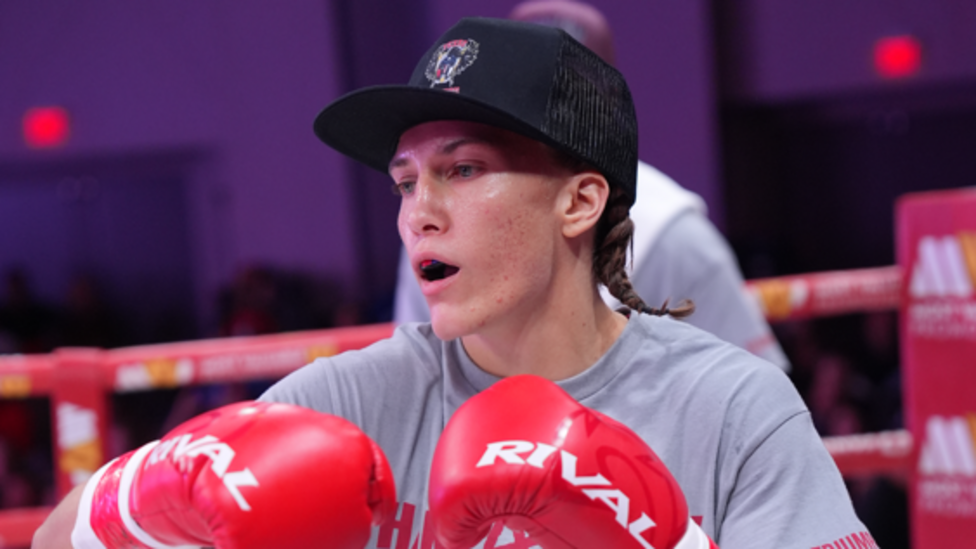
Hannah Rapp, Rising American Boxer, Dies at 26 in Tragic Cycling Accident
American boxer Hannah Rapp, 26, killed after being struck by a car while cycling in Texas, leaving the boxing community in mourning.
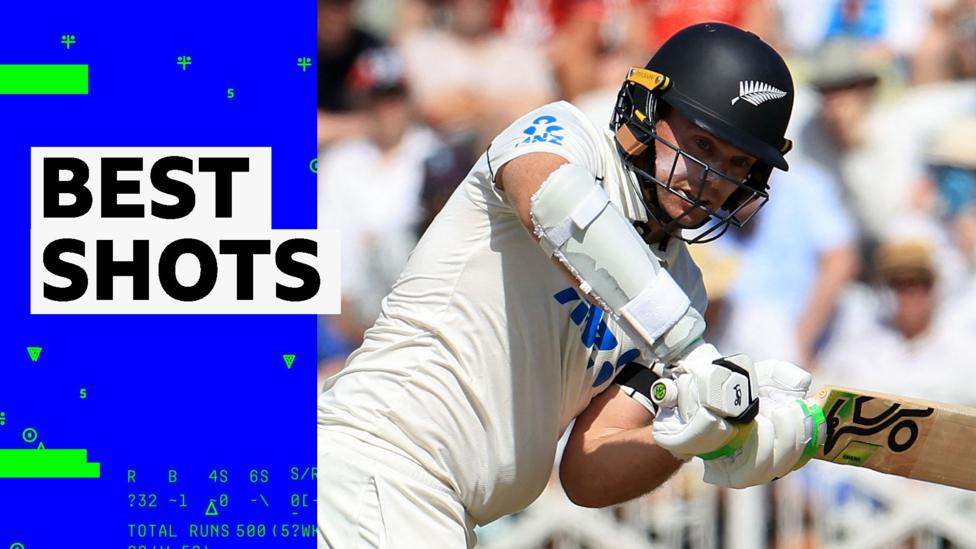
Latham's Fabulous Century Puts New Zealand in Command
Tom Latham's masterful ton at Trent Bridge silences England's attack and gives New Zealand crucial day-one dominance.
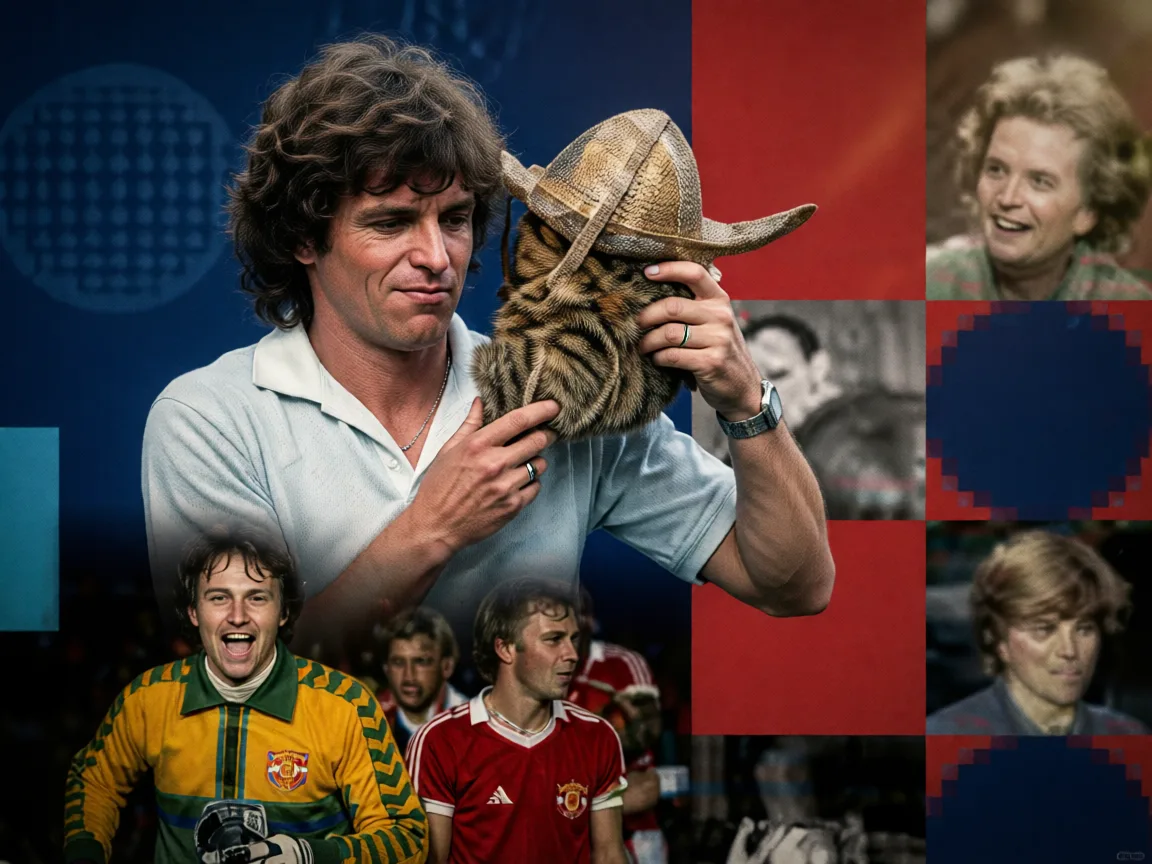
The Night Norway Beat England and a Legend Was Born
Bjørge Lillelien's unhinged 1981 rant after Norway stunned England remains the greatest commentary moment in football history.