George North: The Welsh Colossus Who Rewrote the Wing Blueprint
George North's farewell wasn't just a goodbye — it was a final exclamation point on 16 years of Welsh rugby greatness.
There is a particular cruelty to watching a giant say goodbye.
George North never did anything small. He burst onto the international scene as an 18-year-old in 2010, scored two tries on his Wales debut against South Africa, and spent the next 16 years playing rugby like a force of nature given human form. So when the curtain finally fell on his extraordinary career, it was never going to be a quiet exit.
Even by the standards North had set across a glittering career that spanned more than 120 caps for Wales, three British & Irish Lions tours, and some of the most iconic moments in modern rugby, his farewell match delivered something extraordinary. A final act worthy of a player who made the extraordinary feel routine.
Born to Break the Mould
When North first pulled on the red jersey of Wales, the rugby world wasn't sure what it was looking at. Here was a teenager, 6ft 4in and 17 stone, built like a back-rower but possessing the acceleration of a sprinter. The template for wingers at that time leaned toward smaller, nippier operators. North obliterated the blueprint entirely.
His debut against the Springboks in Cardiff remains one of the most stunning introductions in Test rugby history. Two tries against the reigning world champions. He was 18 years and 214 days old, making him the youngest player to score a try for Wales in the professional era.
"I remember looking at him in the warm-up and thinking, 'What is this kid?' He was built differently. Moved differently. There was a fearlessness in his eyes that you just don't see at that age." — Former Wales teammate
From that moment, North didn't just belong at the highest level. He owned it.
The Numbers Behind the Legend
The statistical footprint of George North's career is staggering, even before accounting for the quality of opposition he routinely dismantled.
- 120+ Test caps for Wales across 16 years
- Three British & Irish Lions tours: Australia 2013, New Zealand 2017, South Africa 2021
- 47 international tries for Wales, placing him among the all-time leading try scorers
- Youngest Lions try scorer in the professional era, crossing against Australia aged 21
- Named in multiple Six Nations Teams of the Championship
- Part of Wales' 2012, 2013, and 2019 Grand Slam squads
But raw numbers only tell part of the story. North's tries weren't tap-ins from rolling mauls. They were statements of physical dominance — defenders bouncing off his frame like tennis balls off a wall, cover tacklers left grasping at the Welshman's shadow.
The Lions Chapter
No assessment of North's career is complete without examining his extraordinary contribution to the British & Irish Lions. His first tour to Australia in 2013 was transformative.
The image from the second Test in Melbourne endures: North collecting the ball deep inside his own half, looking up, seeing nothing but green grass and the Wallaby fullback Israel Folau, and simply running over him. The handoff was violent. The finish was emphatic. It was rugby reduced to its most primal form — a bigger, faster, more determined man refusing to be stopped.
That Lions series, won 2-1, cemented North's reputation as a player built for the grandest stages. He carried that form into the 2017 tour to New Zealand, where the series was drawn against the All Blacks — widely regarded as one of the greatest touring achievements of the modern era.
By the 2021 tour to South Africa, North's body was beginning to betray the punishment it had absorbed over a decade. A serious knee injury ruled him out of the deciding Test, denying him a final crack at the Springboks on the biggest stage.
The Concussion Shadow
Any honest telling of George North's story must reckon with the concussion issues that plagued his later career. It is the uncomfortable chapter that added a layer of tension to every tackle, every collision, every time his head hit the turf.
North suffered multiple concussions across his career, some of them severe enough to spark genuine debate about whether he should continue playing. The 2016-2018 period was particularly concerning, with repeated head injuries drawing scrutiny from medical professionals and the wider rugby community.
"Every player has to make their own peace with risk. George showed incredible courage to keep coming back, but there were moments when you worried about the cost." — Rugby medical expert
That he continued to perform at the highest level despite these setbacks speaks to an almost unfathomable resilience. But it also raises questions the sport is still grappling with. North's career became, in some ways, a case study in the tension between competitive ambition and long-term health — a tension rugby union has yet to resolve.
The Farewell
So when the final whistle approached in his farewell match — a thrilling 33-31 victory for Wales over the Barbarians at Twickenham's Allianz Stadium — there was something heavier than nostalgia in the air. North had marked the occasion with two tries, a fitting exclamation point on his career. Relief, perhaps. Gratitude, certainly. And a deep, resonant pride that radiated from a man who had given everything — sometimes too much — to the sport he loved.
North found something special for the occasion. Because of course he did. This was a player who never shrank from the moment, who treated big occasions not as pressure points but as invitations to perform. His farewell was no different.
The roar from the crowd was not just for the man walking off the field. It was for the 18-year-old who announced himself against South Africa. For the colossus who ran over Folau in Melbourne. For the warrior who kept returning from concussion after concussion because the fire inside him burned hotter than the fear.
What He Meant to Welsh Rugby
Wales has produced extraordinary rugby talent across generations. Gareth Edwards, JPR Williams, Barry John, Shane Williams — the lineage is rich and deep. George North belongs firmly in that conversation.
He represented something specific about the modern Welsh game: a player who combined traditional Celtic ferocity with the physicality and professionalism demanded by the 21st-century sport. He was proof that Welsh rugby could produce athletes to match anyone in the world, pound for pound, stride for stride.
His partnership with Leigh Halfpenny, Jonathan Davies, and Liam Williams in the Wales backline created one of the most formidable units in international rugby during the 2010s. Under Warren Gatland, those Welsh teams won Grand Slams, reached World Cup semi-finals, and held the world number one ranking. North was central to all of it.
The Legacy Question
Where does George North sit in the pantheon of Welsh rugby greats? The conversation inevitably starts with caps and tries. His 120+ appearances place him among the most capped Welsh players in history. His 47 Test tries rank him alongside the most prolific scorers the nation has produced.
But legacy is not just arithmetic. It is about moments, about the way a player made people feel. And on that count, North's place is secure.
He made Welsh rugby feel powerful again. He made the red jersey look imposing. He gave supporters a player who could change a match with a single carry, a single fend, a single burst of acceleration that left the best defenders in the world looking helpless.
The Next Chapter
North has already signalled his intention to remain involved in the sport. Coaching, mentoring, ambassadorial roles — the details remain fluid, but his commitment to rugby's future is clear.
The Welsh Rugby Union will hope his experience and stature can help guide the next generation. The current national team is in transition, rebuilding after a difficult period. Players of North's calibre don't come around often, and his knowledge of what it takes to compete at the highest level is invaluable.
But for now, the moment belongs to the man himself. Sixteen years. Three Lions tours. More than 120 caps. A career that began with the audacity of youth and ended with the dignity of a player who gave everything and regrets nothing.
George North didn't just play rugby. He redefined what a Welsh wing could be. And when the story of this era is written, his name will be in the boldest print.
Updated: 2026-06-28 — Added details of Wales' 33-31 win over Barbarians and George North's two-try performance in his farewell match.
Editorial Integrity
This is an original SportPulse article written by our editorial team. All content is independently researched, written, and reviewed by our writers and editors before publication. We do not publish copied, aggregated, or syndicated content.
SportPulse is committed to original sports journalism. Read our editorial policy or contact us with any questions.
More Like This
All long-reads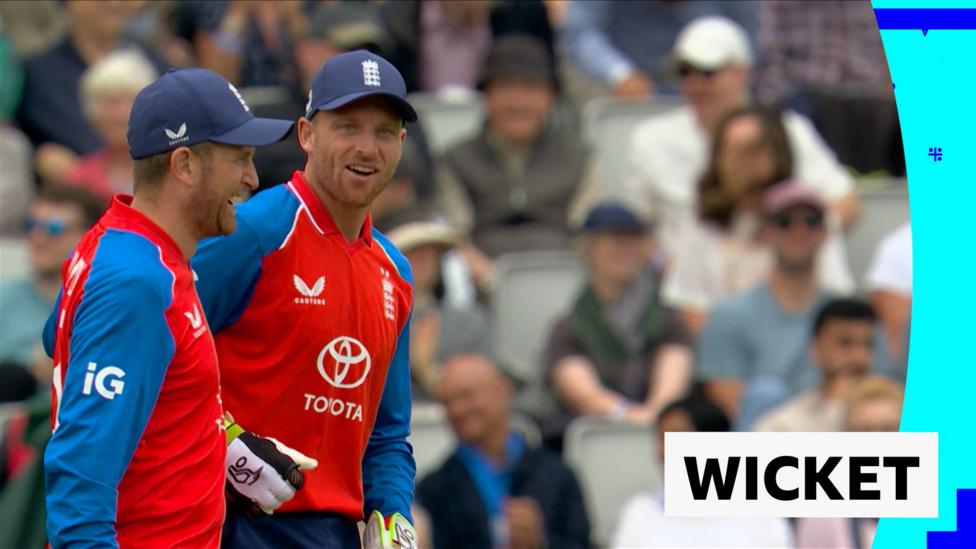
Buttler's Bizarre Run-Out Exposes India's Middle-Order Frailty
An unconventional dismissal encapsulated India's tactical disarray as England seized control at Old Trafford.
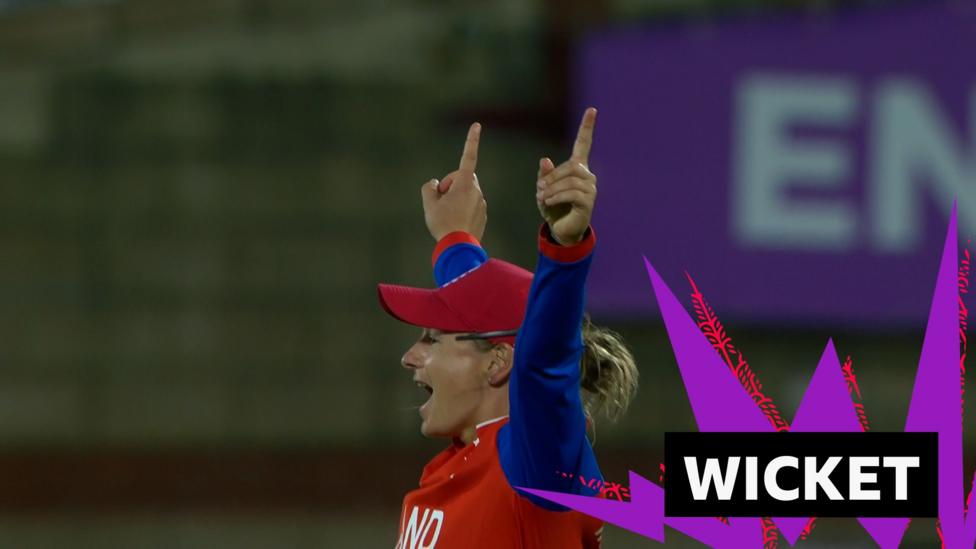
The Run Out That Sent England to a World Cup Final
Danni Wyatt-Hodge's moment of fielding brilliance crushed South Africa's resistance and launched England into the T20 World Cup final.

Why Infantino's FIFA Throne Remains Untouchable
Over 200 federations back Infantino for a fourth term despite scandals, exposing football's power structures as unstoppable.