Germany's World Cup Trauma Deepens as Paraguay Expose Structural Decay
Another round of 16 exit via penalties demands the same soul-searching that birthed Das Reboot after 1998.
The Pattern Is No Longer a Coincidence
When Toni Kroos stepped away from international duty after Euro 2024, there was a quiet anxiety in German football circles that the last bridge to the 2014 generation had been severed. That anxiety has now turned into something far more corrosive: a structural crisis disguised as a penalty shootout defeat. Germany are out of the World Cup at the round of 16 stage, beaten by Paraguay from 12 yards, and the weight of history feels heavier than any single missed spot-kick.
The DFB's reaction to elimination has become almost ritualistic at this point. Exit at the group stage in 2018. Exit at the group stage in 2022. Now, a knockout defeat that carries the particular cruelty of penalties. Three consecutive World Cups where Germany have failed to reach the quarter-finals. For a nation that won the tournament as recently as 2014, this is not a blip. It is a trajectory.
Das Reboot: When Last Time Worked
To understand why this elimination stings differently, you have to revisit the last time German football genuinely confronted its own mediocrity. After the 3-0 quarter-final humiliation against Croatia at the 1998 World Cup, the DFB embarked on what became known as Das Reboot. Youth coaching was overhauled. The scouting infrastructure was rebuilt from scratch. The 18 top Bundesliga clubs were compelled to construct performance centres. The results took time to manifest, but the philosophy was sound: invest in development, trust the process, let the talent emerge.
The payoff was extraordinary. A generation headlined by Kroos, Mesut Özil, Thomas Müller, Manuel Neuer, and Mario Götze delivered the 2014 World Cup in Brazil, dismantling the hosts 7-1 in the semi-final along the way. As Dietrich Weise, one of the architects of the earlier overhaul, noted: "At least 10 players who are involved in the national team today we would have never found otherwise. Think of Toni Kroos. He hails from a small place in Mecklenburg-Vorpommern. No one would have looked at him."
That system worked because it was holistic. It was not merely about producing technically gifted footballers; it was about creating an identity, a way of playing that filtered from the academy to the senior side. The pressing structures, the positional play, the relentless emphasis on spatial awareness. These were principles, not just players.
Tactical Shift: What Went Wrong Against Paraguay
The specifics of the defeat to Paraguay will sting for different reasons than the 2018 or 2022 collapses. This was not a team that collapsed under pressure or lacked ambition. This was a side that, for large stretches of the match, struggled to create meaningful penetration against a well-organised Paraguayan low block that shifted between a 5-4-1 and a 5-3-2 depending on the phase of play.
Paraguay's defensive discipline was the story. Their back five maintained compact distances, rarely exceeding 10-12 metres between the defensive line and the midfield bank. Every time Germany attempted to circulate possession across the width, Paraguay shuffled laterally in unison, denying the half-spaces that modern German attacking play depends upon. The diagonal balls into the channels that Germany have historically used to break compact defences were intercepted with alarming regularity.
The pressing trigger that Germany attempted to deploy high up the pitch was neutered by Paraguay's goalkeeper and centre-backs, who were comfortable playing short under pressure before launching direct balls into the channels behind Germany's advanced full-backs. This forced Germany into a reactive posture, dropping their defensive line deeper than intended and compressing the space available for their midfielders to operate.
The Penalty Lottery
Penalty shootouts are, by their nature, cruel arbiters. But Germany's record from the spot in recent major tournaments has been poor enough to suggest a systemic issue rather than bad luck. The technical demands of penalty-taking under tournament pressure are well documented: the ability to execute under cognitive load, the mental resilience to reset between kicks, the nerve to commit to a decision against a reading goalkeeper. Germany's preparation in this area has been questioned before, and those questions will intensify now.
Paraguay, for their part, were clinical. Their takers showed no hesitation, hitting their spots with conviction while the German contingent wavered at crucial moments. The shootout was won not by talent but by temperament, and that distinction should trouble the DFB enormously.
The Identity Crisis
The deeper issue is philosophical. Germany's 2014 triumph was built on a specific tactical architecture: a 4-2-3-1 that could morph into a 4-3-3 in possession, with Kroos and Sami Khedira controlling the tempo from deep positions while Özil and Müller exploited the spaces between the lines. The pressing was coordinated, the transitions were devastating, and the squad depth allowed for seamless tactical adjustments mid-tournament.
Since then, Germany have oscillated between tactical identities without committing to any. The Hansi Flick era promised a return to high-intensity pressing but produced inconsistent results. The appointment of his successor brought a more possession-oriented approach, but the personnel available no longer fit the system that made Germany dominant. The midfield profiles have changed. The defensive structure has lost its commanding presence. The attacking patterns lack the rehearsed automatism that once defined German tournament football.
The Bundesliga, while producing excellent clubs and entertaining football, has not generated the same volume of tournament-ready international talent that it did in the 2006-2014 golden era. The competitive gap between Bayern Munich and the rest of the league has, paradoxically, both elevated and limited German football. Players develop in a system where domestic dominance is almost guaranteed, only to face hostile tournament environments where the margins are razor-thin and every tactical detail matters.
What Comes Next
The DFB now faces a decision that will define the next decade of German football. The temptation will be to make a coaching change, to find a new voice who can galvanise the squad for the next qualifying cycle. That would be the easy path, and almost certainly the wrong one.
What Germany needs is another Das Reboot. Not a cosmetic reshuffle, but a fundamental review of how the national team identifies, develops, and integrates talent. The youth pipeline requires investment not just in facilities but in tactical education. The next generation of German footballers must understand spatial dynamics, pressing triggers, and positional interchange from an age when these concepts can become instinctive rather than rehearsed.
The penalty defeat to Paraguay is painful, but pain without purpose is just suffering. Germany have been here before, in the wreckage of 1998 and 2000, and they emerged stronger because they chose to rebuild rather than merely repair. The question now is whether the DFB possesses the institutional courage to do it again.
"At least 10 players who are involved in the national team today we would have never found otherwise." — Dietrich Weise on the impact of Das Reboot.
The clock is already ticking toward the next major tournament, and the tactical blueprint for Germany's resurgence remains unwritten. What Paraguay exposed was not just a weakness in penalty execution, but a void in strategic vision that no single coaching appointment can fill.
Editorial Integrity
This is an original SportPulse article written by our editorial team. All content is independently researched, written, and reviewed by our writers and editors before publication. We do not publish copied, aggregated, or syndicated content.
SportPulse is committed to original sports journalism. Read our editorial policy or contact us with any questions.
More Like This
All football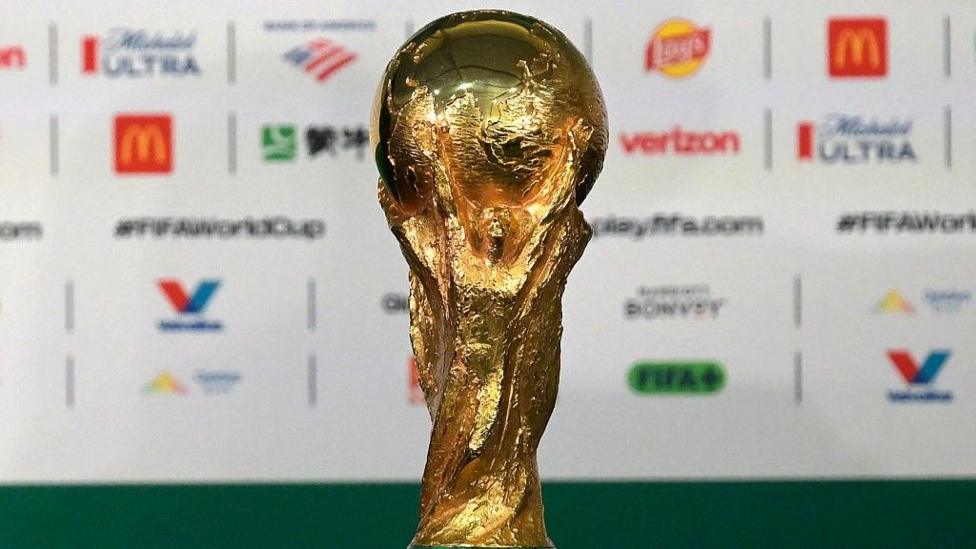
The 2026 World Cup Will Be Everywhere. Here's How to Catch Every Second.
With 104 matches across three nations, the 2026 World Cup demands a new playbook for how fans consume the tournament.
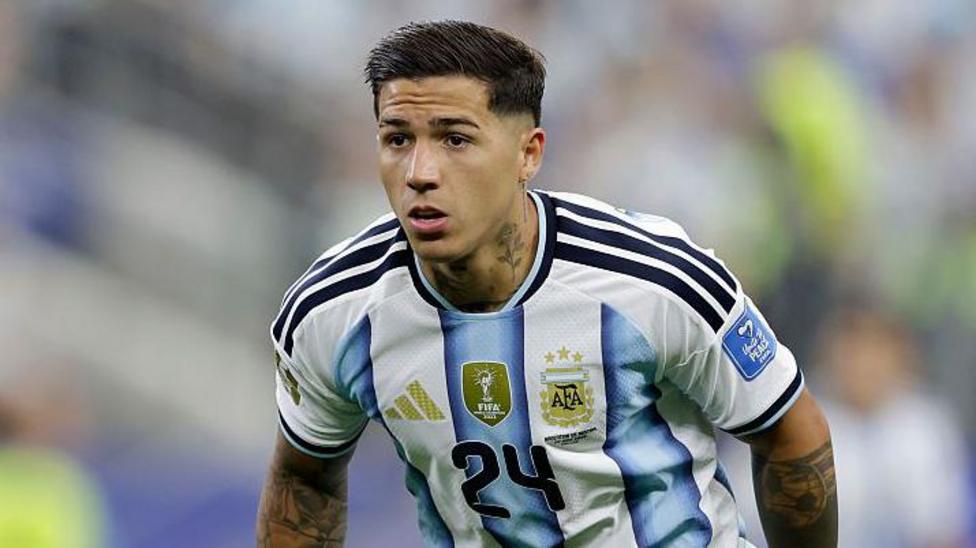
Real Madrid Draw the Line: No Enzo Fernandez Pursuit This Summer
Madrid's blunt rejection of Enzo Fernandez signals deeper strategy than mere transfer frugality.
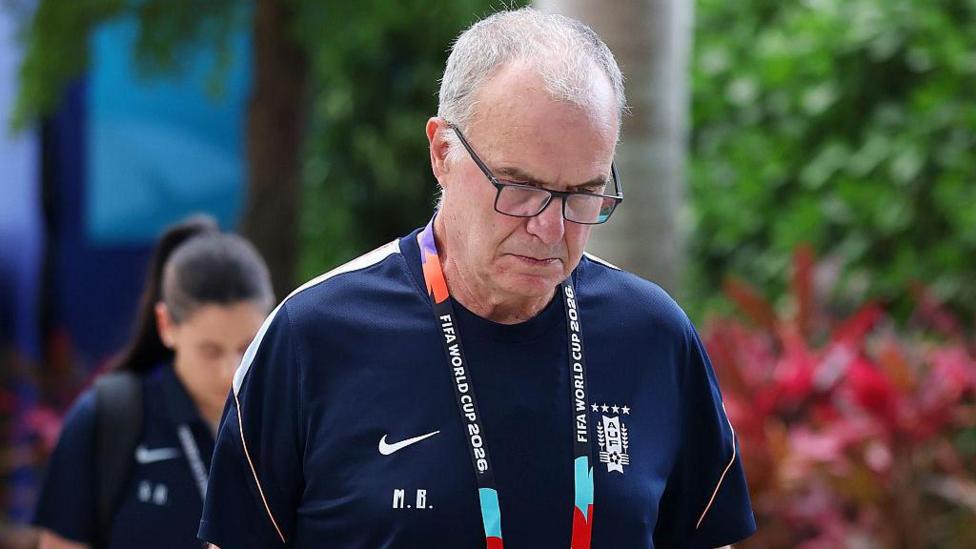
Bielsa's Uruguay on the Brink of World Cup Catastrophe
Marcelo Bielsa's rigid ideals have pushed Uruguay to the edge of 2026 World Cup elimination. The romance is dead.