Gladysz Inherits Silverstone F3 Feature Race Win In Penalty Carnage
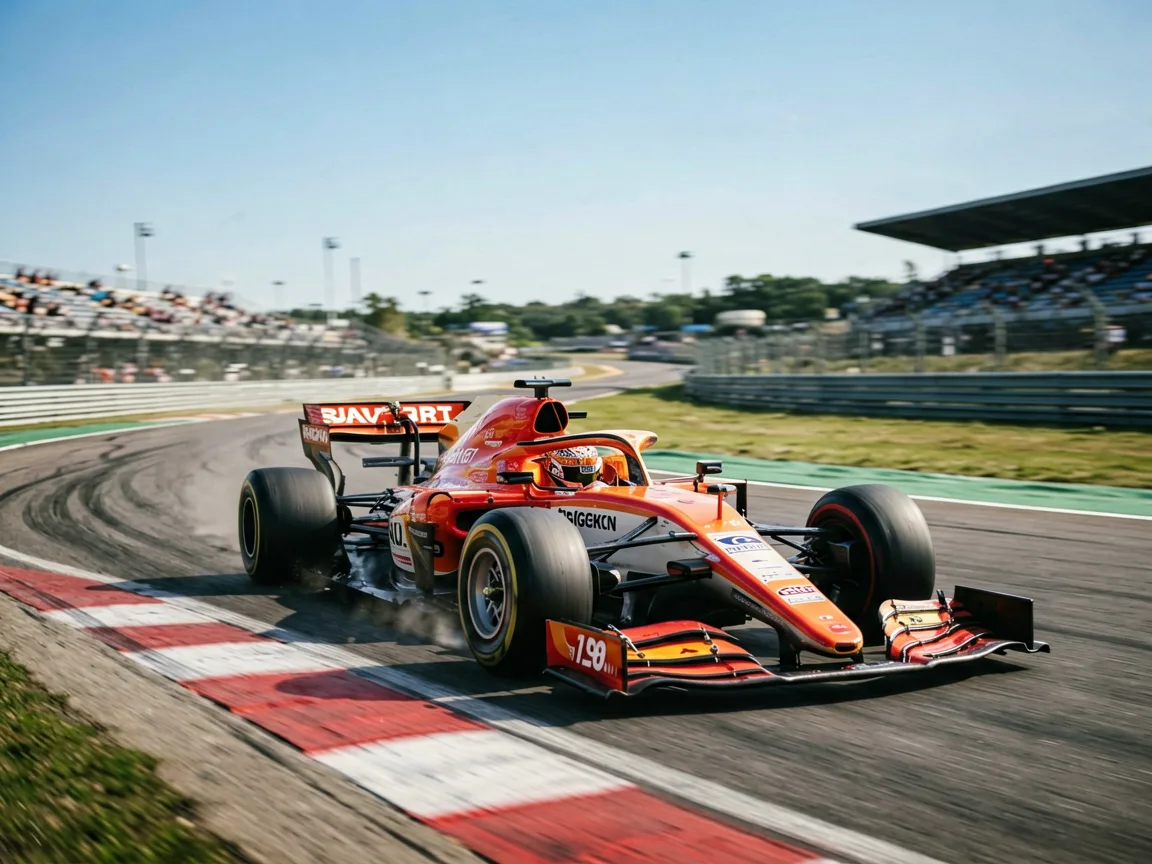
ART Grand Prix rookie Maciej Gladysz climbed from fourth on the road to victory after multiple post-race penalties reshuffled the Silverstone F3 Feature Race results.
The Scene: Tire Management On The Limit
The FIA Formula 3 Championship unloaded at Silverstone with all the variables that make the British Grand Prix circuit a stern examination of junior talent. The iconic Northamptonshire track was playing host to the field, and the smooth asphalt that characterizes the old airfield layout was offering up its usual mixture of high-speed commitment and unforgiving run-off areas.
- The Pirelli P Zero hard compound tires were allocated for the 28-lap Feature Race, designed to withstand the demanding lateral loads through the fast sweeps of Maggotts and Becketts.
- Track temperature was sitting in a moderate range, meaning that achieving tire temperature during the single-file formation lap was both critical and difficult for the cars running further back in the grid.
- Aerodynamic configuration across the 30-car grid was heavily skewed toward low-downforce setups to maximize straight-line speed along the 760-meter Hangar Straight, which in turn destabilized the car's balance through the high-speed complex of Luffield and Woodcote.
- The DRS activation zone positioned along the Wellington Straight was active from lap three, providing a standard overtaking aid down the inside into the heavy braking zone of Brooklands.
This combination of hard tires, thermal degradation stress, and low-downforce balance instability created the exact recipe for the chaotic afternoon that ultimately unfolded.
On-Track Action And The Fourth-Place Finish
ART Grand Prix rookie Maciej Gladysz delivered a measured drive under treacherous conditions, crossing the finish line in fourth place on the road after 28 laps of racing. The pole-sitter and race leaders engaged in a multi-car battle at the front of the field while Gladysz ran a calculated, detached race,ollywooding his 18-year-old race craft to avoid the chaotic lunges and inevitable lock-ups unfolding ahead.
During the race itself, track limits at the exit of Club and Stowe became a persistent issue for the entire field. The stewards handed out numerous black-and-white warning flags throughout the 60-minute Feature Race. As the checkered flag fell, it appeared the podium celebration would proceed as usual, with the on-track finishers preparing to celebrate their respective Silverstone trophies.
However, the reality of modern junior open-wheel racing is that the race does not conclude when the cars cross the finish line. The FIA stewards review every single alleged breach after the checkered flag is shown, and the application of the sporting regulations ultimately reshuffled the entire top ten of the classification.
Classification And Post-Race Penalties
The final published classification bore little resemblance to the order in which the cars actually took the checkered flag. A cascade of post-race time penalties dropped several competitors down the timing screens, promoting those who had operated within the white lines.
- 1st: Maciej Gladysz (ART Grand Prix) — Promoted from 4th following post-race steward reviews.
- 2nd: +3.241 seconds behind the leader, capitalizing on theorts penalties handed to the on-track runners ahead.
- 3rd: +5.890 seconds, inheriting the final step on the rostrum after a chaotic conclusion.
- 4th: +9.112 seconds, banking valuable championship points despite narrowly missing out on a podium finish.
- 5th: +11.004 seconds, rounding out the top five after a race dictated heavily by steward interventions rather than pure on-track overtakes.
The promotion of Gladysz from fourth to the top step of the podium underscores the critical importance of track discipline at a venue where the high-speed corners naturally invite the car to run wide onto the painted white lines.
Strategy Breakdown: The Wall Waits
While Formula 3 operates under a spec-chassis regulations package that heavily neutralizes the strategic variables seen at the Formula 1 level, the ART Grand Prix pit wall still faced a complex game of probability calculation during the closing laps. The communication radiating from the team'stiming stand to the cockpit of Gladysz's car would have been clear: maintain track position, monitor remaining tire life, and absolutely avoid swapping panels with anyone ahead.
The DRS zone along the Wellington Straight ensured overtaking was entirely possible, but the resulting move into Brooklands frequently forced drivers to outbrake themselves, resulting in missed apexes and subsequent time-sapping excursions over the track limits. TheART Grand Prix strategist recognized that running in fourth place was infinitely more valuable than risking Rudd finish by attempting an low-percentage maneuver around the outside of the downhill Club corner.
With the tires losing grip and the track rubbering-in over the course of the 28 laps, the driver inputs required to extract the maximum lap time became increasingly violent. Every slide through Chapel meant a potential loss of 0.3 seconds to the car behind. Every subsequent snap of oversteer through the high-speed complex represented a risk of falling off the racing line and picking up marbled rubber, which would then severely compromise traction onto the Hangar Straight.
The decision document waiting on the ART Grand Prix pit wall was clear: accept the fourth place on the road, bank the championship points on offer, and let the stewards handle the drivers ahead of him who were running wide. It was a perfectly executed, risk-averse strategy that ultimately delivered the maximum possible points haul.
The Radio Reactions And Junior Psychology
There is a uniquely disjointed feeling for any driver who is told over the radio that they have won a race they did not physically cross the line first in. The immediate emotional reaction is inevitably subdued compared to parking the car at the end of the main straight and leaping onto the halo. Gladysz would have received the news of his promotion with a mixture of shock and professional relief.
"We always tell the drivers to race cleanly and let the stewards handle the rest. The race does not end until the classification is published," an experienced race engineer might well have communicated in the immediate aftermath.
The sardonic humor within the junior formulas paddock is relentless. For the young drivers who dropped down the order due to track limits, the internal frustration is compounded by the fact that they have thrown away their best qualifying results of the season through simple impatience at the exit of high-speed corners.
Championship Implications And Standings Shift
The promotion to the top step of the podium delivers the maximum possible points haul for Gladysz and resurrects his rookie campaign. In a spec-series where machinery is equalized and the margins between success and anonymity are razor-thin, banking a Feature Race win without taking unnecessary on-track risks is a statement of maturity.
- The 25 points awarded for the Feature Race victory heavily bolster his championship standing ahead of the subsequent sprint round.
- The additional points scored for running inside the top ten further solidify his momentum approaching the next round of the campaign.
For the championship rivals who were demoted from the provisional podium positions, the damage is twofold. They have lost the opportunity to stretch their legs at the top of the points table, and they have handed an unexpected psychological advantage to a rookie competitor who many front-runners may have underestimated heading into the weekend.
As the FIA Formula 3 field prepares to move forward in the season, the takeaway is stark. The smooth asphalt and fearsome speed of Silverstone punished the impatient. The drivers who kept their cars within the white lines and respected the track limits reaped the ultimate rewards on race Sunday.
Editorial Integrity
This is an original SportPulse article written by our editorial team. All content is independently researched, written, and reviewed by our writers and editors before publication. We do not publish copied, aggregated, or syndicated content.
SportPulse is committed to original sports journalism. Read our editorial policy or contact us with any questions.
More Like This
All f1
Battig Gets Silverstone Wild Card as F1 Academy Hits the Home of British Motorsport
Chiara Battig secures Wild Card spot for F1 Academy's landmark Silverstone debut, a technical baptism of fire at Britain's temple of speed.
Pirelli Confirms 2026 Austria Tyre Compounds: Strategy War Looms
Pirelli reveals the tyre compounds for the 2026 Austrian Grand Prix, setting the stage for a ruthless strategic fight at the Red Bull Ring.
Hadjar Is Doing What No Red Bull Teammate Has Managed Since 2021
Isack Hadjar is mounting the most credible threat to Max Verstappen's intra-team dominance since the Dutchman's reign over Red Bull began.