Glasner Inherits Forest's Chaos: Five Managers, One Year, Zero Stability
Oliver Glasner becomes Nottingham Forest's fifth manager in under a year. Can the Austrian bring structure to a club allergic to it?
A Serial Number, Not an Appointment
When a club cycles through five permanent or interim bosses in a single calendar year, you can expect coaching changes to be treated as routine maintenance. The job description at the City Ground is less about long-term project-building and more about performing mechanical triage on a squad assembled with the scattergun logic of a deadline-day spending spree.
Glasner's departure from Eintracht Frankfurt, where he won the Europa League in 2022, was a product of his own friction with the board. But this situation in Nottingham is different. He is not walking into a club with an established identity that simply needs recalibration. He is walking into a vacuum where identity has never been permitted to form. For a manager whose entire footballing philosophy rests on structure, repetition, and defensive cohesion, this is as far from the ideal laboratory as it gets.
"Nobody wants to get divorced, but sometimes it happens. Now we have a new marriage and we want to have a successful marriage." — Oliver Glasner
The quote is vintage Glasner: blunt, slightly awkward in its emotional honesty, and deeply revealing. He knows he is not arriving as a chosen visionary. He is arriving as the next man willing to try.
In his first interview since taking charge, Glasner revealed that talks with owner Evangelos Marinakis over a seafood platter in Athens convinced him to become Forest's fifth head coach in less than 12 months. The Austrian signed a three-year contract after a fruitful two years at Crystal Palace. He suggested Marinakis may be one of few people more ambitious than him.
"He's one of few people who's more ambitious than I am." — Oliver Glasner
Glasner met the Forest squad on Monday, his first day, and said he is enthused by the scope for the club to grow after a season in which they avoided relegation and reached the Europa League semi-finals. Forest sacked Vítor Pereira because they felt the opportunity to appoint Glasner, out of work after leaving Selhurst Park, was too good to turn down. Glasner conceded Forest's hierarchy were "very hard-working" in their efforts to appoint him. The 51-year-old, who won the FA Cup, Conference League and Community Shield at Palace, believes he can also exceed expectations at the City Ground, but underlined success will not happen overnight. He said he wants to bring back the "sweet honey" of European football to Nottingham Forest.
The Roster Paradox
You cannot build a coherent tactical system around a squad that was constructed without one. Forest's recruitment since their return to the Premier League has been historic in volume but retgatory in philosophy. Their squad has ballooned to upwards of 30 first-team players, containing multiple profiles occupying the same positional slots without the stylistic cohesion to function as complementary pieces.
The Tactical Challenge
Glasner's preferred 3-4-2-1 system, which brought Frankfurt European glory and took Crystal Palace from the relegation mire to mid-table respectability, requires an elite ball-playing center back, dynamic wing-backs capable of covering 11 kilometers per match, and dual No. 10s who can interchange fluidly. The issue is that Forest's roster is heavy on quantity but light on the specific archetypes the Austrian demands.
- Center backs: Forest hasthem in abundance, but how many are comfortable stepping into midfield when the ball is played into the first line of pressure?
- Wing-backs: A critical position in Glasner's system. None of the current wide options are natural wing-backs.
- No. 10s: The squad is overflowing with attacking midfielders, which is the one area of surplus that might actually align with the coach's preferences.
Why Stability Is the Real Opponent
The most damning statistic is not in expected goals or points per game. It is this: five managers in less than a year. That is a rate of attrition that would destabilize even the most well-resourced operation. It points the finger directly at the recruitment structure and the ownership model.
The Verdict on the Project
Every manager Forest have appointed in this stretch has had a distinct identity. Steve Cooper brought organization and fight. Nuno Espirito Santo offered pressing and directness. If each was a distinct architectural blueprint, then the squad they oversaw was a building constructed from mismatched materials. You cannot install a high-pressing system with players recruited for a low-block defense, and you cannot demand progressive buildup from center backs who were signed for their aerial duel dominance.
Glasner's task is not to win football matches, though that will be the metric of his survival. His job is to establish a non-negotiable style of play that survives his eventual departure. That is the cruel irony. He needs to build something he will likely not be around to finish.
The xG Profile Problem
Under previous managers, Forest's underlying numbers painted a grim picture. Last season they ranked in the bottom three for non-penalty expected goals (npxG) per match and were 19th in possession average. They were a team that defended deep, relied on transition moments, and conceded high-quality chances at an alarming rate.
For Glasner, this is a fundamental clash of ideologies. He does not want his team sitting deep and absorbing pressure. His Palace side last season ranked mid-table for possession but top eight for shots in the box. The improvement was about quality of chance creation, not volume of possession.
At Forest, the squad lacks the technical security in midfield to sustain extended possession phases. The potential solution? A more pragmatic version of the 3-4-2-1 that prioritizes defensive solidity over progressive buildup. But that is what Nuno was already doing. The problem is not tactical. It is material.
The Bottom Line
Oliver Glasner's appointment is a marriage of convenience between a manager who needs a job and a club that needs a miracle worker. The question is whether this club will give him the time to implement his ideas or whether he will become the sixth name on a list that grows more embarrassing by the year.
Thecritical variable is not the manager. It is the alignment between the coach's demands and the players available. It is about whether the club will back him in the transfer market by selling players who do not fit and recruiting those who do.
Until that structural defect is addressed, every managerial change is a cosmetic surgery on a patient with a deeper illness. The "new marriage" may be successful. But it will require a level of patience and institutional support that have been in remarkably short supply at the City Ground.
Updated: 2026-07-16 — Added details from Glasner's first interview, including the Athens meeting with Marinakis, three-year contract, and his ambition to bring European football back to Forest.
Editorial Integrity
This is an original SportPulse article written by our editorial team. All content is independently researched, written, and reviewed by our writers and editors before publication. We do not publish copied, aggregated, or syndicated content.
SportPulse is committed to original sports journalism. Read our editorial policy or contact us with any questions.
More Like This
All football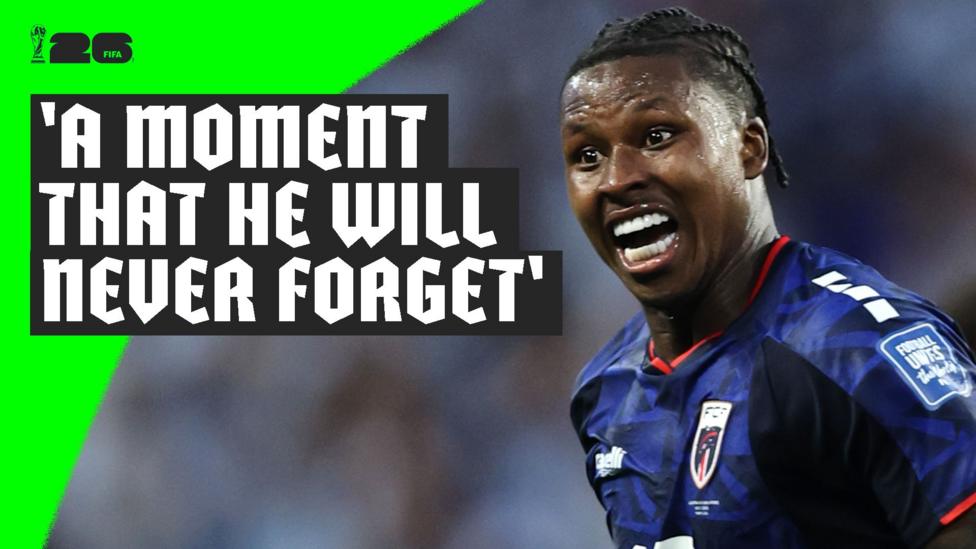
Cabral Thunderbolt: Cape Verde's Remarkable Resistance Against Argentina
Sidny Cabral sent shockwaves through the stadium with an extra-time screamer to level Cape Verde against Argentina for a second time.
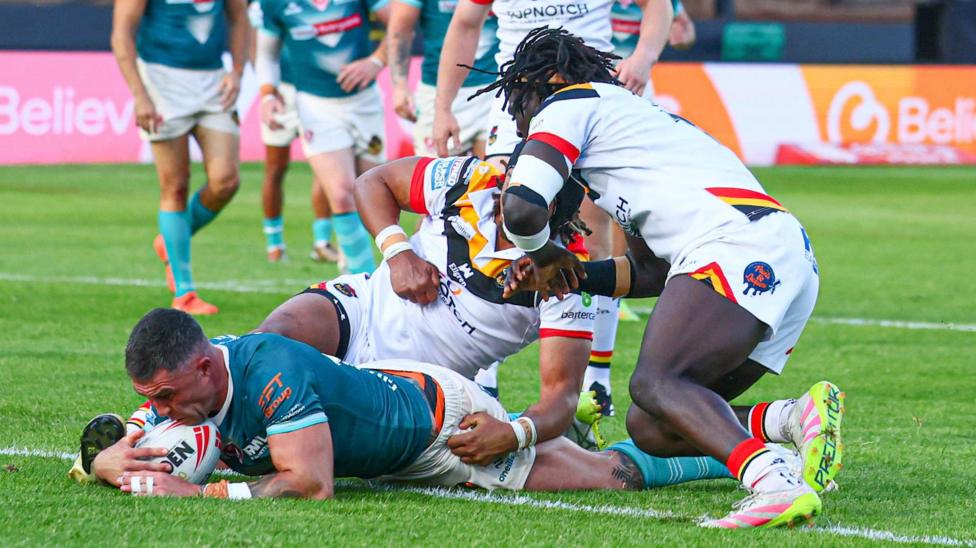
Saints Unleash 28-Point Second-Half Barrage to Storm Into Fourth
St Helens produced a devastating second-half display, shutting out Bradford with 28 unanswered points to climb into Super League's top four.

BBC Unveils 3D Live Match Experience for 2026 World Cup
BBC Sport rolls out an immersive 3D Live Match Experience that will redefine how fans consume the 2026 World Cup.