Golf's Distance Debate Hits the Brakes as Ball Rollback Gets Shelved
Rulesmakers pause plans to limit golf ball distance, igniting fresh debate over the sport's future direction.
The Ball That Won't Be Rolled Back — For Now
Golf's governing bodies just blinked. The R&A and the United States Golf Association, the twin custodians of the game's rules, have officially put on hold their controversial plans to limit how far golf balls travel at the professional level. For a proposal that was supposed to curb what many see as the sport's most existential threat — the relentless march of distance that is rendering classic courses obsolete and flattening the skill gap between elite players — this pause feels less like a tactical retreat and more like a capitulation to industry pressure.
The decision raises a fundamental question: if the organizations responsible for protecting the integrity of the game won't act on distance, who will?
What Was on the Table
To understand the significance of this delay, you need to grasp what the proposed rollback actually entailed. The R&A and USGA had floated a Model Local Rule (MLR) that would have mandated a modified ball for elite competitions, effectively reducing how far the ball flies off the driver by an estimated 15 yards or more. The rule would not have applied to recreational golfers, a deliberate carve-out designed to soften opposition from equipment manufacturers who generate billions selling the promise of distance to weekend hackers.
The numbers driving the proposal were stark. Average driving distance on the PGA Tour has climbed from roughly 260 yards in the early 1990s to over 295 yards in recent seasons. The longest hitters now regularly exceed 320 yards, a figure that would have been considered science fiction when Jack Nicklaus was in his prime. Courses that once hosted iconic duels at Augusta, St Andrews, and Pebble Beach are being stretched to their physical limits, with new tees built further back, fairways narrowed, and rough grown taller just to keep scoring in check.
The USGA's own research showed that average carry distance for a tour-level driver shot increased by approximately 2.2 yards per year over the past decade. At that rate, by 2030, the average tour pro would be driving the ball beyond 310 yards, putting enormous strain on the strategic architecture of courses that were designed for a fundamentally different game.
Why They Hit Pause
The official reasoning behind the delay remains somewhat opaque, but the political and economic pressures are no secret. The equipment industry, led by giants like Titleist (Acushnet), Callaway, and TaylorMade, mounted fierce resistance from the moment the MLR was announced. Titleist's CEO publicly called the proposal "solving a problem that doesn't exist," and the company's lobbying arm made clear it viewed the rollback as an existential threat to its premium ball business, which generates revenues in the hundreds of millions annually.
The PGA Tour itself was never fully on board. While tour officials acknowledged the distance issue in principle, the competitive ecosystem relies heavily on big hitting as a marketable spectacle. Long drive competitions are social media gold. Players like Rory McIlroy and Cameron Champ generating explosive tee shots drive fan engagement, merchandise sales, and broadcast ratings. Restricting that excitement was always going to be a hard sell with broadcasters paying billions for television rights.
Then there's the fragmentation problem. The emergence of LIV Golf introduced a rival tour with its own governance structure and zero appetite for equipment restrictions that might blunt its entertainment-first pitch. If the PGA Tour adopted the MLR but LIV did not, the competitive landscape would fracture in unprecedented ways, making meaningful comparison between tours impossible and creating a bizarre situation where the same player might hit the ball different distances depending on which event he was playing.
The Manufacturer's Playbook
Equipment companies have consistently argued that distance gains are a natural result of improved player athleticism and fitness, not just technology. There is some merit to this claim. Modern tour players train like professional athletes, with dedicated strength and conditioning programs that produce clubhead speeds unimaginable a generation ago. Bryson DeChambeau's transformation into a bulked-up, 190+ mph ball speed machine was as much about gym work as it was about equipment.
But this argument conveniently ignores the engineering arms race. Ball technology has advanced enormously, with multi-layer urethane constructions optimized for both distance off the tee and spin around the greens. Driver faces are now thinner, hotter, and more forgiving, effectively widening the sweet spot so that even off-center strikes travel almost as far as pure ones. The USGA already regulates the coefficient of restitution (COR) of drivers, capping the spring-like effect at 0.830, but manufacturers have found ways to maximize performance within those limits that the original regulators never anticipated.
The truth lies somewhere in the middle: it is both the athlete and the equipment. But only the equipment can be meaningfully regulated without fundamentally changing what it means to be a professional golfer.
The Verdict: A Dangerous Precedent of Inaction
This delay is a mistake. Not because the MLR was perfect — it had legitimate flaws in its proposed implementation and timeline — but because the optics of governing bodies identifying a clear problem, proposing a solution, and then retreating under industry pressure set a deeply troubling precedent. If the R&A and USGA cannot enforce the most basic of their mandates — preserving the balance between skill, equipment, and course design — then the sport's governance structure is fundamentally broken.
The distance problem is not going away. It is accelerating. Every year that passes without intervention, courses become more expensive to maintain at tournament length, the strategic dimension of course management erodes further, and the game becomes more homogeneous — bomb it off the tee, wedge it in, putt for birdie. The subtlety that once defined links golf and classical parkland courses is being systematically eliminated by physics.
The bottom line is this: golf's rulemakers identified the disease, prescribed the medicine, and then handed the prescription pad back to the pharmaceutical companies. That is not governance. That is capitulation.
What Happens Next
The delay does not necessarily mean the rollback is dead. The R&A and USGA are expected to continue consulting with stakeholders and may return with a modified proposal at a later date. Industry insiders suggest a revised timeline could emerge within 12 to 18 months, potentially with a less aggressive distance reduction or an extended implementation period.
In the meantime, the sport's most pressing question remains unanswered: can golf maintain the integrity of its championship courses without fundamentally changing the equipment? The answer, increasingly, appears to be no. Augusta National has already purchased adjacent land for expansion. The Old Course at St Andrews, the spiritual home of golf, has been stretched to its geographical limits. Royal Liverpool, Royal Liverpool, Muirfield — the venues that define the sport's heritage are running out of room.
For fans who love the strategic complexity of professional golf, who appreciate a well-executed long iron into a par four rather than a lob wedge from the fairway, this delay is a setback. For the equipment industry, it is a victory. And for the game itself, it is a question deferred rather than answered.
The ball is still flying further than ever. The only thing not moving forward is the plan to do something about it.
Editorial Integrity
This is an original SportPulse article written by our editorial team. All content is independently researched, written, and reviewed by our writers and editors before publication. We do not publish copied, aggregated, or syndicated content.
SportPulse is committed to original sports journalism. Read our editorial policy or contact us with any questions.
More Like This
All long-reads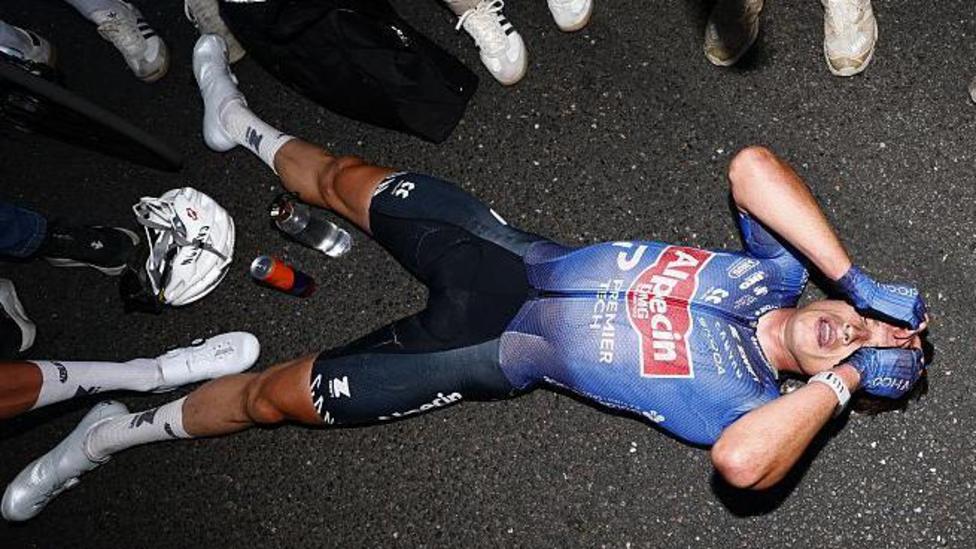
Philipsen Storms Stage 17 as Pure Sprinters Reclaim the Tour
Jasper Philipsen took stage 17 in a bunch sprint, reminding the peloton that raw speed still decides Tour stages.
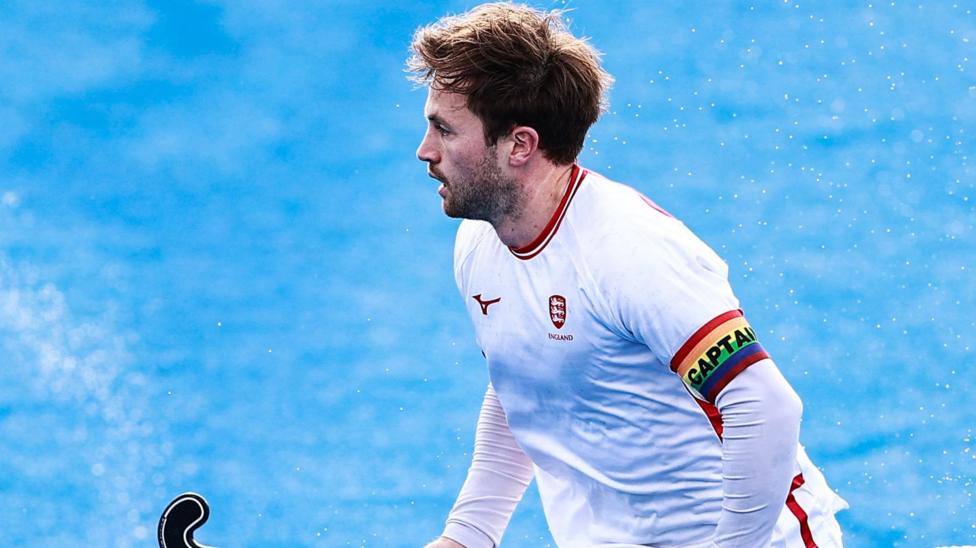
So Close: India Snatch Pro League Glory as England Men Fall in Shootout
England men settle for second after shootout agony against India; women's side dodges relegation in dramatic Pro League finale.

Vaughan Blasts 'Pathetic' Brook as England Crumble in 373 Chase
Michael Vaughan savaged Harry Brook's reckless dismissal as England lurched to 72-3 chasing 373 at Trent Bridge.