Haaland's Norway Trajectory Points to Numbers That Defy International Football Logic
Erling Haaland's Norway exploits raise a staggering question: just how many international goals can one man score?
The Anatomy of a Scoring Machine in National Colours
There was a time, not so long ago, when the conversation around Erling Haaland and international football was framed by absence. Norway's failure to qualify for the 2022 World Cup and Euro 2024 meant the most prolific striker of his generation was locked out of the tournament stage where legends are canonised. Critics wondered whether the gap between his club output and his international résumé would define the limits of his career narrative.
That framing is being dismantled, match by match, goal by goal. Haaland's continued excellence for Norway is no longer a curiosity or a footnote to his Manchester City dominance. It is becoming one of the most remarkable sustained scoring runs in the history of the international game, and the projections attached to it border on the absurd.
The question is no longer whether Haaland can be prolific for his country. It is whether he can rewrite the record books in a way that previous generations would have considered physically impossible.
A System Built Around a Singular Threat
Understanding Haaland's international output requires understanding how Norway head coach Ståle Solbakken has constructed the tactical framework around him. Unlike at Manchester City, where Haaland operates within Pep Guardiola's intricate positional play and can rely on elite creators in every zone, the Norwegian national team is a more direct, vertically oriented side.
Solbakken typically sets up in a 4-3-3 or 4-2-3-1 that prioritises quick transitions and direct service into Haaland's channels. The midfield is structured to win second balls and recycle possession into wide areas, where full-backs and wingers are tasked with delivering crosses and cutbacks into the penalty area. It is a pragmatic approach born of necessity: Norway simply do not possess the midfield creativity to replicate the positional play Haaland enjoys at club level.
What makes this system effective is its honesty. Rather than attempting to play a style that doesn't suit the squad's profile, Solbakken has built a mechanism that funnels the team's greatest asset into high-percentage scoring positions. Haaland's movement between the centre-backs, his ability to attack the near post, and his devastating timing on runs behind the defensive line are all maximised by this direct service model.
The pressing structure also deserves note. Norway tend to employ a mid-block that invites opponents forward before springing counters, a shape that creates the transitional spaces Haaland exploits so ruthlessly. It is not aesthetically revolutionary, but it is tactically coherent, and the results speak for themselves.
The Numbers Behind the Projection
The headline figure circulating in analytical circles — that Haaland could conceivably reach 260 international goals over the course of his career — demands scrutiny. It sounds fanciful until you examine the underlying math.
Haaland made his senior international debut at 19 years old in September 2019. Assuming he plays until his mid-thirties, a conservative estimate gives him roughly 15 to 17 more years of international football. Norway play approximately 10 to 14 competitive and friendly matches per calendar year, meaning Haaland could feasibly accumulate somewhere between 200 and 250 caps over his full career if fitness permits.
His current scoring rate for Norway sits at roughly a goal per game or better, a ratio that is historically extraordinary at international level. Even a modest regression to, say, 0.7 goals per game over a 200-cap career would yield 140 goals — shattering Cristiano Ronaldo's all-time men's record of 130 goals (and counting, though at a diminishing rate given Ronaldo's age).
If Haaland maintains anything close to his current trajectory, the numbers escalate rapidly:
- At 1.0 goals per game across 200 caps: 200 goals
- At 1.0 goals per game across 250 caps: 250 goals
- At 0.85 goals per game across 250 caps: 213 goals
The 260 figure sits at the optimistic end but is not mathematically preposterous. It assumes sustained health, continued motivation, and a scoring rate that stays elite well into his late twenties and early thirties. Those are significant assumptions, but Haaland's physical profile and injury management suggest they are not unreasonable ones.
The Structural Advantage of a One-Man Attack
One factor that distinguishes Haaland's international situation from other elite strikers is the degree to which Norway's entire attacking identity orbits around him. In a squad featuring players like Martin Ødegaard — whose creative passing and set-piece delivery are world-class — Haaland is the undisputed focal point.
This is both a tactical reality and a psychological one. Opponents prepare for Norway by preparing for Haaland. Every defensive briefing, every scouting report, every pre-match team talk revolves around stopping number nine. And yet he keeps scoring.
The reason lies in the specificity of his skill set. Haaland is not a striker who needs the ball to feet in the number 10 zone to be effective. His game is built on movement: the diagonal sprint behind a high line, the blindside run across a centre-back, the explosive near-post dart that arrives a fraction of a second before the goalkeeper can react. These are movements that are extremely difficult to neutralise even when you know they are coming.
Norway's direct approach amplifies this. Every long ball from the goalkeeper, every quick throw-in, every Ødegaard through ball is designed with the same intention: find Haaland in space, or create the conditions for him to manufacture space himself. It is football stripped to its most fundamental attacking principle — give the best player the ball in the most dangerous area — and it works.
Historical Context: Where Haaland Stands Among the Greats
The all-time men's international scoring chart reads like a monument to longevity. Cristiano Ronaldo sits atop with 130 goals for Portugal, a record built across more than 200 caps and two decades of sustained excellence. Behind him, Ali Daei's once-unbreakable mark of 109 goals for Iran stood for over twenty years before Ronaldo surpassed it.
What separates Haaland's trajectory from both is the rate of scoring. Ronaldo's career international rate hovers around 0.55 to 0.6 goals per game, exceptional by any standard but significantly below Haaland's current output. Daei's rate was similar. Haaland is operating at nearly double that frequency.
The comparison is imperfect, of course. Ronaldo spent much of his early career playing as a wide forward for Portugal, a role that naturally suppresses goal tallies relative to a central striker. He also competed in an era when Portugal's squad depth meant he was not the sole attacking outlet in the way Haaland is for Norway.
But the raw numbers are what they are. Haaland is scoring international goals at a pace that no player in the men's game has ever sustained. If he maintains it — and that remains the critical variable — the records will fall with startling speed.
The Longevity Question
The greatest threat to Haaland's international projections is not opposition defenders or tactical adjustments. It is the human body. International careers are long, and the cumulative toll of elite-level football — the muscle injuries, the joint wear, the inevitable physical decline that begins in the late twenties and accelerates through the thirties — is the one variable that no statistical model can fully account for.
Haaland's physical profile offers some reassurance. His combination of 194cm height, explosive power, and professional conditioning suggests a player built for durability. Manchester City's careful management of his minutes at club level — a luxury afforded by the squad's depth — may also extend his peak years.
But football history is littered with cautionary tales of players whose bodies betrayed their talent before their ambition could be fulfilled. The projection of 260 goals assumes a best-case fitness scenario that, while possible, is far from guaranteed.
What Comes Next
Norway's upcoming fixtures represent another opportunity for Haaland to pad his extraordinary tally. The Nations League campaign continues to provide competitive minutes, and every window that passes without a major injury is another step toward the records that now seem less like fantasy and more like inevitability.
The broader question for Norwegian football is whether the team can build a supporting cast capable of complementing Haaland's individual brilliance at a major tournament. Qualifying for the 2026 World Cup would provide the global stage that Haaland's career has so far been denied, and a deep run in that tournament could accelerate his international legacy in ways that Nations League group stages simply cannot.
For now, the numbers continue to climb. The logic continues to strain. And Erling Haaland continues to do what he has done since he first pulled on the red of Norway: score goals at a rate that makes the rest of international football look like it's operating in a different sport.
"He is a phenomenon. We just try to give him the service and let him do what he does." — Ståle Solbakken
Editorial Integrity
This is an original SportPulse article written by our editorial team. All content is independently researched, written, and reviewed by our writers and editors before publication. We do not publish copied, aggregated, or syndicated content.
SportPulse is committed to original sports journalism. Read our editorial policy or contact us with any questions.
More Like This
All football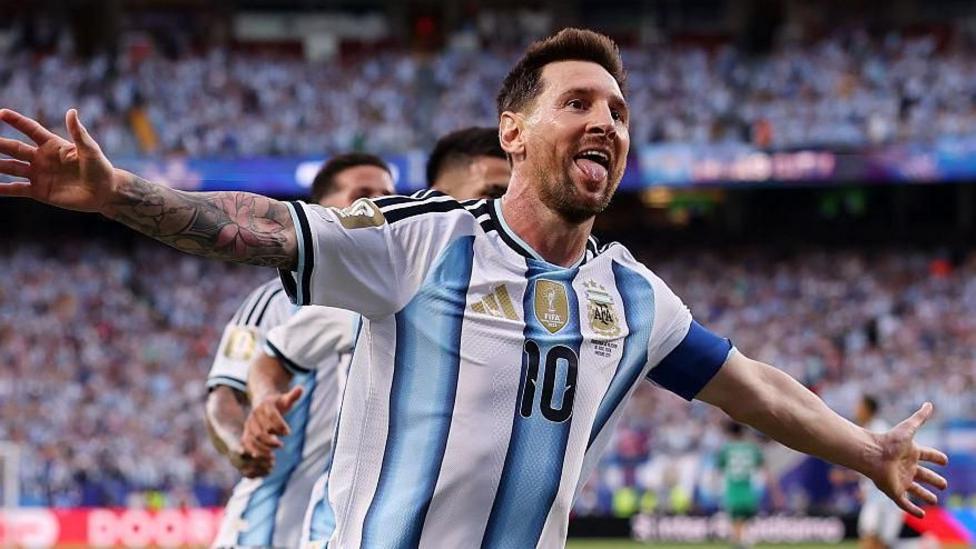
Messi's Masterclass Eclipses Mbappe and Haaland's World Cup Brilliance
On a day packed with modern superstars, Lionel Messi proved he remains the ultimate main event of world football.
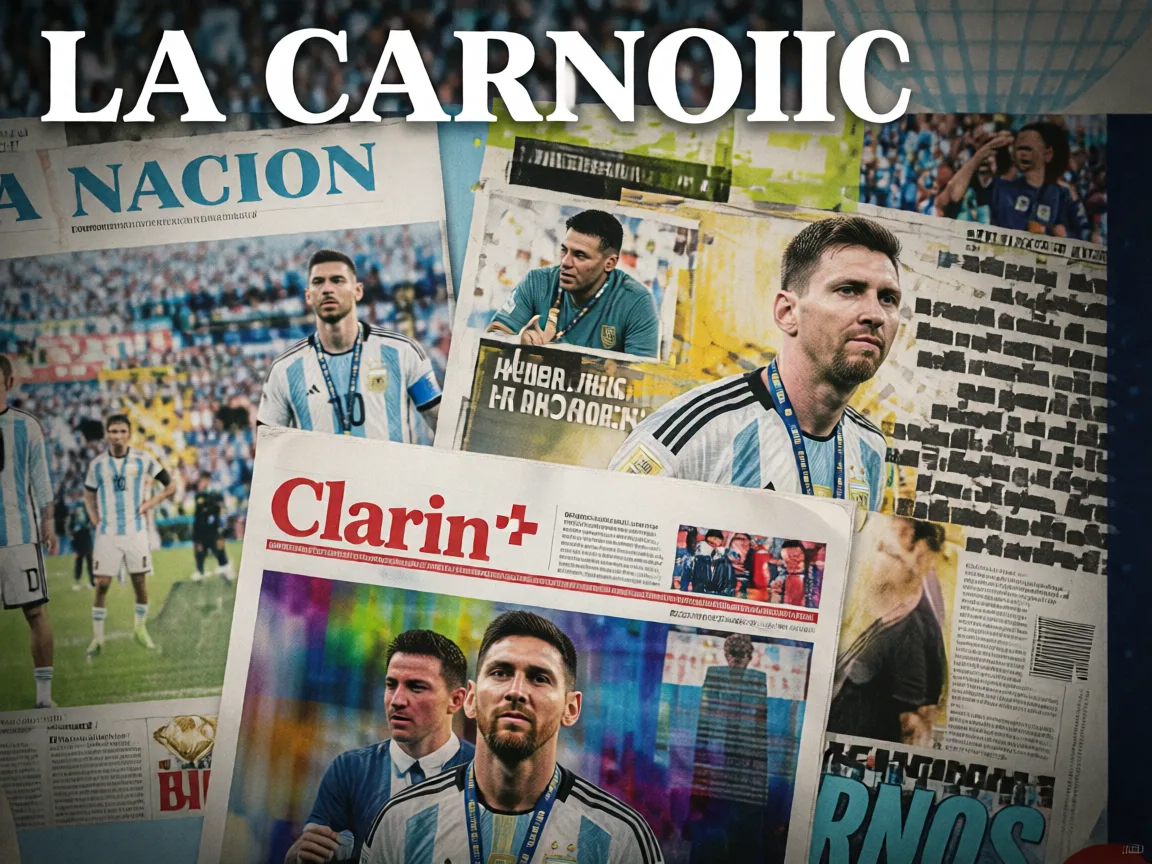
Argentina Mourns but Celebrates as World Cup Dream Ends Against Spain
Argentinian media rallies behind Scaloni's men after a 1-0 final loss to Spain, hailing the team as the nation's pride despite Messi's likely farewell.
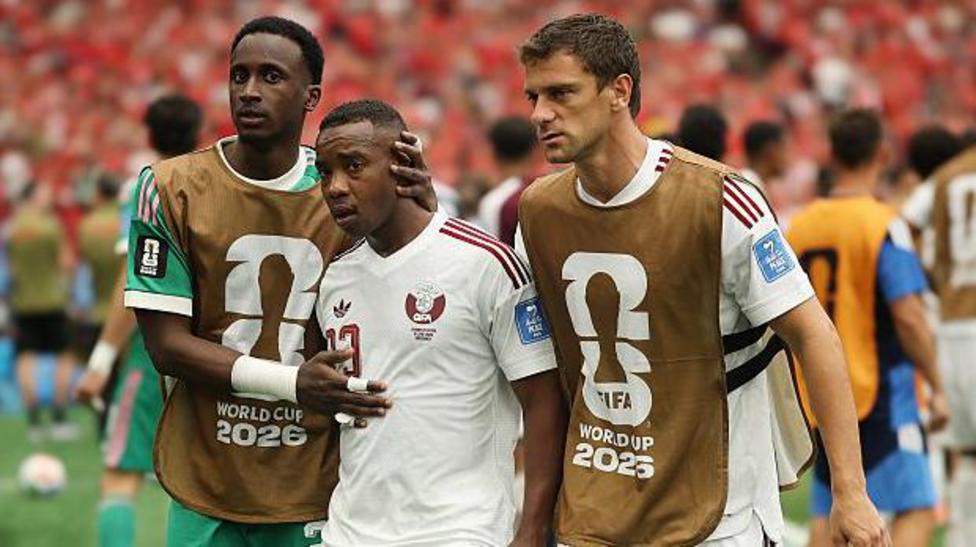
Madibo Ban Exposes FIFA's Disciplinary Inconsistency
Assim Madibo's five-match ban for breaking Ismael Kone's leg highlights the persistent inadequacy of FIFA's disciplinary framework.