Haas Turns Fuji Into Toyota Talent Showcase
Haas ran Toyota-backed drivers Sho Tsuboi and Nirei Fukuzumi at Fuji Speedway, blending fan engagement with a technical audition under the Japanese partnership.
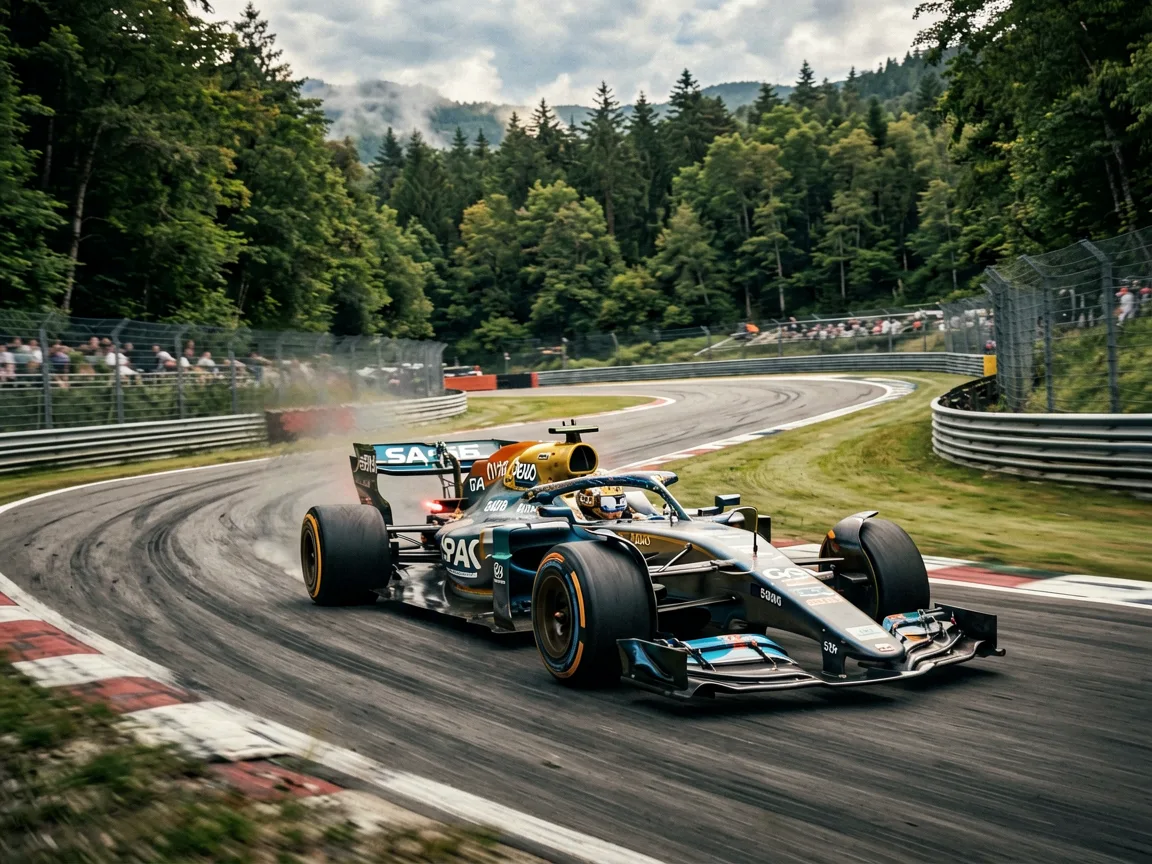
Haas ran Toyota-backed drivers Sho Tsuboi and Nirei Fukuzumi in current Formula 1 machinery at Fuji Speedway this week, combining a public relations exercise with a working evaluation session for the Japanese duo in front of a home crowd.
The outing fits the pattern Haas established under their technical partnership with Toyota Gazoo Racing, announced last October. That deal does not cover powertrain supply: Haas continue to run Ferrari engines through 2026. It does cover operational cooperation, driver development, and engineering resource sharing. Days like Fuji are the visible output of that arrangement.
Fuji's layout and what it demands
Fuji Speedway tests any Formula 1 car across a range of operating conditions. The 1.475-kilometre main straight feeds into a heavy braking zone at the Coca-Cola Corner, demanding a stable aerodynamic platform under lift and rotation as the driver commits to the apex. From there the circuit opens into medium- and high-speed combinations: the long right of 300R and the tightening complex through the final sector test rear-end stability and tyre thermal management over a stint.
For Tsuboi and Fukuzumi, the test served two purposes simultaneously. The first was straightforward mileage: logging laps in a contemporary Formula 1 car, understanding brake-by-wire pedal feel and the aero platform under varying fuel loads. The second was subtler. Every kilometre running at a Grand Prix venue generates data that flows back to both Maranello and the Haas engineering team at Banbury, parameter sweeps across ride height, front flap angle, and diffuser sealing that inform the correlation between CFD models and on-track reality. Toyota's drivers became proxy test hands, but the by-product feeds Haas's normal development loop.
Two drivers, two datasets
The two drivers represent distinct chapters of Toyota's single-seater pathway. Tsuboi, a race winner in Super Formula and a current Toyota factory driver, carried momentum into the test from his domestic campaign. His experience racing high-downforce open-wheelers in Japan's top formula translates directly: braking references, corner-exit application under high torque, and the patience required over a long stint on a surface with heavy degradation.
Fukuzumi, a veteran of both Super Formula and Super GT, brought his own technical feedback credentials. His career arc included earlier Formula 1 test exposure with Honda-powered programmes, giving him a baseline reference for what a current-generation car should feel like through high-speed commitment corners like 300R and the downhill braking into the Hairpin. The contrast between the two driving styles gives the Haas engineering wall two distinct datasets to cross-check against simulation predictions.
Where the Toyota deal actually sits
The Haas-Toyota alliance raised eyebrows when it was announced, partly because Toyota's last involvement in Formula 1 as a full works entry ended in 2009 after eight seasons without a victory. The current arrangement is categorically different in scope. Haas remain an independent customer team. They build their own cars around a Ferrari power unit, design their own suspension kinematics, and run their own race operations. Toyota provides resources, facilities, and access to a driver pool they continue to develop in Japan.
Putting two Toyota-aligned drivers in Haas overalls at a Japanese circuit generates goodwill in a market where Formula 1 interest has spiked since Yuki Tsunoda reached the grid and the sport returned to Suzuka round after round. It also gives Toyota a feedback loop on their own driver development programme measured against Formula 1 engineering benchmarks.
The sponsorship and commercial dimensions matter too. Haas operate on the smallest budget among the ten Formula 1 teams. A partnership that opens Japanese corporate interest and provides technical support without the capital outlay of a full works operation is a rational model for both sides.
What the laps feed back into
Haas enter the next phase of the current regulations cycle with the nucleus of a team still finding its competitive ceiling and floor. The VF-24 has shown genuine one-lap pace at certain circuits, particularly where hard braking and long straights suit their aero philosophy. Where they have struggled is race pace trim and tyre management over a stint, the exact parameters a circuit like Fuji probes if the team were running it as a full test rather than a marketing and feeler day.
Every kilometre of running helps, even within the constraints of a promotional event format. The data harvested from two drivers of contrasting styles and physical dimensions feeds back into correlation work at the factory, validating or invalidating the simulations the Haas design group rely on for the current car and the clean-sheet 2026 project when new technical regulations reset the competitive order.
The Fuji outing will not move Haas up the championship table. What it does is reinforce the structures and data pipelines that might, over a season and across a development cycle. For Tsuboi and Fukuzumi, it was a rare and valuable day. Formula 1 seat time is the scarcest commodity in the sport, and they each banked laps the majority of the global driver market will never access. For Toyota, it was another line on the reliability and performance portfolio they are quietly rebuilding in Formula 1, one test at a time without the pressure of a works programme.
The next visible checkpoint for the partnership will come when Haas confirm their 2026 power unit arrangement and the extent of Toyota's technical involvement in that new-era car. The Ferrari relationship extends through the regulatory reset, but the depth of engineering collaboration with Toyota remains the variable that could shift Haas's competitive position over time.
Editorial Integrity
This is an original SportPulse article written by our editorial team. All content is independently researched, written, and reviewed by our writers and editors before publication. We do not publish copied, aggregated, or syndicated content.
SportPulse is committed to original sports journalism. Read our editorial policy or contact us with any questions.
More Like This
All f1
McLaren's Rear Wing Gambit: What Piastri's Friday Reveal Means
McLaren's experimental rear wing test at the Austrian GP signals aggressive development heading into the season's critical stretch.
Verstappen's Silverstone Qualifying Cursed by 'Double Whammy'
Two overlapping technical gremlins sabotaged Verstappen's British GP qualifying, raising urgent questions about Red Bull's margin for error.
Crawford Returns to FP1 Duties at Spa Amid Aston Martin Development Push
Aston Martin deploys Jak Crawford for another FP1 session at Spa, evaluating the young American amid the team's critical mid-season technical recalibration.