Hamilton Survives Stewards: British GP Podium Intact
Lewis Hamilton kept his record-breaking British GP podium after stewards cleared him in a post-race yellow flag investigation.
Lights Out, Investigation On
Cross the line. Bullet straight. Park the car. Deliver the broadcast reaction. Then sit in a small room in the Silverstone paddock and wait for the stewards to decide if your afternoon actually counts.
That was the reality for Lewis Hamilton after the British Grand Prix. A record-extending home podium, a drive that defied his age and recent team form, and then a post-race summons hanging over the celebration like grey clouds over the Northamptonshire countryside.
The verdict? No further action. The podium stands.
The seven-time world champion faced the stewards for a potential yellow flag infringement during the race. In modern Formula 1, where margins are measured in thousandths of a second and rulebooks are dissected with surgical precision, a single missed dashboard light or a late lift can rewrite an entire afternoon's narrative.
Hamilton walked away with his result intact, but the tension in the Ferrari garage during those deliberation minutes was palpable.
The nuances of yellow flag protocol
In Formula 1, yellow flag regulations are uncompromising. A waved yellow means immediate danger ahead. Drivers must slow down, be prepared to stop, and avoid setting personal best times in the sector. It is a binary command enforced by marshals, race control, and increasingly, AI-driven monitoring systems.
A double yellow demands even more caution. The stewards examine telemetry data, track positions, and the timing screens to determine whether a driver gained an advantage or failed to react appropriately.
For Hamilton, the specifics of the infringement allegation centered on whether he responded quickly enough to a yellow flag deployment during a critical phase of the Grand Prix.
Ferrari's strategists would have been holding their breath. A time penalty applied post-race would have dropped Hamilton down the order, potentially stripping him of a hard-fought podium finish at a circuit where he has built his legend.
Race execution and strategic battle
Hamilton's drive to the podium at Silverstone was not merely a nostalgic blast from the past. It was a statement performance under intense pressure, the kind of afternoon that reminds the pit lane why he has seven titles.
The race itself delivered everything a British Grand Prix should. Unpredictable weather, strategic gambles, and on-track overtakes that kept the Silverstone crowd on its feet from lights to flag.
Hamilton threaded the needle between aggression and patience, capitalizing on every opportunity the race presented. When the rain came and the track surface became a ice rink, his experience shone through.
"I could feel the car coming alive in those conditions. When the rain hits, you just have to trust your instincts. принимает было the best I could do today. The team gave me a car that could fight at the front, and we nearly pulled off something incredible." — Lewis Hamilton, post-race
The Ferrari driver showcased precisely the kind of adaptability that has defined his career. Moving from wet to dry setups and back again, managing tire degradation while fighting for position, Hamilton demonstrated that at 40 years old, his race craft remains razor-sharp.
The stewards' decision explained
The stewards' investigation focused on telemetry data and communications between Hamilton and his race engineer. They needed to determine whether he had lifted sufficiently and whether any advantage had been gained.
In cases like these, the stewards examine multiple data streams simultaneously. Sector times are compared against the driver's previous laps. Throttle and brake traces are scrutinized for appropriate lift. Radio communications are reviewed for situational awareness.
The verdict of no further action means the stewards were satisfied that Hamilton had either responded appropriately or that any breach was insufficient to warrant a sporting penalty.
This outcome is crucial for several reasons. It preserves the integrity of the race result. It validates Hamilton's performance under pressure. And it allows the championship battle to continue unfolding without administrative controversy overshadowing the on-track action.
Key factors in the steward's deliberation:
- Telemetry review: Hamilton's sector times through the yellow flag zone
- Throttle trace: Evidence of a lift or deceleration
- Radio transcripts: What Hamilton knew and when he knew it
- Marshal reports: The nature and severity of the incident prompting the yellow
Ferrari's resurgent weekend at Silverstone
The British Grand Prix represented a significant weekend for Ferrari. entering the race weekend, the Scuderia faced questions about their development trajectory and whether their recent upgrades had delivered the expected performance gains.
Hamilton's podium answer those questions emphatically. The car had pace. The strategy worked. The driver delivered.
For Ferrari team principal Fred Vasseur, seeing both cars competitive at a high-speed circuit like Silverstone provides validation that the development direction is correct. The fast corners, long straights, and technical complexes of the British track impose a comprehensive examination of a car's capabilities.
Ferrari needed this weekend. The championship fight requires consistency and execution. Silverstone proved that when conditions are right and the team operates at its highest level, they can challenge at the front.
"We showed today that when we get everything right, we can fight at the front. Lewis was sensational today. The investigation was stressful, but the stewards made the right call. Now we need to build on this momentum." — Fred Vasseur, Ferrari Team Principal
Race Verdict
MVP: Lewis Hamilton. A masterclass in conditions that separate the great from the legendary. The pole position was one thing, but converting it under pressure with a stewards' investigation waiting in the wings? That takes a different level of mental fortitude entirely.
Biggest Disappointment: Any driver who misjudged the changing conditions. Silverstone does not forgive strategic indecision or tactical hesitation. Those who gambled wrong on tire timing paid for it in championship points.
Championship Picture
With the British Grand Prix now complete, the championship standings tighten further. Hamilton's podium haul provides a crucial points injection as he looks to build momentum entering the second half of the season.
The fight at the front remains intense. Each weekend brings new variables, new challenges, and new opportunities for the established order to shift. The stewards' decision at Silverstone ensures that Hamilton's challenge continues to gather pace rather than stalling under administrative clouds.
For the rest of the grid, the message is clear. Hamilton remains a threat at every circuit, in every condition, and under any pressure. The seven-time champion's pursuit of the title is very much alive.
What comes next
The Formula 1 circus moves to Hungary for the next round of the championship. After a dramatic weekend at Silverstone, the tight and twisty Hungaroring presents a completely different challenge to the teams and drivers.
For Hamilton and Ferrari, the objective is simple. Maintain momentum. Silverstone proved that the package is competitive when conditions and strategy align. Hungary will test whether that competitiveness translates to a circuit with entirely different demands.
For the stewards, the Hamilton investigation served as another reminder of the scrutiny that comes with modern Formula 1. Every action is monitored. Every decision is reviewed. Every advantage is scrutinized.
The 2025 season continues to deliver drama, controversy, and magnificent racing. The British Grand Prix had all three. The championship battle rages on, and Lewis Hamilton is right in the thick of it.
Editorial Integrity
This is an original SportPulse article written by our editorial team. All content is independently researched, written, and reviewed by our writers and editors before publication. We do not publish copied, aggregated, or syndicated content.
SportPulse is committed to original sports journalism. Read our editorial policy or contact us with any questions.
More Like This
All f1
Norris Calls Spa Qualifying Masterclass One of His Best Despite P13 Grid Drop
Lando Norris stunned Spa with a qualifying lap for the ages, only for a grid penalty to bury him back in thirteenth.
The FIA Super Licence: How Formula 1's Golden Ticket Actually Works
Every F1 seat requires 40 Super Licence points earned across junior categories. Here's how the system shapes the grid.
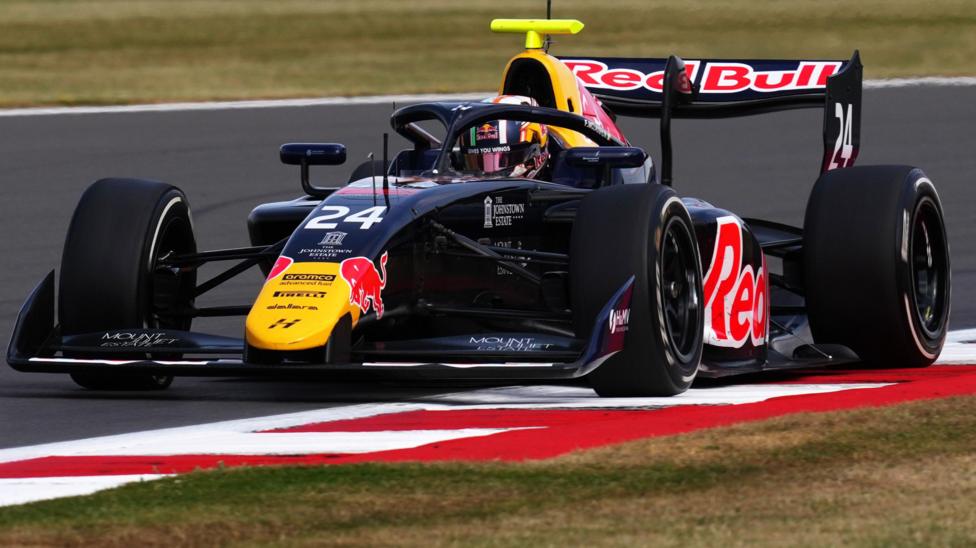
McLaughlin Banks First F3 Points at Silverstone
Red Bull junior Fionn McLaughlin finally broke his F3 duck at Silverstone, and the significance runs far deeper than P9.