Hearts Draw Sturm Graz as Hibs and Motherwell Navigate Conference League Minefield
Scottish Premiership trio face defining European draws: Hearts tackle Sturm Graz while Hibs and Motherwell confront vastly different Conference League hurdles.
The European Gauntlet Begins
The European draw has spoken, and for Scotland's three continental representatives, the reality is brutally clear: there are no easy routes into the group stages. Heart of Midlothian must navigate a Champions League qualifying collision with Austrian outfit Sturm Graz, while Hibernian and Motherwell face their own distinct brands of Conference League jeopardy. This is not a morning for Scottish football romanticism. It is a morning for cold, tactical calculation.
Hearts earned their shot at the elite by finishing a commanding third in the Scottish Premiership. Their reward is a second-round qualifier against a Sturm Graz side dripping with recent big-tournament pedigree. For Hibs and Motherwell, the Conference League path offers no less peril, only a different shape of obstacle.
Hearts vs. Sturm Graz: The Tactical Asymmetry
Sturm Graz are not a fixture gift. They are the reigning Austrian Bundesliga runners-up, a side that operated at a relentless domestic level last season, consistently finishing behind a Bayer Leverkusen marvel that went unbeaten. That context is critical. Finishing second to Xabi Alonso's invincibles is no disgrace; it is a marker of elite consistency.
The Austrians play a high-octane, vertically oriented system. They rely on explosive wing play and aggressive counter-pressing, suffocating teams who dare to build from the back in low blocks. Their European pedigree is also sharply intimidating, having featured in the group stages of the Europa League recently, accruing valuable continental experience.
For Hearts, this demands a radical shift in domestic methodology. Steven Naismith's side built their Premiership success on defensive rigidity, compactness, and rapid transition. They are fundamentally a mid-block team, comfortable absorbing pressure before springing forward through the dynamic running of strikers. But against Sturm Graz, sitting deep for 90 minutes in Austria is tactical suicide.
The Data Divide
The statistical asymmetry between the two leagues is stark, and it underscores the scale of the task facing the Edinburgh club.
- 0.37 - The coefficient difference between the Scottish Premiership (ranked 9th) and the Austrian Bundesliga (ranked 6th) in the UEFA association rankings.
- 2 - Sturm Graz's group stage appearances in the Europa League across the last three seasons.
- 0 - Hearts' Champions League group stage appearances in their entire history.
Sturm Graz will possess superior technical fluidity and a roster well-versed in the specific tempo of European knockout football. Hearts, critically, must find a way to disrupt that rhythm. Naismith cannot afford to be passive. The first leg in Edinburgh is paramount: Hearts must establish a physical and territorial supremacy at Tynecastle, targeting the Austrian champions' occasional vulnerability to direct, physically imposing center-forwards. If Hearts concede an away goal on home soil, the tie is effectively over before the plane takes off.
The Bottom Line: This is a tie defined by execution under pressure. Sturm Graz are the heavy favorites, but a disciplined, aggressive Hearts can turn the first leg into a war of attrition. The margin for error is exactly zero.
Hibernian's Complex Qualifying Maze
While Hearts fight for a place at Europe's top table, Hibernian's Conference League path is a labyrinth of multiple qualifying rounds. As the Scottish Premiership representatives in the third tier, the structure of the draw presents a swirling, multi-legged marathon.
The Conference League qualifiers are uniquely brutal. They pit rising teams from mid-ranked leagues against battle-hardened survivors from earlier rounds. By the time the third qualifying round arrives, the opposition is no longer rusty; they are match-sharp, having already survived two brutal continental ties.
Hibernian's squad depth will be tested to its absolute limits. Nick Montgomery's system relies heavily on high-intensity pressing and aggressive defensive actions, a style inherently difficult to sustain across domestic fixtures and Thursday night travels to remote corners of Eastern Europe or the Balkans. Squad rotation is not a luxury; it is a mathematical requirement.
Furthermore, Hibs' historic European record is a spectre they must actively exorcise. Progression beyond the qualifying rounds has been sporadic, often derailed by early-season rustiness or catastrophic away performances. The financial and logistical planning required to prepare for an unknown opponent who has already played four competitive European matches is immense.
Verdict: Hibs must treat their domestic form as secondary conditioning for the primary objective of European survival. Deep squad rotation and early-season tactical pragmatism will be required to navigate this qualifying minefield.
Motherwell: The Unpredictable Element
Motherwell's presence in the draw adds a fascinating wildcard to the Scottish contingent. Entering at the earliest stage of the Conference League, their draw is saturated with obscurity. Potential opponents could emerge from any corner of Europe's lower-ranked associations, ranging from part-time qualifiers to ambitious clubs backed by significant capital.
This unpredictability is Motherwell's greatest enemy. Whereas Hibs might face an opponent with a recognizable European footprint, Motherwell must prepare for the tactical unknown. A late June or early July opponent from a lesser-known league offers almost no reliable video scouting data. Manager Stuart Kettlewell faces weeks of frantic analysis, potentially relying on grainy footage and second-hand reports.
Tactically, Motherwell must default to their core identity: aggressive, territorial, and robust. Abandoning that identity in pursuit of European sophistication is a fast track to elimination. They must overwhelm lower-ranked opposition with physical intensity and domestic standard quality before the tie becomes a nuanced chess match.
The stakes for Motherwell's domestic season are equally high. A deep Conference League run, while financially lucrative, can completely dismantle a Premiership campaign. The wear and tear on a squad not built for Thursday-Sunday cycles is a documented hazard in Scottish football.
Verdict: Motherwell's best chance of progression lies in brutal, high-tempo simplicity. If they can blow away early opposition without overthinking the occasion, they have a fighting chance of surviving the unknown.
The Coefficient Stakes
Beyond the immediate glory and revenue of group stage football, there is a broader war being fought. The Scottish Premiership's coefficient is under constant threat from the flexible rise of the Austrian Bundesliga, and to a lesser extent, the Czech First League.
Every result across all three clubs directly impacts the nation's ranking. If all three teams crash out early, the financial and structural consequences ripple through the entire league for years to come. The pathway to the Champions League group stage for the Premiership winner could narrow, or the automatic group stage spots for the Conference League could evaporate.
Progression Probability Rankings
- Sturm Graz - Favorites to eliminate Hearts, possessing superior squad value and recent European match experience.
- Hibernian - Face a grueling but navigable path if they can secure strong first-leg advantages and manage squad fitness.
- Motherwell - Pure lottery. Early exit is highly probable, but a deep run remains possible if they survive the chaotic early rounds.
What Comes Next
The fixtures are set. The preparatory countdowns have begun. For Hearts, the convergence of domestic ambition and European necessity arrives immediately against Sturm Graz. For Hibs and Motherwell, the marathon begins in the qualifying trenches.
Scottish football has historically thrived on European nights through raw atmosphere and physical defiance, not technical superiority. Naismith, Montgomery, and Kettlewell must channel that exact anarchic energy. The tactical blueprints must now be drawn, the fitness targets must be accelerated, and the transfer windows must be ruthlessly exploited. The European draw has handed Scotland three different puzzles. Solving them requires elite preparation and absolute clinical precision.
Editorial Integrity
This is an original SportPulse article written by our editorial team. All content is independently researched, written, and reviewed by our writers and editors before publication. We do not publish copied, aggregated, or syndicated content.
SportPulse is committed to original sports journalism. Read our editorial policy or contact us with any questions.
More Like This
All football
Messi vs Ronaldo: The Rivalry That Rewrote Football's Record Books
For nearly two decades, two extraordinary talents pushed each other to heights nobody thought possible.
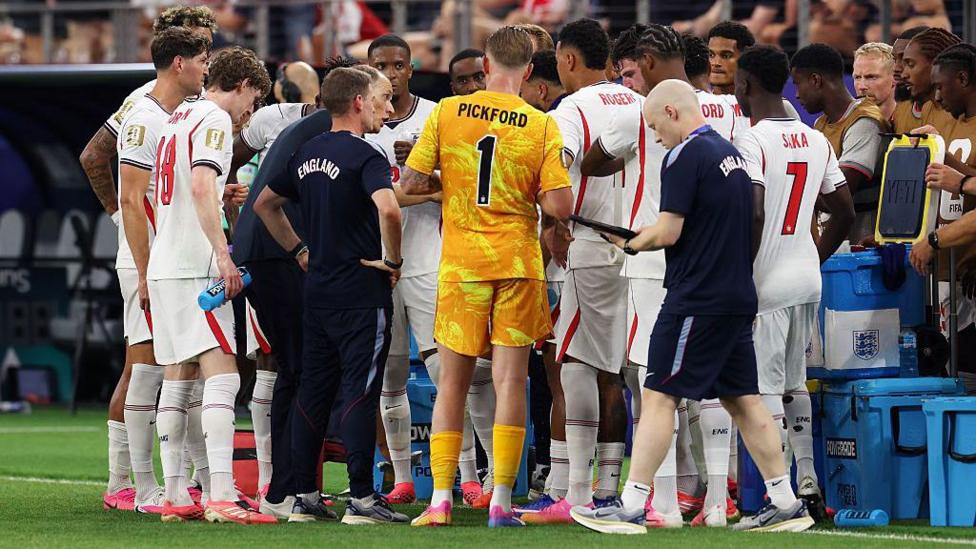
The $250m Pitch Invasion: Hydration Break Ads Are Coming
Hydration break advertising is a $250m revenue machine that fans despise but leagues cannot resist.

London City Lionesses Pull Off Transfer Earthquake Signing Alexia Putellas
Two-time Ballon d'Or winner Alexia Putellas joins London City Lionesses on a three-year deal in a historic women's football bombshell.