Messi vs Ronaldo: The Rivalry That Rewrote Football's Record Books
For nearly two decades, two extraordinary talents pushed each other to heights nobody thought possible.
Two Names, One Era
Football has seen rivalries that shook stadiums. Pele versus Maradona in the court of public opinion. Di Stefano versus Puskas on the same Real Madrid frontline. Zidane versus Ronaldo Nazario across Champions League knockout ties. None of them held a candle to what Lionel Messi and Cristiano Ronaldo built together over the better part of two decades.
Their rivalry didn't just dominate headlines. It consumed an entire sport. Every Ballon d'Or ceremony from 2008 to 2017 was a two-man race. Every Champions League matchday carried the subtext of who scored more. Every Saturday night in La Liga became a referendum on genius versus power, instinct versus obsession. The numbers they produced in that stretch are so absurd that historians will struggle to find a parallel in any team sport.
The Origins Nobody Planned
This wasn't a manufactured spectacle. It was a collision of circumstance.
Ronaldo arrived at Manchester United as a raw, flamboyant teenager from Sporting Lisbon in 2003. Sir Alex Ferguson shaped him into a ruthless goal machine by 2008, the year Ronaldo claimed his first Ballon d'Or after leading United to a Champions League title. He was 23 years old and already the most expensive player in the world when Real Madrid paid €94 million to bring him to the Bernabeu in 2009.
Messi was already there. Already the darling of the Camp Nou. Already Barcelona's number 10, their academy prodigy, the kid who had been scoring impossible goals since he was 17. By the time Ronaldo landed in Madrid, Messi had won his first Ballon d'Or and had just lifted the Champions League trophy with Pep Guardiola's Barcelona. He was 22.
The stage was set. Same city. Same league. Same rivalry bracket for the biggest individual award in football. For the next nine seasons, they would face each other at least twice a year in El Clasico, often more in Copa del Rey and Champions League encounters.
The Numbers Defy Belief
Strip away the narrative. Look at the raw output.
During their overlapping La Liga years from 2009 to 2018, Messi scored 329 league goals for Barcelona. Ronaldo scored 311 for Real Madrid. Those figures alone would represent a career for most elite strikers. They did it while also competing in the Champions League, domestic cups, and international tournaments.
In the Champions League, Ronaldo separated himself as the competition's all-time leading scorer with over 140 goals across his career. Messi sits second on the all-time list with approximately 129. Ronaldo won the competition five times (once with Manchester United, four with Real Madrid). Messi won it four times, all with Barcelona.
The Ballon d'Or tally tells its own story. Messi has won it eight times, a record that may never be broken. Ronaldo has five, which would be a record in any other era. Between them, they locked out the award for a full decade, beating out generational talents like Xavi, Iniesta, Neymar, Modric, Suarez, and Lewandowski.
"When you compete against someone who is pushing you every single year, you cannot relax. You cannot coast. That rivalry made me better, and I believe it made him better too." — Cristiano Ronaldo
Contrasting Styles, Same Ruthlessness
The beauty of the rivalry lay in how differently they operated.
Messi was the artist. Low center of gravity. Ball glued to his left foot. The ability to thread a through ball that no one else on the pitch had even seen. His dribbling in tight spaces remains the most efficient in football history, consistently completing over four dribbles per 90 minutes during his Barcelona peak. He didn't sprint past defenders. He floated through them.
Ronaldo was the athlete perfected. Towering headers. Thunderous free kicks. An ability to accelerate from a standing start that left fullbacks grasping at air. He reinvented himself multiple times, evolving from a tricky winger at Sporting and early United into a penalty-box predator at Real Madrid. His heading ability alone produced over 100 career headed goals, a number that defies physical logic for someone who was often marked by the best defenders alive.
The stylistic divide split football fans into tribes. Barcelona supporters worshipped Messi's otherworldly vision and humility. Real Madrid fans revered Ronaldo's work ethic, physical dominance, and big-game mentality. The arguments raged in every pub, every forum, every schoolyard across the planet.
The El Clasico Theater
Nothing amplified the rivalry quite like El Clasico.
From 2009 to 2018, Messi and Ronaldo faced each other 30 times across all competitions in a Barcelona-Real Madrid fixture. Messi scored 20 goals in those meetings. Ronaldo scored 21. The margins were razor-thin, the stakes always enormous.
Some of those matches were unforgettable. Ronaldo's calma celebration at the Camp Nou in 2012 after scoring a late winner. Messi's hat trick at the Bernabeu as a 19-year-old in 2007. The Champions League semifinal in 2011 where both players traded brilliance over two legs. These weren't just football matches. They were cultural events that drew global audiences exceeding 600 million viewers for the biggest editions.
The tension was real. Body language between the two was often frosty on the pitch. There were no joint celebrations, no shared smiles. The competition was too fierce for pleasantries. Behind closed doors, both men were known to be respectful of the other's achievements, but the public rivalry demanded war.
Beyond the Pitch: Commercial Titans
Their impact transcended football.
Ronaldo became the first athlete to surpass 500 million Instagram followers, making him the most followed person on the platform. His CR7 brand spans clothing, fragrances, hotels, and gyms. Forbes consistently ranked him among the highest-paid athletes on the planet, with annual earnings regularly exceeding $100 million.
Messi, quieter in his commercial approach, still built a global empire. His endorsement portfolio includes Adidas, Pepsi, Budweiser, and Hard Rock Cafe. His move to Inter Miami in 2023 generated a commercial earthquake in Major League Soccer, with ticket prices surging over 1,000 percent and Apple TV subscriptions spiking globally.
Together, they pushed football's commercial boundaries into territory the sport had never seen. Sponsorship deals grew. Transfer fees inflated. Broadcasting rights soared. The Messi-Ronaldo era coincided with football becoming the most valuable entertainment product on the planet. That was not a coincidence.
The Final Chapters
The rivalry's intensity faded after Ronaldo left Real Madrid for Juventus in 2018. The twice-yearly El Clasico meetings were gone. The direct comparison became harder. Ronaldo dominated Serie A while Messi continued his Barcelona heroics before a tearful departure to Paris Saint-Germain in 2021.
Messi's crowning glory came at the 2022 World Cup in Qatar. At 35 years old, he carried Argentina to the trophy in one of the greatest individual tournament performances ever seen, scoring seven goals including a brace in the final against France. The image of Messi lifting the World Cup trophy became the defining football photograph of the decade.
Ronaldo, meanwhile, had already won Euro 2016 with Portugal, a triumph that meant everything to a football-mad nation that had never won a major tournament. He continued to break international scoring records, surpassing 130 goals for Portugal and becoming the highest-scoring men's international player in history.
The dressing rooms tell different stories now. At Inter Miami, Messi is the elder statesman, surrounded by former Barcelona teammates, orchestrating attacks in a league still learning to contain him. At Al Nassr, Ronaldo pursues goal records with the same fury he had at 25, his competitiveness undimmed by age or geography.
The Debate That Will Never End
Who was better? The question has generated more words than most wars.
Messi loyalists point to his eight Ballons d'Or, his World Cup, his ability to create as well as score, and his consistency at a single club for over 20 years. Ronaldo advocates highlight his five Champions League titles, his dominance across four major leagues, his physical longevity, and his unmatched big-game record.
The truth is that the debate is the legacy. Their competition elevated both men to a plane that neither would have reached alone. Messi needed Ronaldo to sharpen his edge. Ronaldo needed Messi to fuel his hunger. Without each other, the Ballon d'Or might have been shared among a dozen different winners. Instead, it became the ultimate two-man showdown.
"For me, Messi is the best player in history. But Ronaldo is right there with him. We were lucky to watch them at the same time." — Zinedine Zidane
What It Means
The Messi-Ronaldo rivalry is over in its original form. They will never face each other in a meaningful competitive fixture again. Both are in the twilight of their careers, playing in leagues outside Europe's elite.
But what they left behind is a standard that current players cannot reach. Kylian Mbappe, Erling Haaland, and Vinicius Junior are all extraordinary talents. None of them are operating at the sustained, decade-long peak that Messi and Ronaldo maintained simultaneously. The next great rivalry in football has not yet materialized.
Their combined career goal tally exceeds 1,700. Their combined Ballon d'Or count is 13. Their combined Champions League titles number 9. These are figures that may never be matched by any two players sharing the same era.
Football fans who watched from 2008 to 2022 witnessed something that cannot be replicated. Two of the greatest athletes in human history pushed each other to the absolute limit of what is possible on a football pitch. The sport is richer for it. The records are permanent. The argument is eternal.
Update:
新条目聚焦于两个标志性庆祝来探讨竞争驱动力,而现有文章更广泛地描述竞争改写纪录。
Editorial Integrity
This is an original SportPulse article written by our editorial team. All content is independently researched, written, and reviewed by our writers and editors before publication. We do not publish copied, aggregated, or syndicated content.
SportPulse is committed to original sports journalism. Read our editorial policy or contact us with any questions.
More Like This
All football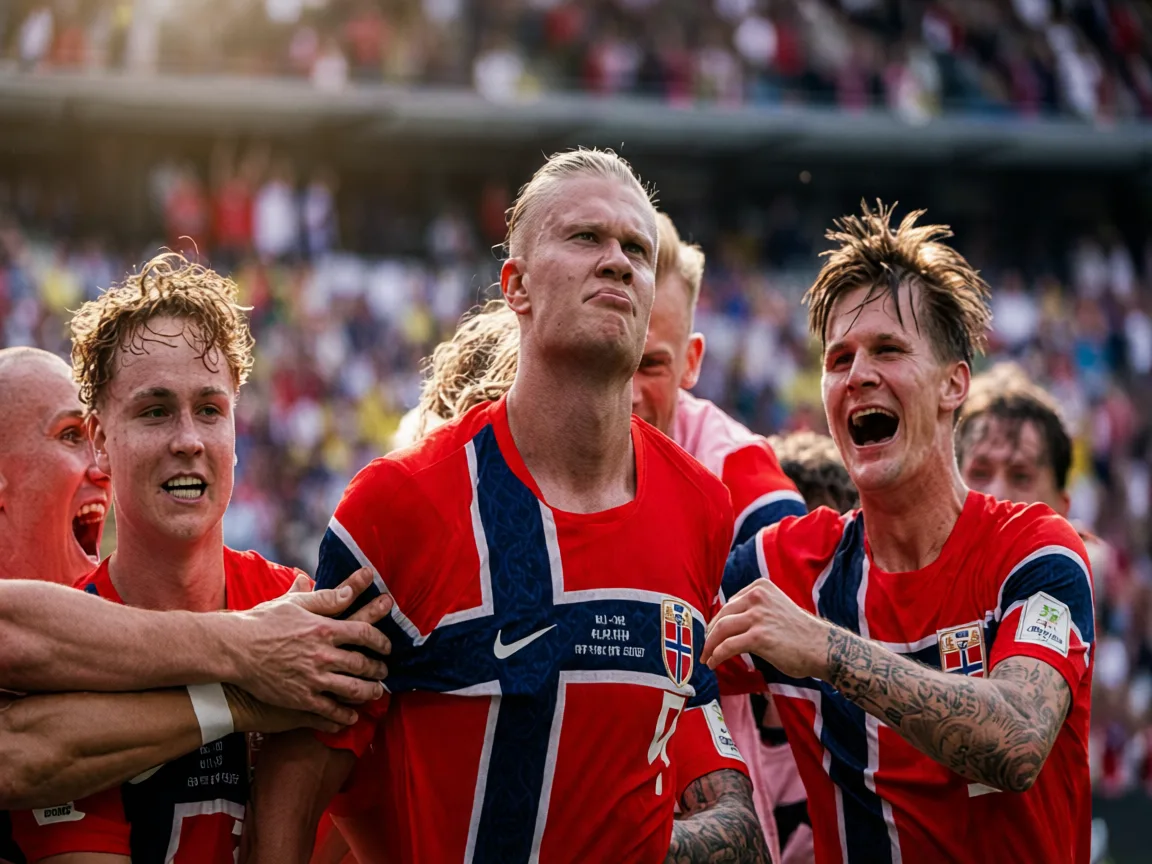
How Norway Built a Golden Generation From Plastic Pitches
Artificial turf, gambling revenue, and a coach-first culture built Norway's talent machine from the ground up.
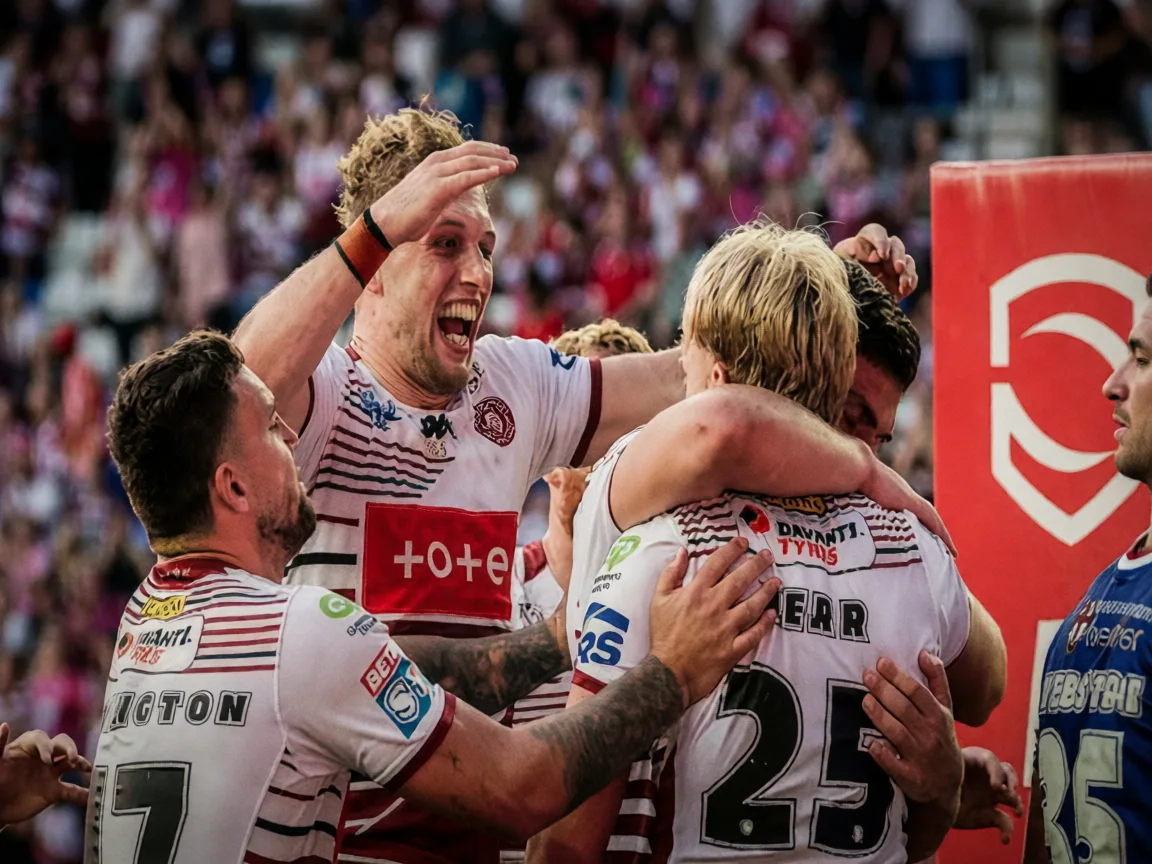
Wigan's Young Guns Fire Four First Tries in Warrington Rout
Four Wigan academy graduates score their maiden senior tries as the Warriors pull clear in second place with a statement win.
The Architecture of False Hope: Two Minutes and Fifty-Five Seconds
England's World Cup dream lived for just 175 seconds before reality intervened, yet that fleeting hope revealed something profound about football's emotional geometry.