The Architecture of False Hope: Two Minutes and Fifty-Five Seconds
England's World Cup dream lived for just 175 seconds before reality intervened, yet that fleeting hope revealed something profound about football's emotional geometry.
There is a precise measurement for heartbreak in football, and it is two minutes and fifty-five seconds. That is the duration during which England supporters genuinely believed a World Cup final was within reach before the tactical and emotional architecture of that hope collapsed. It did not kill them. That is the surprising revelation. The human capacity to absorb footballing disappointment and emerge, if not unscathed, then at least functional, is remarkably resilient.
This experience sits at the intersection of literature and the terraces. The author Rebecca Solnit, in her book Hope in the Dark, examines whether hope remains possible when weighed against the totality of human suffering. She draws on the Bulgarian writer Maria Popova's formulation: "Critical thinking without hope is cynicism, but hope without critical thinking is naivety." This is not merely a philosophical abstraction. It is the operational framework of every football supporter who has ever watched their team attempt to bridge the gap between aspiration and reality.
The Tactical Anatomy of a Brief Dream
England's tournament structure followed a familiar 4-2-3-1 formation, a system designed to balance defensive security with transitional attacking potential. The tactical narrative of the semi-final, however, was not one of sustained dominance but of a brief, violently compressed period of belief. For 175 seconds, the tactical adjustments appeared to have unlocked something. The midblock was bypassed. The half-spaces were occupied with purpose.
The broader tactical context matters here. England had spent much of the knockout phase operating within a structured rest-defence framework, conceding possession in measured doses and looking to exploit vertical channels on the counter. The semi-final demanded something different. The opposition's midfield trio controlled territory with a single pivot anchoring a box-to-box pairing that suffocated England's central progression. The match became a study in spatial denial.
The two minutes and fifty-five seconds of genuine hope represented a micro-period where England's tactical adjustments momentarily disrupted the opponent's ball-circulation structure. A specific trigger press in the middle third forced a turnover. The ball reached the final third with a numerical advantage. For those seconds, the pressing trap worked exactly as the coaching staff had designed it in their match preparation.
Then the geometry corrected itself. The opponent's back four re-solidified. The pressing intensity that England could not sustain for ninety minutes faded. The structural vulnerability of England's approach, one that had been tolerable during group stage matches against less sophisticated opposition, became fatal against a team with superior positional play discipline.
The Emotional Midfield
The relationship between critical thinking and hope that Popova describes is the exact psychological mechanism that governs football fandom. The critical thinking tells you that a team which has struggled to create 3.2 chances per 90 minutes in the knockout stage is unlikely to suddenly produce a sustained attacking masterclass against an elite opponent. The hope tells you that football is not a spreadsheet, that tournaments are won by teams who find form in specific moments, that regression to the mean can work in both directions.
This is where the Lincoln City supporter Graham Burrell's observation following his club's 2-1 home defeat to Wigan in 2024 becomes relevant to the national team discourse. His words, "It is the hope that kills you," represent the exhaustion of critical thinking. When he wrote that he felt the playoff push was finally killed off, he was describing the moment when hope and critical thinking converge into a single, devastating recognition of limitation. The England experience in this World Cup semi-final was different precisely because the hope was so brief. It did not build over weeks and collapse. It arrived, existed for under three minutes, and departed. The emotional damage was limited by the brevity of the illusion.
The emotional timeline of England's semi-final can be broken into three distinct phases:
- The pre-match period of measured pessimism, lasting from tactical preview through the early exchanges, when the opponent's control of possession and territory confirmed expectations of a difficult evening.
- The 175-second interval of genuine hope, triggered by a specific tactical moment that briefly suggested the match's structural logic had shifted.
- The prolonged resolution, during which the opponent reasserted their tactical superiority and the result followed the pattern that critical thinking had predicted.
Tactical Shift
The match's decisive moment arrived in that brief window when England's midblock briefly transformed into an aggressive pressing structure in the opponent's defensive third. For those 175 seconds, England moved from a 4-2-3-1 in a low-block orientation to a 4-2-3-1 with a high line and man-oriented pressing in the final third. The opponent, accustomed to facing a passive English block, was momentarily disoriented. The single pivot was forced into a rushed decision. The turnover occurred in a dangerous zone, roughly 35 yards from goal.
What followed was the tactical reason the hope was doomed to be fleeting. England's pressing structure was not sustainable. The bus stop six, two holding midfielders positioned to screen the centre-backs, had pushed too far forward. The space behind them, between the lines, became a super-highway for the opponent's pivot once the initial press was bypassed. The rest-defence was inadequate. When the opponent played through the pressure with a simple third-man combination, England's entire structure was exposed. The high line became a liability. The brief pressing adventure ended with the opponent advancing into the space that England's own aggression had created.
This is the essential tactical lesson. Pressing is not merely about intensity. It is about geometric coherence. For 175 seconds, England's pressing was intense but ultimately incoherent. The pressing trap lacked the secondary coverage that would make it functional over a sustained period. The opponent needed less than three minutes to diagnose the vulnerability and exploit it.
"Critical thinking without hope is cynicism, but hope without critical thinking is naivety." — Maria Popova, as quoted by Rebecca Solnit
The Aftermath of Brief Belief
The solace that England supporters took from this defeat was genuine, if perhaps unexpected. The hope did not kill them because it was too brief to constitute a real investment of emotional capital. It was a flicker rather than a flame. The critical thinking had done its work beforehand. The hope arrived unexpectedly, existed in a compressed window, and departed without the slow erosion that makes prolonged hope so destructive.
This is a different kind of footballing heartbreak. The classic English tournament exit involves a slow accumulation of belief over weeks, a growing sense that this time might be different, followed by a defeat that feels like a betrayal of accumulated faith. The semi-final exit with two minutes and fifty-five seconds of genuine hope is almost clinical by comparison. The diagnosis was quick. The patient was conscious throughout.
What the experience reveals is something about the adaptability of football supporters. The emotional system is capable of processing brief, intense hope without sustaining permanent damage. The fan who enters a tournament with critical thinking intact, who understands the structural limitations of their team, who can identify the tactical gaps between aspiration and capability, is not destroyed by a brief encounter with hope. They are equipped for it precisely because their critical thinking provides the framework within which hope can exist without becoming naivety.
Looking Forward
The next tournament cycle will present England with a familiar challenge. The coaching staff will need to address the structural issues that made the pressing structure unsustainable in that critical semi-final moment. The single pivot problem, the vulnerability to third-man combinations in the spaces between the lines, the inability to maintain a high line without conceding dangerous transition opportunities. These are the tactical questions that will define the next qualification campaign.
For the supporters, the lesson is less tactical and more philosophical. Hope, in its brief and honest form, is not the enemy. It is the prolonged hope, the kind that ignores critical thinking, that produces the devastation described by Graham Burrell at Lincoln City. The England experience of this World Cup suggests that there is a sustainable form of footballing hope. It lasts 175 seconds, acknowledges reality, and leaves you intact. Whether that constitutes genuine hope or simply the manageable remnant of a dream is a question that Solnit and Popova would likely debate for several pages. For the England supporter, the answer is simple enough. It was hope. It was brief. It did not kill them. And in football, that is sometimes the best outcome available.
Editorial Integrity
This is an original SportPulse article written by our editorial team. All content is independently researched, written, and reviewed by our writers and editors before publication. We do not publish copied, aggregated, or syndicated content.
SportPulse is committed to original sports journalism. Read our editorial policy or contact us with any questions.
More Like This
All football
Scotland's World Cup Paradox: Superb Fans, Dismal Football
The Tartan Army conquered America. Steve Clarke's squad? They embarrassed themselves on the pitch against Brazil.
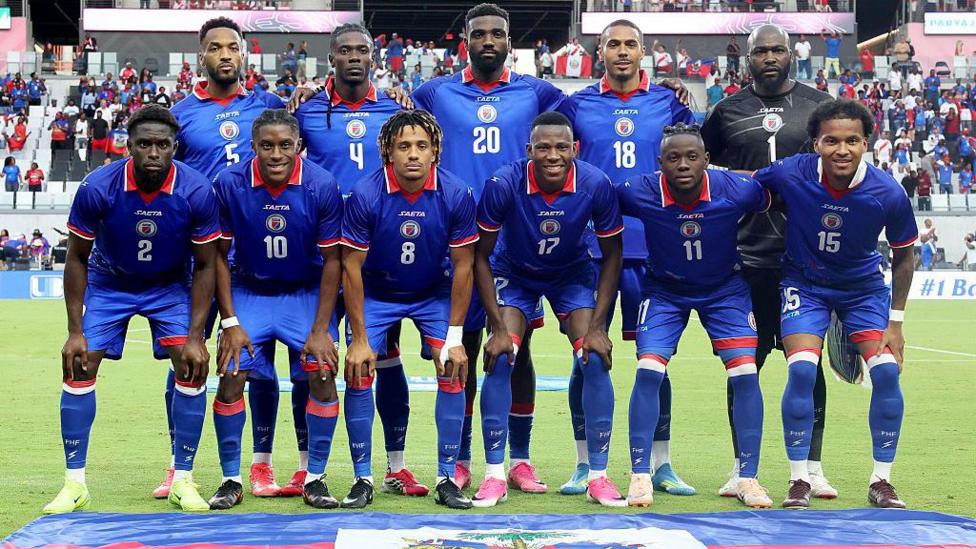
Haiti Forced to Scrap War Scene Kit Before Scotland Opener
Fifa blocks Haiti's World Cup shirt featuring a war scene, forcing a last-minute redesign days before their Scotland opener.

215 Goals, 72 Matches: What the 2026 World Cup Group Stage Numbers Reveal
The expanded 48-team group stage delivered nearly three goals per game. Here's what those numbers mean tactically.