Scotland's World Cup Paradox: Superb Fans, Dismal Football
The Tartan Army conquered America. Steve Clarke's squad? They embarrassed themselves on the pitch against Brazil.
A Tale of Two Scotlands
There are two stories coming out of Scotland's 2026 World Cup campaign, and they couldn't be further apart. The first is a triumph of spirit, colour, and cultural charm. The second is a footballing embarrassment that raises serious questions about where this national team program is headed.
The Tartan Army descended on the United States and did what they always do: they turned every street corner, bar, and stadium concourse into a rolling carnival. Kilts, bagpipes, spontaneous singalongs with bewildered locals. By all accounts, Scottish supporters have been among the tournament's most beloved visitors, winning hearts from coast to coast.
On the pitch, Steve Clarke's side delivered something far less inspiring. A dismal, disjointed collapse against Brazil laid bare the gulf between Scotland's ambition and their reality. The performance was a mess from first whistle to last, and it left the squad clinging to the thinnest of mathematical threads for a place in the last 32.
The Brazil Reality Check
Nobody expected Scotland to beat Brazil. That isn't the point. The point is the manner of the defeat, the lack of tactical identity, the absence of fight in key moments. This was not a plucky underdog going down swinging. This was a side that looked out of its depth on the world's biggest stage.
Brazil's attacking firepower is formidable, yes. Vinícius Júnior and his supporting cast are capable of dismantling anyone. But Scotland's approach invited pressure without offering any coherent counter-punch. There was no mid-block resilience, no transition threat, no plan B when the first plan was shredded inside the opening exchanges.
Clarke built his reputation on defensive organization. That was the foundation of Scotland's Euro 2020 campaign, the bedrock of their Nations League promotions. Against Brazil, that foundation crumbled. The back line was stretched, the midfield bypassed, and the forwards starved of service. It was, in the harshest possible terms, a coaching failure on the day.
The Weight of History
Scotland hadn't appeared at a World Cup since 1998. Twenty-eight years of hurt, of near-misses, of watching from home while the Tartan Army sang about what could have been. Clarke finally broke that cycle, and the qualification alone was a monumental achievement worth celebrating.
But qualification and competitiveness are two very different conversations. Scotland have now participated in 11 World Cups across their history. They have never progressed beyond the group stage. Not once. The pattern is painfully familiar: arrive with hope, depart with regret, rinse and repeat across generations.
This tournament was supposed to be different. The expanded format to 48 teams opened the door wider than ever. The last 32, a stage Scotland had never reached, suddenly felt attainable. Clarke himself spoke about seizing the opportunity, about making history. The Brazil match suggested the squad wasn't ready to write that particular chapter.
Clarke's Contract With Reality
Steve Clarke has earned enormous respect for what he's built. Taking a Scotland side that couldn't qualify for anything and steering them to back-to-back European Championships and now a World Cup is a genuine legacy. He is, by most reasonable measures, the most successful Scotland manager in modern history.
That respect doesn't grant immunity from scrutiny. Clarke's tactical rigidity has been a recurring concern, and the Brazil match magnified it. His system is built on structure and discipline, but when an elite opponent dismantles that structure in real time, there's no spark of improvisation to fall back on. The squad looked coached into submission rather than liberated to compete.
The question now is whether Clarke gets to lead the next chapter or whether this World Cup exposes a ceiling. His contract situation and the SFA's appetite for change will dominate Scottish football discourse once the domestic season kicks off and everyone moves on.
The Tartan Army's Lasting Impact
Here's the part that deserves genuine celebration. While the team stumbled, the fans soared. Reports from across the United States paint a picture of Scottish supporters behaving exactly as the best version of international football fandom. They were loud, they were generous, they were funny, and they left a mark on every city they touched.
The psychological and societal value of that cannot be overstated. Scotland is a small nation with a complicated self-image. The Tartan Army acting as cultural ambassadors on the world's biggest sporting stage provides a morale boost that transcends football. Commercially, too, the visibility matters. Sponsor interest, tourism narratives, and the broader brand of Scottish football all benefit from supporters conducting themselves with such distinction.
The paradox is brutal in its simplicity: the fans gave everything they had. The team did not.
Domestic Distractions Loom
The source piece makes a sharp observation that deserves emphasis. Within weeks, this World Cup experience will be swallowed whole by the tribal fury of Scottish domestic football. Old Firm rivalries, Championship promotion battles, the SPFL's weekly chaos. It will all rush back in, and the national team will recede into the background.
That cycle is part of the problem. Scotland's football culture is so consumed by club loyalties that international windows often feel like inconvenient interruptions rather than sacred moments. The World Cup cracked through that noise briefly, uniting the country behind a common cause. The fear is that the moment passes without the deeper lessons being absorbed.
Clarke's squad needs this tournament to be a line in the sand, not a fleeting novelty. The infrastructure, the development pathways, the coaching philosophy at youth level, all of it should be interrogated in the wake of what happened against Brazil. Falling short at a World Cup is forgivable. Failing to learn from it is not.
What It Means
Scotland's 2026 World Cup will be remembered as a contradiction. The fans were magnificent, the team was not. Clarke delivered history by qualifying but couldn't deliver performance when it mattered most. The faint hope of a last-32 place may still technically be alive, but the manner of the Brazil defeat suggests this group has already hit its ceiling.
The real test comes next. Does Scottish football treat this as a catalyst for genuine reform, or does it retreat into the comfort of domestic tribalism and forget the whole thing happened? The Tartan Army did their part. Now it's on everyone else to match that commitment.
Scotland deserved better on the pitch. At least the stands delivered.
Editorial Integrity
This is an original SportPulse article written by our editorial team. All content is independently researched, written, and reviewed by our writers and editors before publication. We do not publish copied, aggregated, or syndicated content.
SportPulse is committed to original sports journalism. Read our editorial policy or contact us with any questions.
More Like This
All football
Earps Faces the Spotlight Again After London City Switch
Mary Earps admits uncertainty about returning to the spotlight after her surprising move to the London City Lionesses.
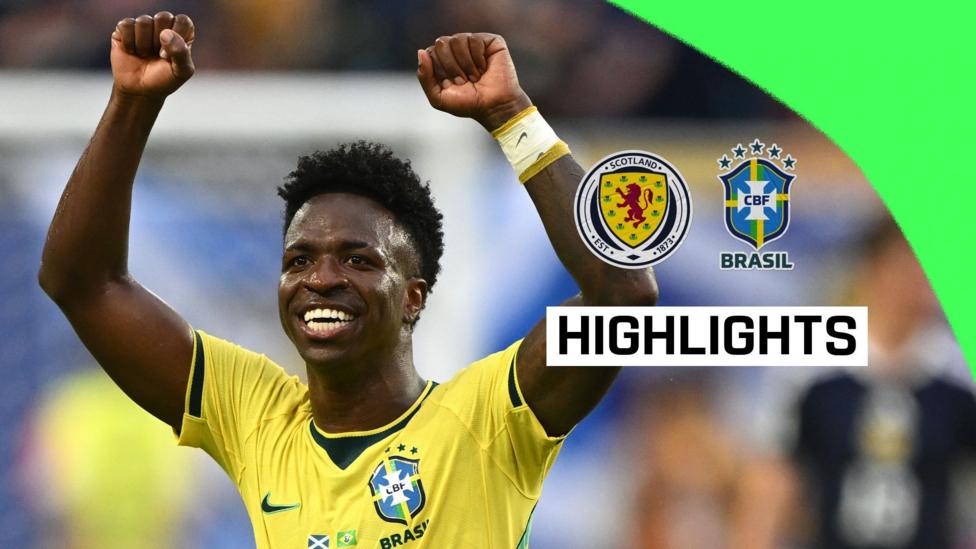
Scotland's World Cup Dream Hangs by a Thread After Brazil Collapse
Calamitous defending handed Brazil a 3-0 win in Miami, leaving Scotland's knockout hopes on a knife edge.
England Stumble Into Quarterfinals While America Quietly Exits
The Three Lions reach the last eight but the swagger is gone, and the US crashed out without a whimper.