Herbert Bogeys 18th to Miss Record 61 at The Open
Lucas Herbert's five-foot putt on the 18th at Royal Birkdale slides wide, denying him a historic major record and leaving a bitter 62.
The Agony of Five Feet — Twice Over
The roar was ready. The engraver was poised. The history books were open, awaiting a name to etch into perpetuity. Lucas Herbert stood on the 18th green at Royal Birkdale, staring down a five-foot putt that would have elevated him into the rarest air the game has ever breathed. A breakthrough at the 2026 Open Championship was within grasp, the lowest single round in men's major history beckoning with quiet, irresistible allure.
The stroke was pure in intention. The read was meticulous. Every variable had been measured, computed, and felt through the spiked soles of a golfer walking the razor-thin margins of greatness. But the ball turned its face away at the final instant, catching the left edge of the cup before curling out into the afternoon light. The gasp from the grandstands was involuntary, collective. Herbert sank to his haunches, his cap pulled low. A one-under-par finish. A bogey on the 18th. A score of 62.
It was not a collapse. It was not a capitulation. It was the most exquisite, gut-wrenching sort of heartbreak that sport specializes in. One stroke away from immortality, left instead with a merely extraordinary round that will be remembered for the tragedy of its conclusion rather than the majesty of its construction.
Yet even as Herbert agonised over what might have been, the same Southport links was delivering an altogether different emotional landscape. Sam Burns of the United States was fashioning his own symphony — one that would arrive at the same destination of 62, but without the accompanying heartbreak. Two men, two eight-under-par rounds, and a share of the lowest score ever recorded in men's major championship history. One reaction was anguish. The other was quiet satisfaction. The contrast spoke volumes about the capricious nature of a game that can produce identical numbers from diametrically opposed emotional journeys.
Architecture of a Near-Record — and a Record Equalled
To understand the cruelty of Herbert's miss, one must first appreciate the symphony of the round that preceded it. Herbert had navigated Royal Birkdale's storied links with a blend of aggression and restraint that felt almost algorithmic in its precision. When the wind demanded humility off the tee, he clubbed down. When the greens presented a window, his iron play was surgical, creating the kind of incremental gains that compound into mythology.
Every pivotal shot in Herbert's round was a study in tactical course management. The Australian's ability to manipulate trajectory and spin opened scoring windows that the field could not access.
The outward nine set the foundation. The inward nine built the cathedral. Birdies arrived in clusters. A barrage that tested the historiographical limits of what is possible over 18 holes at a major. There is a specific degradation that pursuit of history inflicts upon the nervous system, and Herbert had managed it with such remarkable composure that the arithmetic of record merely felt inevitable.
Burns, meanwhile, was constructing his own masterpiece with a different temperament entirely. Where Herbert's round was defined by its agonising crescendo, Burns's was notable for its unburdened consistency — a round that reached eight-under without the spectre of a single dropped shot, and without the dramatic inflection point that would haunt Herbert's scorecard. Same number. Same place in the record book. Starkly different story.
The Statistical Canvas
- A second-round score of 62 at Royal Birkdale — recorded by both Lucas Herbert and Sam Burns.
- Herbert's missed five-foot par putt on the 18th hole that cost him a historic 61.
- Both rounds equalling the lowest score in men's major championship history.
- The pivotal stroke occurring on the closing hole of Herbert's round.
- Burns's bogey-free path to the same mark, a study in composed precision.
These numbers sketch a profile of two golfers at the absolute peak of their craft — one undone by the capricious physics of a wind ghost or a blade of grass, the other navigating those same forces with unhurried certainty.
The Final Hole: A Tactical Dissolution
The 18th at Royal Birkdale is not a brute. It is a psychological trap masquerading as a finishing hole. The temptation to force a stroke play advantage is overwhelming, yet the penalty for over-commitment is profound. Herbert's approach to the hole was textbook until the green, where the true test awaited.
The putt itself was not technically difficult. Five feet is a distance that professional golfers make the vast majority of the time. But context corrodes mechanics. The weight of the record was not merely on the line, it was threatening to rewrite the annals of the sport. A miss would mean a bogey. A make would mean a 61 and a place alone atop legends.
Herbert's stroke was slightly tentative. The ball started on line but lacked the conviction to hold its arc through the final revolutions. It broke low. It lipped out. And with it, the architecture of a record round collapsed into the dust of a 62 — equalled, not surpassed, by a man playing elsewhere on the same course with no such drama.
The Bigger Picture
In the immediate aftermath, Herbert's disappointment was total. Burns's reaction was measured, appropriately thrilled — the quiet pride of a professional who understands the magnitude of what he has achieved. Both men walked off Royal Birkdale with 62 on their cards and a share of history. But where Burns carried the satisfaction of a round flawlessly executed, Herbert carried the weight of a digit that got away. Time reframes sporting heartbreak, but it also reframes sporting triumph. A 62 at The Open Championship at Royal Birkdale remains a monumental achievement regardless of emotional context, one that will place both golfers squarely in contention for the Claret Jug.
"I hit a good putt. It just didn't go in. That's golf. It hurts right now, but I'll take a lot of positives from this round."
The larger implication for the tournament is the positioning of both Herbert and Burns on the leaderboard. Brutal as Herbert's finish was historically, competitively it leaves him in a commanding position. Burns, arriving at the same number through a less harrowing route, is equally poised. The 2026 Open Championship has found its narrative focal point in a second round that was simultaneously transcendent and tragic — and in another that was simply, magnificently, complete.
Herbert's Trophy Putt
What is most poignant about the miss is its ordinary nature. There was no catastrophic error. No errant drives. No shanked approaches. The randomness of championship golf is such that its most consequential moments are not always spectacular. Sometimes they are a putt that starts a half-degree offline. Sometimes they are a record denied by the width of a dimple.
For Herbert, the challenge now is emotional regulation. The "Curtains Closing" phenomenon suggests a deficit between expectation and execution under pressure. The golfer who can process the loss of a major record and still contend on the weekend is a rarer psychological specimen than the one who shoots 61. Herbert's weekend will be a test not of his swing, but of his resilience.
What's Next
As the 2026 Open Championship turns toward the weekend, both Herbert and Burns are positioned at the head of affairs, twinned by history if not by temperament. The field is not idle. The tactical question for the weekend is how the golf course will evolve. Royal Birkdale's links are living things, their temperament dictated by wind and rain that can transform a welcoming layout into a brute.
Herbert's challenge is twofold. He must reconcile the agony of the 18th with the reality of a tournament that remains wide open. And he must do so while the field pursues him with the knowledge that his round was near-perfect. Burns, unencumbered by such ghosts, faces a different task — maintaining the composure that carried him to 62 without the emotional baggage that Herbert must shed. The weekend will demand tactical patience, iron-play precision, and putting that does not revisit the heartbreak of the 18th.
The scoreboard shows 62 — twice. The history book has a new chapter, co-authored. The Claret Jug is still to be lifted. For Lucas Herbert and Sam Burns, the road from Royal Birkdale runs straight through the weekend, history shared and destiny still unwritten.
Updated: 18 July 2026 — Added Sam Burns's matching 62 that equalled the men's major championship scoring record alongside Herbert's round, presenting two identical scores from contrasting emotional journeys.
Editorial Integrity
This is an original SportPulse article written by our editorial team. All content is independently researched, written, and reviewed by our writers and editors before publication. We do not publish copied, aggregated, or syndicated content.
SportPulse is committed to original sports journalism. Read our editorial policy or contact us with any questions.
More Like This
All long-reads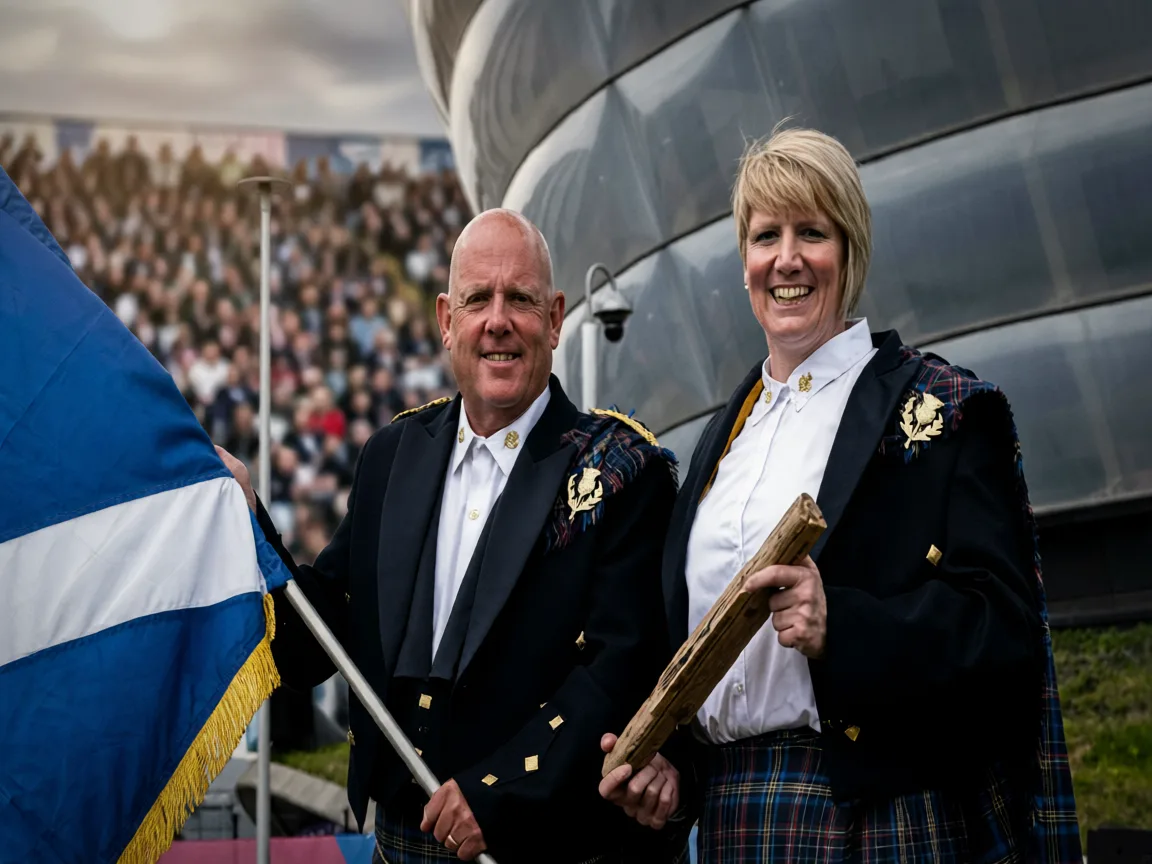
Lawn bowls legend Alex Marshall to carry Scotland's flag at Commonwealth Games
Five-time Commonwealth gold medallist Alex Marshall named Scotland's flagbearer for Thursday's opening ceremony.
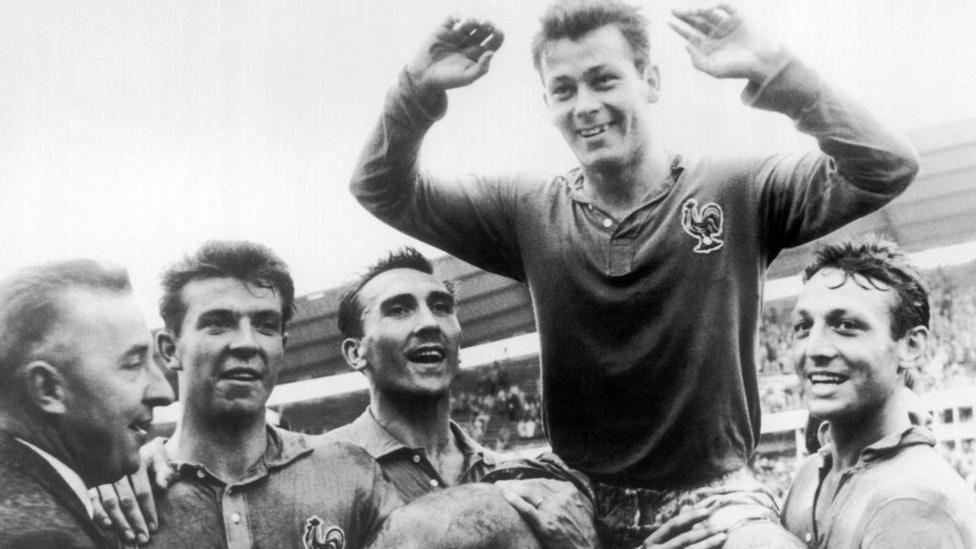
Just Fontaine: 13 Goals, Borrowed Boots, and Football's Most Unbreakable Record
In 1958, Just Fontaine scored 13 World Cup goals wearing borrowed boots. His record still stands, and his career ended at 28.

Merino Closes Family Circle With Spain's World Cup Decider
A late winner against Portugal completes a generational arc for Mikel Merino, a father's legacy and a son's future