London's World Record Pursuit: Hodgkinson and Kerr Chase History
Britain's brightest track stars target immortality at London's Diamond League meeting this Saturday.
The Rare Air of World Record Chases
Saturday's Diamond League meeting in London carries a weight that few regular-season track events can claim. Two of Britain's most compelling athletes, Keely Hodgkinson and Josh Kerr, are not merely competing. They are hunting world records. The distinction matters.
In an era where athletics struggles for mainstream oxygen between Olympic cycles, a dual world-record attempt on home soil is a promotional gift. London has historically rewarded boldness; the stadium roars for athletes who commit fully rather than calculating safety first. Hodgkinson and Kerr have both built reputations on front-running fearlessness.
The schedule reads as a standard Diamond League fixture. The subtext reads as a potential historic night for British athletics.
Keely Hodgkinson: Crafting an 800m Masterpiece
Hodgkinson's rise since winning Olympic silver in Tokyo 2021 has been remarkable, culminating in her Olympic gold in Paris 2024 — a victory that elevated her from star to bona fide icon. Yet the world record in the 800m remains the glaring absence on her resume.
The current women's 800m world record of 1:53.28, set by Jarmila Kratochvílová in Munich in July 1983, was long considered virtually unassailable. Kratochvílová's record survived 41 years through generations of champions, ranging from Maria Mutola to Caster Semenya to Athing Mu, all of whom rewrote the event without breaching that ultimate barrier. When Jarmila set it, the event was progressing at a pace that outstripped modern standards. Her mark was a statistical anomaly, an outlier that has stared down every challenger.
Hodgkinson's personal best sits at 1:54.61, recorded in July 2024. The gap to the record — precisely 1.33 seconds — may sound modest to the uninitiated. In 800m running, it is a canyon. Improving by over a second at the absolute elite level demands a confluence of factors: ideal pace-making, optimal weather, genuine competitive pressure, and a career-defining physiological performance. That gap represents roughly 1.2% of her current best, a margin that requires near-flawless execution across both laps.
Tactical Blueprint: Rabbited Pace and Calculated Risk
The attempt requiresPrecision rabbiting through the opening 400m in approximately 55.5 to 56.0 seconds. Hodgkinson's tactical repertoire has matured significantly since her breakthrough; her championship winning runs have demonstrated growing comfort with fast-paced, honest races. She is no longer merely a kicker from the back. Her Paris victory proved she can shape a race proactively rather than merely react.
- Opening lap in 25.5s per 200m pace, closely tracking the rabbit
- Sustained second lap with controlled degradation
- Final 100m sprint finish, testing whether she can sustain pace under accumulating lactate fatigue
Josh Kerr: The 1500m Renegade
Kerr arrives in London with momentum that has transformed him into one of athletics' mostidible competitors. His Olympic 1500m gold in Paris cemented a trajectory that began with his World Championship title in Budapest 2023. His demeanor — confident, occasionally provocative, always accountable — has made him exactly the kind of personality the sport needs. Track and field desperately requires athletes who generate legitimate emotional stakes.
The men's 1500m world record of 3:26.00 belongs to Hicham El Guerrouj, set in Rome in 1998. Like Kratochvilová's mark, it has proven impossibly durable. 26 years of technological advancement in shoe design, track surface engineering, and training methodology have not dented it. The record sits as a monument to one of distance running's greatest exponents.
Kerr's personal best of 3:27.79 from 2024 places him within 1.79 seconds of history. He has openly discussed targeting the record, a psychological posture that reveals both ambition and acceptance of genuine risk. Most athletes hedge publicly to manage expectations. Kerr leans in.
Why Kerr's Task Differs From Hodgkinson's
The 1500m presents different variables than the 800m. The event is lactate threshold-intensive — runners need to sustain near-maximal effort across a longer duration — and requires precise energy distribution. Kerr's historical strength is his finishing kick, demonstrated so dramatically in his Paris Olympic triumph. The question is whether he can balance front-running aggression with necessary metabolic conservation.
A pace-aided attempt in London will require Kerr to run laps of approximately 55 seconds per 400m, targeting 800m splits near roughly 1:50. This requires a level of structural discipline that somewhat contradicts his instinct for race variation. He typically prefers to disrupt others' rhythms rather than adhere to a metronomic schedule.
The Structural Rareity of the Attempt
What makes Saturday compelling beyond individual ambitions is the coordinated ambition. Two British athletes attempting world records at the same Diamond League meeting is an organizational statement. It reflects deliberate meeting scheduling, athlete readiness, and promotional courage.
British athletics has needed this kind of showcase. Post-Olympic years typically sag in public interest. The Diamond League circuit, while commercially valuable material to athletes and sponsors, rarely generates genuine mainstream excitement. Embedding record attempts shifts the narrative from "another fixture" to a potential landmark event.
The Commercial Calculation
Of course, there is commercial self-interest in promoting the event with such urgency. A world record at home adds universally to legacy, increases broadcast retention, and justifies investment in subsequent seasons. It is also a ratings play. Both the BBC and the sport's commercial stakeholders win from a night that delivers genuine historical stakes.
- Event broadcast nationally on BBC platforms
- Saturday afternoon scheduling maximizes domestic audience reach
- London's Olympic Stadium provides a stage commensurate with attempted history
The BBC's involvement is telling. The broadcaster's athletics coverage has grown selective in recent years, prioritizing events with clear narrative significance over routine circuit meetings. Their commitment here suggests internal confidence that something memorable is genuinely possible.
History Favors the Bold, Records Favor the Perfect
Saturday will likely not deliver two world records. The odds argue against perfect historical days. But that is not the point. The value lies in watching athletes who are structurally willing to fail publicly in pursuit of ultimate achievement. Hodgkinson and Kerr could safely accumulate victories in conventional races throughout the season. instead, they have chosen the harder path.
- Jarmila Kratochvilová's 800m record: 1:53.28 (Munich, 1983)
- Hicham El Guerrouj's 1500m record: 3:26.00 (Rome, 1998)
- Combined age of existing records at stake: over 67 years
- Hodgkinson's personal best: 1:54.61 | Gap: 1.33 seconds
- Kerr's personal best: 3:27.79 | Gap: 1.79 seconds
Both records have proven stubbornly durable for a reason. The 800m requires an extraordinary blend of speed and endurance — sustained maximal effort that punishes any tactical miscalculation exponentially. The 1500m demands sustained lactate threshold mastery and strategic patience. Racing a record attempt is a different physiological equation than racing for a win.
"Records are not broken by cautious athletes. They are broken by athletes who accept that failure is the probable outcome and commit anyway."
London's Role: More Than a Stadium
The stadium itself behaves as an active participant. London's Olympic Stadium, refurbished and rebranded, roots back to 2012's transformative Olympic legacy. It uniquely offers the kind of partisan crowd atmosphere that can physically push athletes through the metabolic barrier that record attempts inevitably encounter. Every British record chaser historically acknowledges the crowds role.
Hodgkinson, from nearby Wigan, and Kerr, from Edinburgh, will feel the specific gravity of home support. It is intangible in statistical terms but exerts physiological effects that cannot be dismissed. When the lungs burn and the legs lose elasticity between 500m and 600m of an 800m, the sound of a invested crowd genuinely alters the body's pain response.
What Success or Failure Means
The equation is stark. If either breaks through, they share headline space with Kratochvilová or El Guerrouj — an exclusive club of historical significance. If neither succeeds, the narrative shifts to "noble attempt" framing, which is valuable but commercially secondary.
Both results advance the sport. Success is obviouly headline-grabbing. Failure from genuine ambition provides the kind of sporting authenticity that manufactured spectacles cannot replicate. Either way, produces a compelling narrative.
The Real Winners: British Athletics and Its Audience
Regardless of outcomes, Saturday's meeting functions as a statement about the health of British athletics. The sport's ecosystem requires headline talent willing to headline events with genuine stakes. Hodgkinson and Kerr are sequencing both.
The bottom line: world records are not typings. They are negotiated. Saturday's stake is whether two British athletes can negotiate the gap between aspiration and execution under maximum pressure. The outcome is uncertain. The ambition is not, and that alone makes London unmissable.
Editorial Integrity
This is an original SportPulse article written by our editorial team. All content is independently researched, written, and reviewed by our writers and editors before publication. We do not publish copied, aggregated, or syndicated content.
SportPulse is committed to original sports journalism. Read our editorial policy or contact us with any questions.
More Like This
All long-reads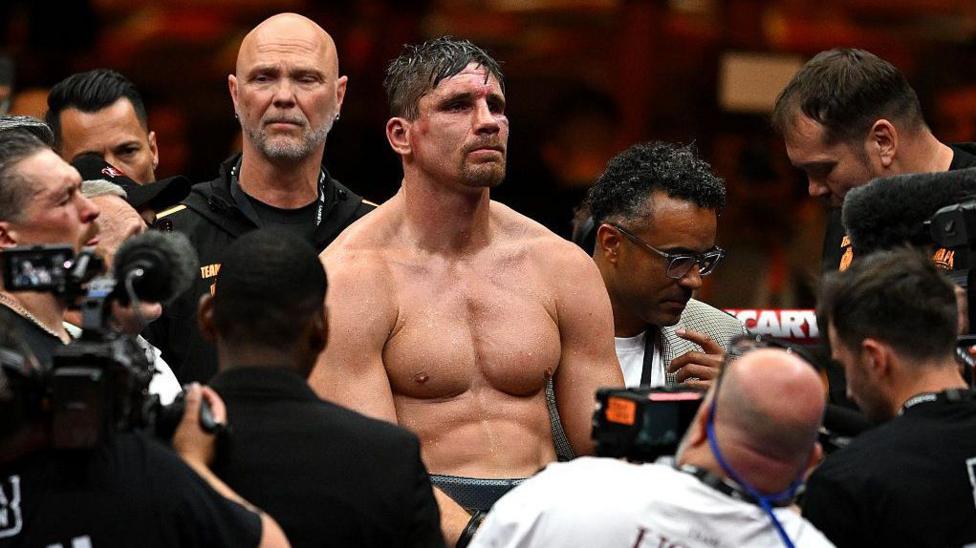
Verhoeven Appeal Dismissed: Usyk Cross-Code Victory Stands
Rico Verhoeven's appeal over his defeat to Oleksandr Usyk is dismissed, ending a bitter cross-code saga.

They Take You Out of Life: Inside Spain's Hidden Palaeolithic Masterpieces
Rediscovered after millennia in darkness, Spain's cave paintings reveal humanity's earliest artistic impulse and a world before time.

England's Post-Stokes Reckoning: Who Fills the Leadership Void?
Ben Stokes' captaincy exit leaves England cricket at a crossroads, with Harry Brook the leading candidate to inherit a transformed dressing room.