The Bid That Changed Football Forever: How Qatar Won the 2022 World Cup
A December 2010 vote in Zurich reshaped global football. The story of how Qatar landed the World Cup is bigger than any single scandal.
On December 2, 2010, in a wood-paneled conference room inside FIFA's Zurich headquarters, 22 men changed the trajectory of world football. The FIFA Executive Committee voted to award the 2022 World Cup to Qatar, a desert nation with no football tradition to speak of, a population smaller than Houston's metro area, and summer temperatures that routinely exceed 45 degrees Celsius.
The room erupted. Delegates from Qatar's bid committee embraced. The delegation from the United States, the overwhelming favorite, sat in stunned silence. Four years of lobbying, scheming, and spending had come down to a 14-8 final-round vote that would generate more controversy, more investigation, and more long-term structural change to football governance than any decision in the sport's history.
Twelve years later, the tournament actually happened. And by most accounts, it was a logistical and sporting success. But the question has never fully gone away: how did Qatar pull this off?
The Pitch That Shouldn't Have Worked
Qatar's bid was, on paper, absurd. A country of roughly 1.7 million people at the time, with no major stadiums, no football culture worth noting, and a climate so hostile to outdoor sport that FIFA's own technical evaluation flagged it as a "high risk" option. The bid committee knew this. Their entire strategy hinged on reframing the conversation.
Sheikh Mohammed bin Hamad bin Khalifa Al Thani, the son of the Emir, fronted the campaign. He was young, media-savvy, and fluent in the language of football's power brokers. His pitch was built on three pillars: legacy, innovation, and history.
Qatar promised the first World Cup in the Middle East. They promised air-conditioned stadiums, a technology that barely existed in outdoor venues at the time. They promised a compact tournament where every fan could attend multiple matches in a single day, with all eight stadiums located within a 55-kilometer radius of Doha. They promised to dismantle some venues after the tournament and donate them to developing nations.
It was audacious. It was also, in many respects, exactly what FIFA wanted to hear.
The Geopolitical Chess Match
To understand how Qatar won, you have to understand what FIFA wanted in 2010. Sepp Blatter, then in his 12th year as president, had long spoken about bringing the World Cup to new frontiers. After South Africa in 2010, the logic went, why not the Middle East? Expanding the game's global footprint was FIFA's stated mission, and awarding the tournament to Qatar would be the boldest statement yet.
But the real engine of Qatar's bid was not idealism. It was money and influence.
Qatar's sovereign wealth, channeled through the Qatar Investment Authority and state-backed entities like Al Jazeera (later beIN Sports), gave the bid an almost bottomless war chest. The committee hired top-tier lobbying firms, funded football development programs across Africa and Asia, and built relationships with federations whose Executive Committee members held votes.
Mohamed bin Hammam, the Qatari football official who sat on the FIFA Executive Committee and led the Asian Football Confederation, was a central figure. Though he was technically recused from voting on Qatar's bid, his network of influence across Asian and Caribbean football federations was immense. Bin Hammam would later be banned from football for life over corruption, but by then the vote had already been cast.
The Competition That Underestimated Doha
Qatar beat four rivals: the United States, Australia, Japan, and South Korea. Each had strengths. The U.S. offered massive stadiums, commercial revenue, and an established infrastructure that would cost FIFA virtually nothing. Australia was the sentimental pick to bring the tournament to a new continent for the first time. Japan and South Korea, fresh off the memory of co-hosting in 2002, pitched futuristic concepts including holographic match broadcasts to remote stadiums worldwide.
The U.S. bid was widely considered the strongest on pure merit. Their technical score was the highest. Their projected revenue was the largest. Their stadiums existed. When the vote went to Qatar by a margin of 14-8, the American delegation was not just disappointed. They were blindsided.
What the U.S. bid lacked was the intangible machinery that Qatar had spent years assembling. Votes on the FIFA Executive Committee were not cast on technical evaluations. They were cast based on relationships, promises, and sometimes, as later investigations would allege, direct inducements.
The Corruption Shadow
No honest account of Qatar's bid can avoid the corruption allegations that have defined it. In 2015, the U.S. Department of Justice indicted multiple FIFA officials on charges including racketeering, wire fraud, and money laundering. While the indictments focused primarily on broadcasting and marketing rights across the Americas, the investigation opened a window into the culture of vote-buying that had pervaded FIFA for decades.
The Garcia Report, commissioned by FIFA itself and authored by American attorney Michael Garcia, investigated the 2018 and 2022 bidding processes. FIFA initially refused to publish it. When a leaked summary suggested the investigation had found evidence of improper payments, FIFA's own adjudicatory chamber dismissed the concerns. Garcia resigned in protest, calling FIFA's summary of his work "materially incomplete."
The full report, finally released in 2017, detailed payments from Qatari-linked entities to football officials across Africa and the Caribbean. It stopped short of recommending the bid be revoked, citing insufficient evidence of a direct quid pro quo tied to the specific vote. Critics argued the standard of proof was impossibly high given the opaque nature of the transactions.
The late Chuck Blazer, the American FIFA Executive Committee member who became a cooperating witness for the FBI, admitted in court to accepting bribes during the 2010 bidding process, though the charges related to the 1998 and 2010 World Cup hosting votes, not 2022 specifically.
What Happened After the Vote
The decision triggered a cascade of consequences that reshaped football governance:
- The tournament was moved from summer to November-December, the first winter World Cup in the Northern Hemisphere, forcing every major European league to halt their seasons mid-stream.
- Blatter was re-elected in 2015 but resigned days later amid the DOJ investigation. He was later banned from football.
- FIFA reformed its bidding process, introducing transparency requirements and eventually expanding the Executive Committee into a larger FIFA Council.
- The 2026 World Cup was awarded through a new, more transparent process, with the United States, Canada, and Mexico winning a joint bid by a public vote of the full FIFA Congress rather than a closed-door Executive Committee.
- Qatar spent an estimated $220 billion on infrastructure, including a new metro system, highways, hotels, and the stadiums themselves, making it the most expensive sporting event in history by a staggering margin.
The Legacy Question
Qatar delivered a technically impressive tournament. The stadiums were stunning. The logistics were tight. The 3.4 million fans who attended the 64 matches witnessed a World Cup that many players and coaches praised for its organization. Lionel Messi lifting the trophy in Lusail became one of the most iconic images in sporting history.
But the human cost was enormous. The Guardian estimated that 6,500 migrant workers from India, Pakistan, Nepal, Bangladesh, and Sri Lanka died in Qatar between 2010 and 2020, though Qatar disputed the direct link to World Cup construction. The kafala labor sponsorship system, which effectively tied workers to their employers, drew sustained international criticism. Reforms came, but slowly and often inadequately.
The sporting legacy is more nuanced. The compact tournament format was praised. The winter scheduling was not. European clubs lost players for weeks during a critical phase of their seasons, and several stars arrived at the World Cup carrying injuries from the compressed pre-tournament schedule.
What It Means
The 2022 World Cup in Qatar was never just about football. It was a test case for what happens when sport intersects with unlimited state wealth, opaque governance, and geopolitical ambition. Qatar proved a small nation could host the world's biggest sporting event. The cost, in dollars and in lives, raised questions that football's governing bodies have still not fully answered.
The bid process that produced Qatar also produced reform. FIFA's current system is more transparent, more accountable, and less susceptible to the kind of closed-door dealing that characterized the 2010 vote. Whether those reforms are sufficient is a debate that will continue as the 2034 World Cup, almost certain to be awarded to Saudi Arabia, approaches.
The question of how Qatar won the 2022 World Cup has a simple answer and a complicated one. The simple answer: they spent more, lobbied harder, and promised bolder than anyone else. The complicated answer involves 22 men in a room, decades of institutional rot, and a sport that learned, painfully, what happens when the people running it are more accountable to their wallets than to the game itself.
Editorial Integrity
This is an original SportPulse article written by our editorial team. All content is independently researched, written, and reviewed by our writers and editors before publication. We do not publish copied, aggregated, or syndicated content.
SportPulse is committed to original sports journalism. Read our editorial policy or contact us with any questions.
More Like This
All football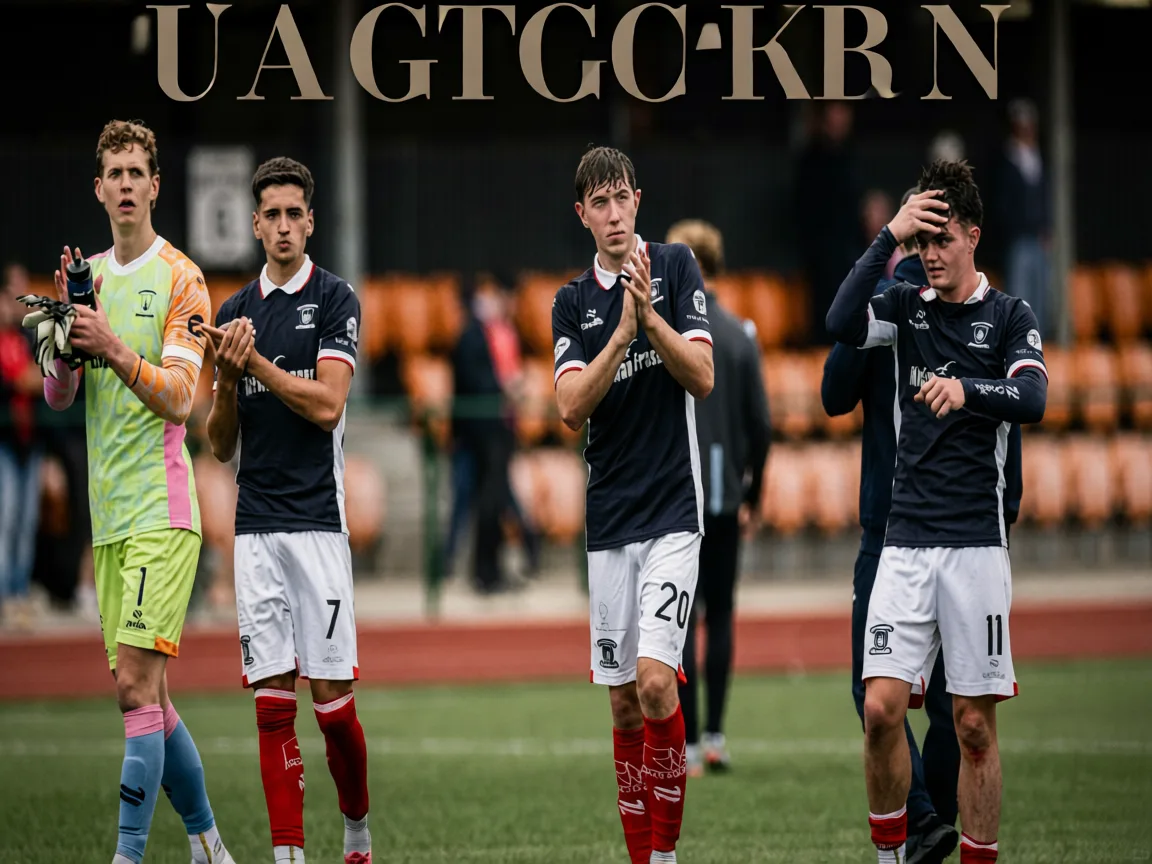
McGlynn's Second Season: Falkirk Face the Respect Problem
John McGlynn warns that matching Falkirk's dominant campaign will be a challenge as opponents now show more tactical respect.

Ferguson's Bologna Future Hinges on World Cup Shifts
Lewis Ferguson will evaluate his Bologna future after the World Cup, as tactical evolution and market dynamics reshape his Serie A trajectory.
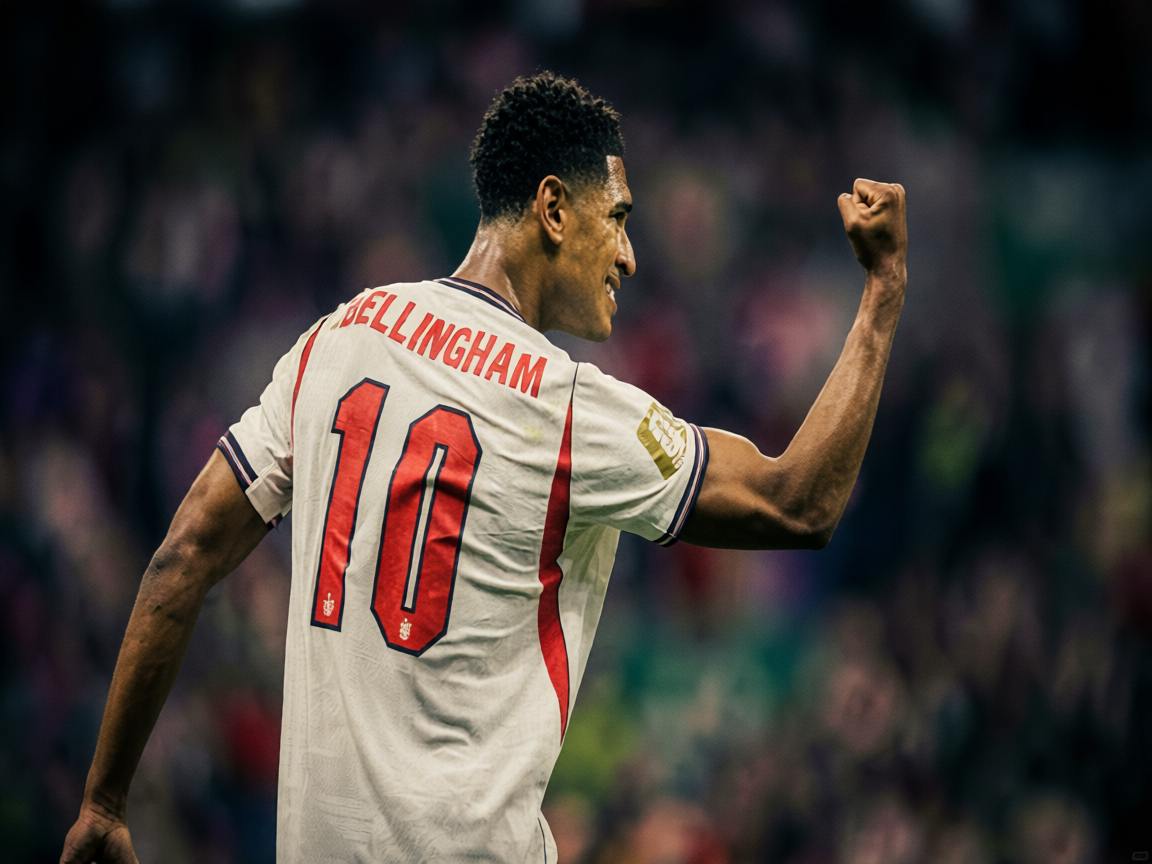
9.1 Million Witnesses: England's Quarter-Final March Captivates a Nation
England's World Cup last-eight berth is a tactical triumph and a ratings blockbuster, with 9.1 million peak viewers tuning in overnight.