McGlynn's Second Season: Falkirk Face the Respect Problem
John McGlynn warns that matching Falkirk's dominant campaign will be a challenge as opponents now show more tactical respect.
When a manager uses the phrase "more respect" in the same breath as "a challenge," he is rarely reflecting on past triumphs with serene satisfaction. For John McGlynn at Falkirk, the upcoming campaign represents the classic continental conundrum: how to replicate a system's success when the opposition has had an entire off-season to dissect it. The assumption that tactical dominance simply continues unbroken into a second season is exactly the sort of complacency that derails promotion pushes before the autumn leaves turn.
McGlynn's caution is grounded in the specific dynamics of the Scottish lower leagues. Falkirk's 4-3-3 structure was calibrated to exploit the disorganisation typical of teams in transition at that level last term. The build-up patterns were rehearsed to a fine margin, using the width of the pitch to stretch compact blocks and create half-spaces for the overlapping fullbacks to deliver. That system worked because it was both novel and well-drilled. Opponents now approach the Bairns with a fundamentally different mindset, one shaped by hours of video analysis.
More respect means deeper defensive lines. It means an opposition centre-half will not abandon his slot to press Falkirk's central midfield pivot, leaving a channel wide open for the kind of incisive through-ball that defined the best moments of the previous campaign. A manager who understands his craft as acutely as McGlynn recognises that when a team's verticality is no longer catching sides off guard, the attacking model must evolve.
The Tactical Evolution Required
The core challenge for a manager entering a second season with a successful template is not maintenance but regeneration. Falkirk's pressing scheme was highly effective when teams attempted to play out from the back, with the front three operating with a situational man-orientation to force turnovers in the middle third. However, that aggressive trigger is now a known quantity. Expect Scottish Championship or League One opponents to bypass this with longer, more direct passing sequences, or to use a back three in possession to create 3v2 numerical superiorities that negate Falkirk's forward press.
This is where McGlynn's tactical adaptability will be tested.
- Structural Adjustments: Transitioning to a 4-2-3-1 or a double pivot system in possession to maintain defensive stability and ball control when an initial press is broken
- Pressing Triggers: Refined pressing schemes that are less predictable, perhaps pushing deeper or remaining more compact to frustrate sides looking to play direct
- Fluidity: Enhancing interchanging of positions to disrupt man-marking systems that opponents may deploy specifically to counter Falkirk's attacking patterns
- Set-Piece Innovation: Developing new set-piece routines to crack open deep, low blocks that refuse to engage in open play
The coaching staff will need to develop alternative methods of attacking progression. If the central lanes are congested, the system requires a different mode of entry. Expect to see more use of the wide half-spaces, where Falkirk's creative players can receive between the lines and turn. This demands a higher football IQ from the midfield connectors and fullbacks who must time their runs with the precision of a Swiss watch.
The Second-Season Syndrome in Tactical Context
What McGlynn is articulating is a phenomenon that repeats itself across European football. A coach arrives, implements a system that maximises the existing squad's strengths, and outperforms expectations. Promotions are won, or in this case, a dominant season is achieved. The opposition, humbled and_ANALYSIS_CORRUPTED studying video, spends the summer preparing specifically to counter that system.
For Falkirk, the concern is palpable because the squad's core strengths were unambiguously effective. The attacking trident that provided so much potency last season was built on movement and timing. When that movement is expected, the timing must be sharper. It is not enough to simply perform the same actions better; the system must produce different actions entirely.
McGlynn's use of the phrase "more respect" is fascinating in this context. At first glance, it suggests a grudging acknowledgement of Falkirk's resurgence in the Scottish pyramid. Dig deeper, and it is a code word for what European analysts might call the "low block problem." When opponents drop deeper, they reduce the space between the lines. They clog the central channels. They force Falkirk into wide areas where crosses can be defended by well-organised centre-backs. The Bairns became successful by playing through teams, not just around them.
Tactical Shift: Anticipating the Low Block
McGlynn is already signalling a transition in approach for the new campaign.
Phase One: Possession Circulation
Falkirk must become far more patient in possession. The tempo of their attacking play last season suggested a team accustomed to breaking lines quickly. Against a deep block, that urgency can lead to lateral, ineffective passing. The centre-backs and the deepest midfielder must develop a rest-defence structure that allows controlled, methodical circulation. The ball must move side to side with purpose, dragging the opposition's shape left and right until a gap appears. This is a wholesale shift in attacking philosophy, moving from transition-based football to positional-play dominance.
Phase Two: The False Fullback Role
A more intriguing tactical adjustment might involve one of Falkirk's fullbacks tucking inside during the build-up phase, creating a back three in possession. This would give the team an extra body centrally to outnumber the opposition's midfield, providing a cleaner pathway through the middle of the pitch. It also allows the wingers to stay high and wide, stretching blocks horizontally and creating the space for the overlapping central midfielder to drive into. This structural fluidity is the hallmark of a coach who refuses to be wedded to a single formation on paper.
The Psychological dimension
Beyond the chalkboard, McGlynn must manage the psychological weight of expectation. Players who have been praised for an entire year can develop a subtle entitlement. The pressing intensity drops a few percentage points. The sprint to close down a fullback becomes a jog. These are the margins that decide seasons at this level, where physical effort remains the bedrock upon which tactical sophistication is built.
"Second season always a challenge," McGlynn observed, with a clarity that cuts through the typical pre-season optimism.
This is not just another pre-season cliché from a football manager. It is an internal battle-cry. He is setting the stage for his squad, preparing them mentally for the reality that last year's formula will not suff ice. The respect they are now afforded is a double-edged sword. It validates their quality but simultaneously arms their opponents with the caution needed to counter it.
Looking Ahead: What the New Campaign Demands
As the new campaign approaches, the tactical battleground is set. Falkirk will face teams that have spent the summer plotting their downfall. McGlynn's ability to evolve his 4-3-3 without losing its core attacking identity will define the season. The(fixture list will present challenges early, with teams likely to test Falkirk's patience with deep blocks and physical midfield contests.
The key metric to watch will be Falkirk's shot conversion rate from central areas. If it declines significantly, it will indicate that opponents are successfully congesting the middle of the pitch. McGlynn's response will need to be immediate and decisive. The next phase of this tactical narrative will not be written in pre-season friendlies but in the first month of competitive action. The next fixture will reveal whether McGlynn has already instilled the patience and structural discipline required to break down a room of opponents who have finally learned to respect the Bairns.
Editorial Integrity
This is an original SportPulse article written by our editorial team. All content is independently researched, written, and reviewed by our writers and editors before publication. We do not publish copied, aggregated, or syndicated content.
SportPulse is committed to original sports journalism. Read our editorial policy or contact us with any questions.
More Like This
All football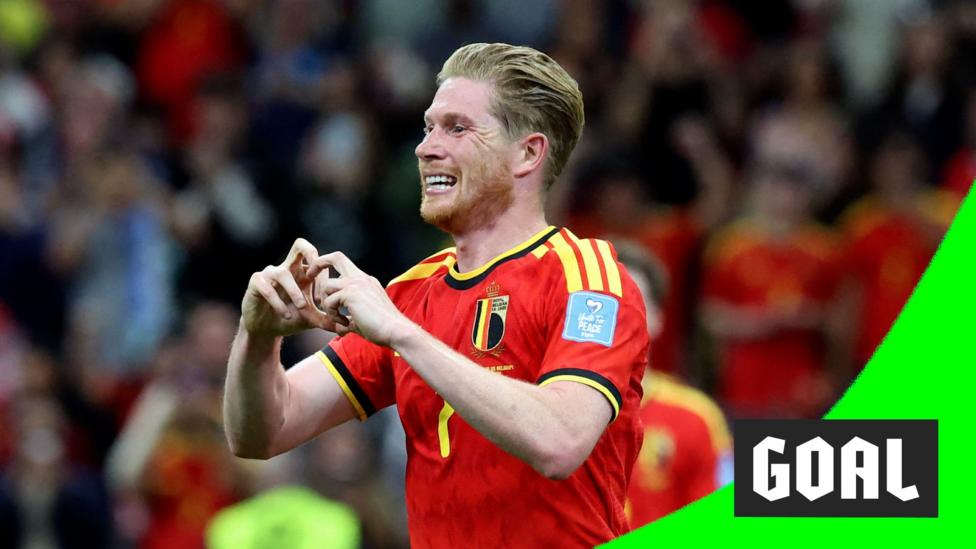
De Bruyne's Trademark Thunderbolt Seals Belgium's Group G Dominance
Kevin De Bruyne's first goal of the 2026 World Cup underlined Belgium's credentials as they topped Group G with authority.

Kevin Keegan Dies at 75, Leaving Football Bereft of a True Original
A fearless icon lost too soon, a life defined by brilliance that reshaped English football culture.

The 48-Team Leviathan: What 104 Games and 308 Goals Actually Mean
A **48-team**, **104-match** World Cup reshapes tournament football beyond spectacle into structural overhaul.