Kevin Keegan Dies at 75, Leaving Football Bereft of a True Original
A fearless icon lost too soon, a life defined by brilliance that reshaped English football culture.
The Final Whistle for a True Original
Football has lost one of its most distinctive voices. Kevin Keegan has died at the age of 75, closing a chapter that began in the dust and determination of North Shields and ended far too soon in the quiet aftermath of a brutal diagnosis. His passing leaves a vacuum that no amount of modern analysis can fill, because Keegan was never simply a statistic. He was a temperament, a standard, and a mirror held up to a nation learning how to love the game again.
The timeline is what makes the loss feel so violent. Keegan revealed he had been diagnosed with stage four cancer just seven weeks before his death. That is not merely a medical footnote. It is a stark measure of how quickly the body can surrender even to those who spent a lifetime defying it. The gap between the announcement and the end was narrow enough to break the spirit of anyone who followed his final campaign with hope.
We do not measure a life by its duration alone. We measure it by the spaces it leaves behind when it ends.
Keegan represented an era where personality was not packaged for algorithms, where players were allowed to be flawed, exuberant, and deeply human. His career did not fit neatly into contemporary performance models. There were no expected assists graphs mapping his genius, no pressing triggers quantifying his movement. He operated on instinct, and that instinct became the blueprint for a generation of English forwards who refused to accept the long-standing belief that flair was incompatible with national success.
Verdict: The loss of Kevin Keegan is not merely the passing of a former player or manager. It is the removal of a foundational pillar from English football history, leaving a cultural and emotional deficit that will take years to process.
Seven Weeks of Defiance
The diagnosis arrived with the kind of clarity that modern oncology demands, yet the speed of his decline defies the usual rhythms of public health narratives. Stage four cancer is rarely a slow burn. It is an aggressive reordering of the body, and Keegan faced it with the same directness he brought to every professional decision. The seven weeks between revelation and death compress an entire emotional arc into something manageable only by those who understand the weight of public expectation.
For fans and former teammates, those weeks were a study in restraint. There were no elaborate press conferences, no manufactured campaigns, no performative gratitude. Keegan simply existed in the final stretch of his life with the same unvarnished honesty that defined his playing days. That honesty matters now more than ever, because the modern football landscape is saturated with carefully curated narratives. His final chapter refused to participate in the machinery.
The brevity of the timeline also underscores a harsh reality about elite sport. Players spend decades conditioning their bodies to withstand punishment, only to find themselves helpless against cellular betrayal. Keegan understood that tension intimately. He played through pain, he carried teams on his back, and he treated physical sacrifice as a professional duty. None of that preparation shields a man from stage four disease. It only makes the eventual loss feel more unjust.
The Bottom Line: The seven-week span between diagnosis and death strips away any illusion of control. Keegan fought with dignity, but the biology was indifferent to his stature, and the football world must now accept a finality that feels uncomfortably sudden.
The Newcastle Heartbeat
No club relationship in English football carries quite the same emotional gravity as the bond between Keegan and Newcastle United. He was not merely a player who happened to wear the shirt. He was a symbol of what the club could mean to a city that had spent decades waiting for someone to believe in them again. His presence at St James' Park was never about tactical perfection. It was about identity, pride, and the quiet promise that excellence could survive outside the traditional power centres.
That connection survived his departure, his return, and his eventual move into management. Keegan understood that loyalty is not a contract. It is a continuous performance, measured in gestures, memories, and the willingness to stand beside a community through its lowest points. When he returned to the club, he did not arrive as a nostalgic relic. He arrived as a man who knew exactly what the badge demanded and refused to offer anything less.
Modern clubs often struggle to cultivate that kind of mutual reverence. They rotate squads, chase marketability, and treat supporters as consumers rather than custodians. Keegan's era operated differently. He treated the crowd as partners in the struggle, and that partnership produced moments that still echo through the stands. The atmosphere at Newcastle was never just noise. It was a conversation, and Keegan was always fluent in the language.
Verdict: The Newcastle connection remains the most emotionally resonant strand of Keegan's legacy. It proves that football identity is built on shared belief, not transfer fees or league positions, and that bond will outlast any statistical record.
Leadership Beyond the Touchline
As England captain, Keegan embodied a leadership style that prioritised belief over bureaucracy. He did not manage by committee. He led by example, by voice, and by the sheer force of expectation he placed on himself and those around him. The responsibility of carrying the national team was never a title he accepted lightly. It was a burden he wore with visible pride, even when the results did not always match the ambition.
His transition into management carried the same philosophy. Keegan believed in freedom, in trusting talent to make decisions, and in treating football as a creative pursuit rather than a mechanical exercise. That approach sometimes clashed with the rigid structures of modern coaching, but it also produced moments of genuine inspiration. He refused to flatten his players into systems. He wanted them to play with personality, and he accepted that personality could produce mistakes alongside brilliance.
The England national team has since cycled through managers who prioritise structure over spontaneity, security over risk, and process over passion. Keegan's absence is felt most sharply in that contrast. He reminded the country that football could be played with joy, and that joy was not a weakness. It was a weapon.
The Bottom Line: Keegan's managerial and captaincy legacy rests on a simple principle. Leadership is not about controlling every variable. It is about creating the conditions where talent can breathe, and accepting the beautiful unpredictability that follows.
The Unfinished Legacy
Football loses legends regularly, but few leave behind a fingerprint quite like Keegan's. His death at 75 is a reminder that even the most resilient figures are finite. The game will continue, the Premier League will keep evolving, and new talents will rise to fill the headlines. Yet nothing will replicate the specific alchemy of a man who played with such visible delight that the crowd forgot to keep score.
The statistical record will eventually settle into archives, but the cultural memory will remain active. Young players will still watch old clips not to study pressing triggers, but to observe a mindset. Managers will still read interviews not for tactical diagrams, but for reminders that conviction matters as much as formation. Supporters will still point to Newcastle stories and remember that belief can outlast disappointment.
Keegan's final weeks, marked by stage four cancer and a seven-week decline, force the sport to confront mortality without dressing it in false optimism. There is no narrative arc that softens this ending. There is only the recognition that a remarkable life concluded far too soon, leaving behind a body of work that refuses to be reduced to numbers.
Verdict: The football world will mourn Kevin Keegan not because he won everything, but because he played everything with a generosity of spirit that the modern game desperately needs to remember. His legacy is not a ledger. It is a standard.
What Comes Next
The immediate aftermath will bring tributes, retrospectives, and a flood of memories from former teammates, opponents, and supporters. Those reactions will be sincere, but they will also be incomplete, because no single memorial can capture the full scope of a career built on instinct, emotion, and relentless authenticity. The task now falls to the institutions that shaped him. They must decide whether Keegan's philosophy becomes a footnote or a foundation.
Newcastle United will carry his name forward, not as a museum exhibit, but as a living reference point for how clubs and cities can relate to one another. The England set-up will continue without his particular brand of fearless leadership, and that absence will be felt in every selection meeting, every pre-match talk, and every moment when a coach must choose between safety and soul. The Premier League will keep chasing efficiency, but Keegan's ghost will linger in every match where a player dares to play beyond the spreadsheet.
The Bottom Line: The next era of English football will be defined by how much it chooses to listen to the lessons Keegan left behind. His death is not an endpoint. It is a mirror, and the sport must decide whether to look away or learn.
Editorial Integrity
This is an original SportPulse article written by our editorial team. All content is independently researched, written, and reviewed by our writers and editors before publication. We do not publish copied, aggregated, or syndicated content.
SportPulse is committed to original sports journalism. Read our editorial policy or contact us with any questions.
More Like This
All football
Wrexham's US Return: Parkinson Blends Commercial Duty With League Two Preparation
Phil Parkinson frames Wrexham's second American pre-season as both privilege and rebuild before a demanding League Two campaign.

League One 2026-27 Fixtures Drop With Explosive Opening Day Clashes
The new League One season erupts with bitter rivalries on opening day, setting the stage for a brutal promotion scrap.
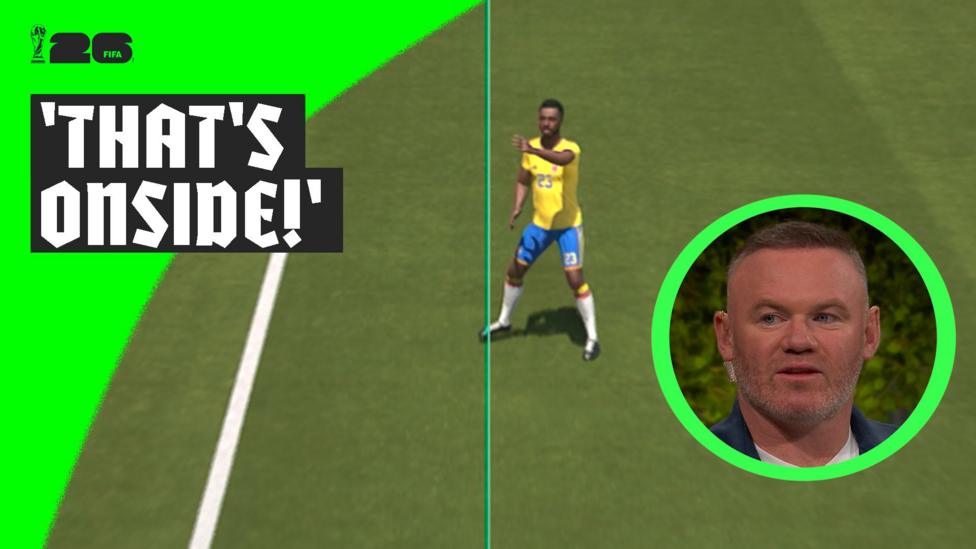
A Toe Offside: VAR's Millimetre Problem Threatens to Undermine the World Cup
Davinson Sanchez's disallowed goal against Portugal reignites the debate over VAR's marginal offside calls at the World Cup.